Meiji/Taishō Prints
明治大正版画
Transitional prints bridging ukiyo-e and modern printmaking, 1868–1926
c. 1868–1926
About Meiji/Taishō Prints
Meiji and Taishō era prints (1868–1926) bridge the transition from traditional ukiyo-e to the modern shin-hanga and sosaku-hanga movements. During this period, Japan underwent rapid modernization and Westernization, profoundly affecting the visual arts. Artists working in this transitional era experimented with Western techniques such as perspective, shading, and oil painting while often maintaining connections to traditional woodblock printmaking. Key figures include Tsukioka Yoshitoshi, who brought ukiyo-e to its dramatic culmination; Kobayashi Kiyochika, who pioneered light-and-shadow effects in prints; and Uemura Shoen, whose refined bijin-ga paintings influenced generations of later printmakers. The era also saw the emergence of the sōsaku-hanga ideal through Kanae Yamamoto''s 1904 "Fisherman," widely considered the first modern creative print.
Meiji/Taishō Prints Artists (16)
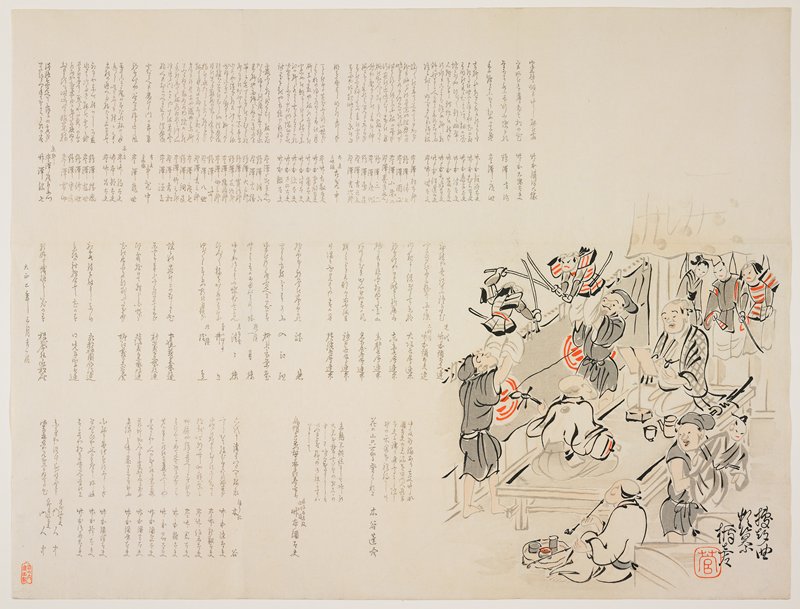
Suga Tatehiko
須賀建彦
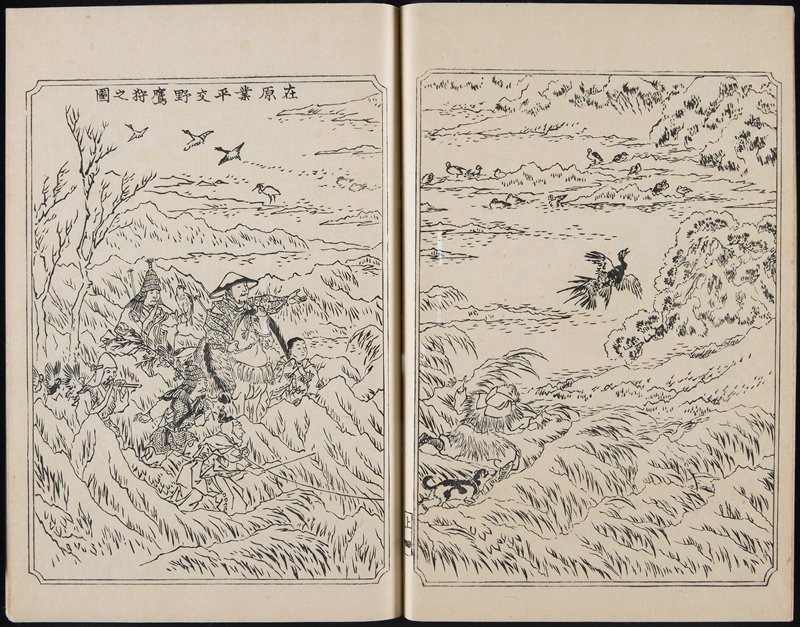
Kawanabe Kyosai
河鍋暁斎
1831–1889
Toyohara Chikanobu
豊原周延
1838–1912
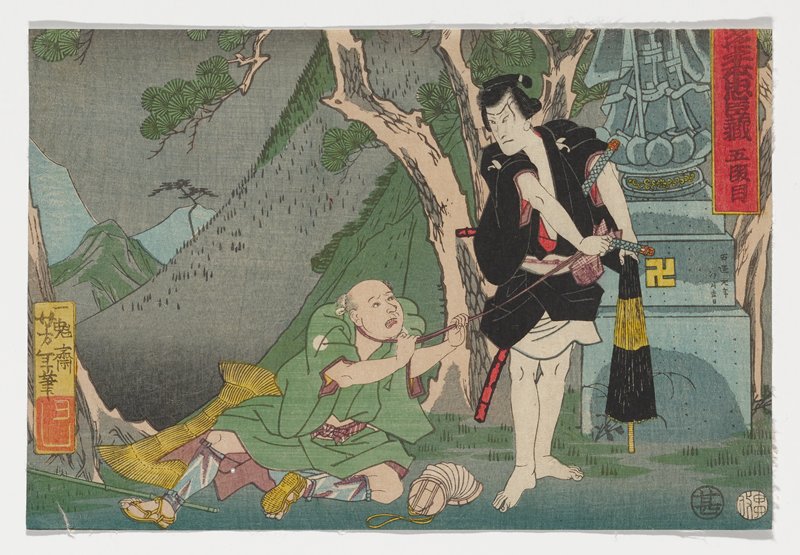
Tsukioka Yoshitoshi
月岡芳年
1839–1892
Kobayashi Kiyochika
小林清親
1847–1915

Watanabe Seitei
渡辺省亭
1851–1918
Asai Chu
浅井忠
1856–1907

Ogata Gekko
尾形月耕
1859–1920

Inoue Yasuji
井上安治
1864–1889

Ogawa Usen
小川芋銭
1868–1938
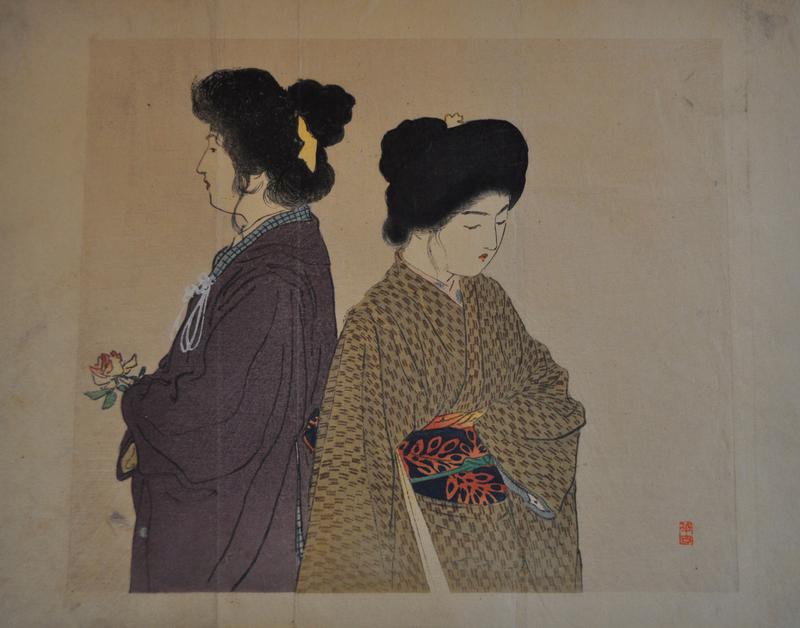
Kajita Hanko
梶田半古
1870–1917

Uemura Shoen
上村松園
1875–1949
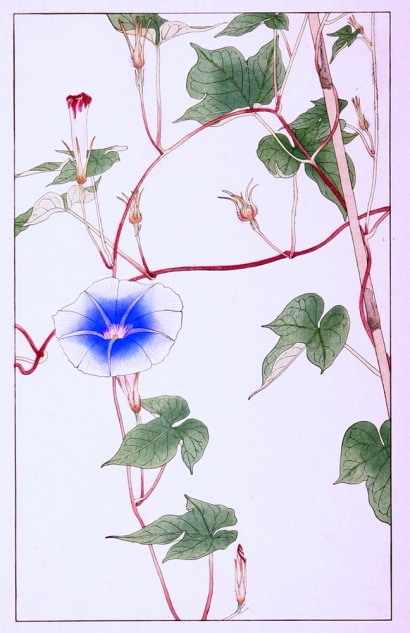
Hisui Sugiura
杉浦非水
1876–1965
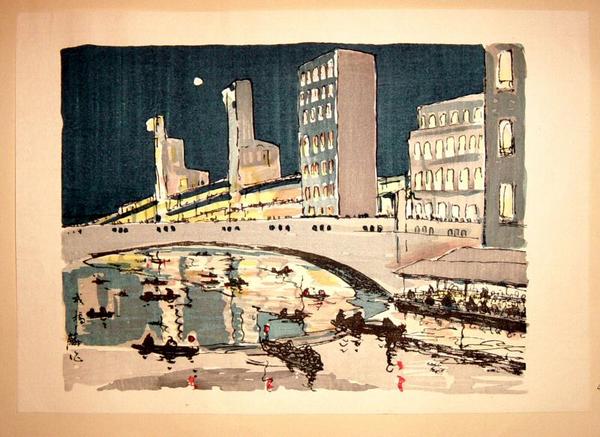
Akamatsu Rinsaku
赤松麟作
1878–1953
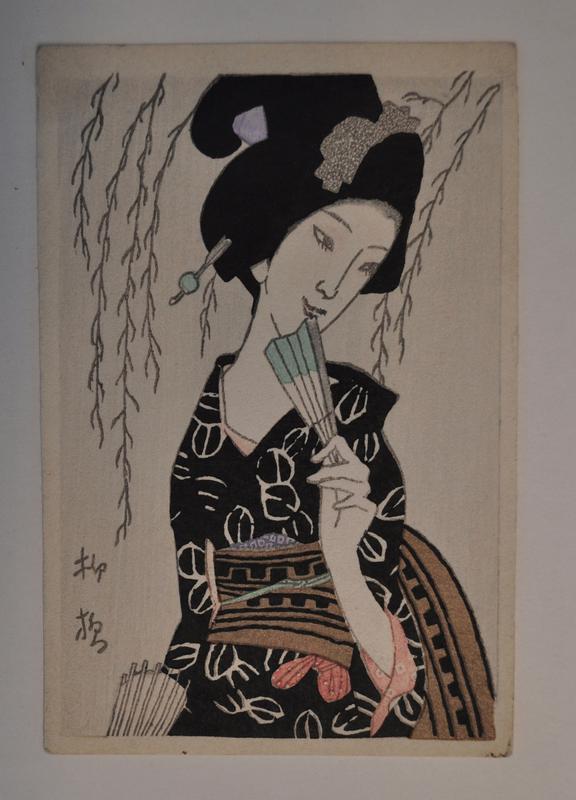
Takehisa Yumeji
竹久夢二
1884–1934
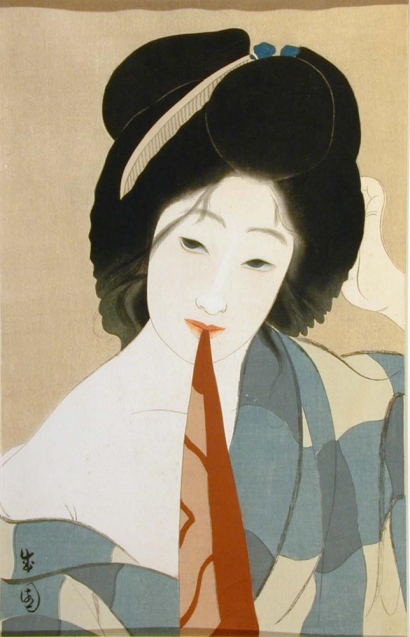
Shima Seien
島成園
1892–1970
Notable Works

'The fox woman of Suwa in Shinano'
19th century
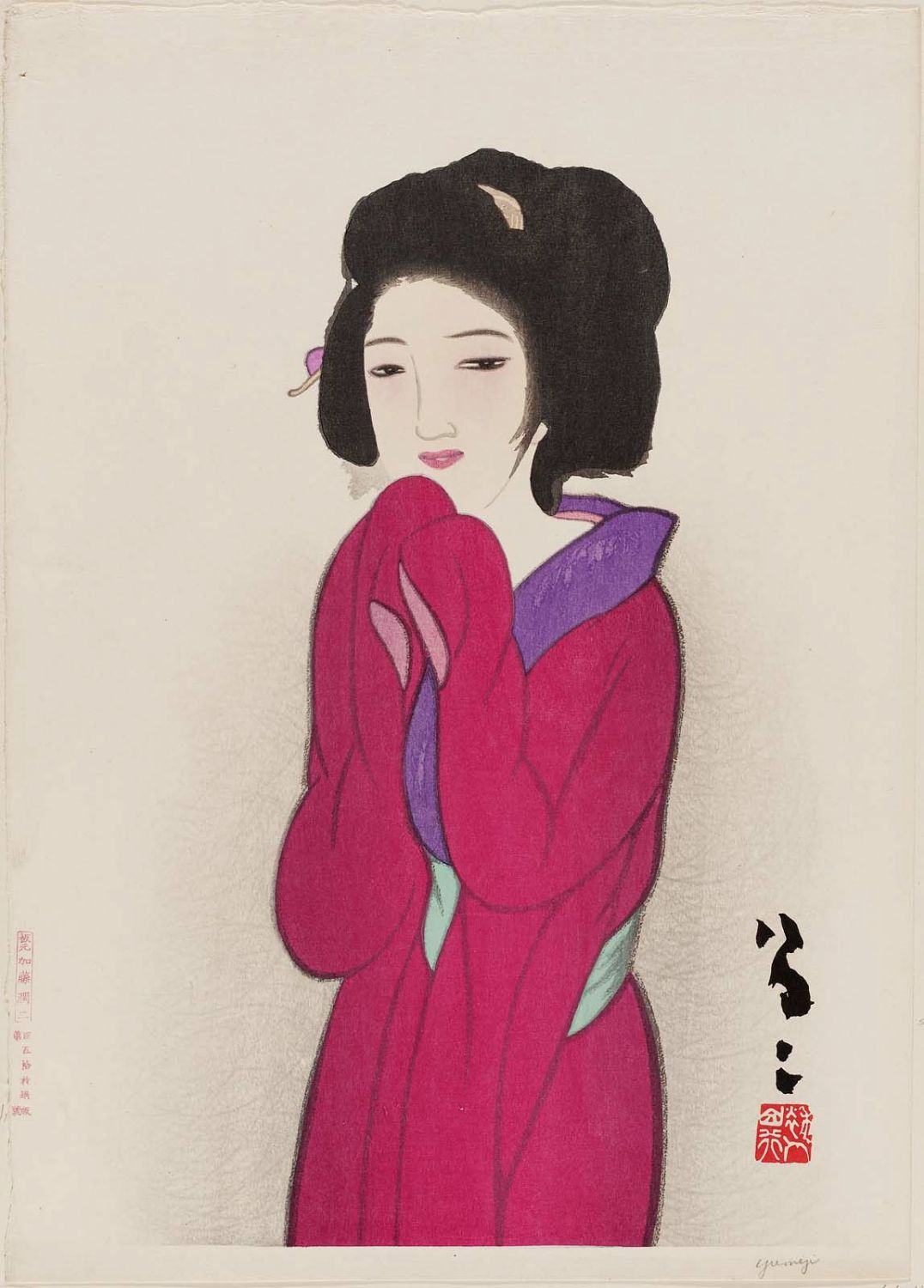
(long undergarment)
Woodblock print

'Jigoku Daiyu, the Hell Courtesan, meditating'
19th century

'Modern Edo Purple'
1862
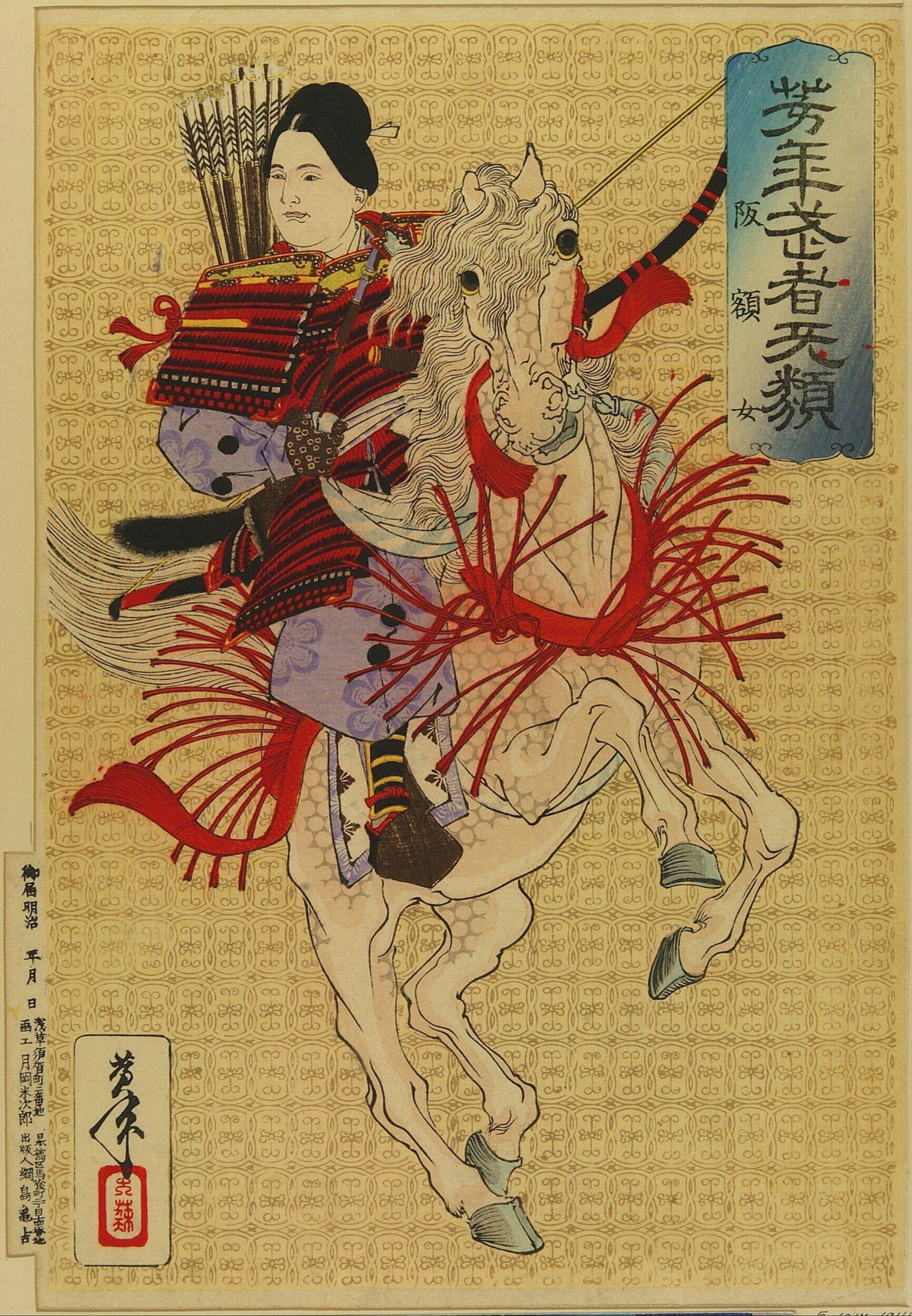
'The female samurai warrior Hangaku'
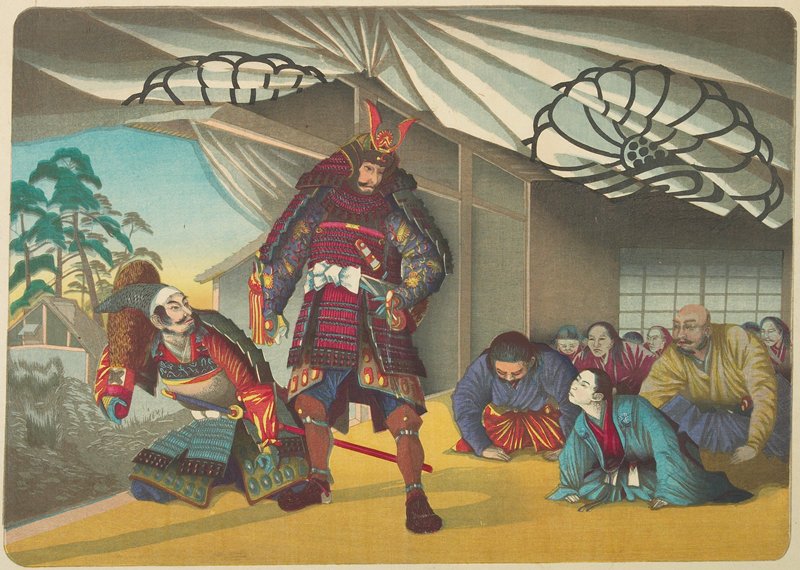
(Warrior Departing for a Battle)
c. 1880–99
Woodblock print, ink and color on paper
![[Toshagu Shrine, Ueno] by Inoue Yasuji](https://data.ukiyo-e.org/famsf/images/3306201405530048.jpg)
[Toshagu Shrine, Ueno]
Woodblock print
![[Western Games] by Inoue Yasuji](https://data.ukiyo-e.org/famsf/images/3306201405530023.jpg)
[Western Games]
Woodblock print
Frequently Asked Questions
What is Meiji/Taishō Prints?
Meiji and Taishō era prints (1868–1926) bridge the transition from traditional ukiyo-e to the modern shin-hanga and sosaku-hanga movements. During this period, Japan underwent rapid modernization and Westernization, profoundly affecting the visual arts. Artists working in this transitional era experimented with Western techniques such as perspective, shading, and oil painting while often maintaining connections to traditional woodblock printmaking. Key figures include Tsukioka Yoshitoshi, who brought ukiyo-e to its dramatic culmination; Kobayashi Kiyochika, who pioneered light-and-shadow effects in prints; and Uemura Shoen, whose refined bijin-ga paintings influenced generations of later printmakers. The era also saw the emergence of the sōsaku-hanga ideal through Kanae Yamamoto''s 1904 "Fisherman," widely considered the first modern creative print.
When was the Meiji/Taishō Prints period?
The Meiji/Taishō Prints movement was active from approximately 1868 to 1926.
Who are the most famous Meiji/Taishō Prints artists?
Notable Meiji/Taishō Prints artists include Suga Tatehiko, Kawanabe Kyosai, Toyohara Chikanobu, Tsukioka Yoshitoshi, Kobayashi Kiyochika, and 11 more.
What are Meiji/Taishō Prints prints known for?
Meiji and Taishō era prints (1868–1926) bridge the transition from traditional ukiyo-e to the modern shin-hanga and sosaku-hanga movements. During this period, Japan underwent rapid modernization and Westernization, profoundly affecting the visual arts. Artists working in this transitional era experimented with Western techniques such as perspective, shading, and oil painting while often maintaining connections to traditional woodblock printmaking. Key figures include Tsukioka Yoshitoshi, who brought ukiyo-e to its dramatic culmination; Kobayashi Kiyochika, who pioneered light-and-shadow effects in prints; and Uemura Shoen, whose refined bijin-ga paintings influenced generations of later printmakers. The era also saw the emergence of the sōsaku-hanga ideal through Kanae Yamamoto''s 1904 "Fisherman," widely considered the first modern creative print.
Related Movements
Want to rate Meiji/Taishō Prints prints?
Sign up to start rating