Biography
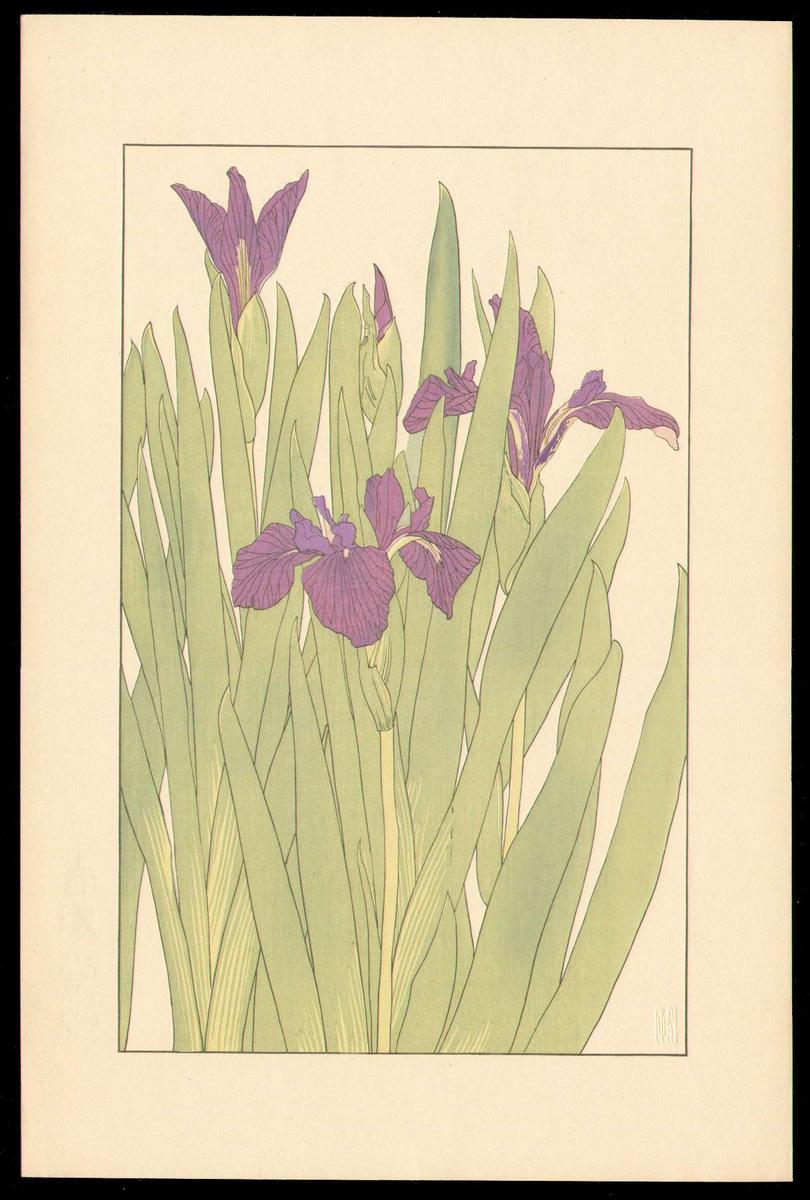
Hisui Sugiura (杉浦非水, 1876–1965) was a pioneering Japanese graphic designer and artist who played a central role in introducing European Art Nouveau aesthetics into Japanese commercial art and poster design during the Meiji and Taisho eras. Best known for his elegant advertising campaigns for the Mitsukoshi department store, Sugiura helped establish graphic design as a respected art form in Japan and created some of the most visually striking commercial imagery of the early twentieth century.
Born Sugiura Hisui (given name Tsutomu) on May 15, 1876, in Matsuyama, Ehime Prefecture on the island of Shikoku, he showed artistic promise from a young age. He studied at the Tokyo School of Fine Arts (now Tokyo University of the Arts) under the influential painter Kuroda Seiki, who had trained in France and was instrumental in introducing Impressionist and Post-Impressionist techniques to Japan. This Western-oriented training gave Sugiura a foundation in European artistic principles that he would later apply to his groundbreaking commercial design work.
The turning point in Sugiura's career came in 1908, when he was hired by the Mitsukoshi department store as its chief designer — a position that gave him unprecedented scope to apply Art Nouveau design principles to Japanese commercial art. Mitsukoshi, originally a kimono shop founded in 1673, was reinventing itself as Japan's first modern department store, modeled on European establishments like Harrods and the Bon Marche. Sugiura's poster designs for Mitsukoshi became iconic images of Taisho-era modernity, featuring elegant women in both kimono and Western dress surrounded by flowing organic forms, stylized natural motifs, and bold typographic elements that married the sinuous curves of Art Nouveau with Japanese decorative traditions.
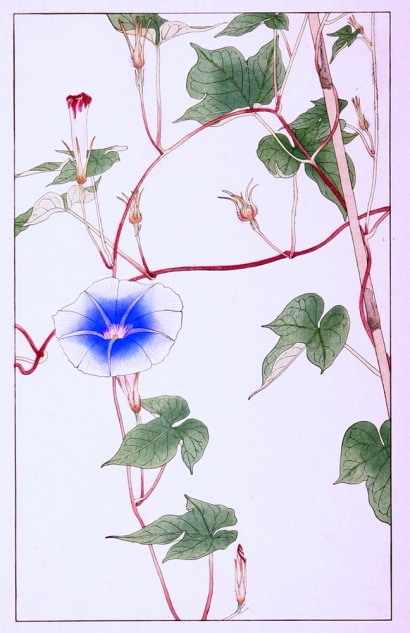
Sugiura's design work extended beyond posters to encompass packaging, magazine covers, pamphlets, and a wide range of promotional materials. His visual language drew on multiple sources: the curvilinear elegance of Alphonse Mucha and the Vienna Secession, the flat decorative patterns of traditional Japanese design, and the naturalistic observation he had learned at the Tokyo School of Fine Arts. The result was a distinctive hybrid aesthetic that was neither purely Western nor purely Japanese but something genuinely new — a visual expression of the cultural synthesis that defined Taisho-era Japan.
While Sugiura's primary legacy is in graphic design rather than fine-art printmaking, his work intersects with the broader history of Japanese prints in important ways. His poster designs were produced using lithographic and other printing techniques, and they share the visual concerns of contemporary woodblock print artists: the interplay of line and color, the relationship between text and image, and the challenge of creating compelling visual narratives. His influence on subsequent generations of Japanese designers and illustrators has been profound, and his Mitsukoshi posters remain among the most celebrated examples of Japanese graphic design.
Sugiura continued to work and teach throughout the Showa era, adapting his design principles to changing times while maintaining his commitment to elegance and visual sophistication. He received numerous honors during his long career and was recognized as a Living National Treasure in the field of graphic design. He died on August 18, 1965, in Tokyo, at the age of eighty-nine. His works are preserved in the Mitsukoshi archives, the National Museum of Modern Art in Tokyo, and various design collections in Japan and abroad.
Key Facts
- Active Period
- 1876–1965
- Nationality
- 🇯🇵Japan
- Movement
- Meiji/Taishō Prints
- Works Indexed
- 6
Frequently Asked Questions
What is Hisui Sugiura known for?
Hisui Sugiura (杉浦非水, 1876–1965) was a pioneering Japanese graphic designer and artist who played a central role in introducing European Art Nouveau aesthetics into Japanese commercial art and poster design during the Meiji and Taisho eras. Best known for his elegant advertising campaigns for the Mitsukoshi department store, Sugiura helped establish graphic design as a respected art form in Japan and created some of the most visually striking commercial imagery of the early twentieth century.
When was Hisui Sugiura active?
Hisui Sugiura was active from 1876 to 1965. They were associated with the Meiji/Taishō Prints movement.
What artistic movements influenced Hisui Sugiura?
Hisui Sugiura's work was shaped by the Meiji/Taishō Prints tradition in Japanese woodblock printmaking. Meiji/Taishō Prints: Meiji and Taishō era prints (1868–1926) bridge the transition from traditional ukiyo-e to the modern shin-hanga and sosaku-hanga movements.
Where can I see Hisui Sugiura's original prints?
Original prints by Hisui Sugiura can be found in collections including ukiyo-e.org, Art Gallery of Greater Victoria, Japanese Art Open Database.
How much do Hisui Sugiura prints cost?
Hisui Sugiura occupies a unique position at the intersection of fine art and graphic design, and his market reflects this dual identity. His original poster designs for Mitsukoshi department store are among the most collectible examples of early twentieth-century Japanese graphic design, valued for both their aesthetic quality and their historical significance as landmarks in the development of Japanese commercial art. Original prints from the Taisho era (1912-1926) are relatively scarce because commercial ephemera were not intended for preservation, and many examples were discarded after their promotional purpose was served. This scarcity, combined with growing recognition of Sugiura's importance in design history, has driven prices upward. Most original works sell in the $300-$3,000 range, with exceptional Mitsukoshi poster designs reaching $5,000-$8,000. Collectors should be aware that reproductions of Sugiura's most famous designs are common and should not be confused with original Taisho or early Showa-era prints. Authentication typically requires examination of paper stock, printing technique, and provenance. Sugiura's market is primarily of interest to collectors of Japanese graphic design and Art Nouveau rather than traditional woodblock print collectors.