Bunraku Puppet Theater of Kanjincho
- Date:
- 20th century
- Medium:
- Color woodblock print
- Dimensions:
- 21.6 × 30.5 cm
- Source:
- Art Institute of Chicago
Typical Price
This print depicts a scene from Kanjincho, one of the most beloved plays in the Japanese theatrical repertoire, performed here by Bunraku puppets. The historical importance of both the play and the art form gives this print special cultural resonance. Values range from $250-$700, above average for Sekino's theater subjects.
Description
Bunraku Puppet Theater of Kanjincho depicts a scene from the famous Kabuki and Bunraku play Kanjincho (The Subscription List) as performed by the traditional Japanese puppet theater. Created by Jun'ichiro Sekino and held by the Art Institute of Chicago, this color woodblock print showcases the artist's bold, expressive approach to a subject deeply rooted in Japanese performing arts traditions.
Kanjincho, originally written for the Kabuki stage in 1840 by Namiki Gohei III, tells the story of the fugitive warrior Minamoto no Yoshitsune and his loyal retainer Benkei, who must pass through a barrier checkpoint while disguised as traveling monks. The drama's climactic moment — when Benkei improvises a reading from a blank subscription scroll to deceive the barrier guard Togashi — is one of the most celebrated scenes in all of Japanese theater. In the Bunraku version, this intensely human drama is performed by large, intricately crafted puppets operated by visible puppeteers.
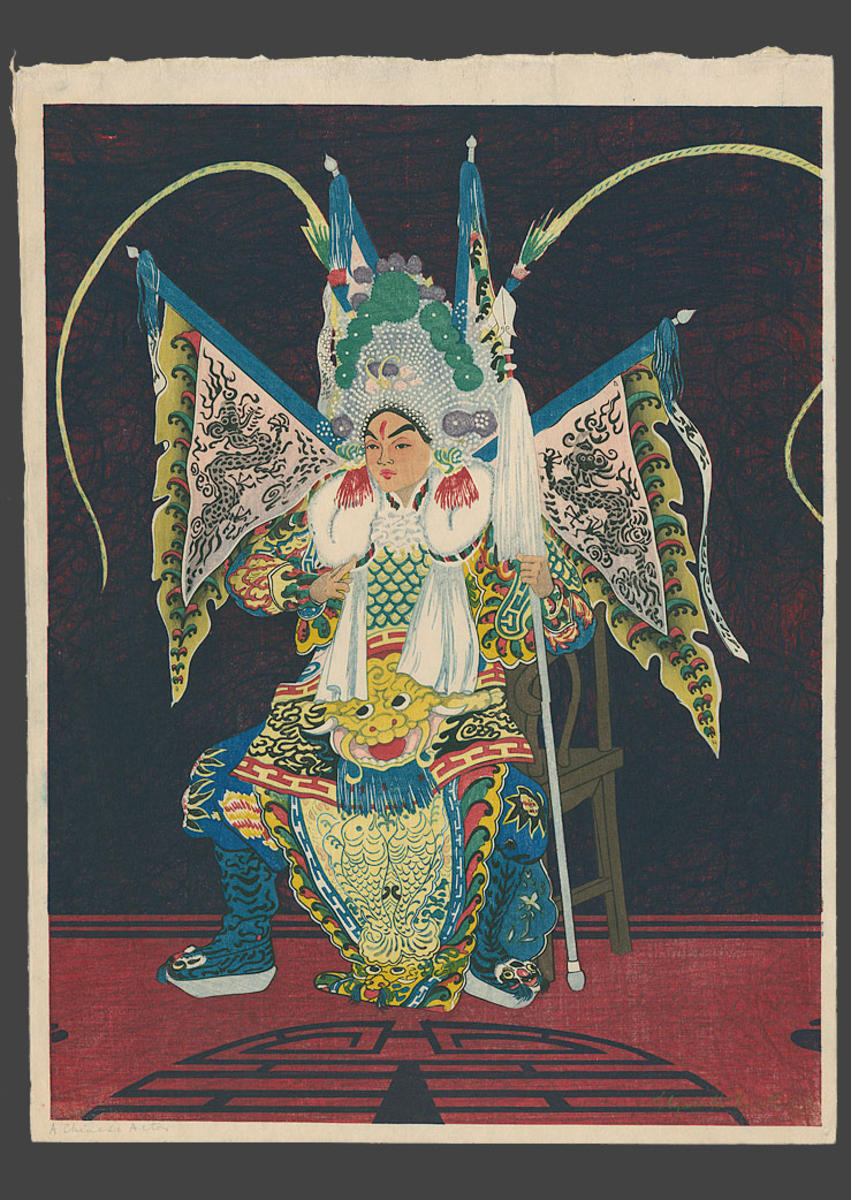
Sekino's treatment of this subject reflects his sosaku-hanga philosophy, in which the artist personally designs, carves, and prints the work. His bold graphic style is well suited to the theatrical subject, with strong outlines and vivid colors capturing the dramatic intensity of the performance. The puppets' elaborate costumes and exaggerated expressions are rendered with an energy that conveys the vitality of live performance while acknowledging the unique aesthetic of puppet theater, where artificial figures achieve remarkable emotional presence.
This print represents an important aspect of Sekino's artistic range. While he is perhaps best known for his portraits and his depictions of Japanese cultural life, his theatrical subjects demonstrate his engagement with Japan's rich performing arts heritage. The Bunraku theater, recognized by UNESCO as an Intangible Cultural Heritage of Humanity, provided Sekino with subjects that combined visual drama, cultural depth, and the kind of bold formal qualities that his woodblock technique could exploit to powerful effect.