Moku-hanga
Technique木版画
Definition
The traditional Japanese method of woodblock printing using water-based pigments, a baren for hand-pressing, and cherry wood blocks.
Moku-hanga in Detail
Moku-hanga is the Japanese term for woodblock printing and refers specifically to the water-based, hand-printed method that distinguishes Japanese prints from Western woodcuts (which use oil-based inks and a press). The technique involves carving a design into a flat block of cherry wood (sakura), applying water-based pigments mixed with rice paste, laying dampened washi paper over the block, and rubbing the back with a baren to transfer the image.
Key characteristics that set moku-hanga apart from Western relief printing include the use of water-soluble pigments that soak into the paper fibers rather than sitting on the surface, hand-burnishing rather than mechanical pressing, and the kento registration system for aligning multiple color blocks. The water-based process produces a distinctive transparency and luminosity impossible with oil-based inks.
Both shin-hanga and sosaku-hanga movements used the moku-hanga technique, though with different philosophies. In shin-hanga, the labor was divided among specialized artist, carver, and printer. In sosaku-hanga, a single artist performed all three roles. Contemporary moku-hanga practitioners worldwide continue to use these traditional methods, drawn to the unique qualities of water-based woodblock printing.
Example Artworks (8)

Moraine Lake
1925
Color woodblock print

Mount Hodaka (Hodakayama)
Hodakayama
1926
Color woodblock print

Eboshidake
1926
Color woodblock print

Camping at Washibadake
1926
Color woodblock print

Greengrocery at Nezu (Nezu shojiki yaoya)
Nezu shojiki yaoya
1926
Color woodblock print; oban
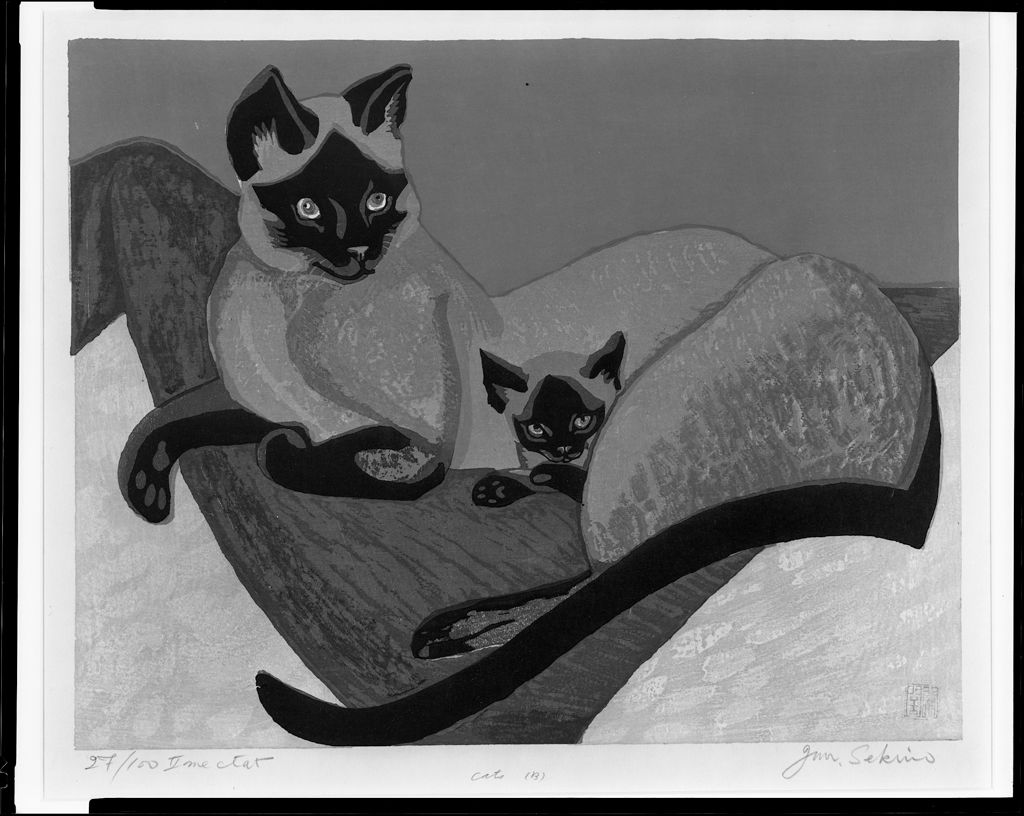
Cats
Woodblock print

Sailing Boats: Forenoon (Hansen, gozen), from the series "Seto Inland Sea (Seto Naikai shu)"
Hansen, gozen
1926
Color woodblock print

Sailing Boats: Afternoon (Hansen, gogo), from the series "Seto Inland Sea (Seto Naikai shu)"
Hansen, gogo
1926
Color woodblock print
Frequently Asked Questions
What is Moku-hanga?
The traditional Japanese method of woodblock printing using water-based pigments, a baren for hand-pressing, and cherry wood blocks.
What does 木版画 mean?
木版画 (Moku-hanga) is a term used in Japanese woodblock printmaking. The traditional Japanese method of woodblock printing using water-based pigments, a baren for hand-pressing, and cherry wood blocks.
How is Moku-hanga used in Japanese woodblock prints?
Moku-hanga is the Japanese term for woodblock printing and refers specifically to the water-based, hand-printed method that distinguishes Japanese prints from Western woodcuts (which use oil-based inks and a press). The technique involves carving a design into a flat block of cherry wood (sakura), applying water-based pigments mixed with rice paste, laying dampened washi paper over the block, and rubbing the back with a baren to transfer the image. Key characteristics that set moku-hanga apart from Western relief printing include the use of water-soluble pigments that soak into the paper fibers rather than sitting on the surface, hand-burnishing rather than mechanical pressing, and the kento registration system for aligning multiple color blocks. The water-based process produces a distinctive transparency and luminosity impossible with oil-based inks.
What are examples of Moku-hanga in Japanese prints?
Notable examples of Moku-hanga can be seen in works such as "Moraine Lake", "Mount Hodaka (Hodakayama)", "Eboshidake", and 5 more in our collection.
Related Technique Terms
Explore more Japanese woodblock print terminology
View full glossary