Kento
Technique見当
Definition
The registration mark system carved into woodblocks to ensure precise alignment of multiple color layers during printing.
Kento in Detail
Kento is the ingenious registration system that makes multi-color woodblock printing possible. Each block in a set has identical marks carved into its surface — typically a right-angle notch in one corner and a straight-line mark along one edge. The printer places the dampened paper against these marks for every impression, ensuring that each color layer aligns precisely with the others.
The standard kento system consists of two marks: the kagi (key mark), an L-shaped notch cut into one corner of the block, and the hikitsuke (pull mark), a short straight groove along one edge. Together, these two reference points fix the paper's position in both axes. The kento marks are cut by the block carver and must be identical on every block in a set.
Accurate kento alignment becomes increasingly critical as the number of color blocks grows. A print using twenty blocks means the paper must be precisely positioned twenty times — any drift shows as color misregistration, visible as thin white gaps or color overlaps between areas. The skill of cutting precise kento marks and consistently positioning paper against them is fundamental to the craft of Japanese printmaking.
Example Artworks (8)

Moraine Lake
1925
Color woodblock print

Mount Hodaka (Hodakayama)
Hodakayama
1926
Color woodblock print

Eboshidake
1926
Color woodblock print

Camping at Washibadake
1926
Color woodblock print

Greengrocery at Nezu (Nezu shojiki yaoya)
Nezu shojiki yaoya
1926
Color woodblock print; oban
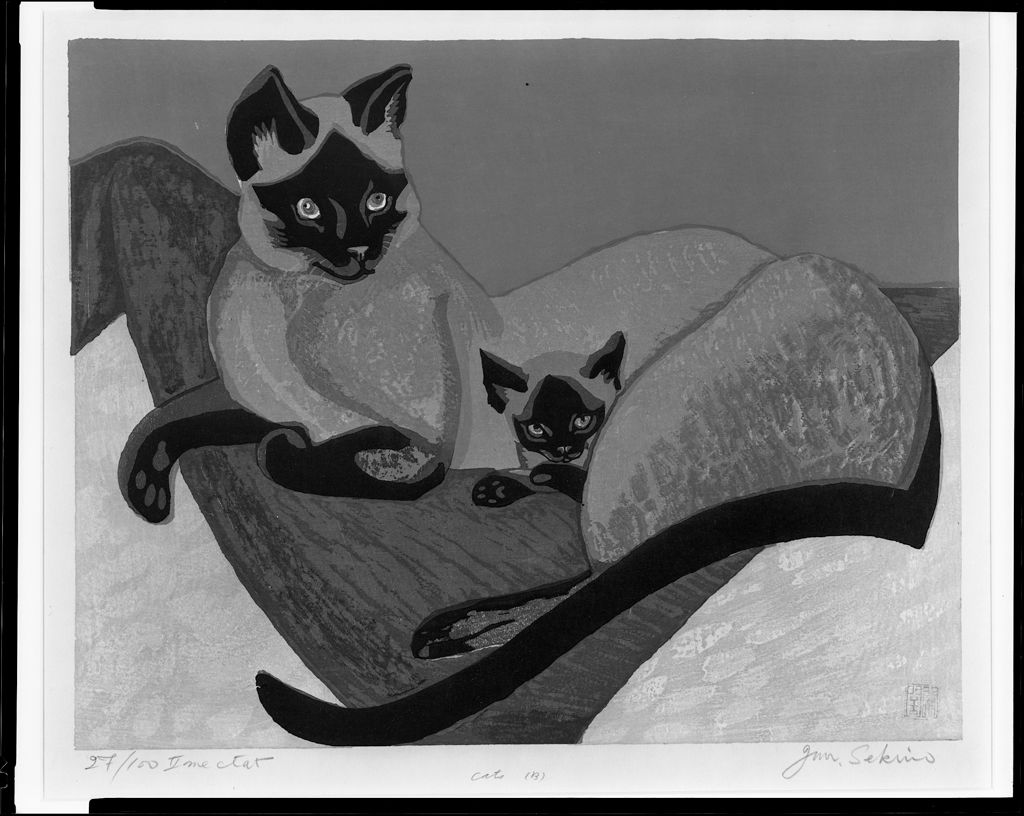
Cats
Woodblock print

Sailing Boats: Forenoon (Hansen, gozen), from the series "Seto Inland Sea (Seto Naikai shu)"
Hansen, gozen
1926
Color woodblock print

Sailing Boats: Afternoon (Hansen, gogo), from the series "Seto Inland Sea (Seto Naikai shu)"
Hansen, gogo
1926
Color woodblock print
Frequently Asked Questions
What is Kento?
The registration mark system carved into woodblocks to ensure precise alignment of multiple color layers during printing.
What does 見当 mean?
見当 (Kento) is a term used in Japanese woodblock printmaking. The registration mark system carved into woodblocks to ensure precise alignment of multiple color layers during printing.
How is Kento used in Japanese woodblock prints?
Kento is the ingenious registration system that makes multi-color woodblock printing possible. Each block in a set has identical marks carved into its surface — typically a right-angle notch in one corner and a straight-line mark along one edge. The printer places the dampened paper against these marks for every impression, ensuring that each color layer aligns precisely with the others. The standard kento system consists of two marks: the kagi (key mark), an L-shaped notch cut into one corner of the block, and the hikitsuke (pull mark), a short straight groove along one edge. Together, these two reference points fix the paper's position in both axes. The kento marks are cut by the block carver and must be identical on every block in a set.
What are examples of Kento in Japanese prints?
Notable examples of Kento can be seen in works such as "Moraine Lake", "Mount Hodaka (Hodakayama)", "Eboshidake", and 5 more in our collection.
Related Technique Terms
Explore more Japanese woodblock print terminology
View full glossary