Sumi
Technique墨
Definition
Traditional Japanese black ink made from soot (usually pine or oil soot) bound with animal glue, used for the key block outlines in woodblock printing.
Sumi in Detail
Sumi is the traditional black ink used throughout East Asian art and calligraphy, and it plays a foundational role in woodblock printing. The key block (the outline block that defines the composition) is invariably printed in sumi. Sumi ink is made by collecting soot — from burning pine wood (shoen-boku) or vegetable oil (yuen-boku) — and binding it with animal glue. The resulting solid ink stick is ground on a wet inkstone to produce liquid ink of the desired concentration.
In woodblock printing, sumi provides the strong, definitive outlines that structure the image. The quality of the ink affects every subsequent color layer, as the key block lines define the boundaries for all other blocks. Different densities of sumi produce effects ranging from intense, glossy black to soft, translucent gray.
Shin-hanga printers sometimes used multiple concentrations of sumi within a single print — darker for foreground elements, lighter for distant features — contributing to the sense of atmospheric depth. The interaction between sumi outlines and the translucent color layers above them is one of the hallmarks of the Japanese woodblock aesthetic, producing a luminosity quite different from Western oil-based printing.
Example Artworks (8)

Moraine Lake
1925
Color woodblock print

Mount Hodaka (Hodakayama)
Hodakayama
1926
Color woodblock print

Eboshidake
1926
Color woodblock print

Camping at Washibadake
1926
Color woodblock print

Greengrocery at Nezu (Nezu shojiki yaoya)
Nezu shojiki yaoya
1926
Color woodblock print; oban
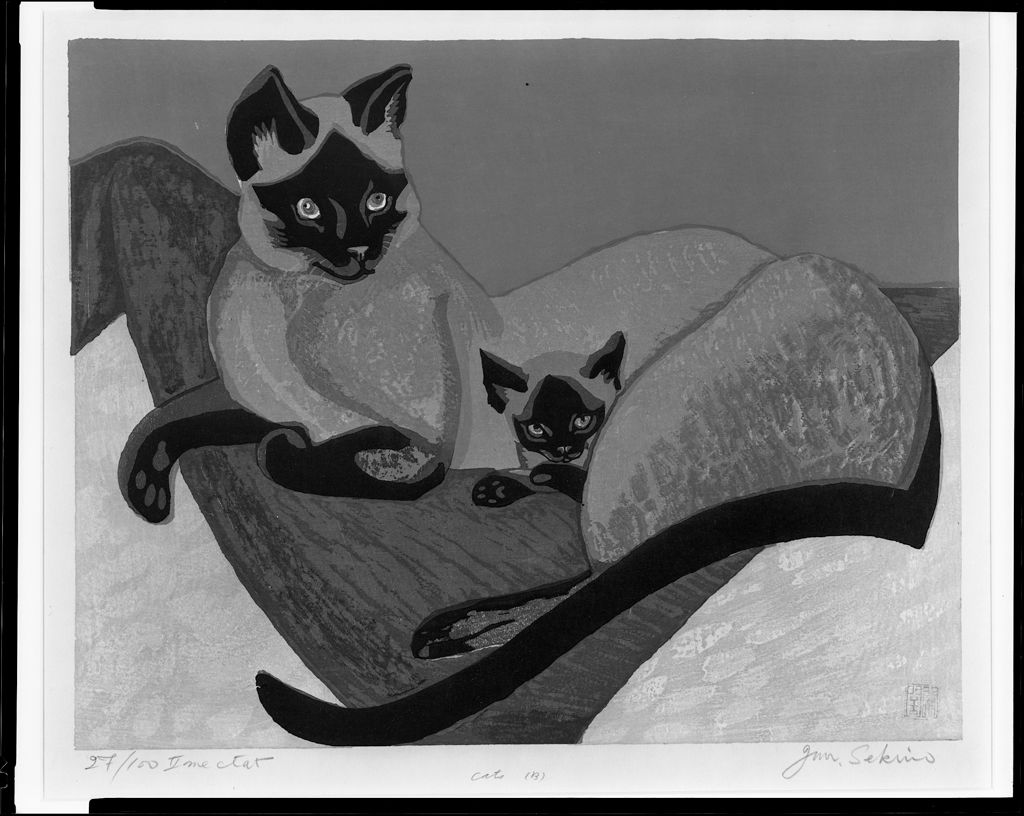
Cats
Woodblock print

Sailing Boats: Forenoon (Hansen, gozen), from the series "Seto Inland Sea (Seto Naikai shu)"
Hansen, gozen
1926
Color woodblock print

Sailing Boats: Afternoon (Hansen, gogo), from the series "Seto Inland Sea (Seto Naikai shu)"
Hansen, gogo
1926
Color woodblock print
Frequently Asked Questions
What is Sumi?
Traditional Japanese black ink made from soot (usually pine or oil soot) bound with animal glue, used for the key block outlines in woodblock printing.
What does 墨 mean?
墨 (Sumi) is a term used in Japanese woodblock printmaking. Traditional Japanese black ink made from soot (usually pine or oil soot) bound with animal glue, used for the key block outlines in woodblock printing.
How is Sumi used in Japanese woodblock prints?
Sumi is the traditional black ink used throughout East Asian art and calligraphy, and it plays a foundational role in woodblock printing. The key block (the outline block that defines the composition) is invariably printed in sumi. Sumi ink is made by collecting soot — from burning pine wood (shoen-boku) or vegetable oil (yuen-boku) — and binding it with animal glue. The resulting solid ink stick is ground on a wet inkstone to produce liquid ink of the desired concentration. In woodblock printing, sumi provides the strong, definitive outlines that structure the image. The quality of the ink affects every subsequent color layer, as the key block lines define the boundaries for all other blocks. Different densities of sumi produce effects ranging from intense, glossy black to soft, translucent gray.
What are examples of Sumi in Japanese prints?
Notable examples of Sumi can be seen in works such as "Moraine Lake", "Mount Hodaka (Hodakayama)", "Eboshidake", and 5 more in our collection.
Related Technique Terms
Explore more Japanese woodblock print terminology
View full glossary