Nishiki-e
Technique錦絵
Definition
Full-color woodblock printing using multiple blocks, one for each color. Literally "brocade pictures," named for their resemblance to colorful woven textiles.
Nishiki-e in Detail
Nishiki-e revolutionized Japanese printmaking when it was developed around 1765, traditionally attributed to the collaboration between artist Suzuki Harunobu and a group of wealthy poetry enthusiasts. Before nishiki-e, prints were limited to two or three colors (benizuri-e). The new technique used a separate carved block for each color — a typical print might require ten to twenty blocks — registered precisely using the kento alignment system.
The name "brocade pictures" reflects the astonishment contemporaries felt at seeing prints rival the color richness of woven silk brocades. Each color required a separate printing pass: the paper was dampened, aligned using corner and side marks (kento), and pressed against each inked block in sequence. The order of color application, the consistency of each pigment, and the moisture level of the paper all had to be meticulously controlled.
Nishiki-e became the standard technique for ukiyo-e production and continued through the shin-hanga movement. Shin-hanga prints often pushed the technique to its limits, with some prints by Kawase Hasui or Hiroshi Yoshida requiring thirty or more separate color blocks to achieve their atmospheric effects. The technique remains the foundation of traditional Japanese woodblock printing today.
Example Artworks (8)

Moraine Lake
1925
Color woodblock print

Mount Hodaka (Hodakayama)
Hodakayama
1926
Color woodblock print

Eboshidake
1926
Color woodblock print

Camping at Washibadake
1926
Color woodblock print

Greengrocery at Nezu (Nezu shojiki yaoya)
Nezu shojiki yaoya
1926
Color woodblock print; oban
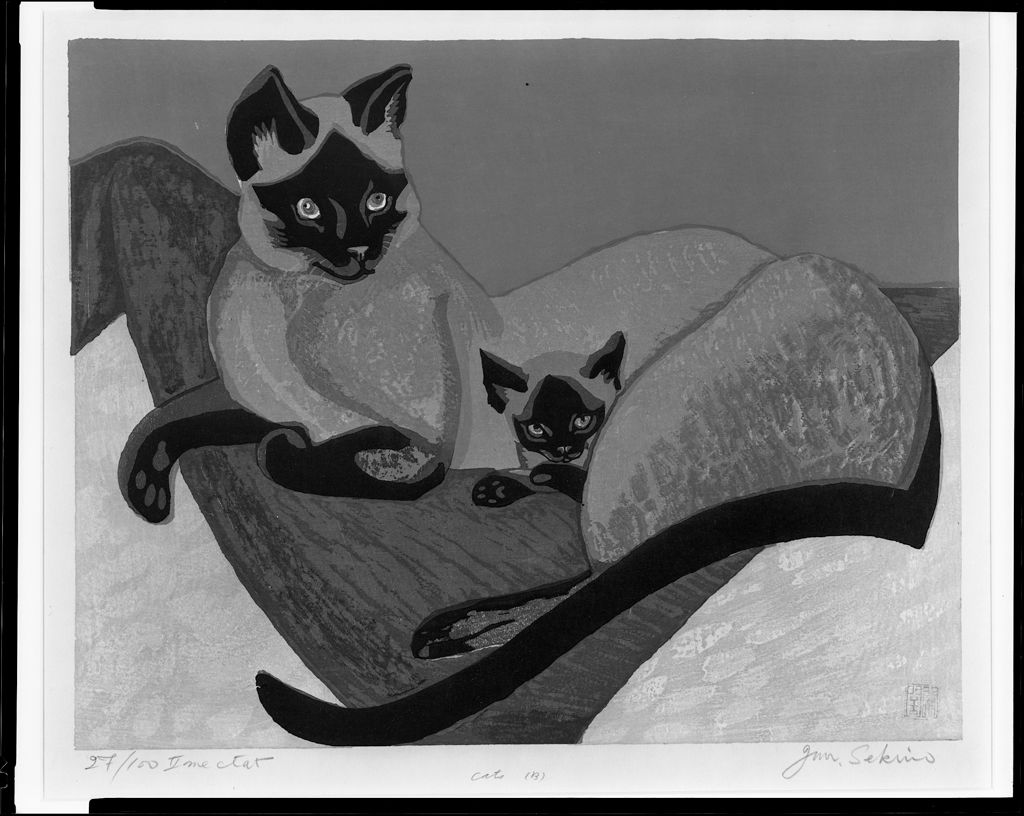
Cats
Woodblock print

Sailing Boats: Forenoon (Hansen, gozen), from the series "Seto Inland Sea (Seto Naikai shu)"
Hansen, gozen
1926
Color woodblock print

Sailing Boats: Afternoon (Hansen, gogo), from the series "Seto Inland Sea (Seto Naikai shu)"
Hansen, gogo
1926
Color woodblock print
Frequently Asked Questions
What is Nishiki-e?
Full-color woodblock printing using multiple blocks, one for each color. Literally "brocade pictures," named for their resemblance to colorful woven textiles.
What does 錦絵 mean?
錦絵 (Nishiki-e) is a term used in Japanese woodblock printmaking. Full-color woodblock printing using multiple blocks, one for each color. Literally "brocade pictures," named for their resemblance to colorful woven textiles.
How is Nishiki-e used in Japanese woodblock prints?
Nishiki-e revolutionized Japanese printmaking when it was developed around 1765, traditionally attributed to the collaboration between artist Suzuki Harunobu and a group of wealthy poetry enthusiasts. Before nishiki-e, prints were limited to two or three colors (benizuri-e). The new technique used a separate carved block for each color — a typical print might require ten to twenty blocks — registered precisely using the kento alignment system. The name "brocade pictures" reflects the astonishment contemporaries felt at seeing prints rival the color richness of woven silk brocades. Each color required a separate printing pass: the paper was dampened, aligned using corner and side marks (kento), and pressed against each inked block in sequence. The order of color application, the consistency of each pigment, and the moisture level of the paper all had to be meticulously controlled.
What are examples of Nishiki-e in Japanese prints?
Notable examples of Nishiki-e can be seen in works such as "Moraine Lake", "Mount Hodaka (Hodakayama)", "Eboshidake", and 5 more in our collection.
Related Technique Terms
Explore more Japanese woodblock print terminology
View full glossary