
Biography
Utagawa Kuniyoshi (歌川国芳, 1798–1861) stands as one of the most inventive and technically accomplished artists of the ukiyo-e tradition, a figure whose restless imagination pushed the boundaries of Japanese woodblock printing in directions that continue to surprise viewers today. Known variously by his art name Ichiyusai, he was a master of warrior prints, a pioneer of landscape composition, a satirist of uncommon wit, and perhaps history's most devoted artistic chronicler of cats.
Kuniyoshi was born on January 1, 1798, in the Nihonbashi district of Edo (present-day Tokyo), the son of Yanagiya Kichiemon, a silk dyer. His father's trade exposed him from childhood to the bold patterns and vivid colors that would later characterize his prints. At approximately age twelve, around 1811, he entered the studio of Utagawa Toyokuni I, the leading master of the Utagawa school and the most commercially successful ukiyo-e artist of his generation. This placed Kuniyoshi among a cohort of students that included Utagawa Kunisada, who would become his lifelong professional rival.
The early years of Kuniyoshi's independent career were marked by prolonged struggle. After receiving his art name and beginning to publish around 1814, he found little commercial success. The market was dominated by Kunisada's actor portraits and Keisai Eisen's bijin-ga, and Kuniyoshi's early efforts in these genres failed to distinguish themselves. By some accounts he was so poor during this period that he supplemented his income by selling tatami mats and repairing broken goods.
The breakthrough arrived in 1827, when Kuniyoshi began publishing his series "108 Heroes of the Popular Suikoden," depicting the legendary Chinese bandits of the classical novel "Water Margin." These prints were a revelation. Each hero was rendered as a figure of explosive dynamism — muscles rippling beneath elaborate full-body tattoos, weapons raised against swirling backgrounds of water, flame, and storm. The series tapped into a contemporary craze for tattooing among Edo's townspeople, and the prints themselves became reference designs for tattoo artists, a role they continue to serve nearly two centuries later. The Suikoden series made Kuniyoshi famous overnight and established the warrior print (musha-e) as his signature genre.
Through the 1830s and 1840s, Kuniyoshi produced an extraordinary body of warrior prints that remain unsurpassed in their dramatic power and compositional daring. His depictions of samurai battles, mythological combats, and scenes from Japanese history combined meticulous period detail with a sense of kinetic energy entirely new to the medium. He was particularly innovative in his use of the triptych format, composing scenes across three joined sheets to create panoramic images of remarkable sweep and complexity.
Kuniyoshi was also a significant landscape artist. His landscape prints reveal a sophisticated engagement with Western art, which he studied through Dutch engravings that entered Japan via Nagasaki. He incorporated Western single-point perspective, chiaroscuro shading, and atmospheric effects into his compositions, sometimes producing landscapes that hover in a striking intermediate space between European and Japanese pictorial conventions.
Among Kuniyoshi's most enduring works are his humorous prints (giga). He was famously devoted to cats — contemporary accounts describe his studio as perpetually overrun with them — and he produced numerous prints featuring cats in anthropomorphic roles: cats forming the shapes of human faces, cats mimicking kabuki actors, cats dressed as people going about daily business. Beyond their charm, these works served a serious purpose in an era of increasing government censorship. The Tempo Reforms of the 1840s banned prints depicting actors, courtesans, and other subjects deemed to promote luxury. Kuniyoshi responded with characteristic ingenuity, producing prints that appeared to depict animals but contained veiled political commentary legible to his Edo audience.
Kuniyoshi's studio trained an estimated seventy or more students. Among his most distinguished pupils were Tsukioka Yoshitoshi, widely regarded as the last great master of ukiyo-e, whose powerful prints carried his teacher's dramatic sensibility into the Meiji era; Utagawa Yoshitora, who became an important chronicler of Yokohama; and Utagawa Yoshiiku, a pioneer of newspaper illustration.
Kuniyoshi suffered a stroke around 1855 that partially paralyzed him. He died on April 14, 1861, in Edo, just seven years before the Meiji Restoration would sweep away the feudal order that had shaped the world of ukiyo-e. His legacy resides not merely in the enormous volume of his output — estimated at over ten thousand designs — but in the range and daring of his artistic vision. His warrior prints defined the visual iconography of the samurai for subsequent generations. His humorous works anticipated modern cartooning and graphic design. Among the last great masters of ukiyo-e, Kuniyoshi was also the most forward-looking, an artist whose work speaks across centuries with undiminished vitality.
Key Facts
- Active Period
- 1798–1861
- Movement
- Ukiyo-e
- Works Indexed
- 199
Frequently Asked Questions
What is Utagawa Kuniyoshi known for?
Utagawa Kuniyoshi (歌川国芳, 1798–1861) stands as one of the most inventive and technically accomplished artists of the ukiyo-e tradition, a figure whose restless imagination pushed the boundaries of Japanese woodblock printing in directions that continue to surprise viewers today. Known variously by his art name Ichiyusai, he was a master of warrior prints, a pioneer of landscape composition, a satirist of uncommon wit, and perhaps history's most devoted artistic chronicler of cats.
When was Utagawa Kuniyoshi active?
Utagawa Kuniyoshi was active from 1798 to 1861. They were associated with the Ukiyo-e movement.
What artistic movements influenced Utagawa Kuniyoshi?
Utagawa Kuniyoshi's work was shaped by the Ukiyo-e tradition in Japanese woodblock printmaking. Ukiyo-e: Ukiyo-e ("pictures of the floating world") is the dominant tradition of Japanese woodblock printing, flourishing from the seventeenth through nineteenth centuries.
Where can I see Utagawa Kuniyoshi's original prints?
Original prints by Utagawa Kuniyoshi can be found in collections including Art Institute of Chicago, Harvard Art Museums, Victoria and Albert Museum.
External Resources
Woodblock Prints by Utagawa Kuniyoshi (199)
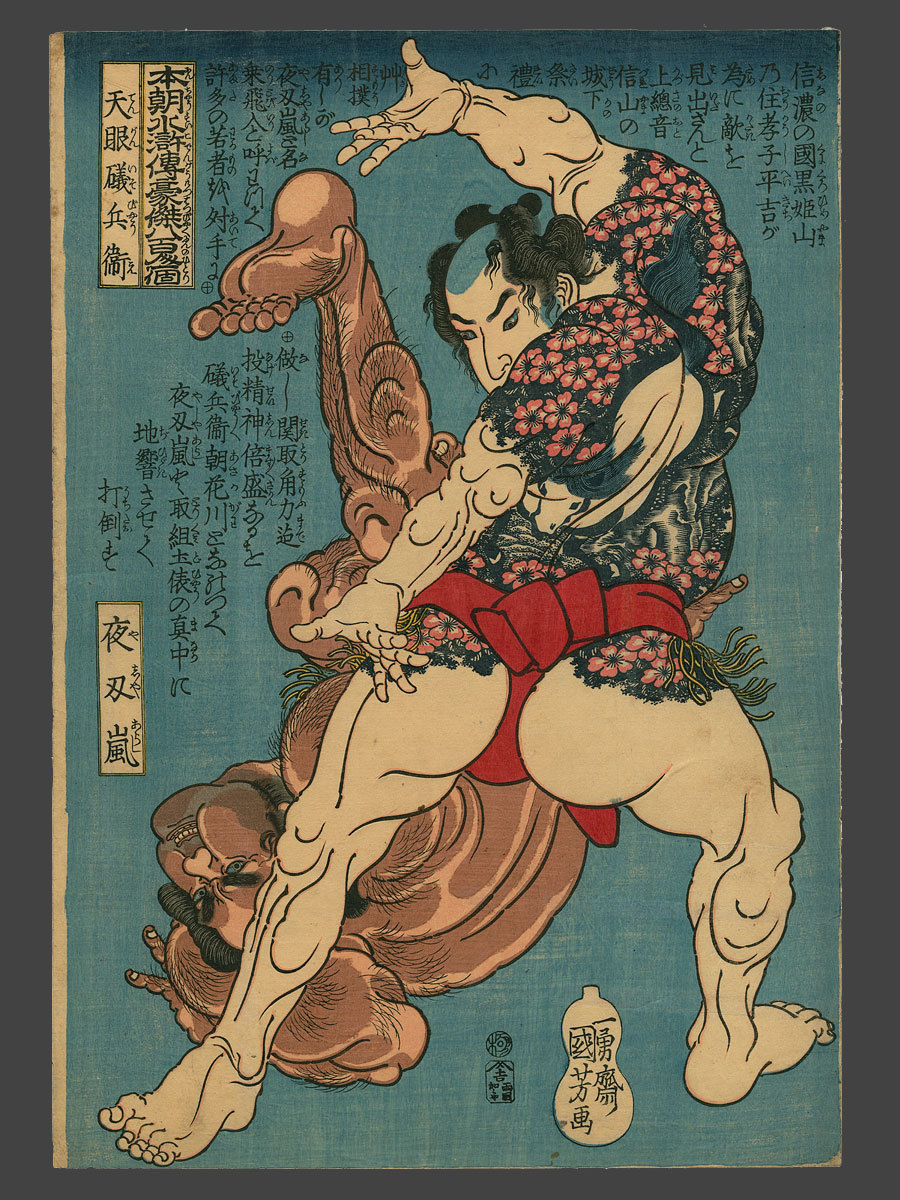
Tengen Isobei Throwing Yasha Arashi in a wrestling Match
Woodblock print
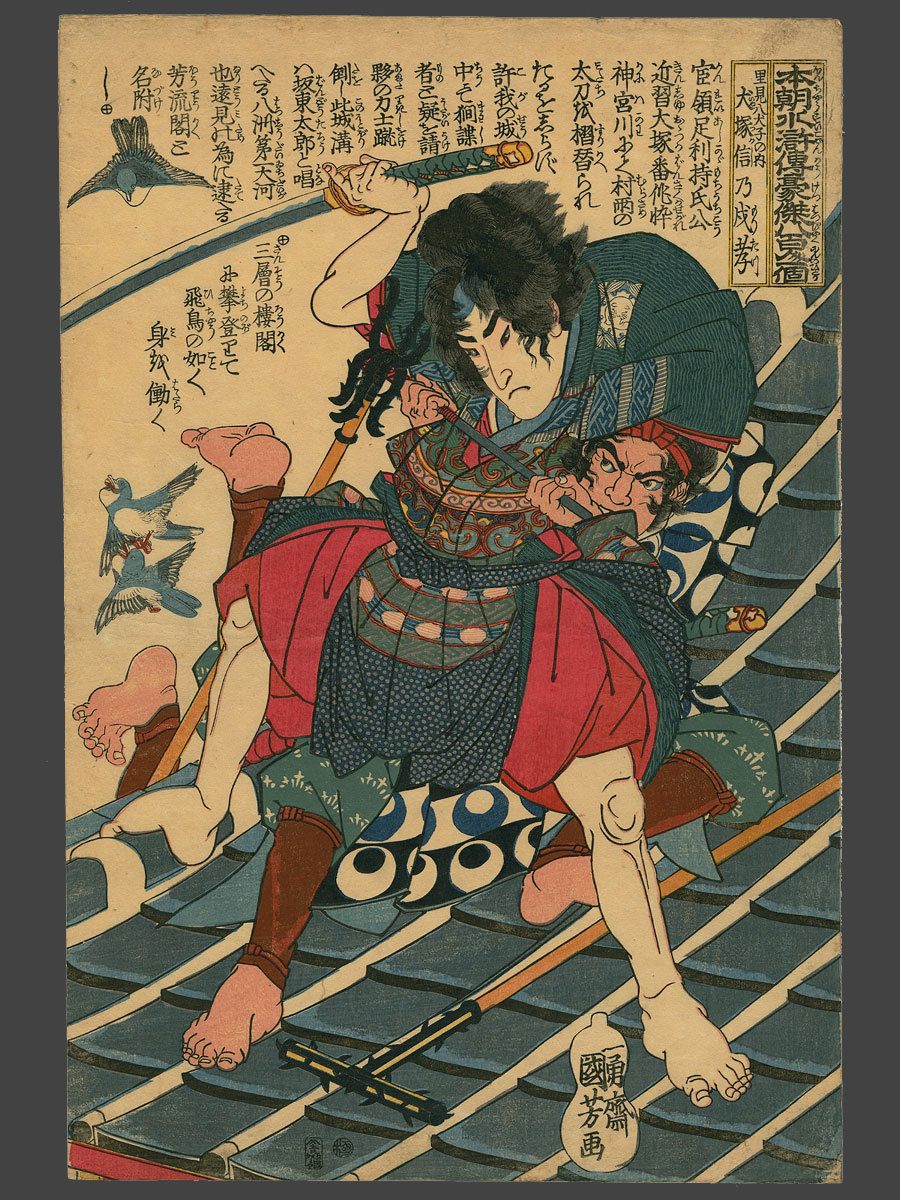
Inuzuka Shino Moritaka Resisting Arrest on the Horyukaku Roof
Woodblock print
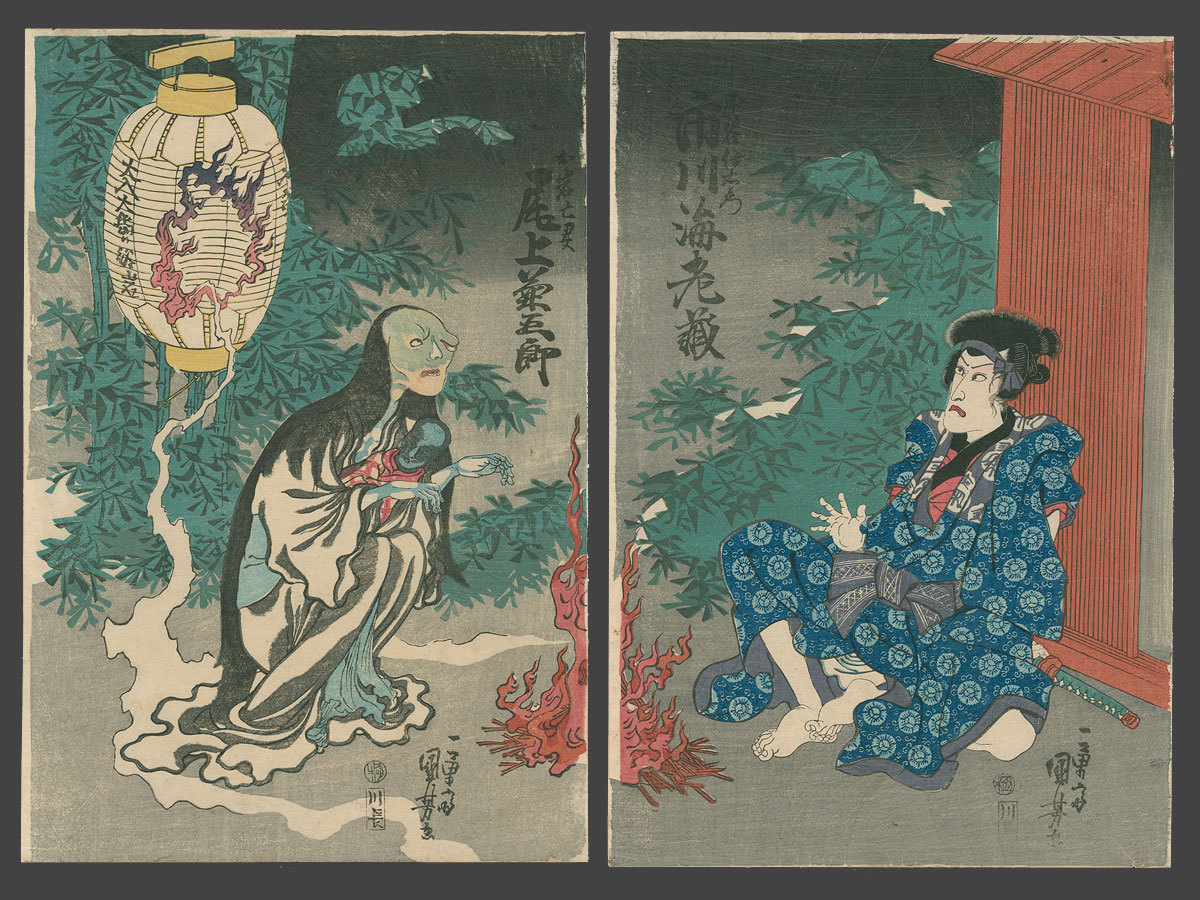
(Tokaido Yotsuya Kaidan)
Woodblock print
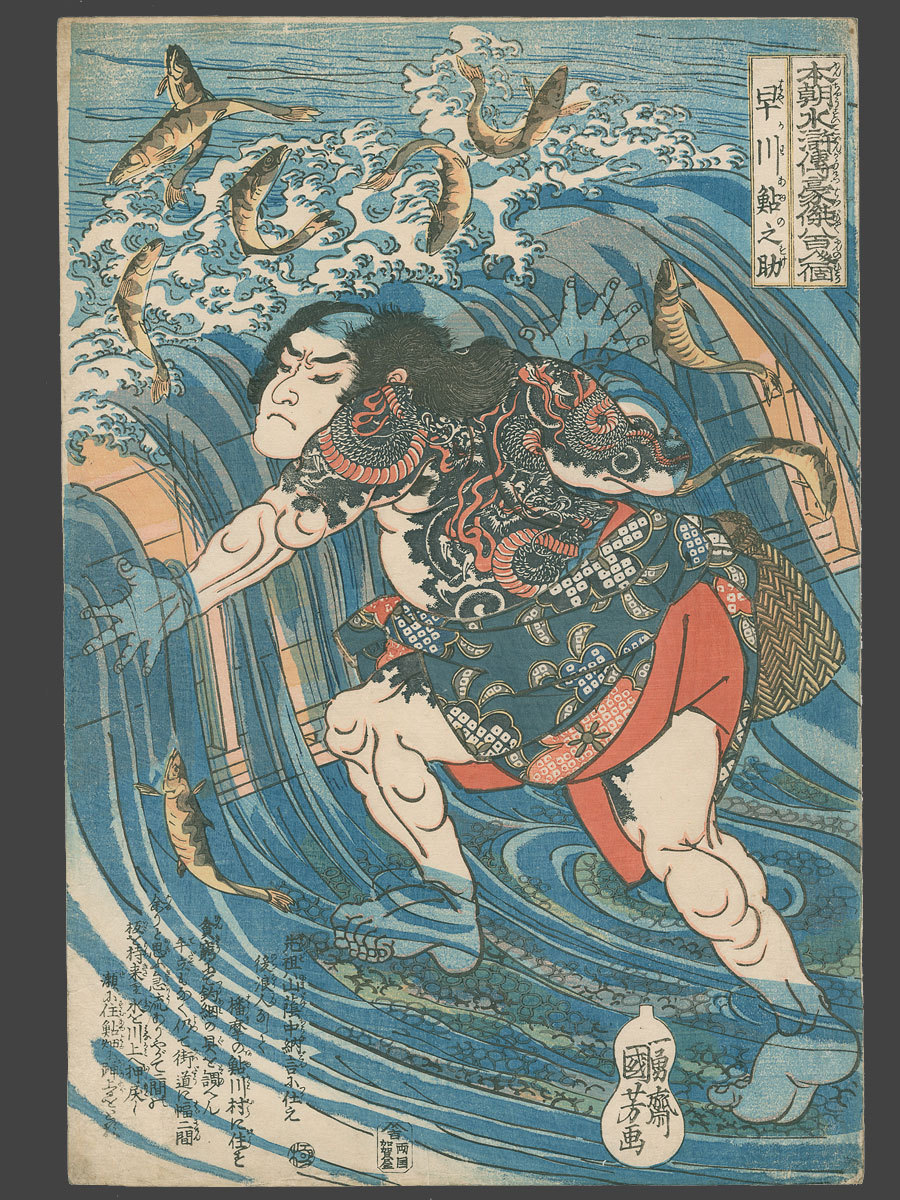
Hayakawa Ayunosuke Damming the Ayukawa River in Order to Strand Fish in the Open Fields
Woodblock print
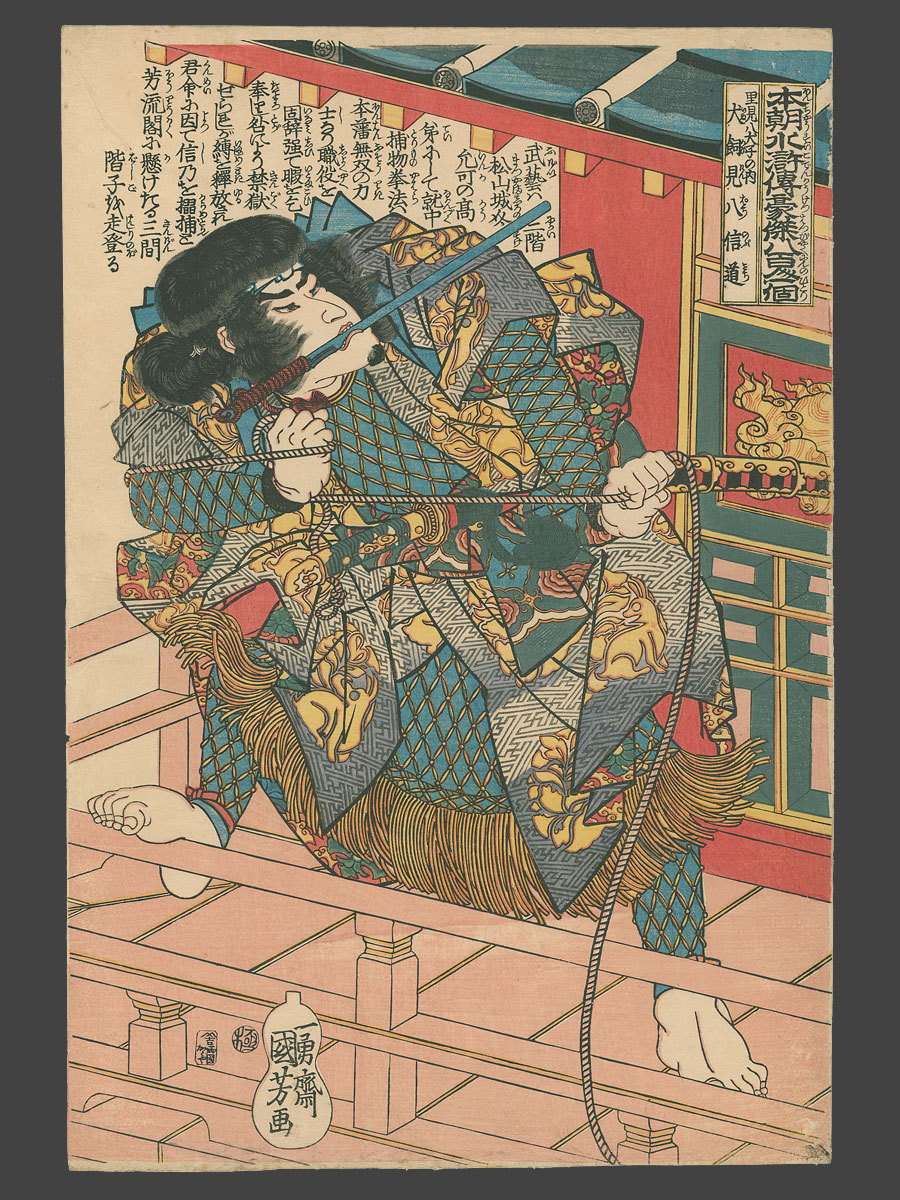
Inuka Kempachi Nobumichi Directing the Attempted Arrest of Inuzuka Shino Moritaka
Woodblock print
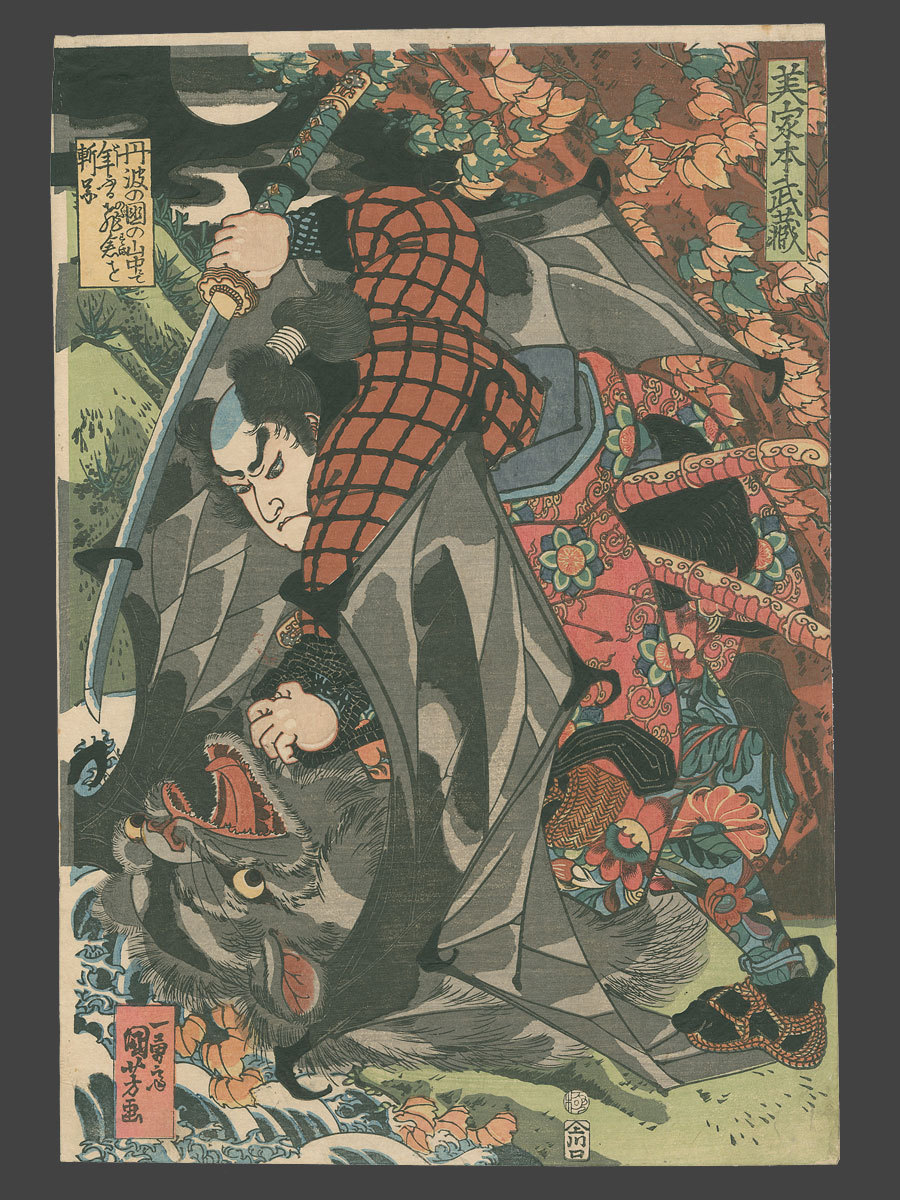
Miyamoto Musashi Killing a Monster Bat in the Mountains of Tambo Province
Woodblock print
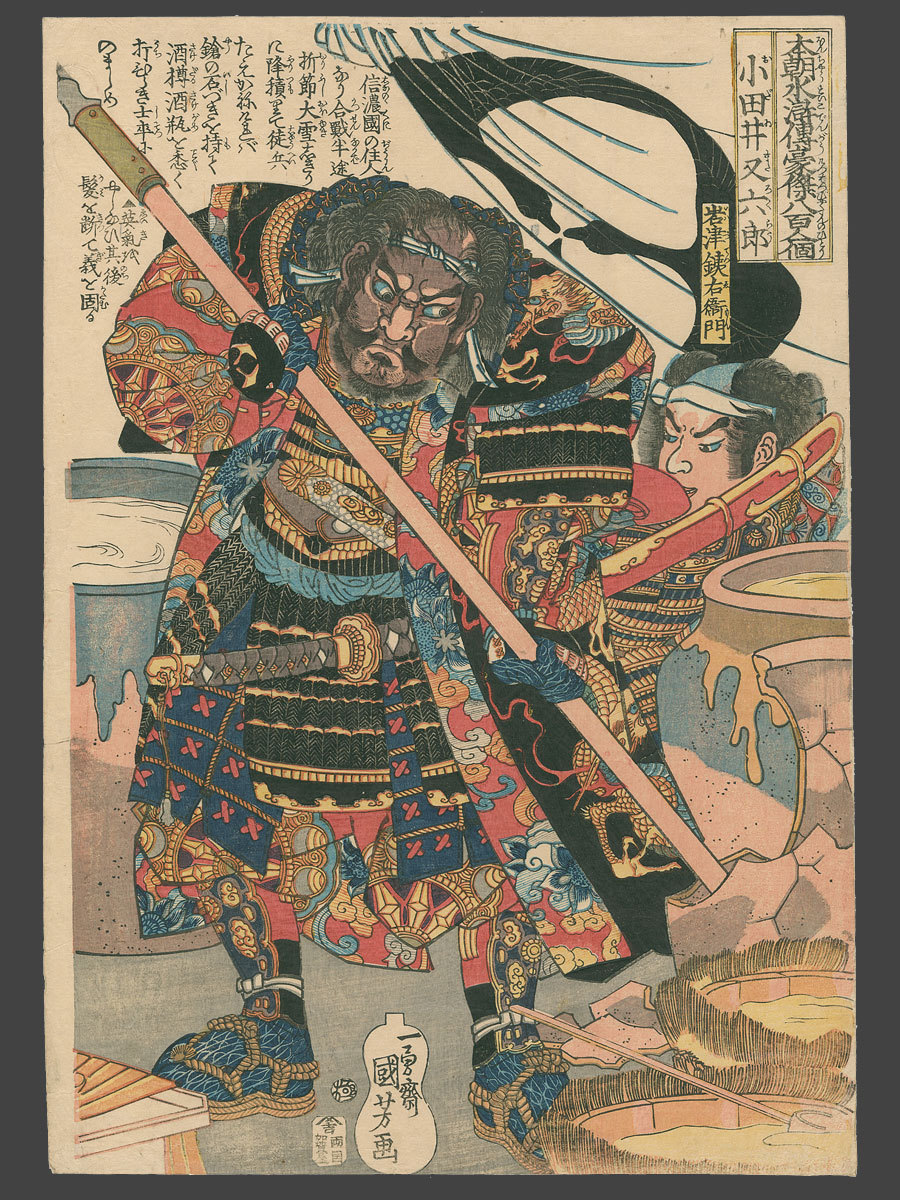
Odai Matarokuro (Yorisada) Breaking a Huge Sake Jar with his Spear While Iwazu Tetsuemon (Shigenobu) Drinks
Woodblock print
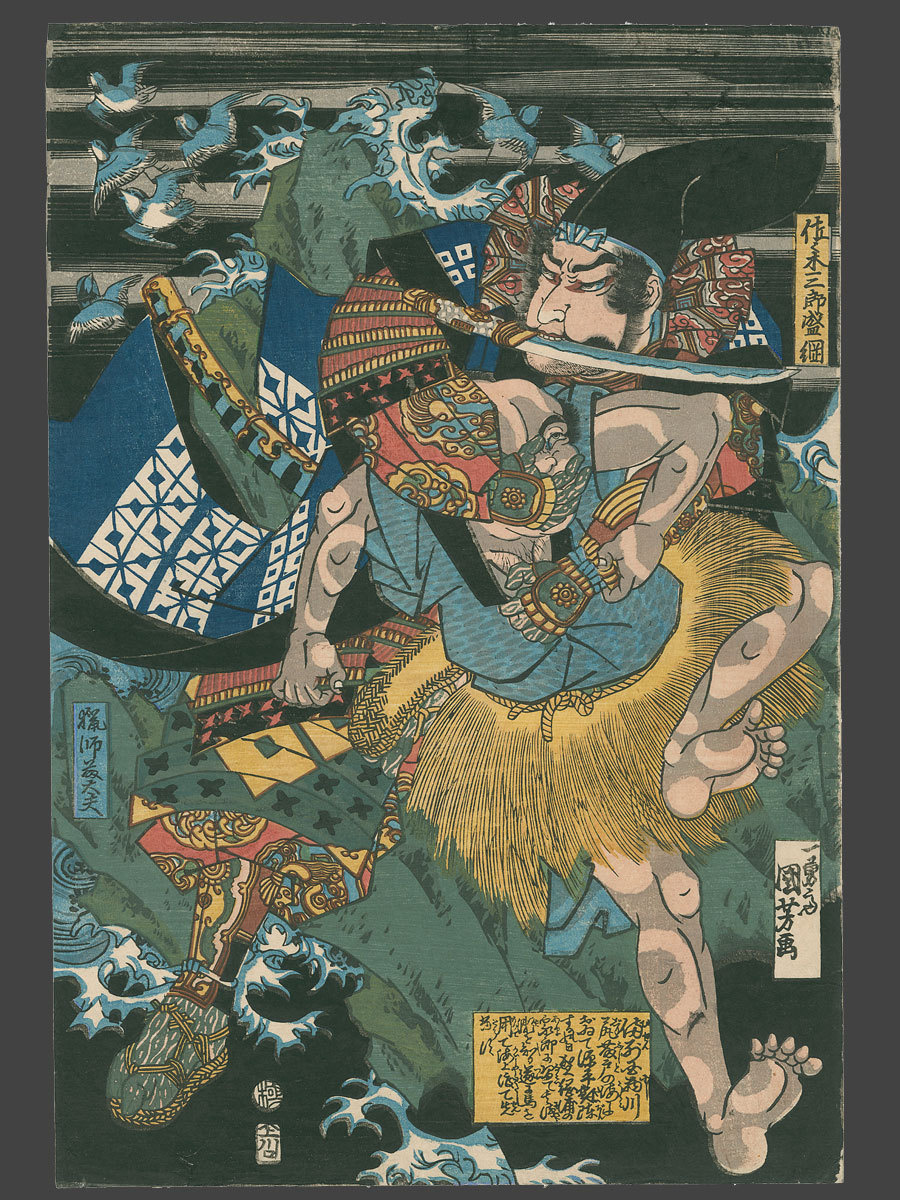
Moritsuna Holding a Knife in his Mouth and Strangling the Fisherman Todayu
Woodblock print
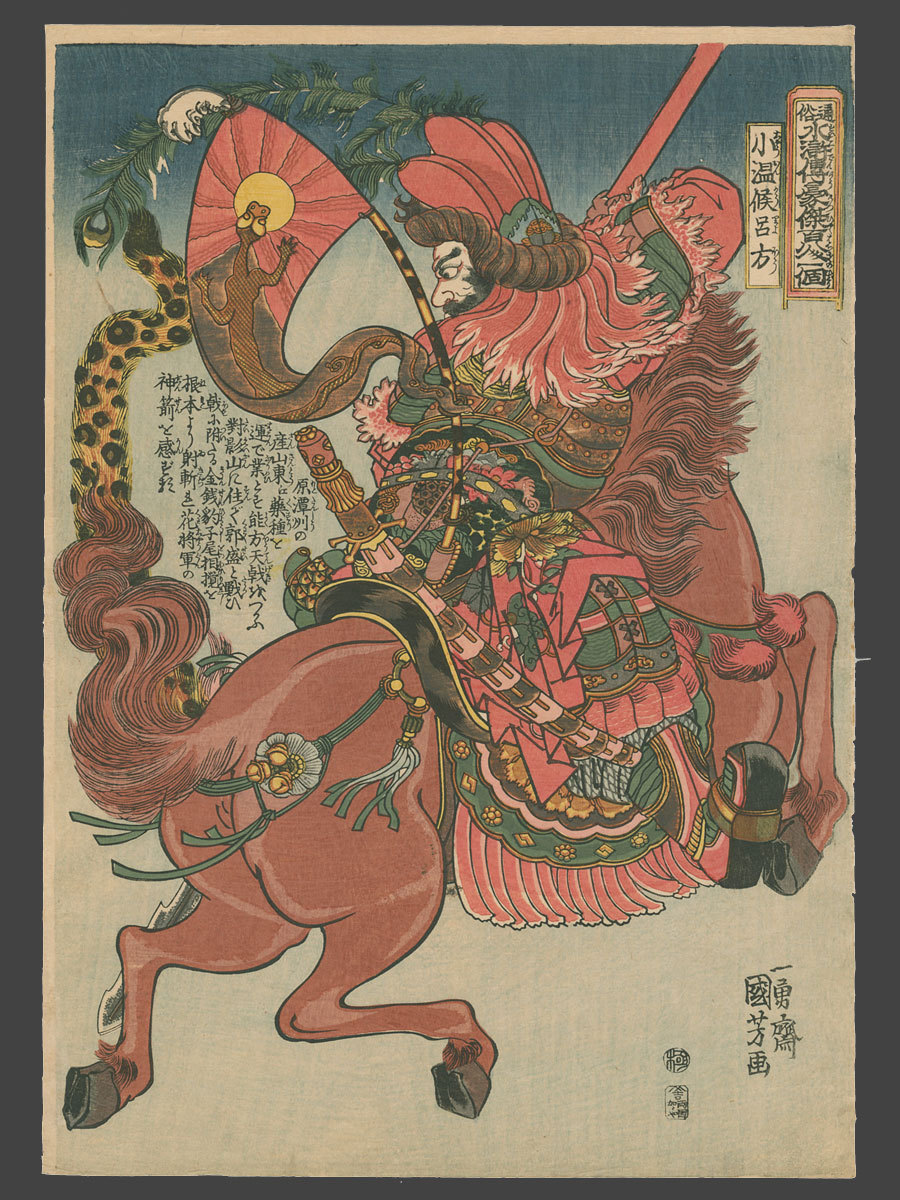
Sho-Onko Ryoho, Armored and armed with a Long Spear
Woodblock print
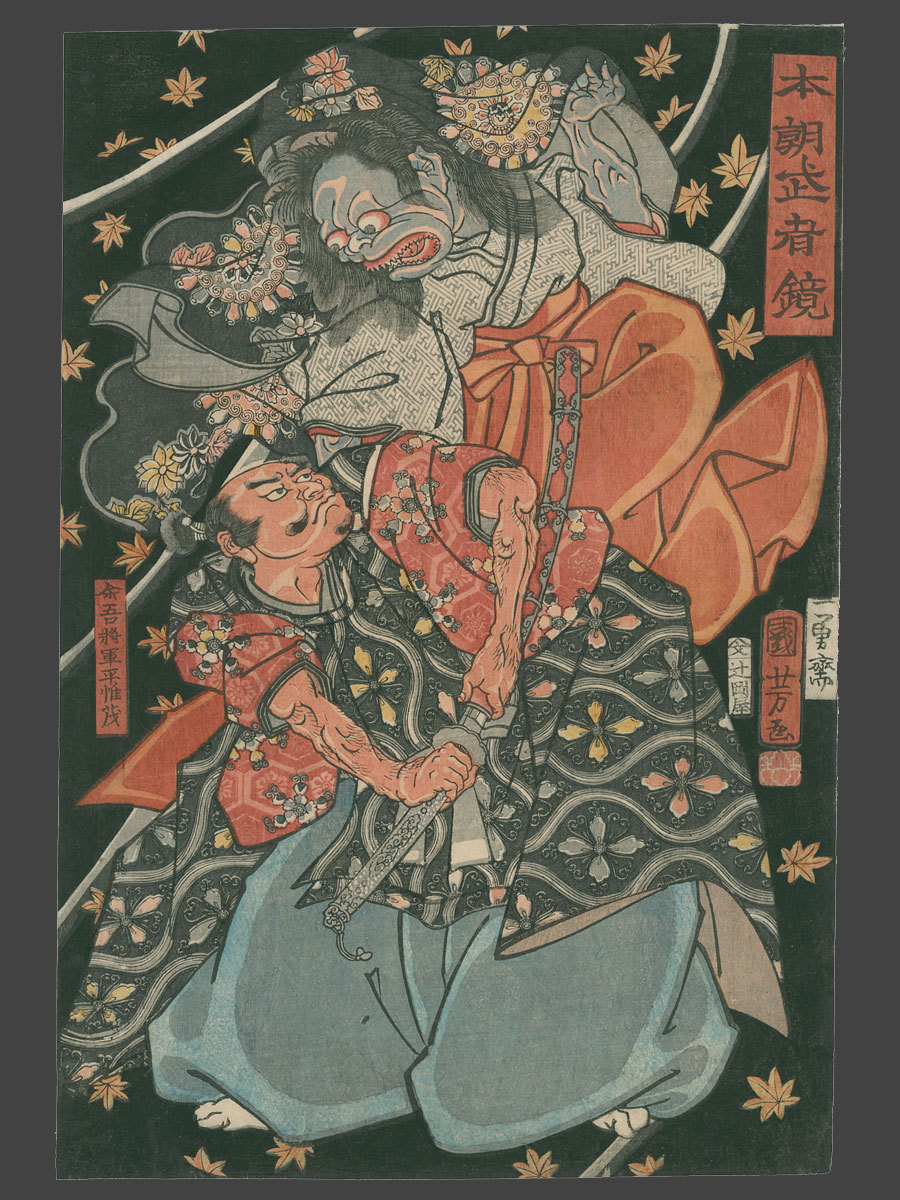
Taira Koremochi (here called Koreshige) Slaying the Female Demon Kijo
Woodblock print
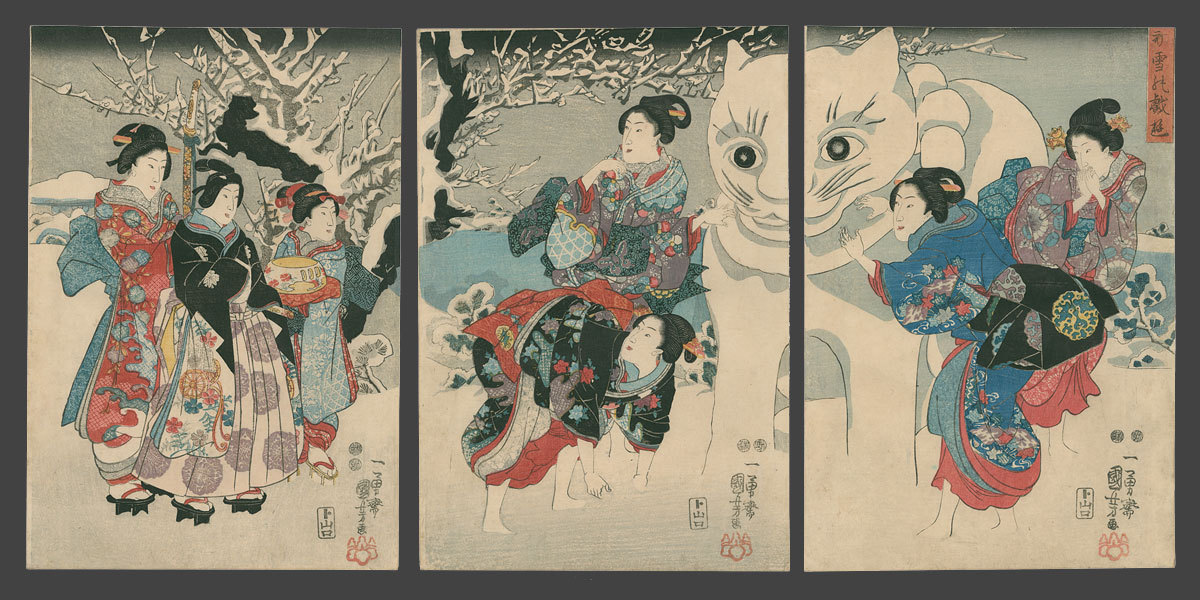
Giant Snow Cat
Woodblock print
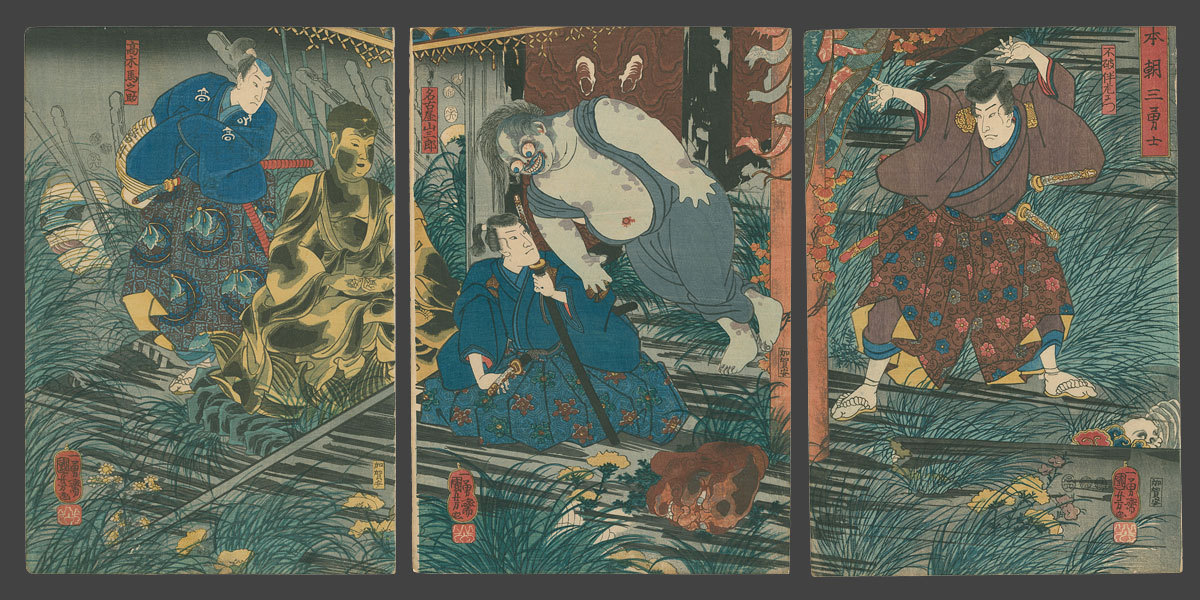
Three Brave Warriors of Our Country
Woodblock print
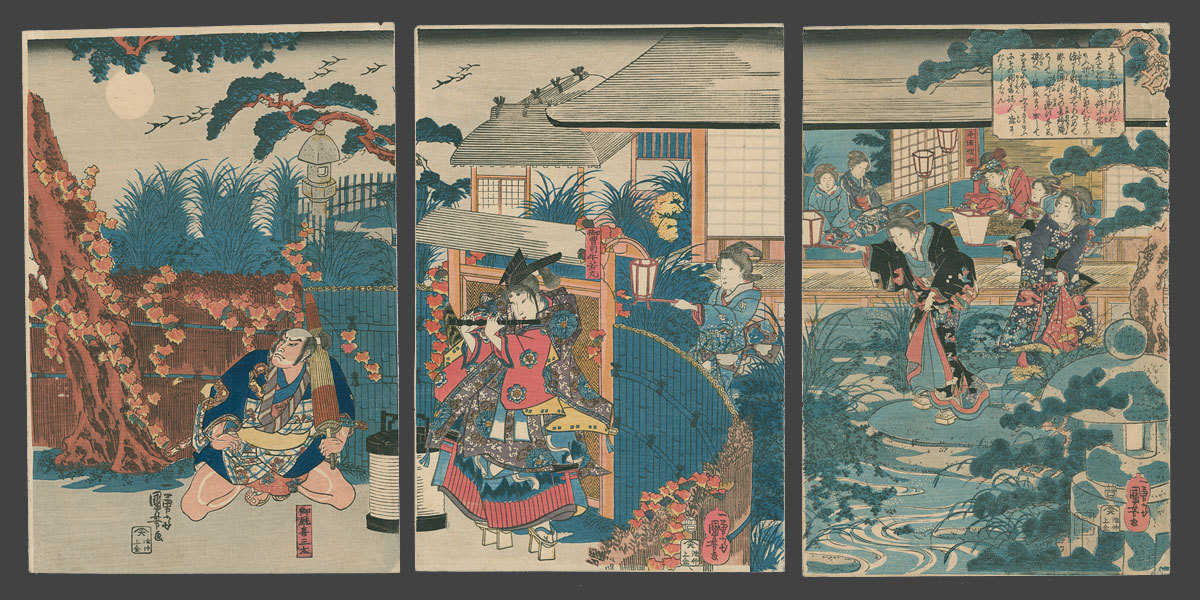
Ushiwakamaru (Yoshitsune as a Boy) Serenading Loruri-hime with his Flute as She accompanies Him inside on Her Koto
Woodblock print
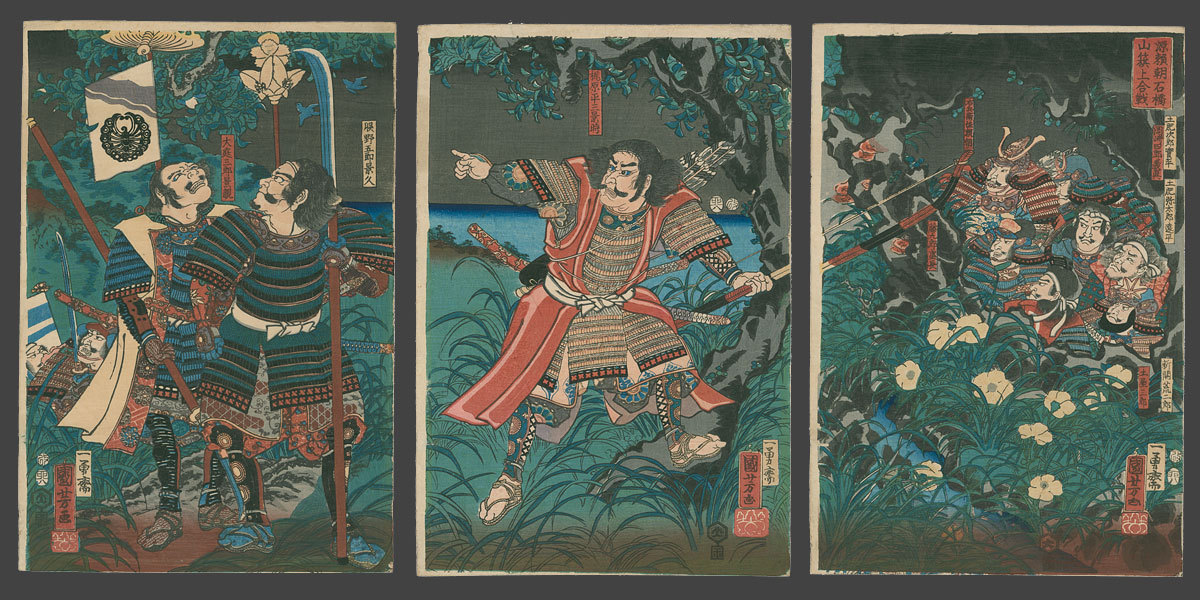
After the Battle of Ishibashiyama (1180), Minamoto no Yoritomo and his Men Hide While Kagotoki Diverts Their Pursuers.
Woodblock print
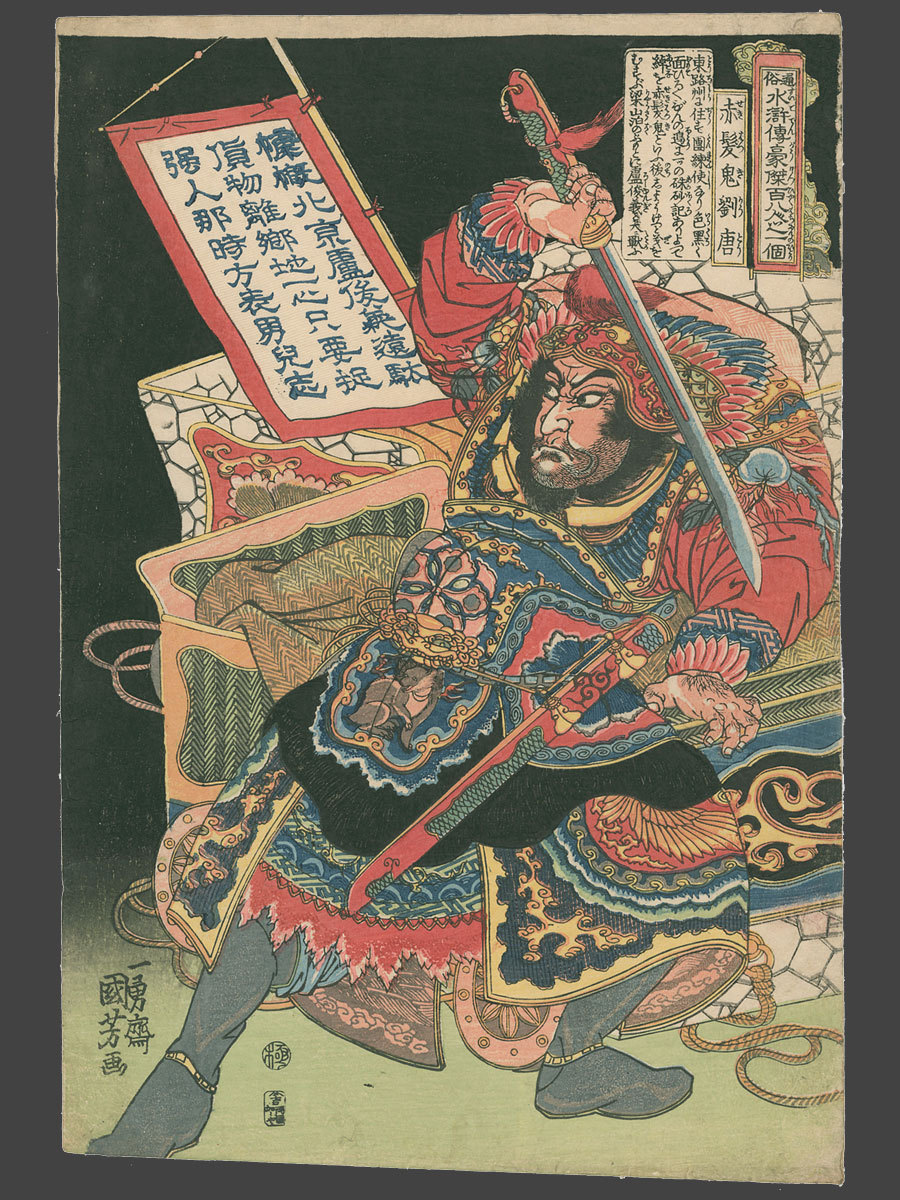
Sekkibakki Ryuto
Woodblock print
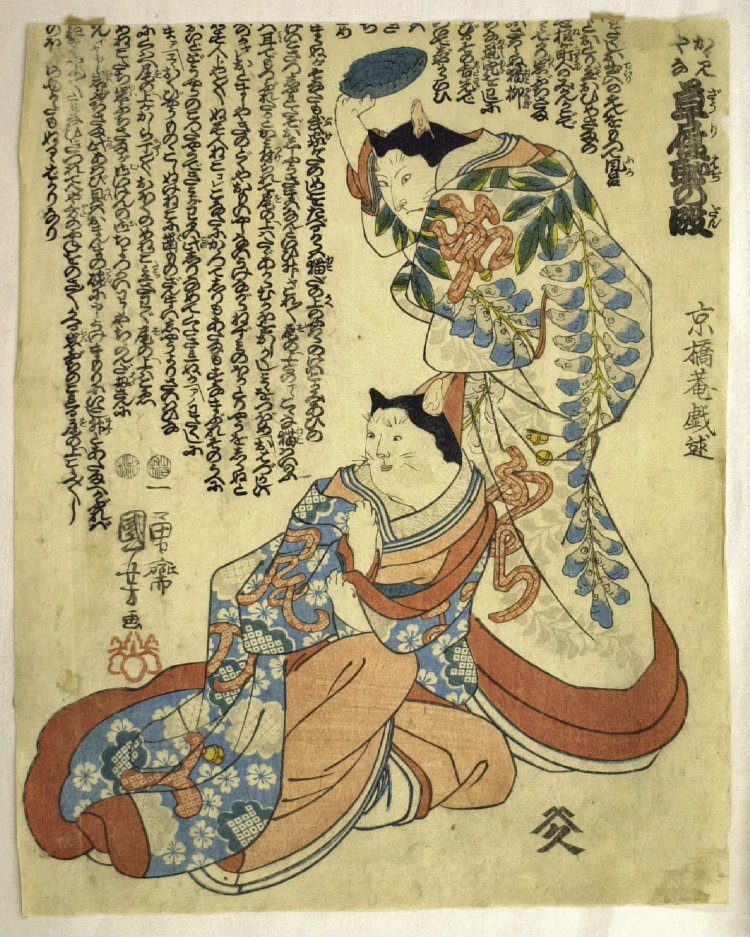
(Kagamiyama) zori-hachi no dan
Woodblock print
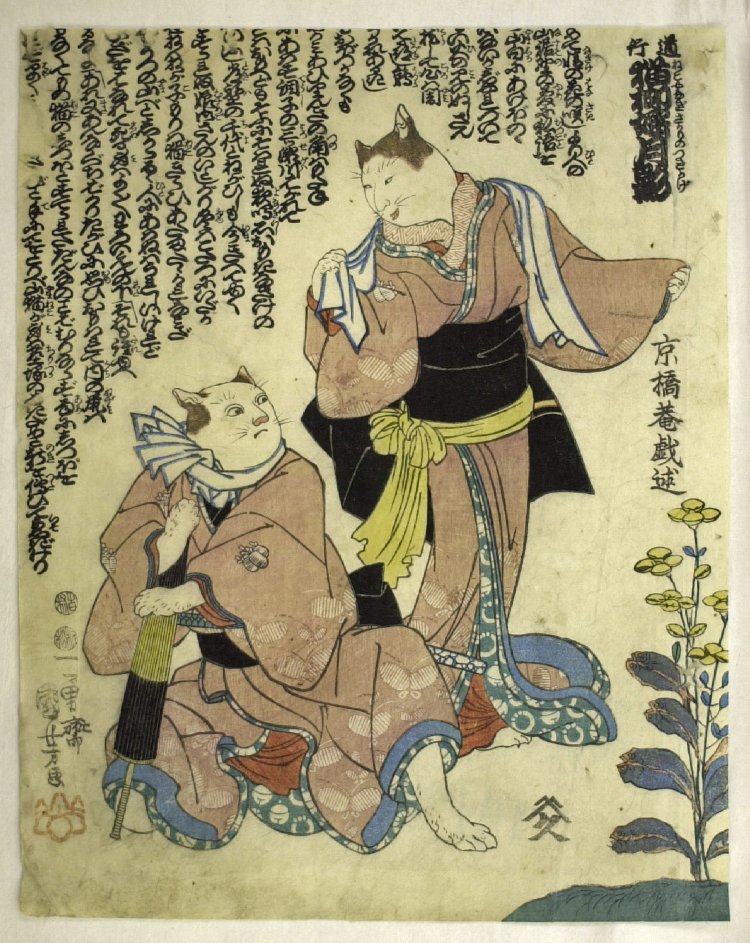
(Michiyuki) nekoyanagi sakari no tsukikage
Woodblock print
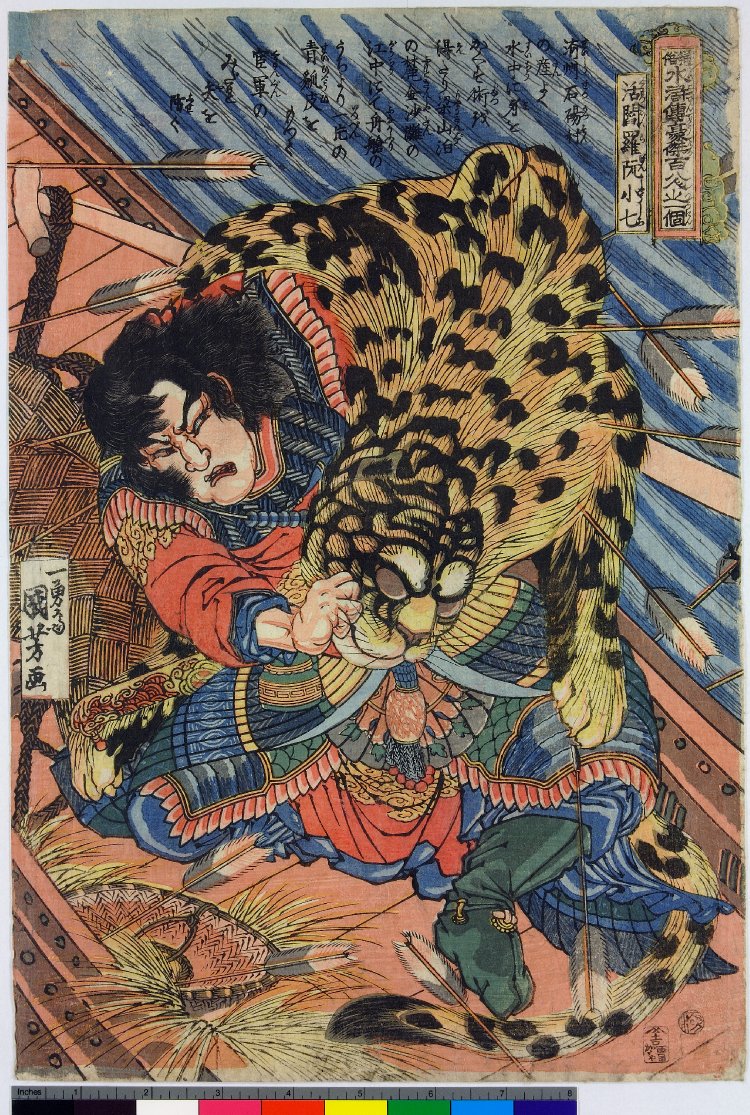
Tsuzoku Suikoden Goketsu Hyakuhachi-nin no Hitori
Woodblock print
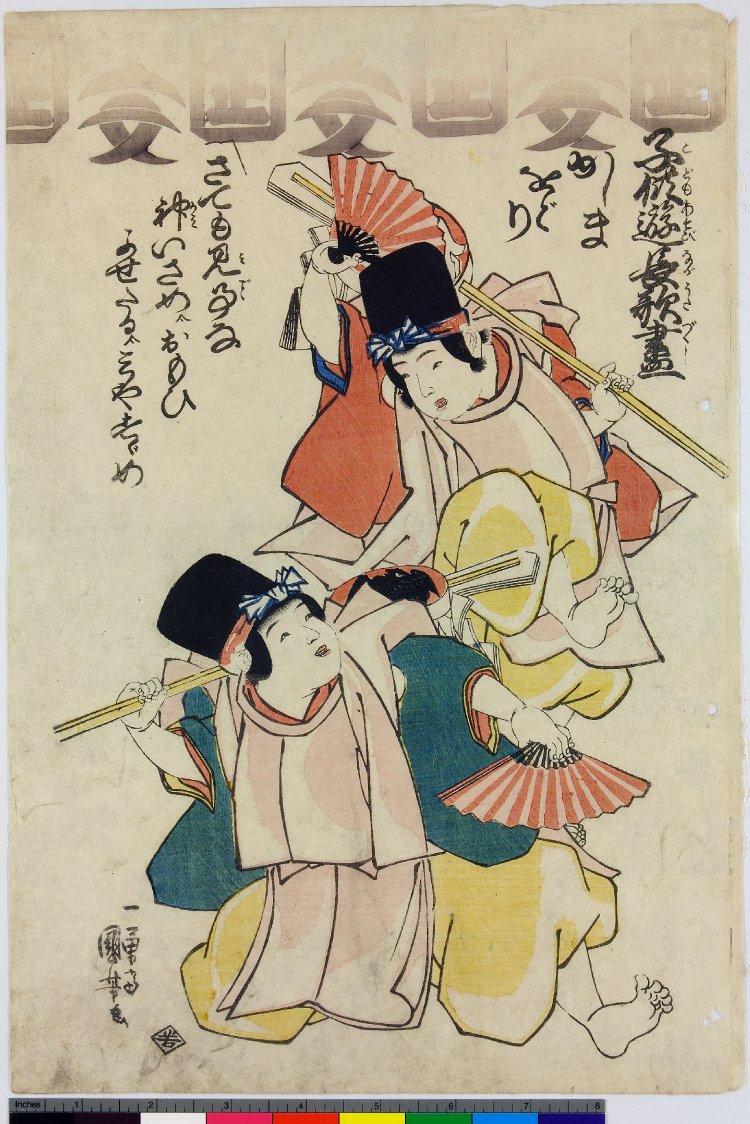
Kodomo asobi nagauta zukushi / Kashima odori
Woodblock print