Biography
Hiratsuka Un'ichi (1895-1997) was one of the founding figures of the sosaku-hanga (creative print) movement in Japan. Born in Matsue, Shimane Prefecture, he studied Western-style painting before turning to printmaking under the influence of Yamamoto Kanae, whose 1904 print "Fisherman" is considered the birth of sosaku-hanga. Hiratsuka became a tireless advocate for the principle that artists should design, carve, and print their own works, in contrast to the collaborative ukiyo-e and shin-hanga traditions.
Throughout his extraordinarily long career spanning over eight decades, Hiratsuka created more than 3,000 prints, predominantly bold black-and-white woodcuts characterized by strong contrasts and dynamic compositions. His subjects ranged from Buddhist temples and Shinto shrines to modern cityscapes, rendered with a distinctively powerful cutting technique. He was instrumental in organizing the Nihon Sosaku-Hanga Kyokai (Japan Creative Print Association) in 1918 and mentored generations of younger printmakers including Takeji Asano and Tomikichiro Tokuriki.
In 1962, Hiratsuka moved to Washington, D.C., where he continued to create prints and teach at several American universities until his return to Japan. He received numerous honors including the Order of the Sacred Treasure and was designated a Living National Treasure candidate. His longevity — he lived to 102 — made him a living link between the pre-war origins of sosaku-hanga and its postwar international recognition.
Key Facts
- Active Period
- 1895–1997
- Nationality
- 🇯🇵Japan
- Movement
- Sōsaku-hanga
- Works Indexed
- 239
Frequently Asked Questions
What is Hiratsuka Un'ichi known for?
Hiratsuka Un'ichi (1895-1997) was one of the founding figures of the sosaku-hanga (creative print) movement in Japan. Born in Matsue, Shimane Prefecture, he studied Western-style painting before turning to printmaking under the influence of Yamamoto Kanae, whose 1904 print "Fisherman" is considered the birth of sosaku-hanga. Hiratsuka became a tireless advocate for the principle that artists should design, carve, and print their own works, in contrast to the collaborative ukiyo-e and shin-hanga traditions.
When was Hiratsuka Un'ichi active?
Hiratsuka Un'ichi was active from 1895 to 1997. They were associated with the Sōsaku-hanga movement.
What artistic movements influenced Hiratsuka Un'ichi?
Hiratsuka Un'ichi's work was shaped by the Sōsaku-hanga tradition in Japanese woodblock printmaking. Sōsaku-hanga: The "creative prints" movement (c.
Where can I see Hiratsuka Un'ichi's original prints?
Original prints by Hiratsuka Un'ichi can be found in collections including Art Institute of Chicago.
Woodblock Prints by Hiratsuka Un'ichi (239)

Plant
20th century
Woodcut print

Amakusa Bay, Kyushu
20th century
Woodblock print

Stone Buddha "Vishnu" Yungkang Cave Temple, Mongolia
1949
Woodblock print

Thistle and Leaves
20th century
Woodcut print

House and Trees
20th century
Woodblock print

Parrot
20th century
Woodcut print

Mount Fuji in Early Morning from Lake Hakone
20th century
Woodblock print

Fruit in Wine Basket
20th century
Woodcut print

Bunraku Doll Yaeya Oshichi
20th century
Woodblock print

Hairdresser
1913
Woodcut print

Roof Tile
20th century
Rubbing, ink on paper

Ichinotani
20th century
Woodblock print

Red Pot from Turkey
1919
Woodblock print

Yellow Jonquil
1919
Color woodblock print

Adam and Eve
1922
Woodcut print

Isumo Mountains
1922
Woodcut print

Plum Blossom and Small Bird
1922
Woodcut print

Landscape Scenes in Ikejiri Setagaya
1922
Woodcut print

View of Nobuto in Chiba Prefecture
1922
Woodblock print

Beach Outside of Hamlet
1922
Woodcut print

Carnation
1923
Woodcut print

Five Pine Trees in Seki (In the Fog) (Seki no gohonmatsu)
1923
Woodcut print

Matsue Tenjin River (Matsue Tenjingawa)
1923
Woodcut print

Landscape in Sagami
1924
Woodblock print

Nude (Sitting on a Rock)
1925
Color woodblock print

Madam Lillian
1925
Woodcut print

The Kaminari Gate, Asakusa, from the series Scenes After the Tokyo Earthquake
1925
Color woodblock print

St. Luke’s Hospital in Tsukiji,from the series Scenes After theTokyo Earthquake
1925
Color woodblock print

Karasaki from Eight Views of Omi
1927
Color woodblock print

Ocean View of Ohara
1927
Color woodblock print

Okutama in Autumn (Okutama shukei)
1927
Color woodblock print

Kagogahana, near Matsue, Shimane Prefecture
1927
Color woodblock print

Peony
1927
Woodcut print

Lake Kizaki in Shinshu (Modern) (Shinshu kizakiko)
1927
Woodcut print

Lake Aoki
1927
Woodcut print

Kingfisher (Kawasemi)
1928
Woodcut print

Bird - Small Thing during the Day
1928
Woodcut print

Hiroko (Hiratsuka's oldest daughter)
1928
Woodcut print

Leaping Deer
1928
Woodblock print

Small Bird from a Fairy Tale (Dowa no kotori)
1928
Woodblock print

Sakurada-mon Gate (Eight Imperial Moat series)
1929
Color woodblock print

Bird in Plum Tree (Year of the Snake)
1929
Woodcut print

Ueno Park
1929
Color woodblock print

Young Woman in Blue Kimono
1930
Color woodblock print

Wild Keshi
1930
Woodcut print

Lace
1930
Woodcut print

Kawaguchi Lake Shore in Koshu District (Koshu Kawaguchi kohan)
1930
Woodblock print

Woodpecker
1930
Woodcut print

Shinobazu Pond in Snow
1930
Color woodblock print

Kuromon Gate, from the series "One Hundred Views of New Tokyo (Shin Tokyo hyakkei)"
1930
Color woodblock print

New Year's Greeting
1931
Woodcut print

View of Azuchi
1931
Color woodblock print
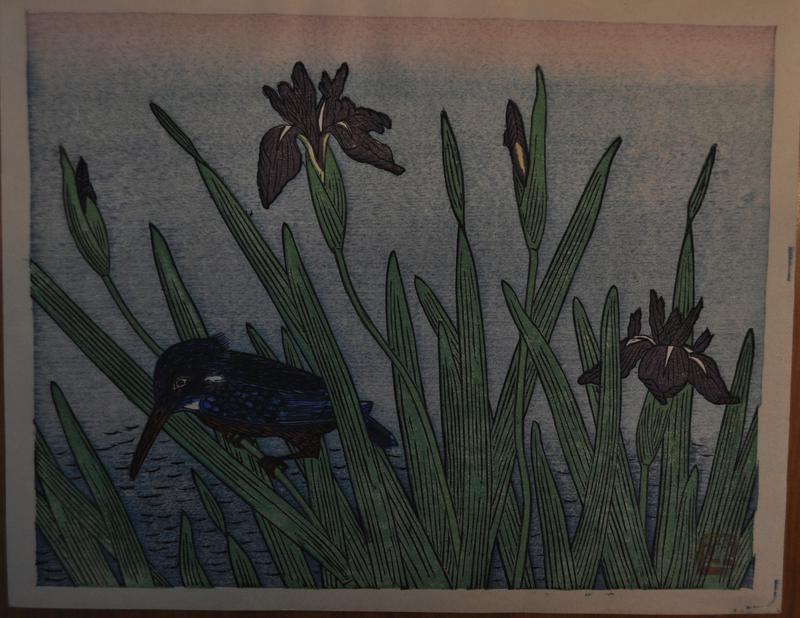
Kingfisher and Irises
1927
Woodblock print, ink and color on paper

Mountains of Izumo, Shimane Prefecture
1932
Color woodblock print

Hiratsuka Shrine, Tokyo
1933
Woodblock print

Saw Mill near Mountains
1933
Woodblock print

Bird on Desk (Kijo kotori)
1928
Woodcut print
Rain on the Tama River
1929
Woodblock print, ink and color on paper

Akasaka Palace, from the series Recollections of Tokyo
1929
Color woodblock print

Great Eastern Gate, Seoul, Korea
1934
Woodblock print