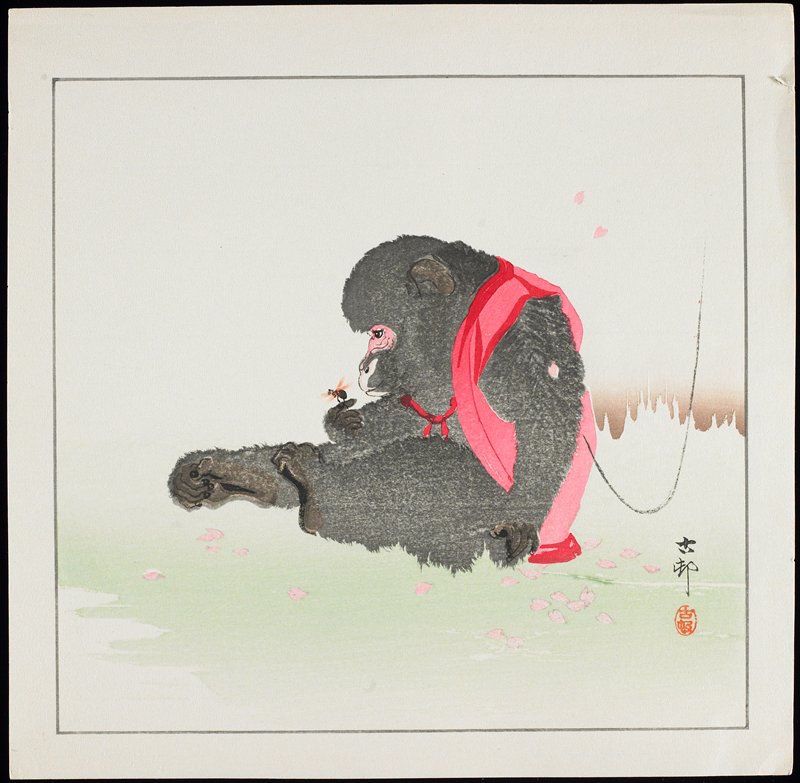
Biography
Ohara Koson, also known as Ohara Shoson and originally named Ohara Matao, was one of the most accomplished and prolific kacho-e (bird-and-flower print) artists of the twentieth century. Born in 1877 in Kanazawa, Ishikawa Prefecture, Japan, Koson would go on to create hundreds of exquisite woodblock prints depicting birds, animals, flowers, and insects, earning him an enduring reputation as the foremost master of this traditional Japanese genre in the modern era. His prints are celebrated for their delicate beauty, naturalistic observation, and masterful use of the woodblock medium to capture fleeting moments in the natural world.
Koson was born into a period of tremendous cultural transformation in Japan. The Meiji government had embarked on a program of rapid modernization and Westernization, and traditional Japanese arts faced an uncertain future. As a young man, Koson studied painting under Suzuki Kason, a respected painter of the Maruyama-Shijo school in Kyoto, which emphasized realistic depiction of nature based on direct observation. This training in naturalistic painting would profoundly shape Koson's artistic vision and set him apart from artists working in more stylized traditions. Under Kason's guidance, Koson developed the keen eye for animal behavior and botanical detail that would become the hallmark of his woodblock prints.
Koson began his printmaking career around 1900, initially working under the art name Koson. His early prints were published by various firms, including Akiyama Buemon and Matsuki Heikichi, and were primarily aimed at the Western export market. These early works already demonstrated his remarkable ability to capture the essence of birds and animals with economy and grace. By the first decade of the twentieth century, Koson had established himself as a leading designer of kacho-e prints, producing images that combined the decorative elegance of traditional Japanese art with a naturalism informed by his Maruyama-Shijo training.
Around 1912, Koson changed his art name to Shoson and entered into what many consider the most productive and artistically significant phase of his career. During this period, he began working with the publisher Watanabe Shozaburo, the visionary founder of the shin-hanga (new prints) movement. Under Watanabe's direction, Koson's designs were carved and printed by highly skilled craftsmen, resulting in prints of exceptional technical quality. The collaboration with Watanabe proved enormously fruitful, producing some of the most beloved images in the entire shin-hanga canon. Watanabe recognized the commercial potential of Koson's appealing animal subjects, which found eager buyers among both Japanese and Western collectors.
The prints produced during the Watanabe period are characterized by their refined technique and atmospheric sensitivity. Works such as "Eagle Under Rain," depicting a powerful eagle perched on a branch against driving rain rendered in delicate gray washes, demonstrate Koson's ability to convey both the physical presence of the bird and the mood of the natural setting. "Crow on a Cherry Branch" captures a solitary crow amid cascading cherry blossoms, a subject that perfectly marries the decorative beauty of traditional kacho-e with the wistful, transient quality central to Japanese aesthetics. "Two Cranes" presents a pair of elegant red-crowned cranes in a composition of austere beauty, while "Heron in Snow" depicts a white heron standing motionless in a snow-covered landscape, the bird's form almost dissolving into the wintry whiteness around it.
Koson's range of subjects was remarkably broad. He depicted eagles, crows, sparrows, swallows, herons, cranes, roosters, ducks, plovers, kingfishers, owls, and dozens of other bird species, as well as fish, frogs, rabbits, monkeys, cats, and insects. His botanical subjects included cherry blossoms, irises, lotuses, chrysanthemums, peonies, wisteria, and bamboo. Many prints combined animal and plant subjects in the kacho-e tradition, creating compositions that evoked specific seasons and moods. A leaping carp amid swirling waters suggests summer vitality; a solitary crow on a snow-laden pine branch evokes winter stillness; blossoming cherry branches with fluttering sparrows announce the arrival of spring.
Technically, Koson's prints demonstrate the full range of possibilities offered by the woodblock medium. He employed bokashi (graduated color printing) extensively to create atmospheric effects — misty backgrounds, luminous skies, and the soft glow of moonlight. His use of embossing (karazuri) added subtle three-dimensional texture to feathers, petals, and other surfaces. The printing of his designs required exceptional skill from the craftsmen involved, as many compositions depended on precise registration and delicate color gradations that allowed no margin for error. The best impressions of Koson's prints are marvels of the printer's art, with colors that seem to glow from within the handmade washi paper.
The Great Kanto Earthquake of 1923 destroyed many of Watanabe's woodblocks, and some of Koson's earlier designs were lost. However, Watanabe rebuilt his publishing operation and continued to issue new designs by Koson as well as reprints of popular earlier subjects. The commercial success of Koson's prints, particularly in Western markets, ensured a steady demand for his work throughout the 1920s and 1930s.
Around 1926, Koson adopted yet another art name, reverting to a modified version of his original name, now reading as Koson but written with different characters. The reasons for this change are not entirely clear, but it may have been related to changes in his publishing arrangements or personal artistic evolution. Despite the name changes, the quality and character of his work remained remarkably consistent throughout his career.
In addition to his work with Watanabe, Koson also produced prints for other publishers and created paintings in the nihonga (Japanese-style painting) tradition. His paintings, executed in mineral pigments and ink on silk, demonstrate the same keen observation and refined technique visible in his prints, though they are far less well known to Western collectors.
Koson continued working until near the end of his life, producing prints well into the 1930s and possibly into the early 1940s. He died in 1945, the final year of World War II, a conflict that had devastated Japan's cultural infrastructure and brought the shin-hanga publishing industry to a virtual halt. By the time of his death, Koson had produced an estimated five hundred or more print designs, making him one of the most prolific Japanese woodblock print artists of the twentieth century.
The legacy of Ohara Koson rests on his achievement in bringing the kacho-e tradition into the modern era while maintaining the highest standards of artistic quality and technical craftsmanship. His prints have become some of the most widely reproduced and collected Japanese woodblock prints in the world, adorning museum collections, private collections, and countless reproductions. Major holdings of his work can be found at the Museum of Fine Arts Boston, the Rijksmuseum in Amsterdam, the British Museum, the Art Institute of Chicago, and the Minneapolis Institute of Art, among many other institutions. His images of birds and flowers have become iconic representations of the beauty and refinement of Japanese art, and his influence on subsequent generations of wildlife artists and printmakers has been profound and enduring.
Key Facts
- Active Period
- 1877–1945
- Nationality
- 🇯🇵Japan
- Movement
- Shin-hanga
- Works Indexed
- 94
Frequently Asked Questions
What is Ohara Koson known for?
Ohara Koson, also known as Ohara Shoson and originally named Ohara Matao, was one of the most accomplished and prolific kacho-e (bird-and-flower print) artists of the twentieth century. Born in 1877 in Kanazawa, Ishikawa Prefecture, Japan, Koson would go on to create hundreds of exquisite woodblock prints depicting birds, animals, flowers, and insects, earning him an enduring reputation as the foremost master of this traditional Japanese genre in the modern era. His prints are celebrated for their delicate beauty, naturalistic observation, and masterful use of the woodblock medium to capture fleeting moments in the natural world.
When was Ohara Koson active?
Ohara Koson was active from 1877 to 1945. They were associated with the Shin-hanga movement.
What artistic movements influenced Ohara Koson?
Ohara Koson's work was shaped by the Shin-hanga tradition in Japanese woodblock printmaking. Shin-hanga: The "new prints" movement (c.
What subjects did Ohara Koson depict?
Ohara Koson's prints frequently feature birds & flowers, landscapes, moonlight, rivers & lakes, portraits, night scenes.
Where can I see Ohara Koson's original prints?
Original prints by Ohara Koson can be found in collections including Art Institute of Chicago, Cleveland Museum of Art, Harvard Art Museums, Art Gallery of Greater Victoria.
How much do Ohara Koson prints cost?
Ohara Koson is the undisputed master of kacho-e (bird-and-flower prints) in the shin-hanga era, and his prints are among the most widely collected Japanese woodblock prints today. With hundreds of designs spanning a career from 1900 to the 1940s, his market offers options at every price level, from $200 for common posthumous editions to $10,000+ for rare early impressions. The edition hierarchy is complex because Koson worked with multiple publishers across his career. Early Watanabe editions (pre-earthquake, before 1923): $2,000–$10,000+. Later Watanabe lifetime editions: $800–$3,000. Editions from other publishers (Kawaguchi, Matsuki Heikichi, Daikokuya): $500–$2,500 depending on rarity. Posthumous Watanabe editions: $200–$800. Koson also published under the names Shoson and Hoson at different career stages — prints signed "Koson" are generally earlier and more valuable than those signed "Shoson" or "Hoson," though there are exceptions. Look for the publisher seal to help identify the edition era. The most popular subjects among collectors are his owl prints, eagle designs, and compositions featuring herons or cranes in atmospheric settings. Prints depicting birds in rain or snow scenes are especially prized. Koson's market has seen exceptional growth over the past decade, driven partly by his crossover appeal to both Japanese art collectors and bird/nature enthusiasts worldwide. Condition is particularly important for kacho-e prints, as the subtle color gradations that define Koson's work are easily damaged by light exposure and moisture.
External Resources
Woodblock Prints by Ohara Koson (94)
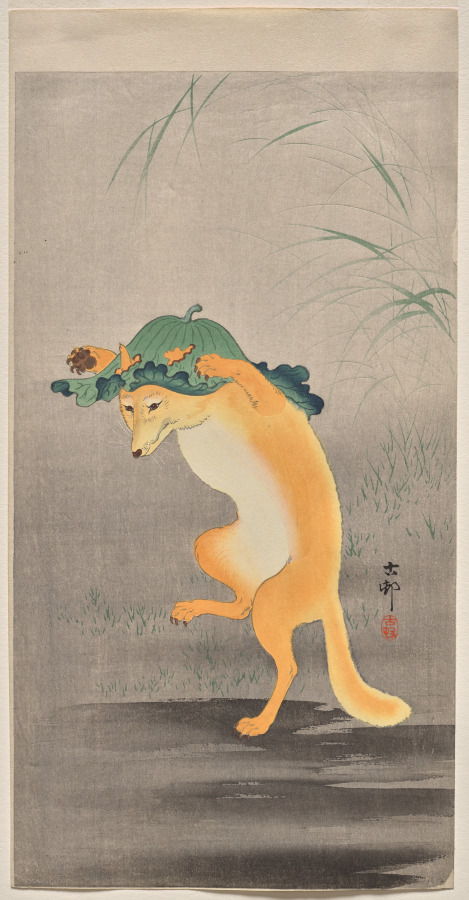
Dancing Fox
1900–1910s
Color woodblock print
Russo-Japanese War (Scene of Battle at Jiuliancheng)
1904
Woodblock print
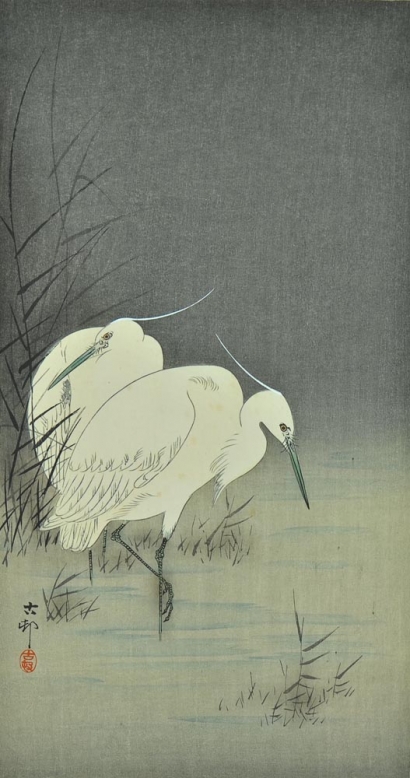
Two Egrets at Night
c.1910
Woodblock print
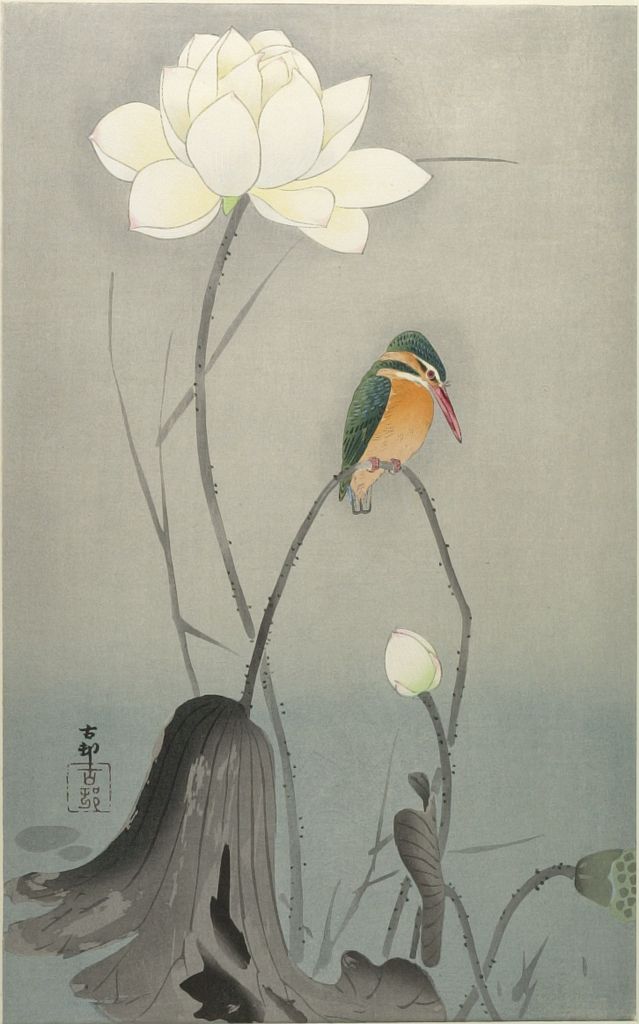
Kingfisher on Reed
葦に翡翠
c. 1910
Color woodblock print
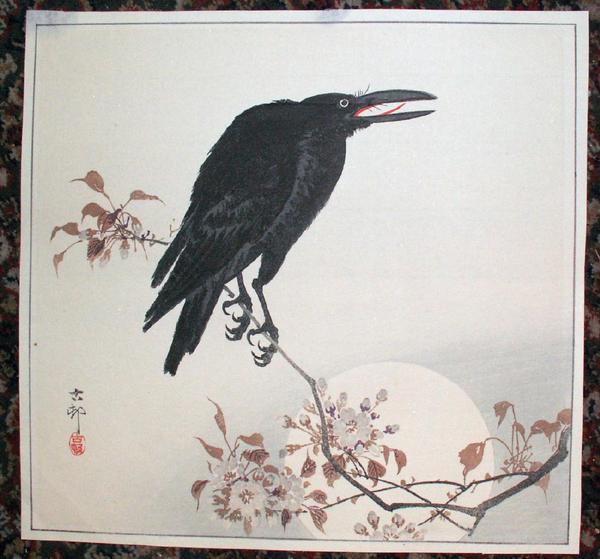
Crow on Cherry Branch
桜に烏
c. 1910
Color woodblock print

Flying Geese and Moon
before 1912
Woodblock print, ink and color on paper
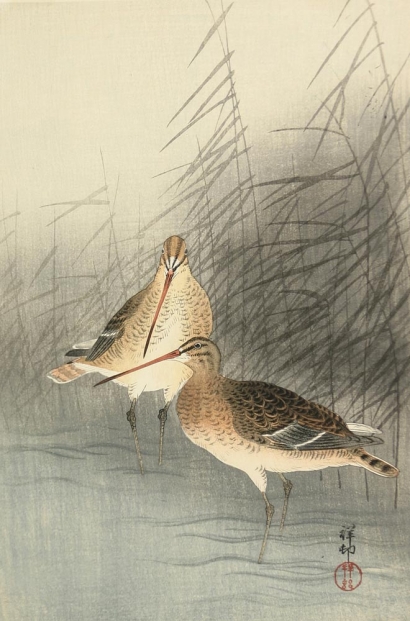
Two Pigeons on Branch of Maple
紅葉に二羽の鳩
c. 1912
Color woodblock print
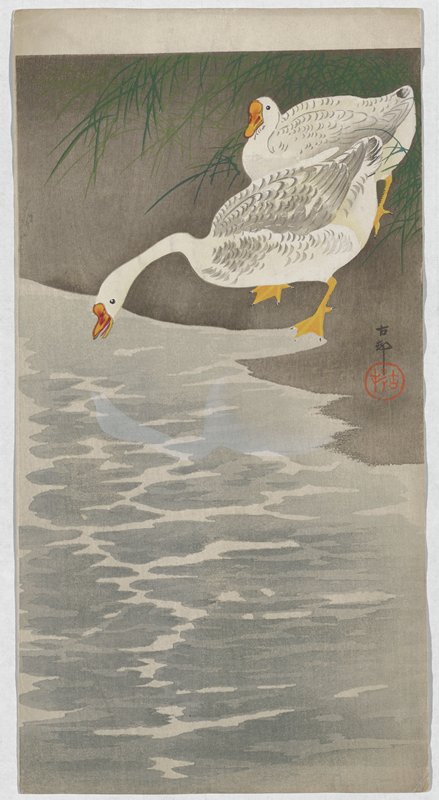
Geese by Water
before 1912
Woodblock print, ink and color on paper
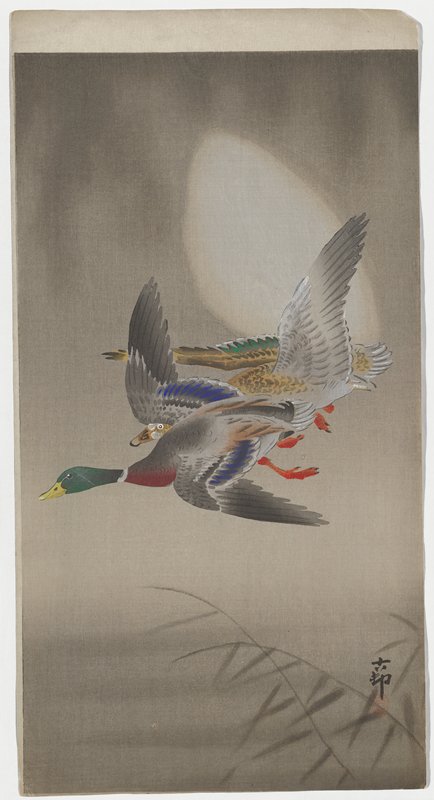
A pair of Flying Ducks and Moon
before 1912
Woodblock print, ink and color on paper
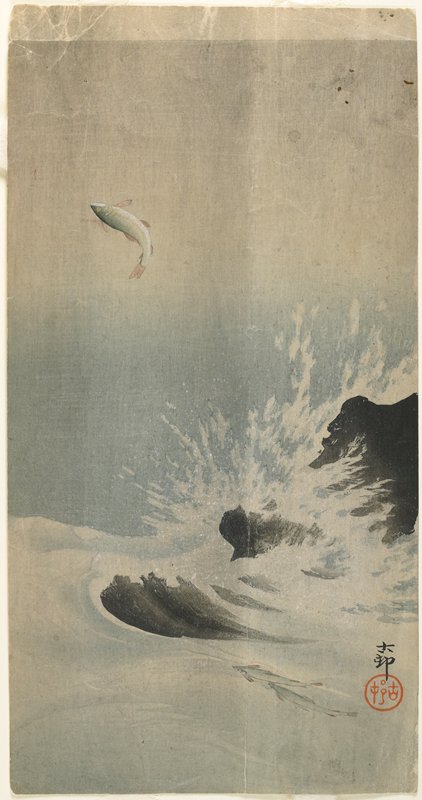
Leaping Fish
before 1912
Woodblock print, ink and color on paper
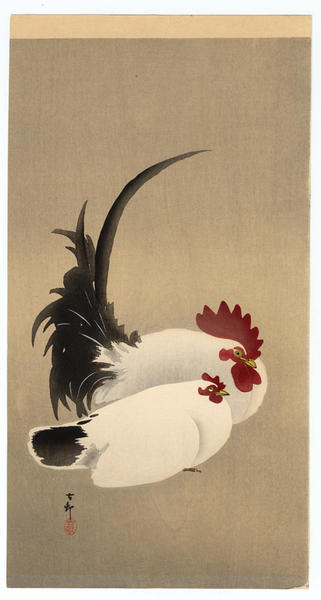
Rooster and Hen
鶏
c. 1912
Color woodblock print
Mandarin Ducks
鴛鴦
c. 1915
Color woodblock print
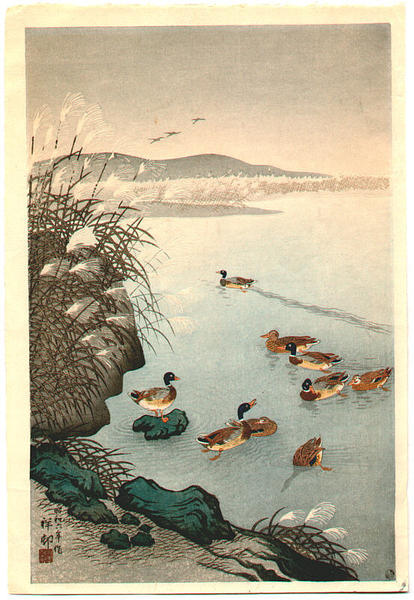
Mallard Ducks Swimming
泳ぐ鴨
c. 1915
Color woodblock print
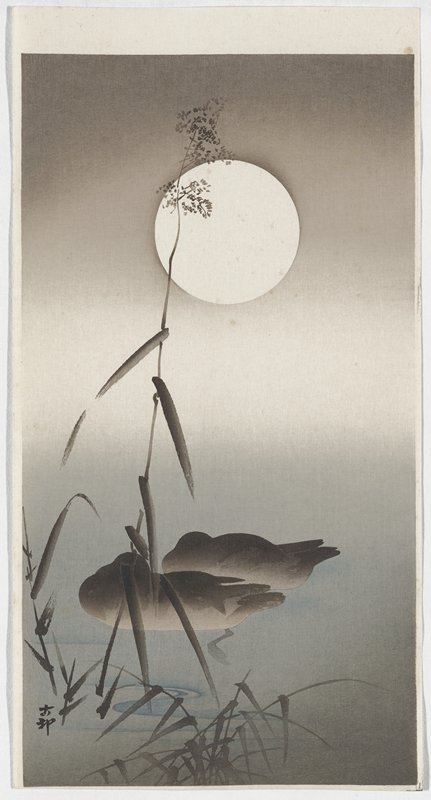
Two Mallards in Water Between Reeds and a Full Moon
1920s
Woodblock print, ink and color on paper
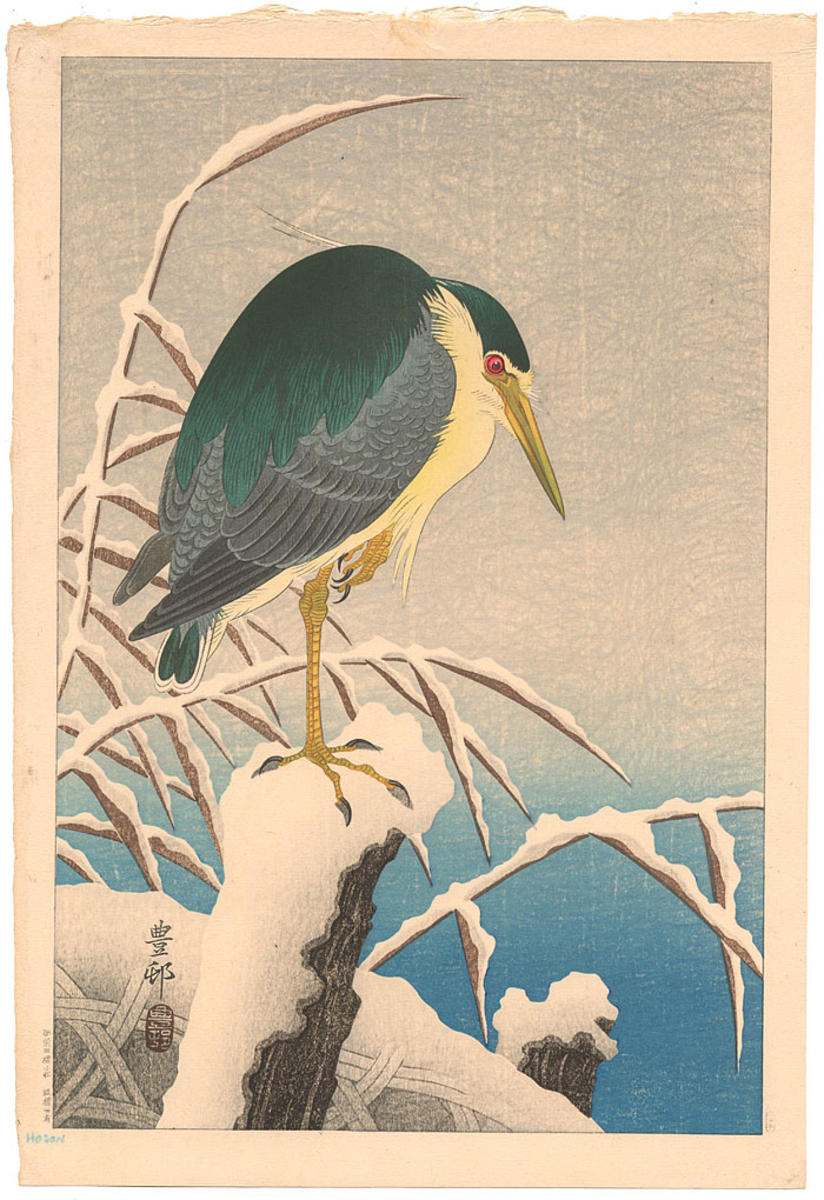
Heron in Snow
雪中の白鷺
c. 1920
Color woodblock print
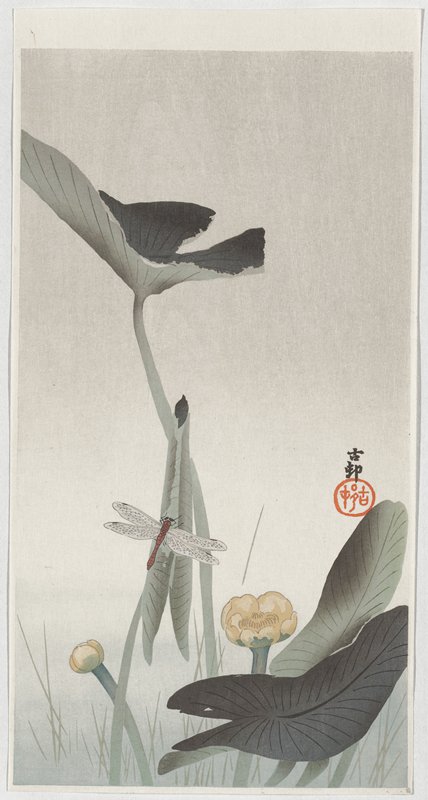
Dragonfly and Lotus
1920s
Woodblock print, ink and color on paper
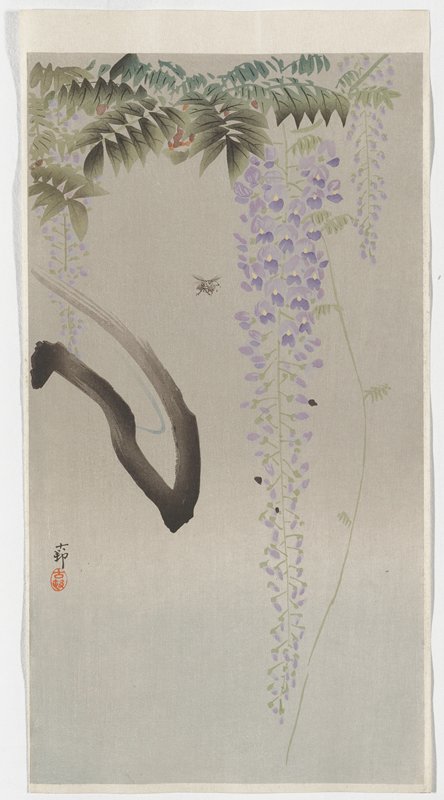
Bee Next to Flowering Wisteria
1920s
Woodblock print, ink and color on paper
Snowy Egret on Willow
柳に白鷺
c. 1920
Color woodblock print

Lapwing on Tree Stump
1920s
Woodblock print, ink and color on paper
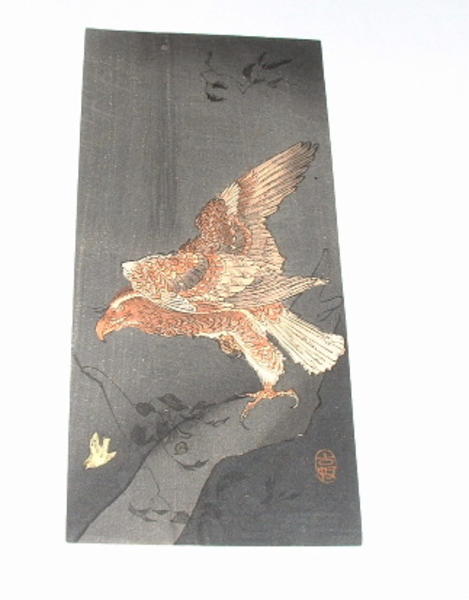
Hawk on Snowy Branch
雪中の鷹
c. 1920
Color woodblock print
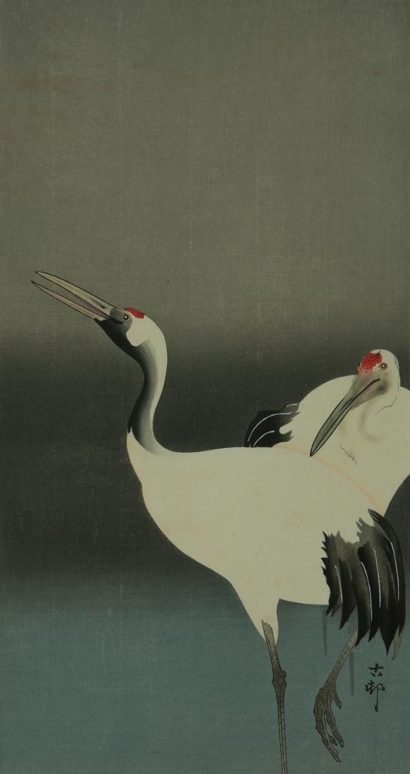
Two Cranes
二羽の鶴
c. 1925
Color woodblock print
Two Sparrows in Rain
雨中の二羽の雀
c. 1925
Color woodblock print
Peacock on Cherry Tree
桜に孔雀
c. 1925
Color woodblock print
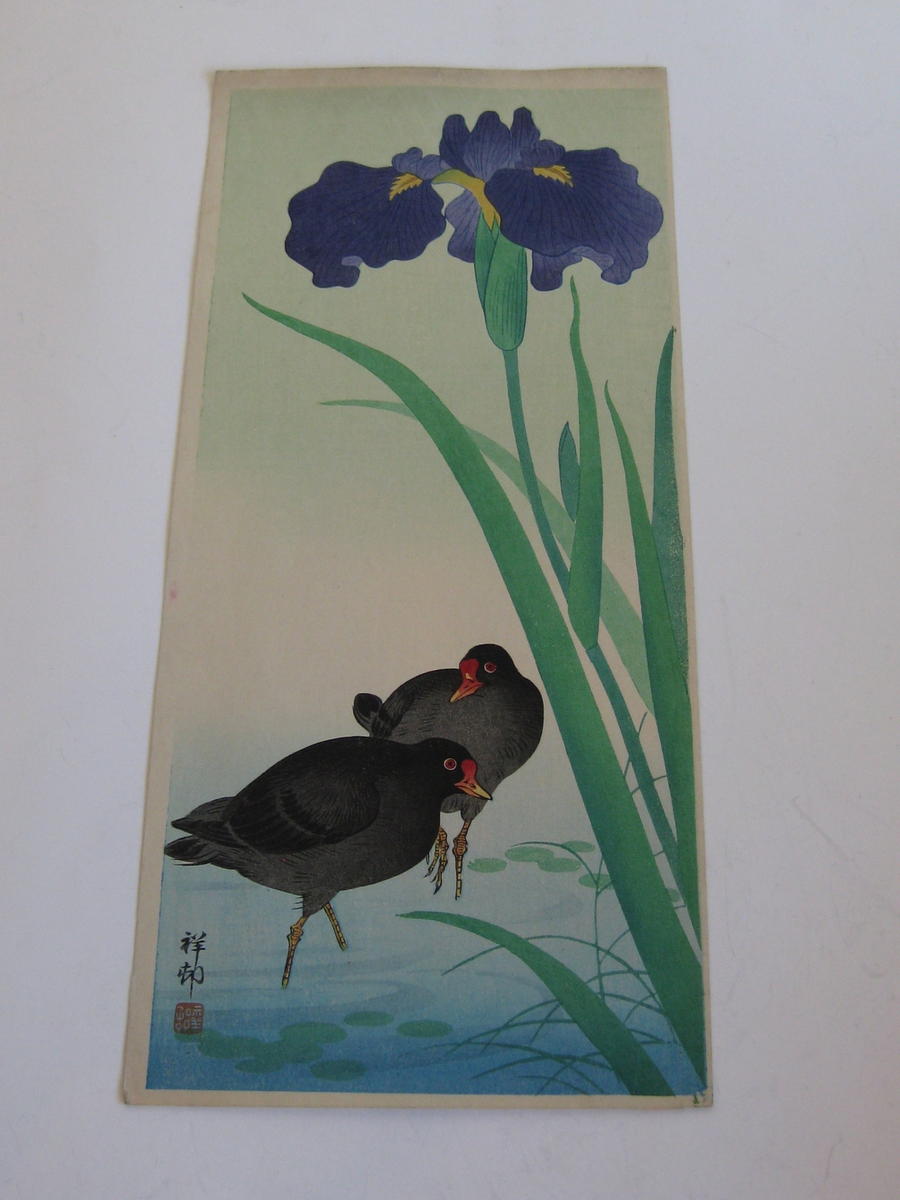
Iris and Kingfisher
菖蒲に翡翠
c. 1925
Color woodblock print
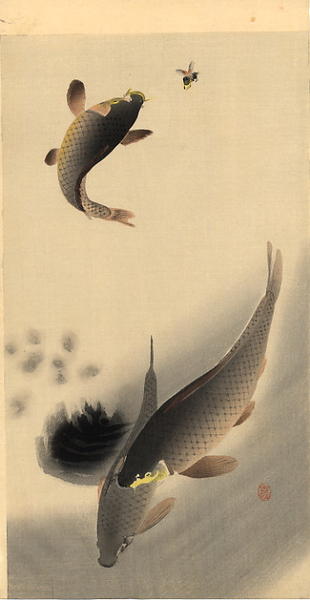
Leaping Carp
跳ね鯉
c. 1926
Color woodblock print
Swallows and Wisteria
藤に燕
c. 1926
Color woodblock print
Scops Owl in Flight, Cherry Blossoms and Full Moon
Shōwa period, 1926
Woodblock print in "ōban" format; ink and color on paper
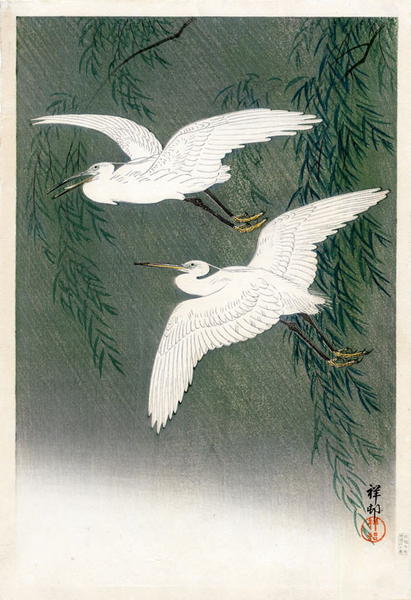
Egrets in Rain
雨中白鷺
c. 1926
Color woodblock print

Bar-tailed Godwits and Reeds
1926
Color woodblock print; oban

Carp
1926
Color woodblock print; oban

Egrets and Crescent Moon
1926
Color woodblock print; oban
Kingfisher with Lotus Flower
Shōwa period, early to mid 20th century
Woodblock print; ink and color on paper
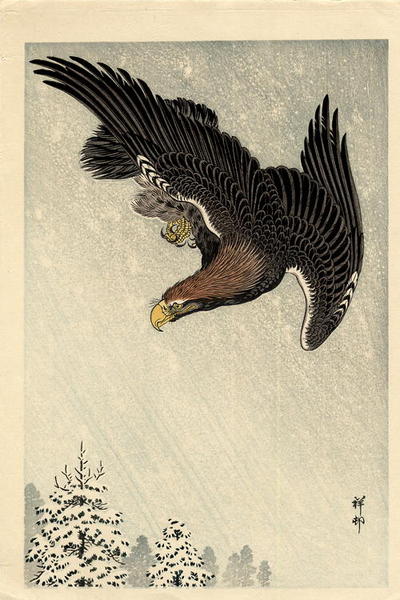
Eagle Under Rain
雨中の鷲
c. 1927
Color woodblock print

Crows in moonlight
1927
Color woodblock print; oban
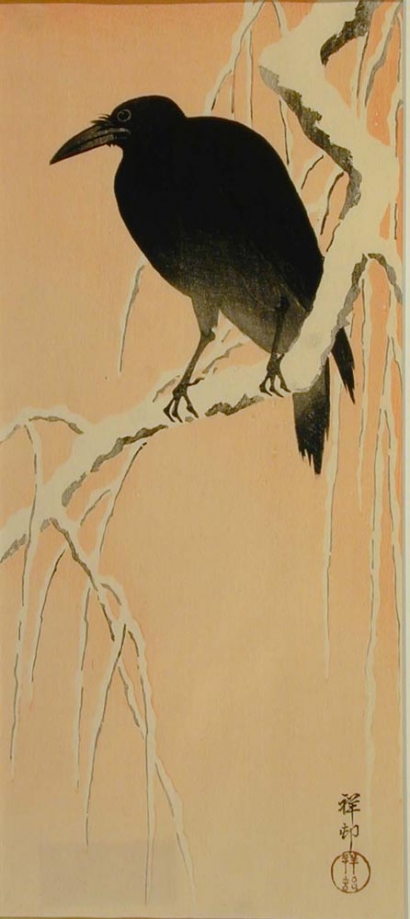
Crow in Moonlight
月に烏
c. 1927
Color woodblock print
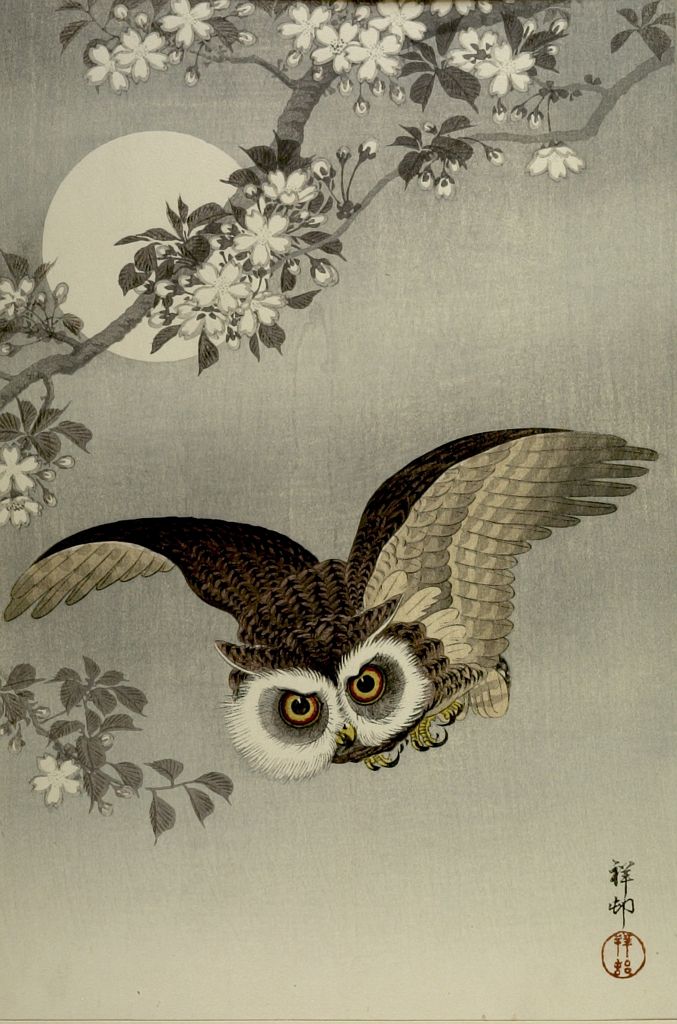
Owl on Ginkgo Branch
銀杏に木菟
c. 1927
Color woodblock print
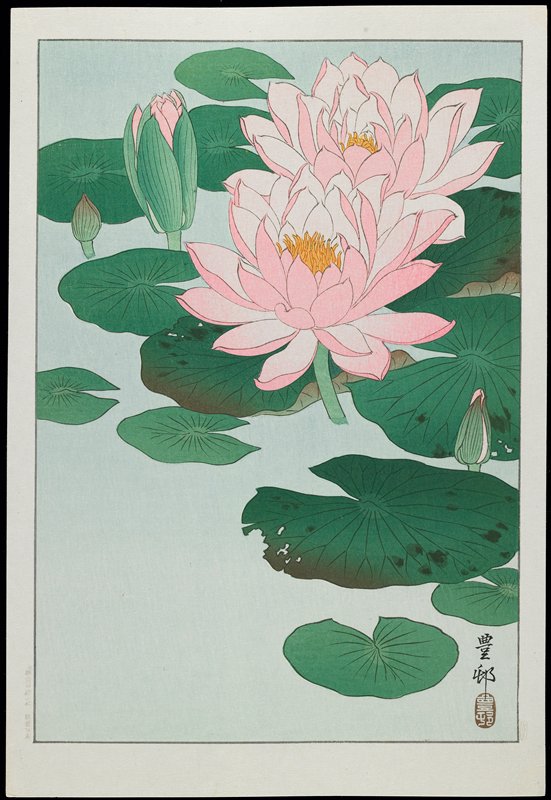
Water Lily
c. 1928–1930
Woodblock print, ink and color on paper

Egret in Rain
1928
Woodblock print, ink and color on paper with embossing

Hill Myna on a Magnolia Branch
c. 1928–1930
Woodblock print, ink and color on paper
Heron in the Rain
Shōwa period, circa 1928
Woodblock print in "ōban" format; ink and color on paper with embossing
Egret Standing in Rain
1928
Color woodblock print; oban

White Geese and Reeds
1928
Color woodblock print; oban

Swan and Reeds
1928
Color woodblock print

Two Carp
c. 1928–1930
Woodblock print, ink and color on paper
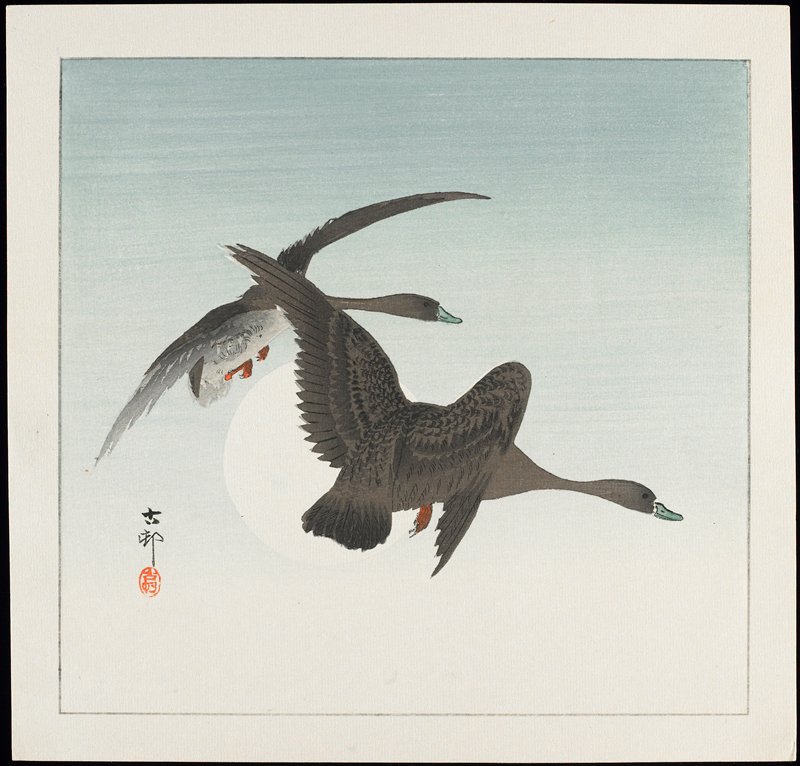
Geese in Flight
c. 1928–1930
Woodblock print, ink and color on paper
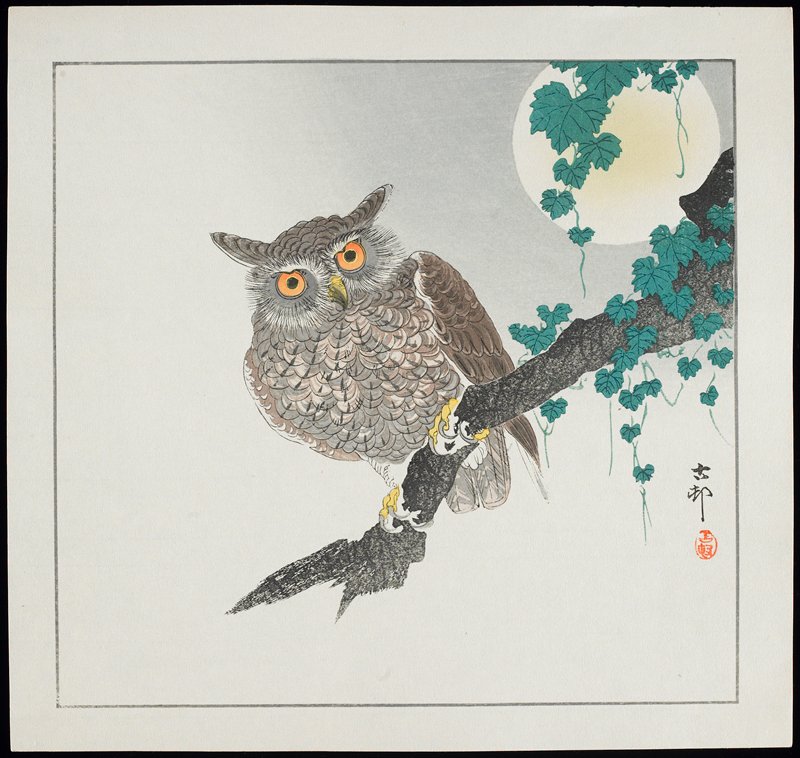
Owl
c. 1928–1930
Woodblock print, ink and color on paper
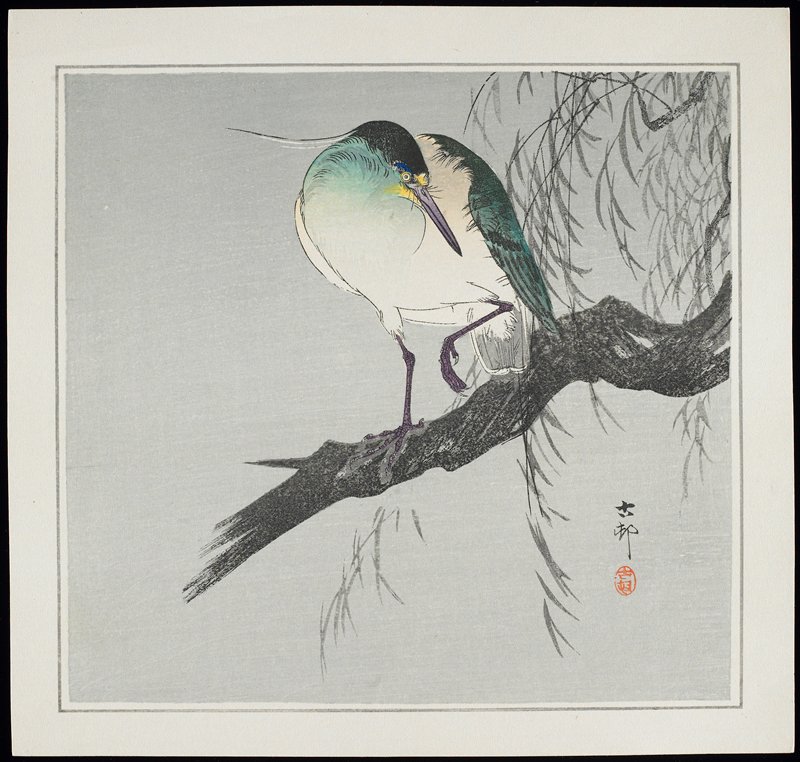
Heron on Branch
c. 1928–1930
Woodblock print, ink and color on paper
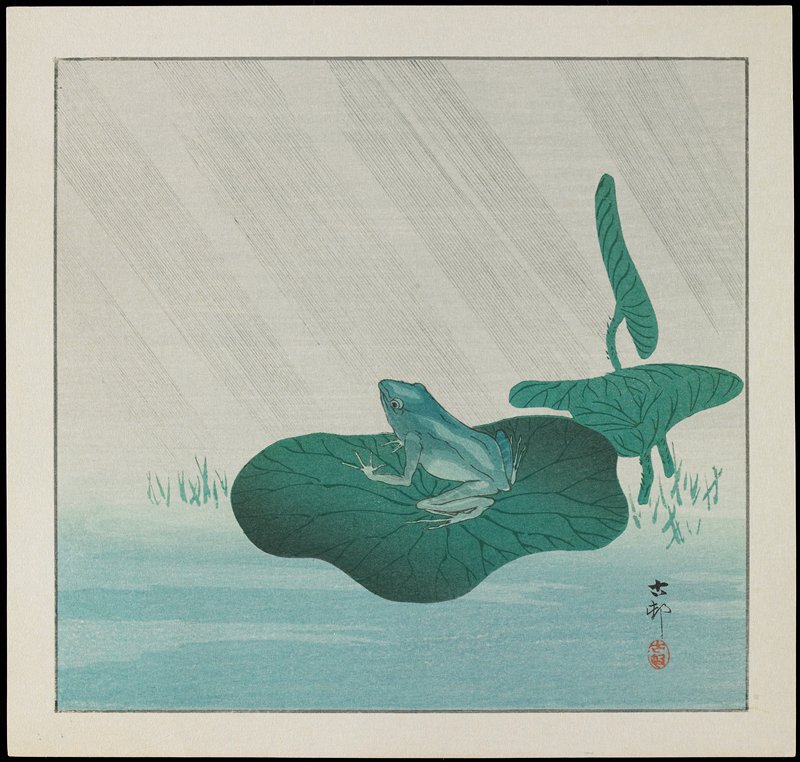
Frog in Rain
c. 1928–1930
Woodblock print, ink and color on paper
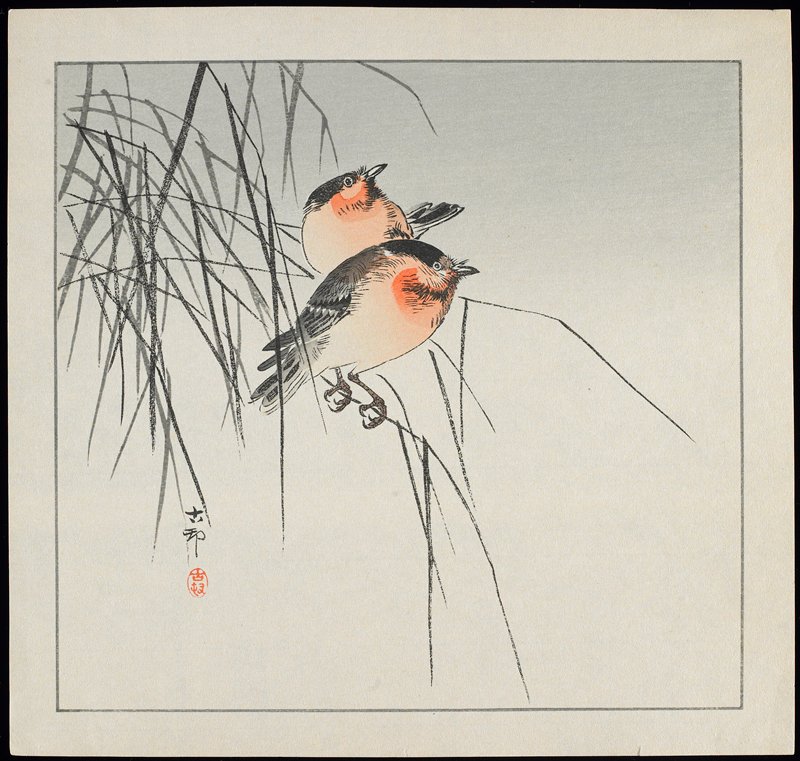
Two Birds on Reeds
c. 1928–1930
Woodblock print, ink and color on paper
Monkey Catching a Bee
c. 1928–1930
Woodblock print, ink and color on paper
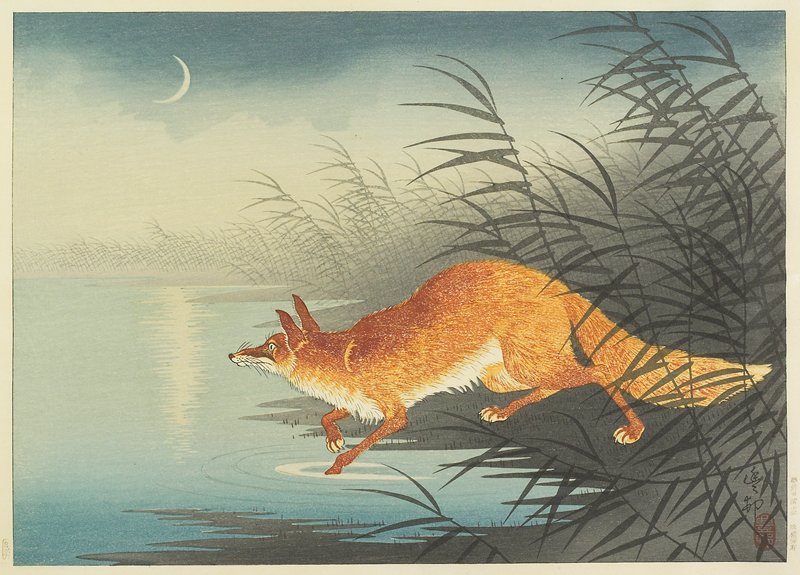
Fox by the Moonlit Water
c. 1928–1930
Woodblock print, ink and color on paper
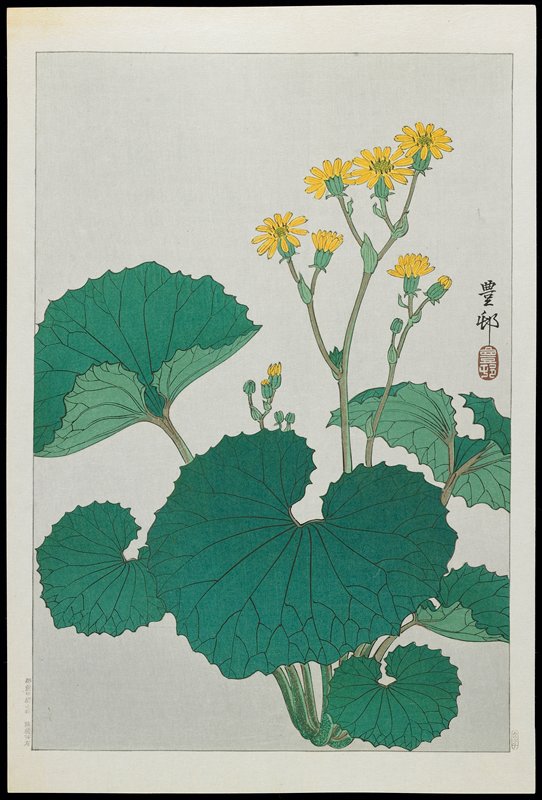
Flowers of Japanese Silver Leaves
c. 1928–1930
Woodblock print, ink and color on paper
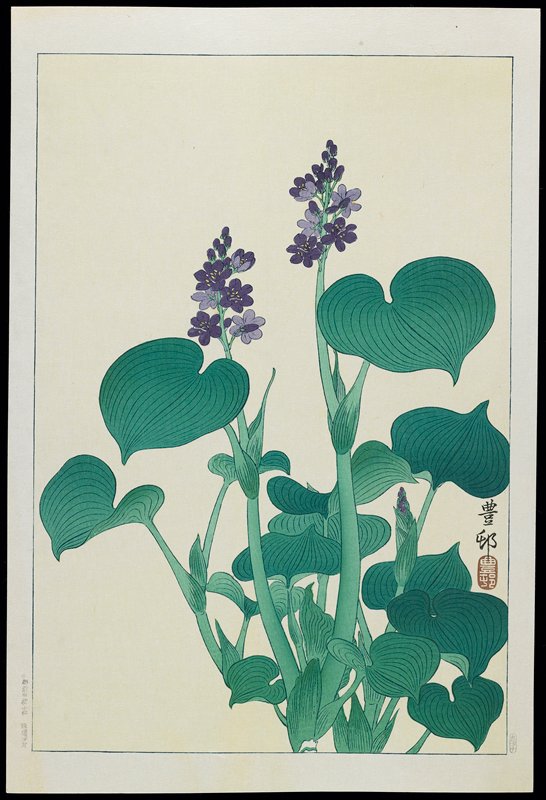
Water Hollyhock
c. 1928–1930
Woodblock print, ink and color on paper

Frogs Wrestling
c. 1928–1930
Woodblock print, ink and color on paper
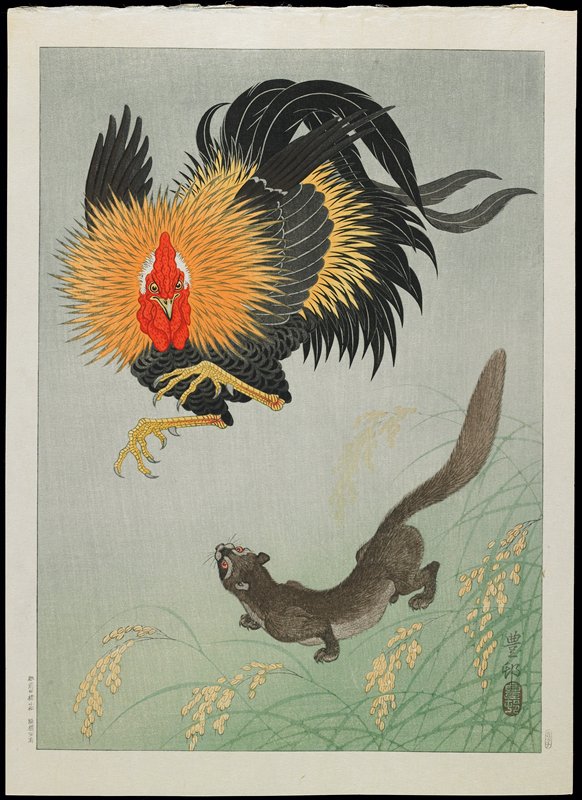
Rooster and Weasel
c. 1928–1930
Woodblock print, ink and color on paper
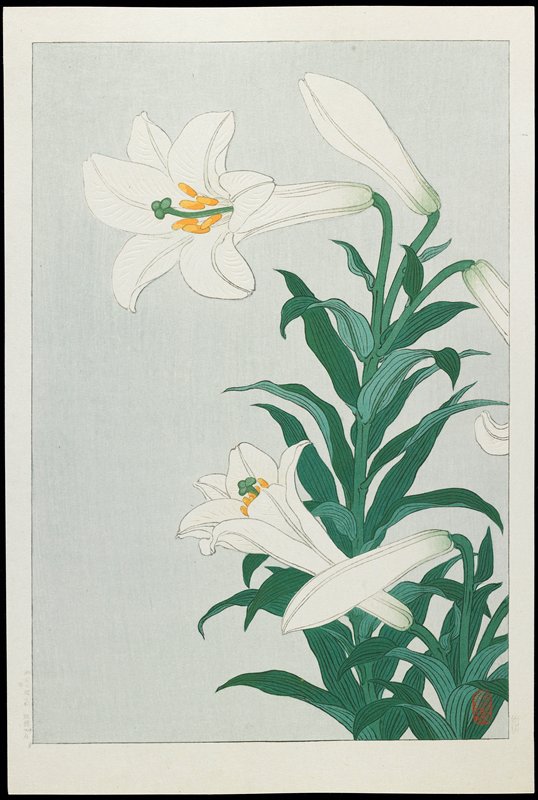
White Lily
c. 1928–1930
Woodblock print, ink and color on paper with embossing
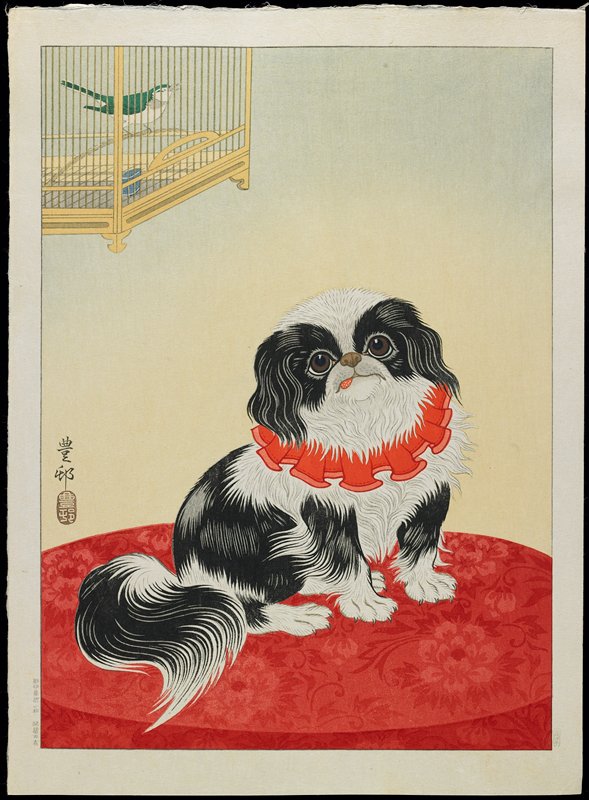
Pug Dog
c. 1928–1930
Woodblock print, ink and color on paper

Monkeys and Persimmon
c. 1928–1930
Woodblock print, ink and color on paper
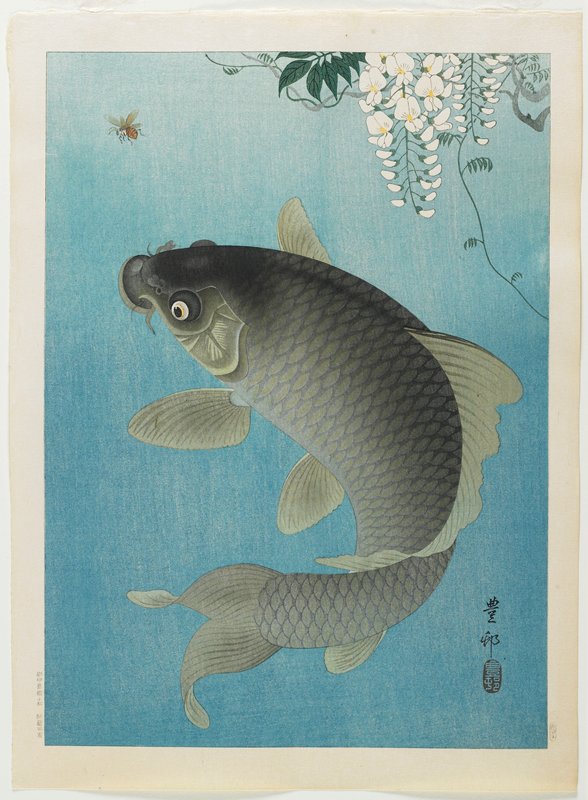
Carp Leaping
c. 1928–1930
Woodblock print, ink and color on paper
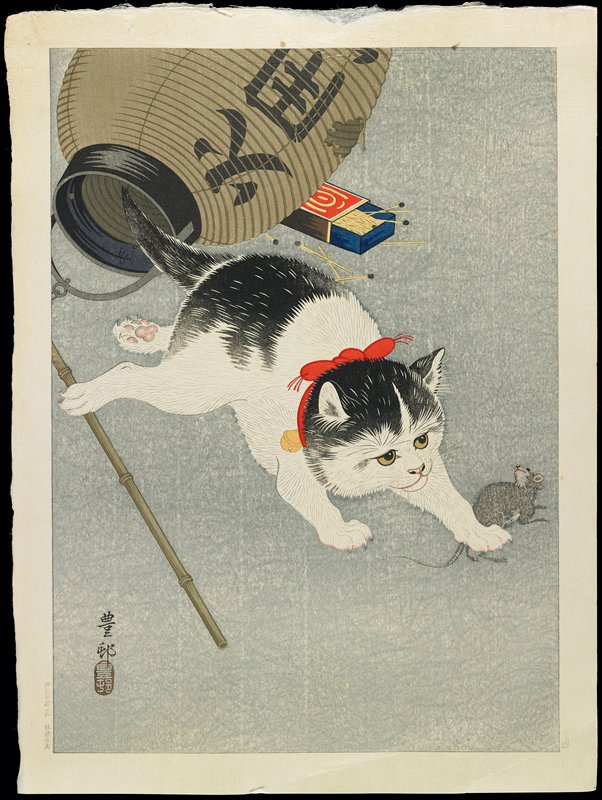
Kitten and Lantern
c. 1928–1930
Woodblock print, ink and color on paper