
Biography
Ogata Gekko (尾形月耕, 1859–1920) was one of the most prolific and versatile Japanese woodblock print artists of the Meiji era, producing an extraordinary body of work that encompassed landscapes, beautiful women, warriors, historical subjects, nature studies, and scenes of modern life. His "Flowers of One Hundred Poets" series and his extensive war prints documenting Japan's military conflicts established him as one of the most visible and commercially successful artists of his generation.
Born Tashiro Masanosuke in the Kanda district of Edo (modern Tokyo) on August 10, 1859, Gekko was largely self-taught as an artist — an unusual distinction in an era when most Japanese painters apprenticed under established masters. He studied painting on his own, reportedly learning by copying works by old masters and sketching from nature, and adopted the art name Gekko (meaning "moonlight") early in his career. His lack of formal training in any single school gave him a certain creative freedom, allowing him to draw on diverse artistic traditions without the constraints of a particular lineage or orthodoxy.
Gekko first achieved widespread recognition through his designs for woodblock prints, working with several Tokyo publishers who catered to the enormous Meiji-era appetite for illustrated books and print series. His range was remarkable: he produced delicate kacho-e (bird-and-flower prints) alongside muscular warrior subjects, elegant bijin-ga (beautiful women) alongside documentary war prints, and serene landscapes alongside bustling scenes of Tokyo's modern transformation. This versatility made him one of the most commercially successful print designers of his time, though it also contributed to his later critical neglect, as art historians tended to favor artists with more focused, easily categorizable bodies of work.
Among Gekko's most celebrated achievements is "Gekko Zuihitsu" (Gekko's Sketchbook), a series of elegant prints depicting a wide range of subjects from daily life, nature, and classical literature. These prints demonstrate his exceptional draftsmanship and his ability to distill complex subjects into compositions of clarity and grace. His "Flowers of One Hundred Poets" (Hyakunin isshu) series, illustrating the famous anthology of classical Japanese poetry, is another major work that combines literary erudition with visual beauty, depicting scenes inspired by each of the one hundred poems with sensitivity to both their literary meaning and their decorative potential.
Gekko was also one of the most prolific creators of war prints during the Sino-Japanese War of 1894–1895 and the Russo-Japanese War of 1904–1905. These triptychs and multi-panel compositions depicted naval battles, cavalry charges, siege operations, and other military subjects with a combination of dramatic energy and documentary detail that made them enormously popular with the Japanese public. While war prints were produced by many Meiji-era artists, Gekko's are distinguished by their ambitious compositions and their attention to the specifics of modern military technology.
Beyond prints, Gekko was active as a painter and illustrator. He contributed illustrations to newspapers and magazines, designed decorative objects, and produced paintings for exhibition. He was a member of the Japan Art Association and participated in numerous domestic and international exhibitions, including the 1893 World's Columbian Exposition in Chicago and the 1900 Exposition Universelle in Paris, where Japanese art attracted enormous international interest.
Gekko's artistic style combined elements of traditional Japanese painting with selective incorporation of Western techniques. His compositions often employ classical Japanese conventions of spatial arrangement and decorative patterning, but with a naturalism and attention to light that reflects the influence of Western art. His line work is characteristically fluid and assured, capable of conveying both the delicacy of flower petals and the power of crashing waves or charging warriors.
Gekko died on October 1, 1920, in Tokyo, at the age of sixty-one. His enormous output — numbering in the thousands of designs — ensures that his work is widely available to collectors, though this same prolificacy has sometimes worked against his critical reputation. In recent decades, however, scholars have increasingly recognized the quality and significance of his best work, particularly the "Flowers of One Hundred Poets" and the "Gekko Zuihitsu" series. His prints are held in collections worldwide, including the Library of Congress, the Museum of Fine Arts Boston, the British Museum, and the Art Institute of Chicago.
Key Facts
- Active Period
- 1859–1920
- Nationality
- 🇯🇵Japan
- Movement
- Meiji/Taishō Prints
- Works Indexed
- 146
Frequently Asked Questions
What is Ogata Gekko known for?
Ogata Gekko (尾形月耕, 1859–1920) was one of the most prolific and versatile Japanese woodblock print artists of the Meiji era, producing an extraordinary body of work that encompassed landscapes, beautiful women, warriors, historical subjects, nature studies, and scenes of modern life. His "Flowers of One Hundred Poets" series and his extensive war prints documenting Japan's military conflicts established him as one of the most visible and commercially successful artists of his generation.
When was Ogata Gekko active?
Ogata Gekko was active from 1859 to 1920. They were associated with the Meiji/Taishō Prints movement.
What artistic movements influenced Ogata Gekko?
Ogata Gekko's work was shaped by the Meiji/Taishō Prints tradition in Japanese woodblock printmaking. Meiji/Taishō Prints: Meiji and Taishō era prints (1868–1926) bridge the transition from traditional ukiyo-e to the modern shin-hanga and sosaku-hanga movements.
Where can I see Ogata Gekko's original prints?
Original prints by Ogata Gekko can be found in collections including Cleveland Museum of Art, Victoria and Albert Museum, Art Institute of Chicago, Harvard Art Museums.
How much do Ogata Gekko prints cost?
Ogata Gekko was one of the most prolific Meiji-era print artists, and the sheer volume of his output means that his work is relatively accessible to collectors. War triptychs and common subjects are available for as little as $200-$500, making Gekko an excellent entry point for collectors interested in Meiji-era Japanese prints. His finest artistic works command significantly higher prices. Gekko's market divides into several tiers. War prints from the Sino-Japanese and Russo-Japanese wars are the most commonly available and affordable works, typically selling for $200-$800. His artistic prints — nature studies, beautiful women, historical and literary subjects — from series such as 'Gekko Zuihitsu' and 'Flowers of One Hundred Poets' are more sought after and typically sell for $600-$2,000. The finest impressions of his most celebrated designs, particularly from the 'Hundred Poets' series, can achieve $3,000-$10,000. For collectors, Gekko offers an unusual combination of quality and accessibility. His best prints demonstrate exceptional draftsmanship and elegant composition, while his large output keeps prices moderate compared to rarer Meiji-era artists. Condition and impression quality are important differentiators in Gekko's market, as the quality of carving and printing can vary considerably across his extensive production.
Woodblock Prints by Ogata Gekko (146)

Picture of the Surrender of Port Arthur (Ryojunkô kanraku no zu)
Woodblock print
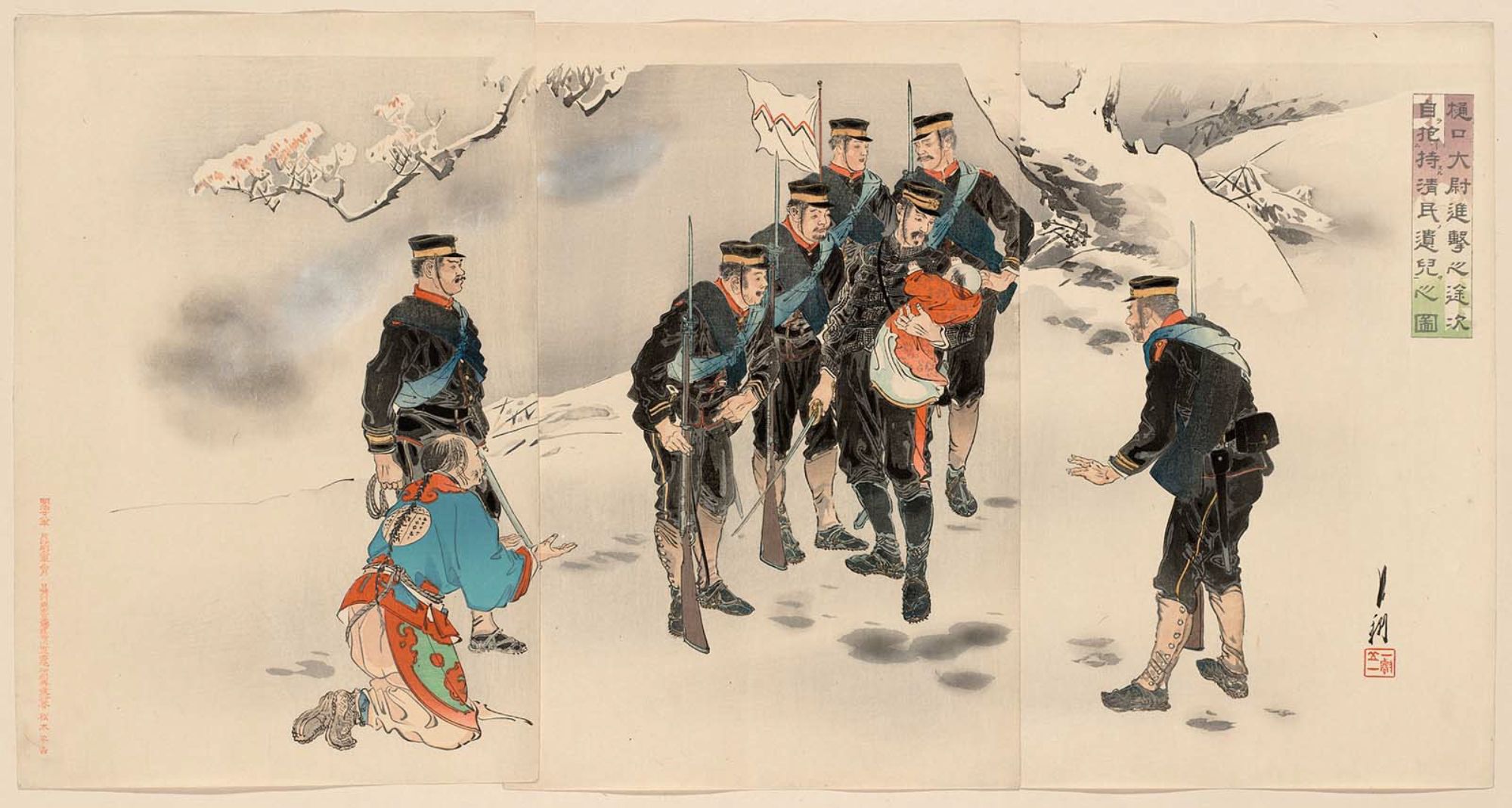
Captain Higuchi, in the Midst of the Attack, Personally Holds a Lost Chinese Child (Higuchi taii shingeki no toji mizukara Seishi no ishi o hôji suru no zu)
Woodblock print

Illustration of the Death-Defying Squad of Captain Osawa and Seven Others from the Crew of the Warship Yaeyama Pushing Forward in Rongcheng Bay (Yaeyamakan norikumi Ôsawa taiira shichimei no kesshitai Eijôwan ni funshin suru zu)
Woodblock print
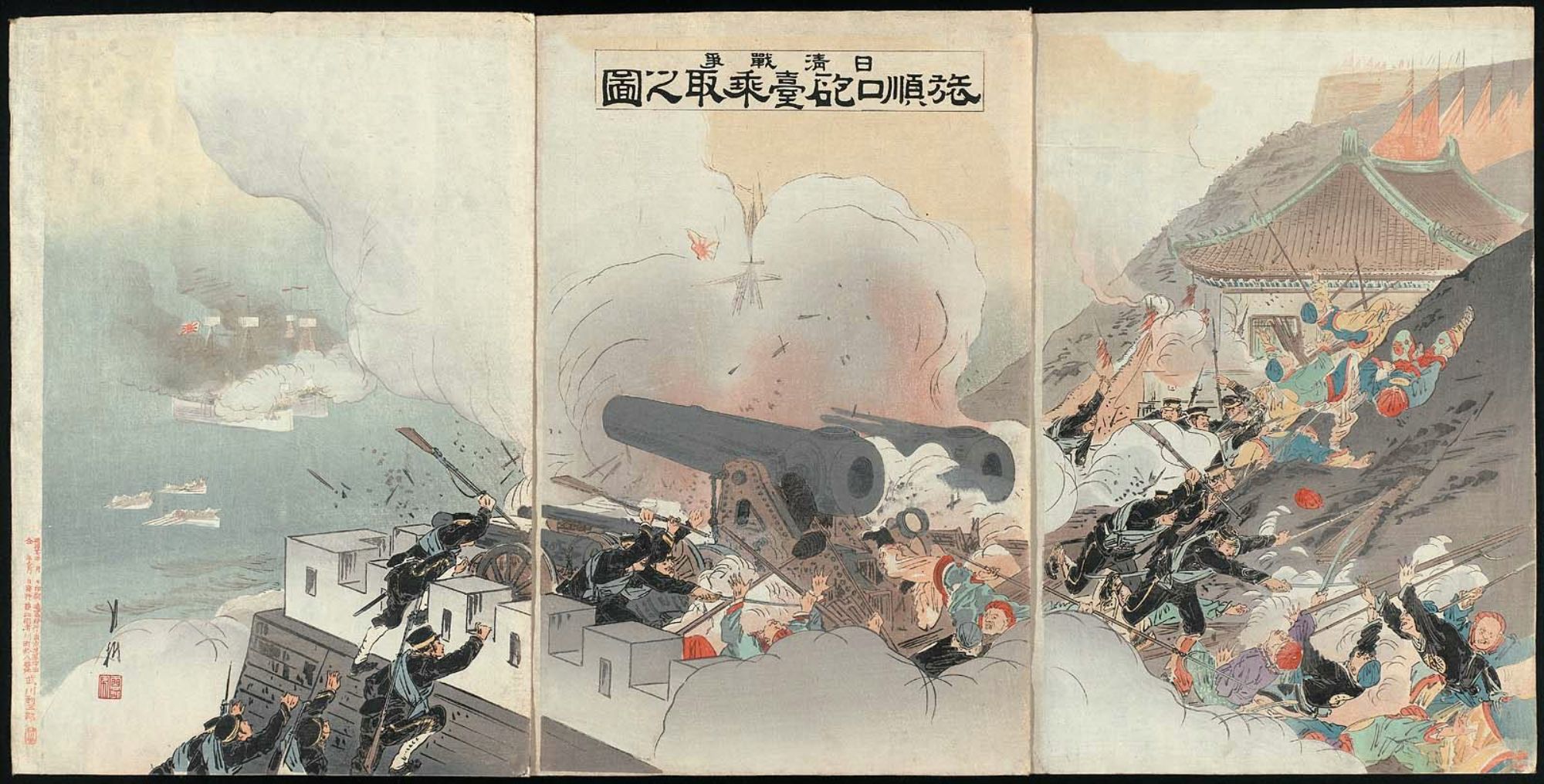
Sino-Japanese War: Illustration of the Occupation of the Battery at Port Arthur (Nisshin sensô: Ryojunkô hôdai nottoru no zu)
Woodblock print
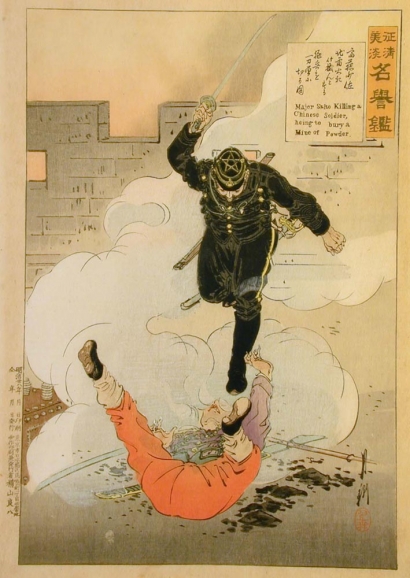
Major Saito Killing a Chinese Soldier, being (sic) to bury a Mine of Powder
Woodblock print

Harimaze
Woodblock print
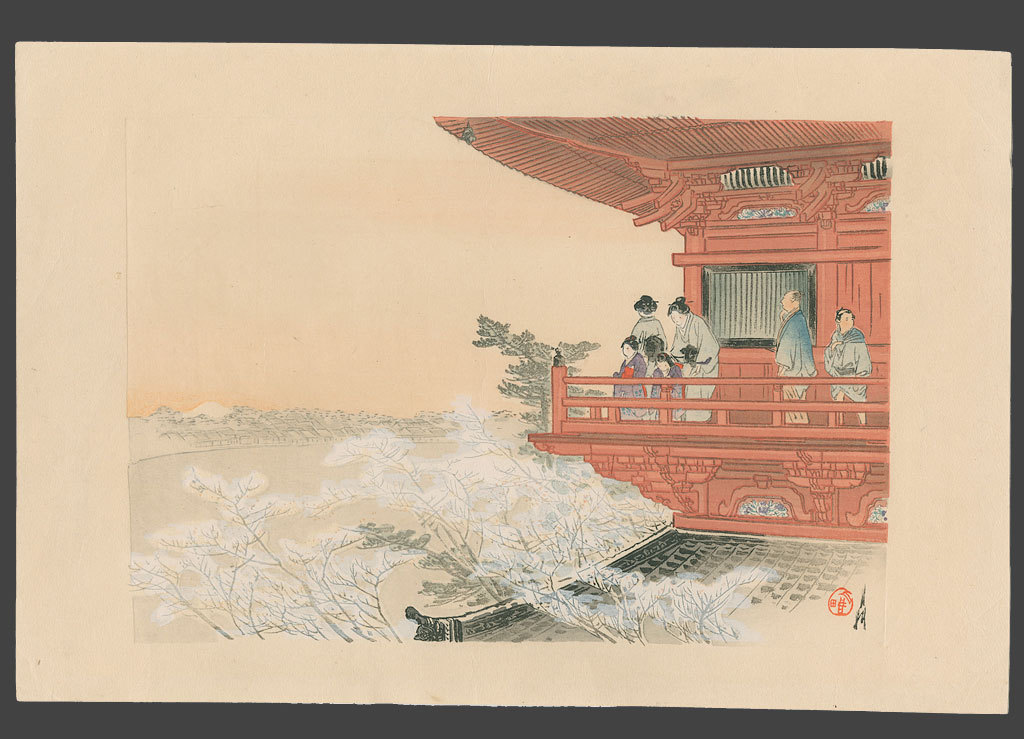
Fuji from a temple balcony
Woodblock print

Foxes with Lanterns Leave a Forest Shrine on a Foggy Night
Woodblock print

Murasaki Shikibu Writing on a Veranda Overlooking a Lake
Woodblock print
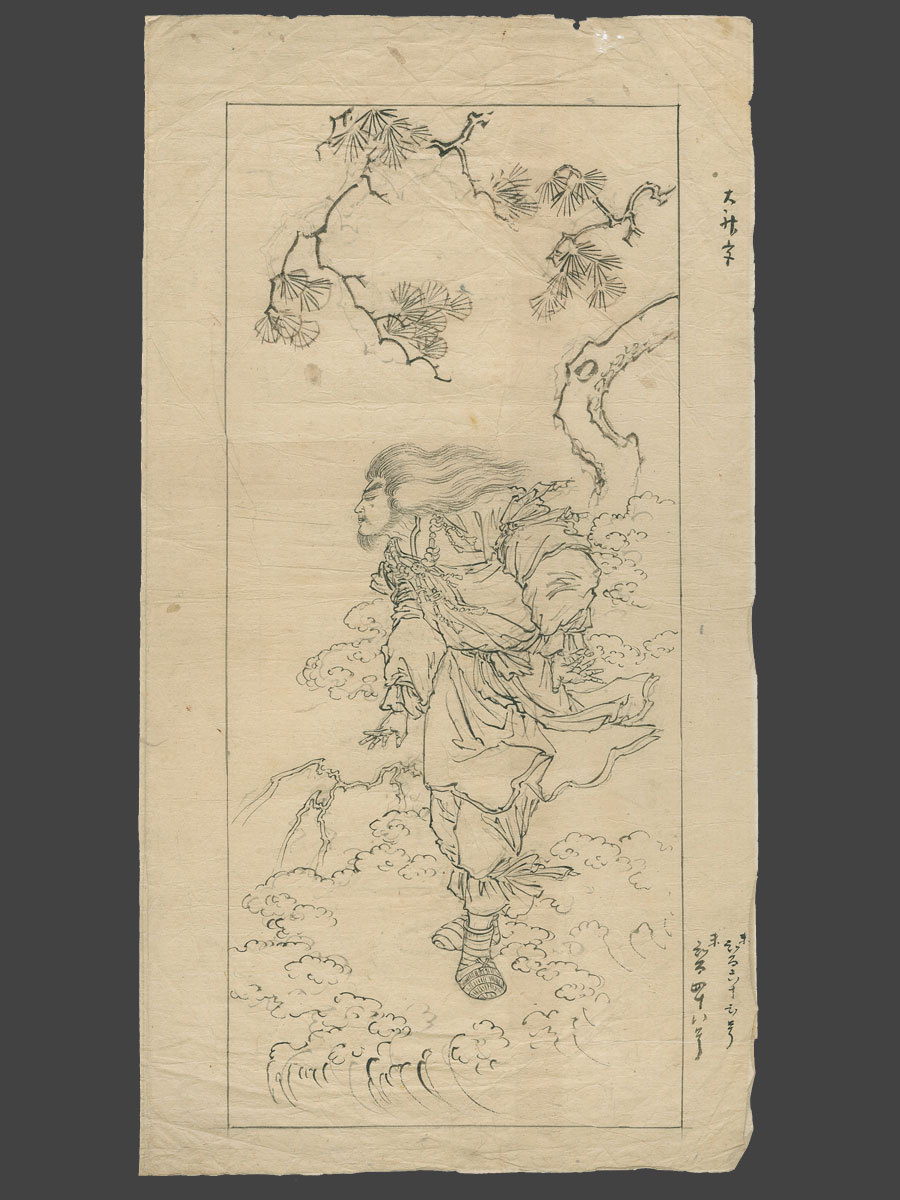
Susano-o no Mikoto, Shinto's Mythical Ruler of the Tides
Woodblock print
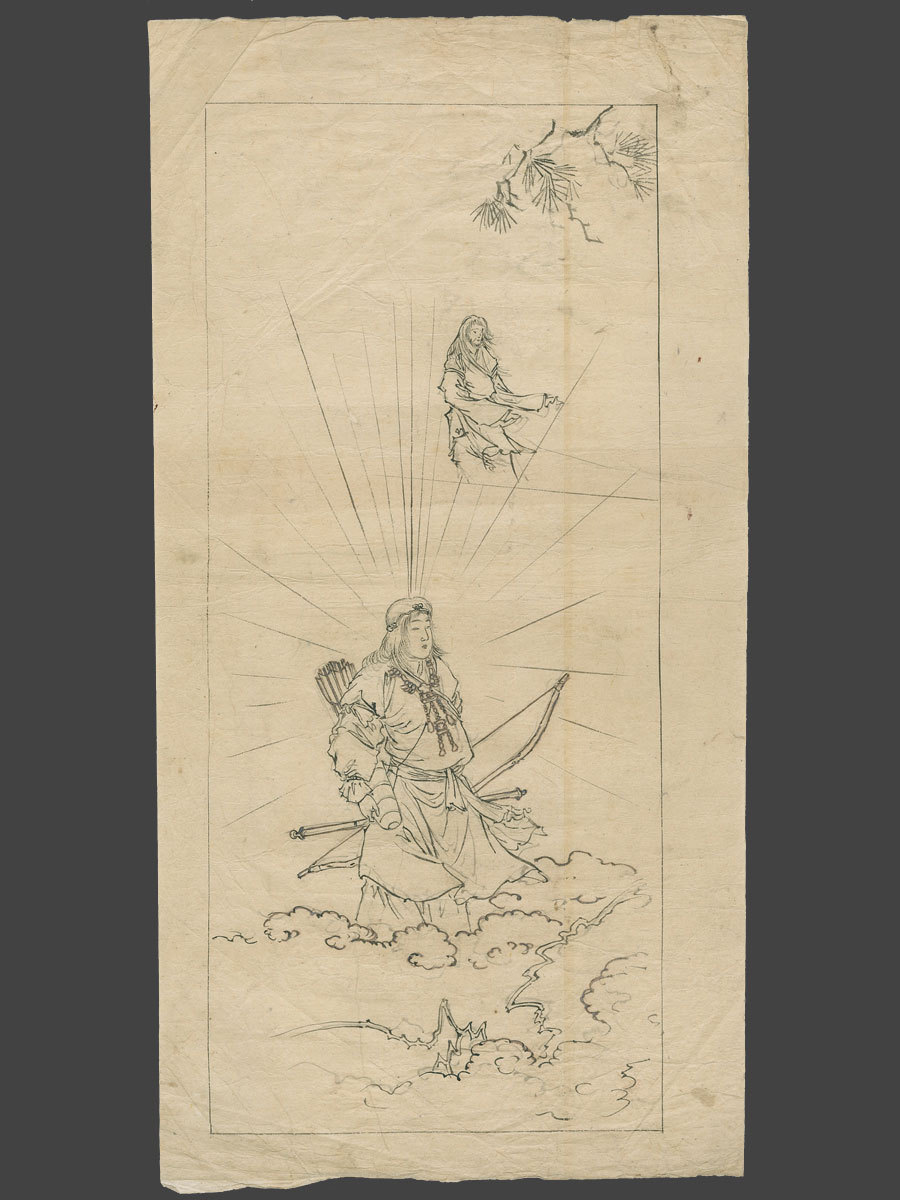
Amaterasu, The Sun Goddess and Sister of Susan-o Before She Hid in Her Cave
Woodblock print
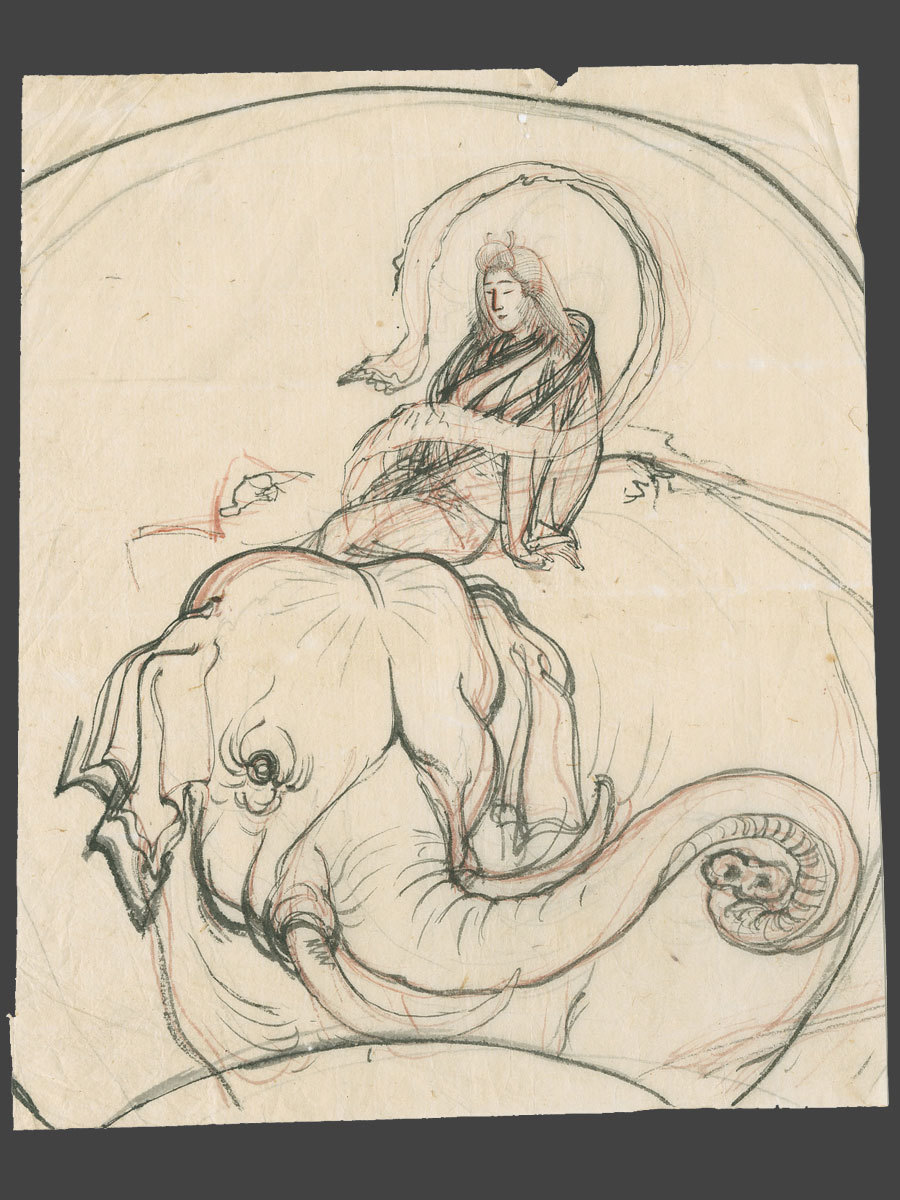
Bishoman on her Elephant
Woodblock print
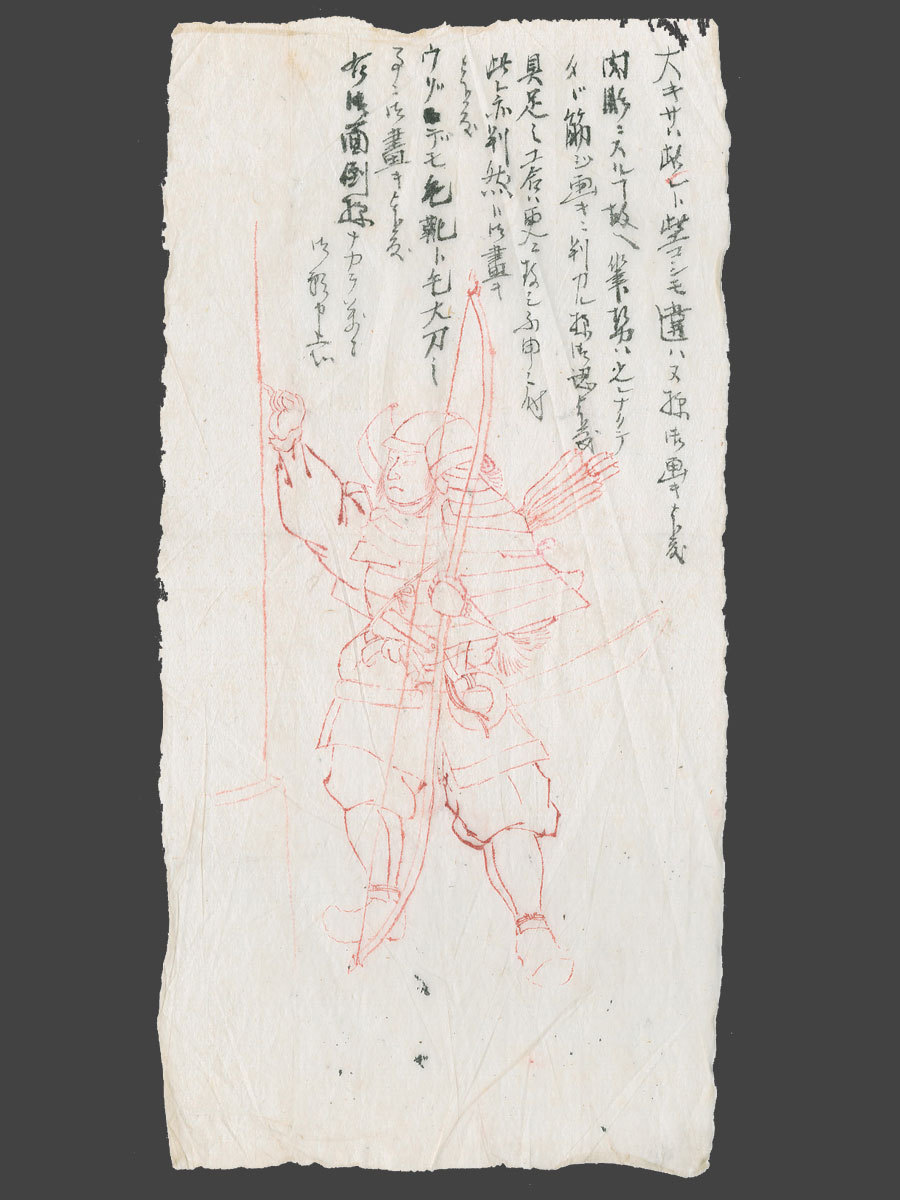
Samurai Warrior
Woodblock print
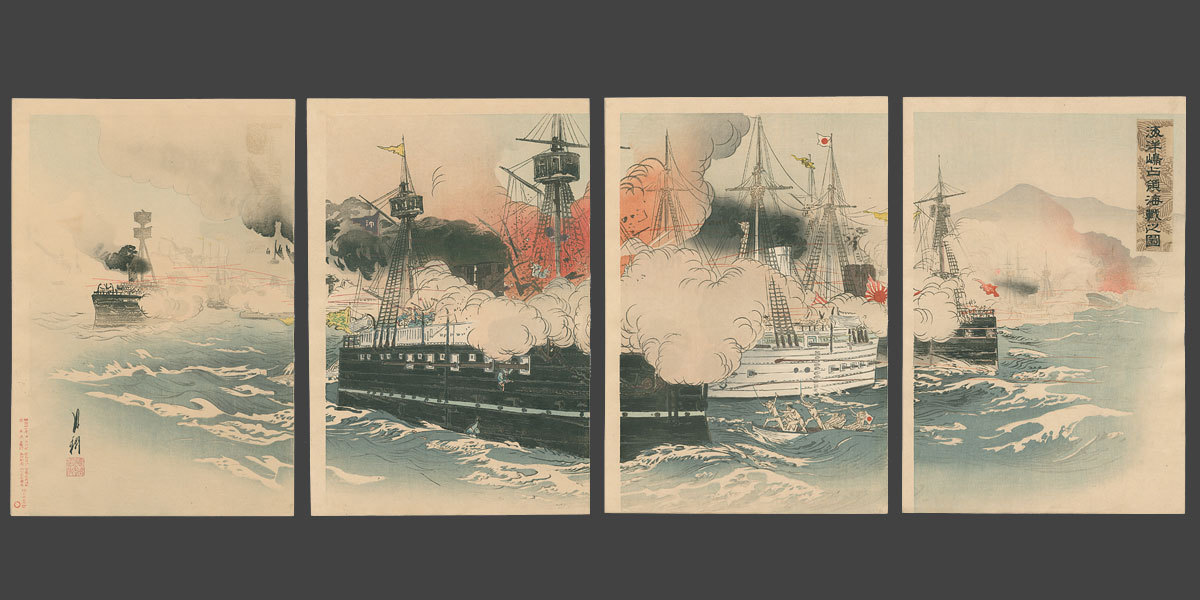
Naval Battle in which we Capture Haiyang Island
Woodblock print
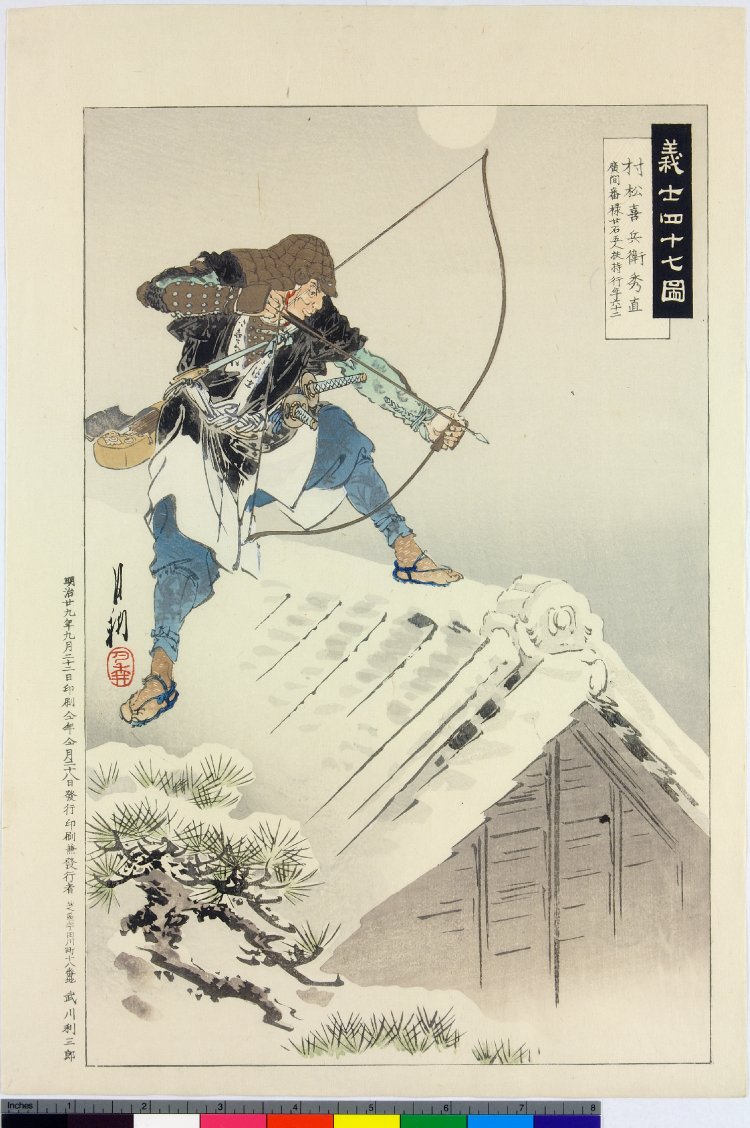
Muramatsu Kihei Hidenao 村松喜兵衛秀直 / Gishi shijushichi zu 義士四十七図
Woodblock print
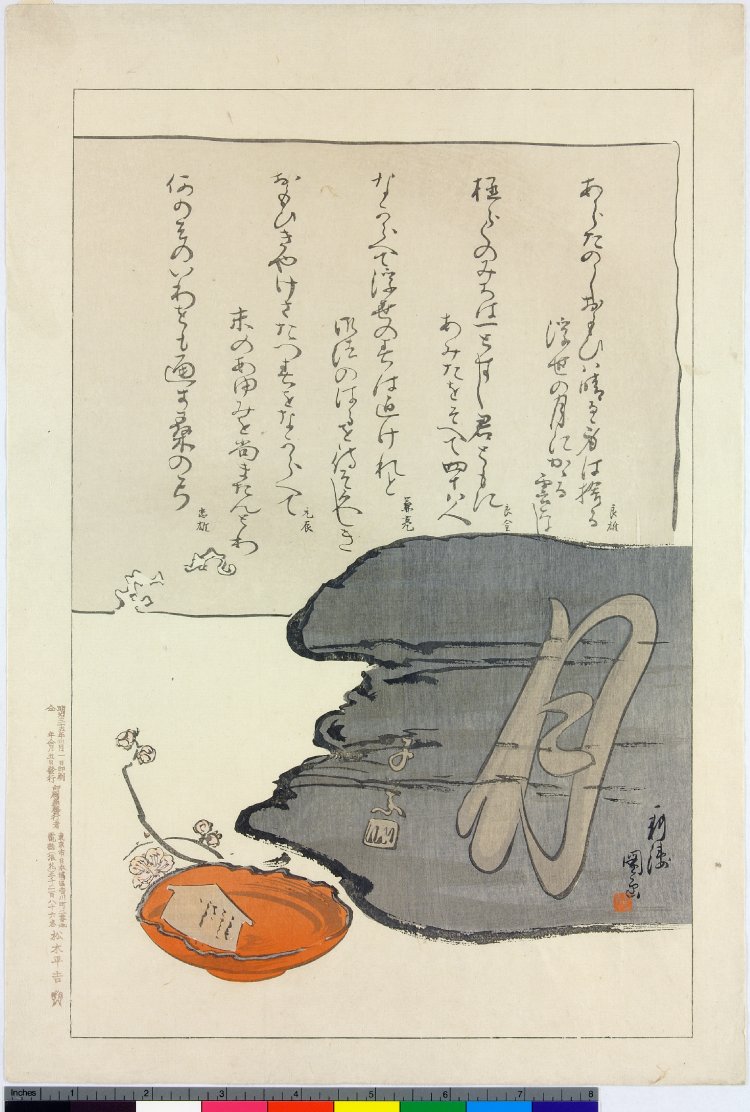
Chushingura
Woodblock print
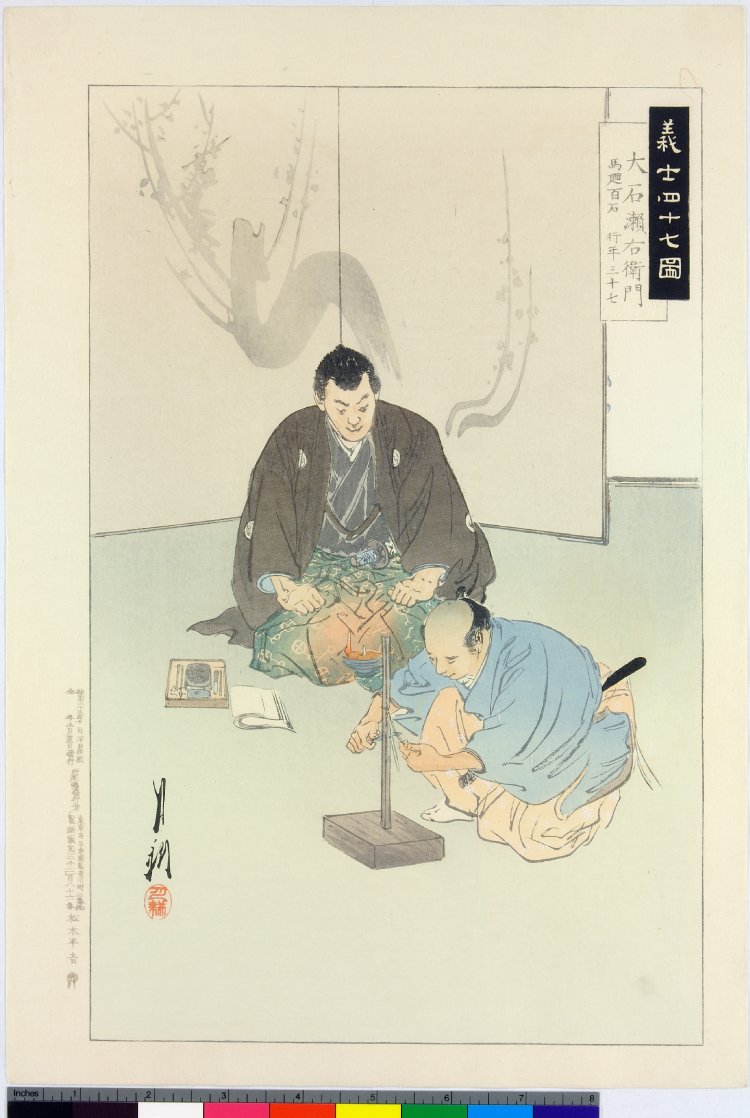
Oishi Se'emon 大石瀬右衛門 / Gishi shijushichi zu 義士四十七図
Woodblock print
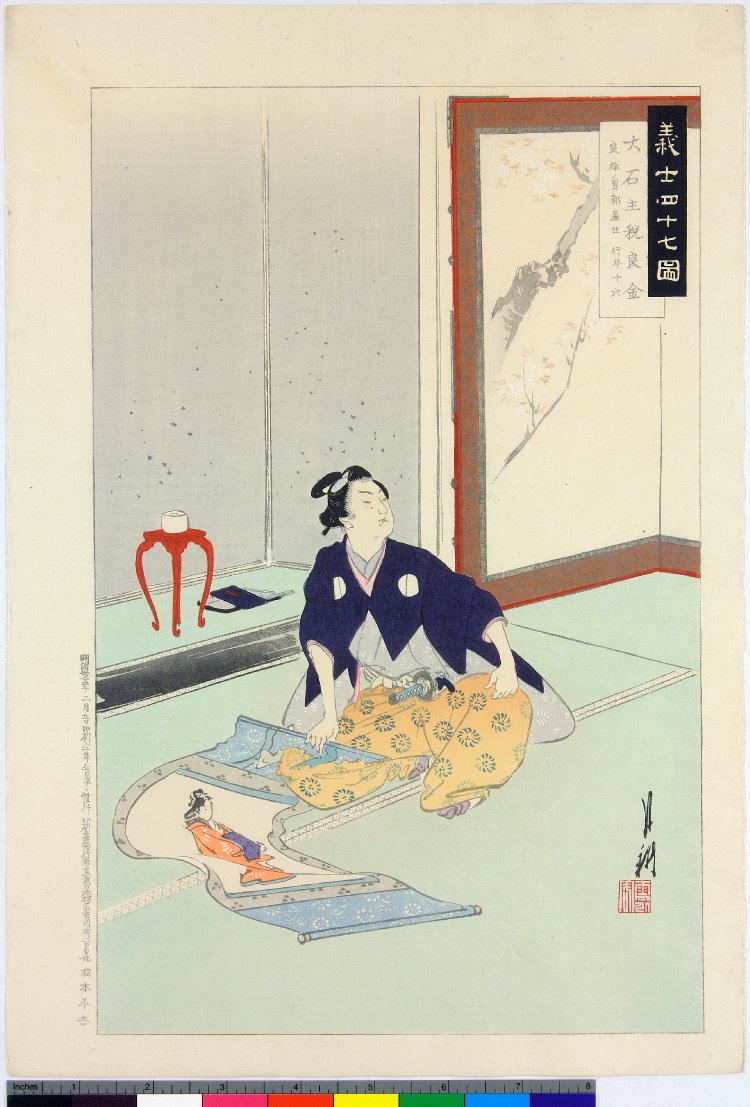
Oishi Chikara Yoshikane 大石主税良金 / Gishi shijushichi zu 義士四十七図
Woodblock print
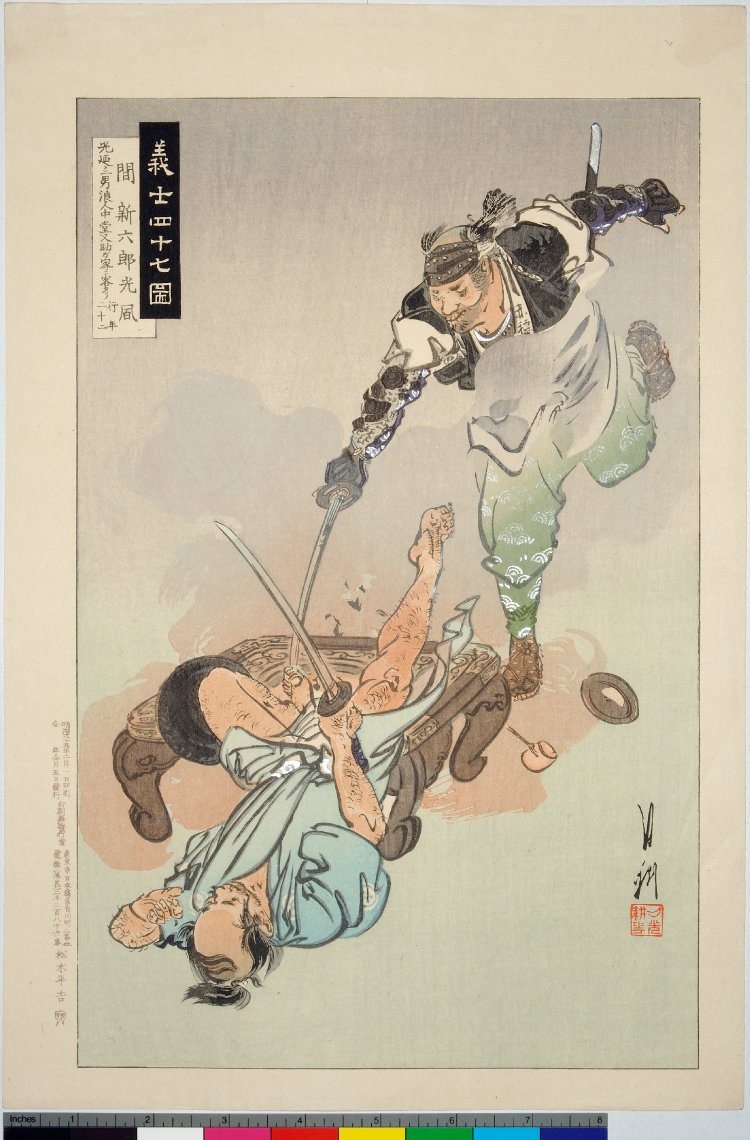
Hazama Shinrokuro Mitsukaze 間新六郎光風 / Gishi shijushichi zu 義士四十七図
Woodblock print
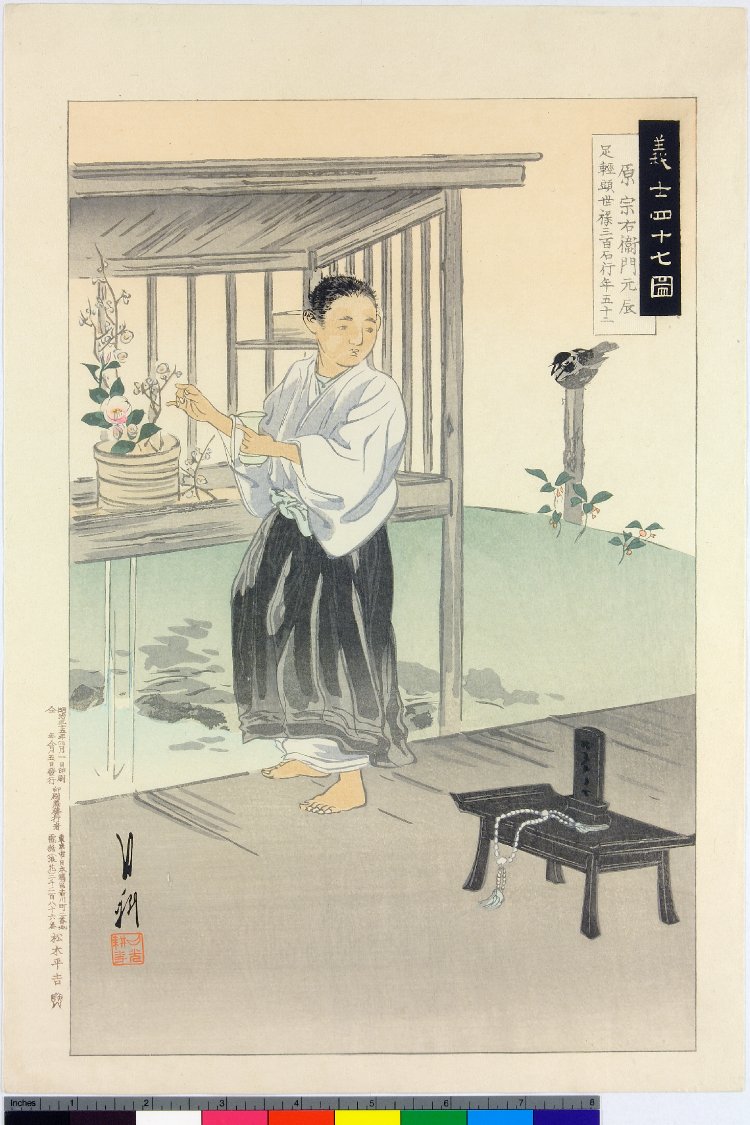
Hara Soemon Mototoki 原惣右衛門元辰 / Gishi shijushichi zu 義士四十七図
Woodblock print
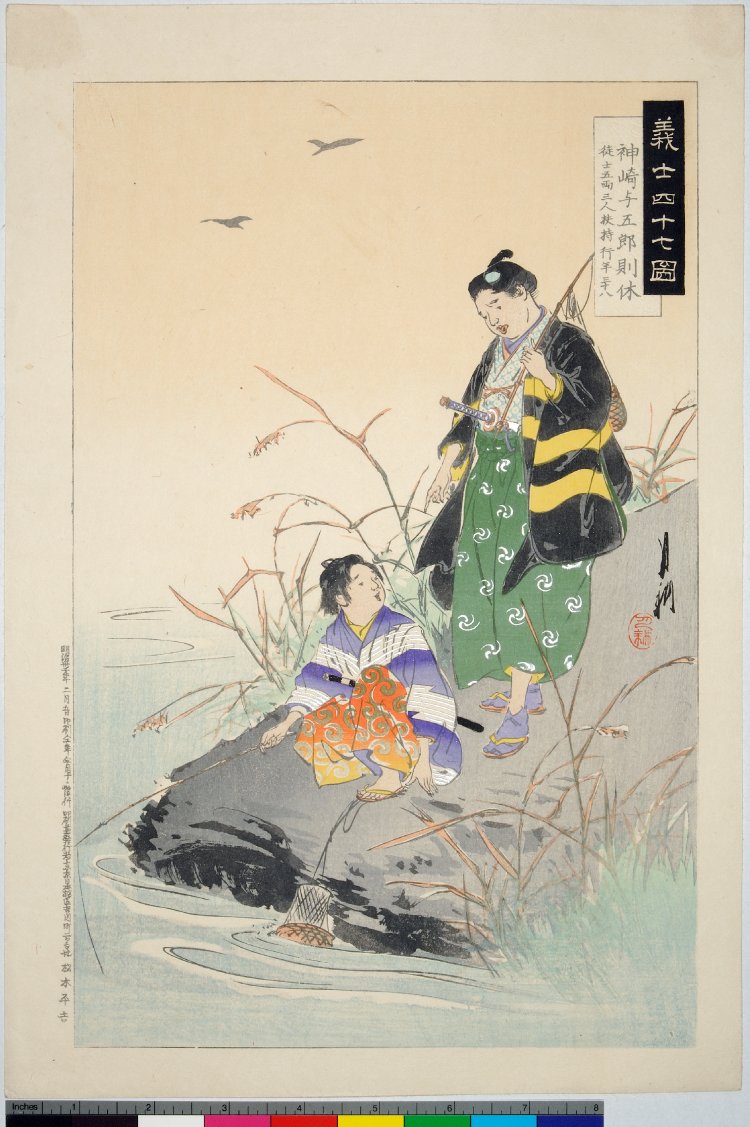
Kanzaki Yogoro Noriyasu 神崎与五郎則休 / Gishi shijushichi zu 義士四十七図
Woodblock print
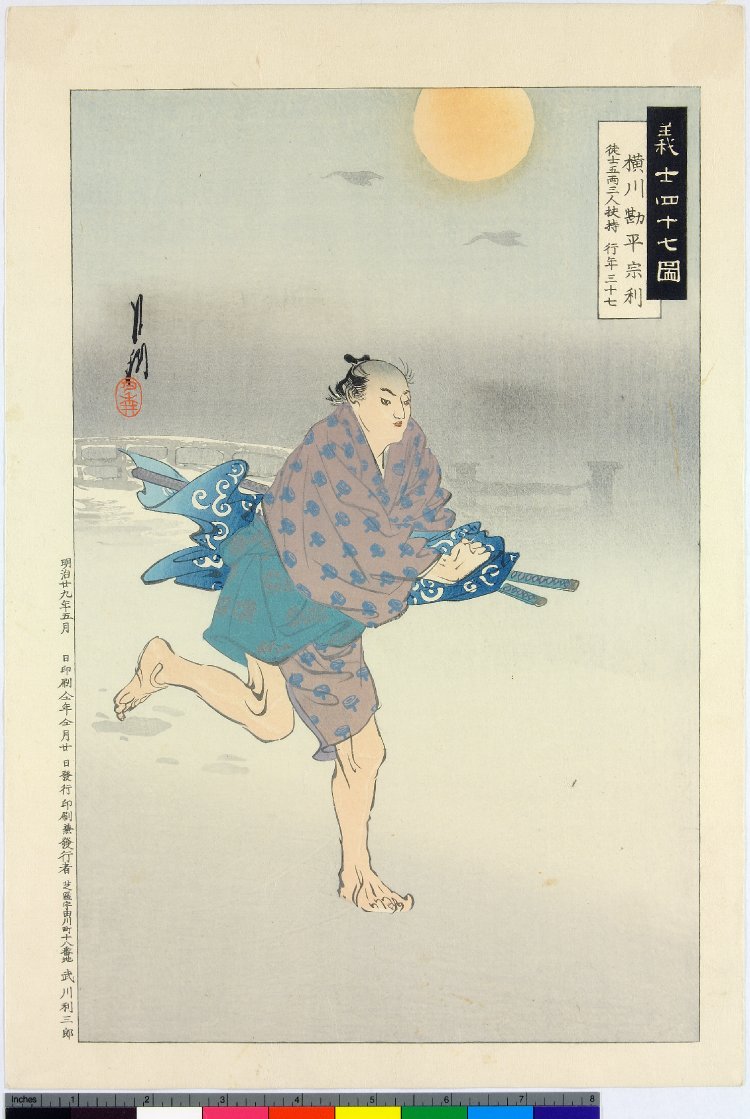
Yokokawa Kanbei Munetoshi 横川勘平宗利 / Gishi shijushichi zu 義士四十七図
Woodblock print
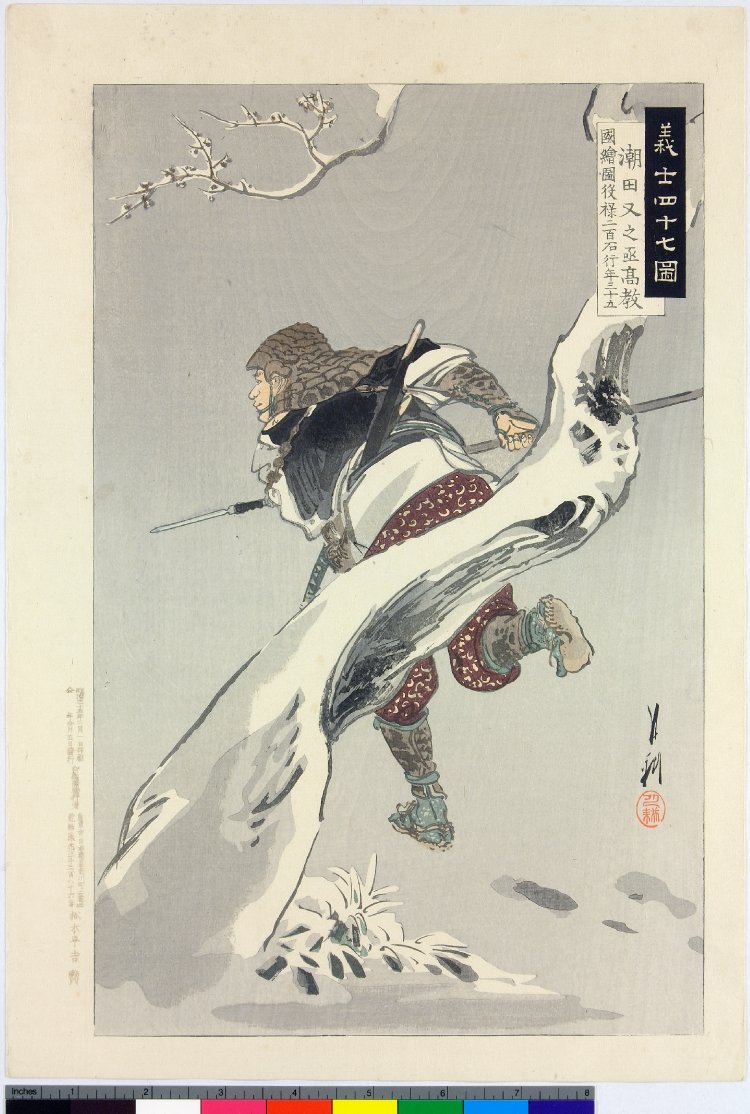
Shioda Matanojo Takanori 潮田又之丞高教 / Gishi shijushichi zu 義士四十七図
Woodblock print
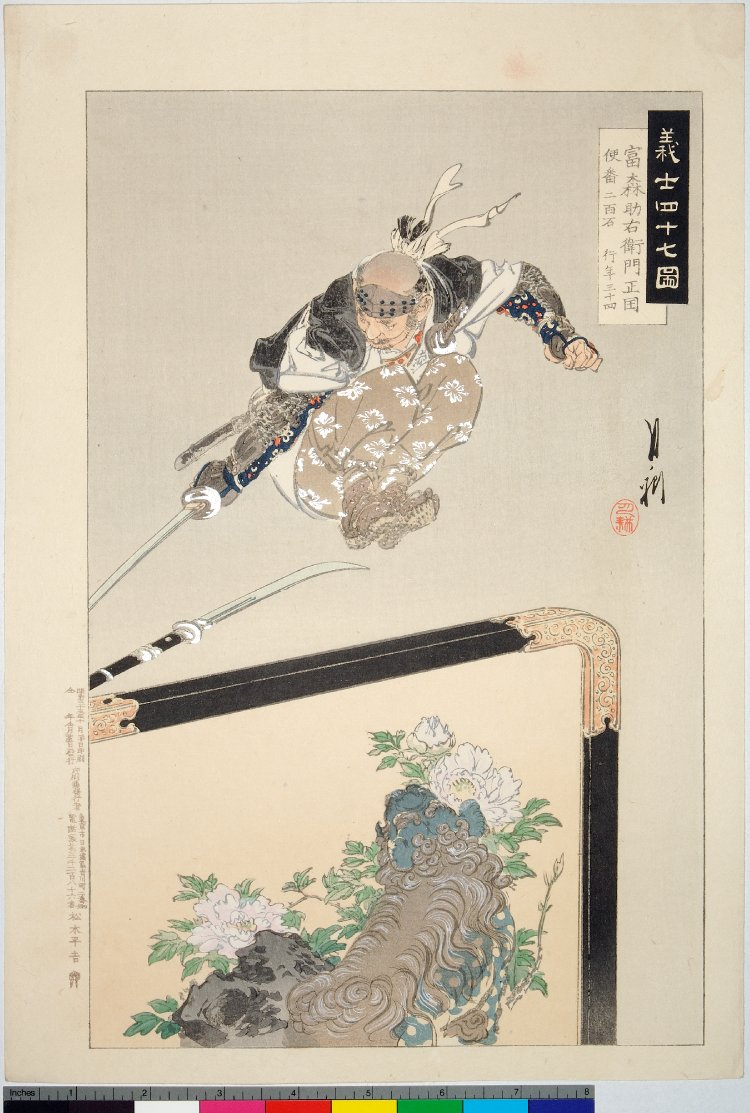
Tominomori Sukeemon Masanori 富森助右衛門正因 / Gishi shijushichi zu 義士四十七図
Woodblock print
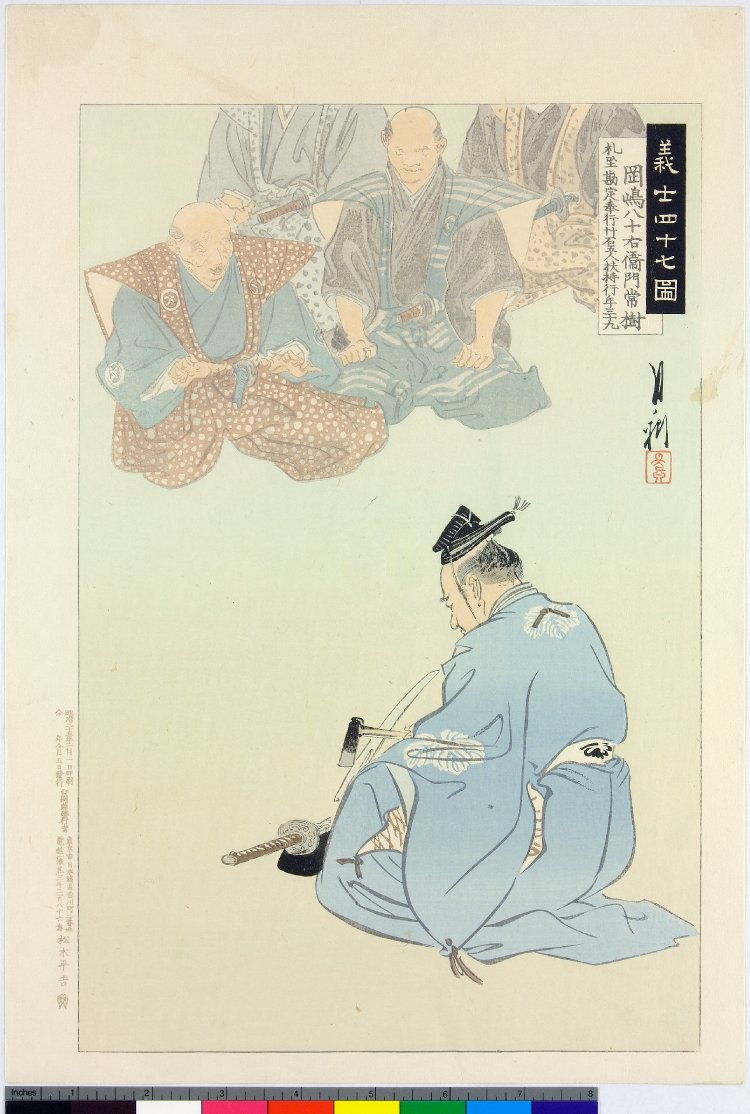
Okajima Yasoemon Tsuneshige 岡嶋八十右衛門常樹 / Gishi shijushichi zu 義士四十七図
Woodblock print
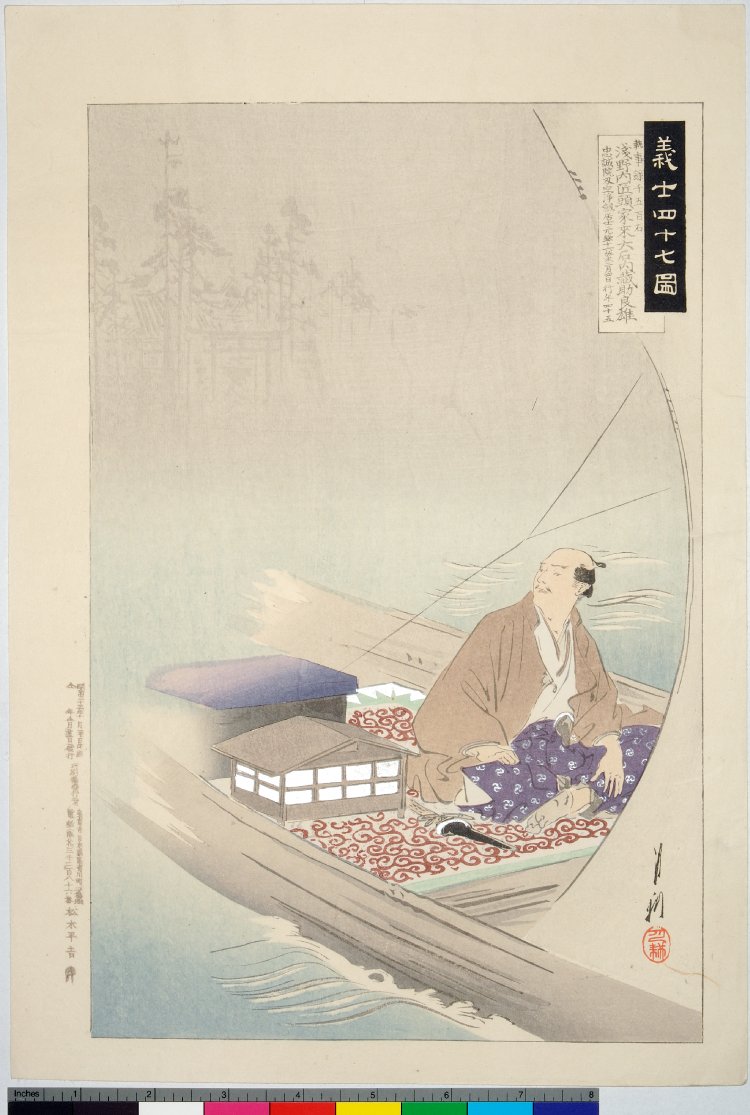
Asano Takumi no kami kerai Oishi Kuranosuke Yoshio 浅野内匠頭家来大石内蔵助良雄 / Gishi shijushichi zu 義士四十七図
Woodblock print

Kimura Okaemon Sadayuki 木村岡右衛門貞行 / Gishi shijushichi zu 義士四十七図
Woodblock print
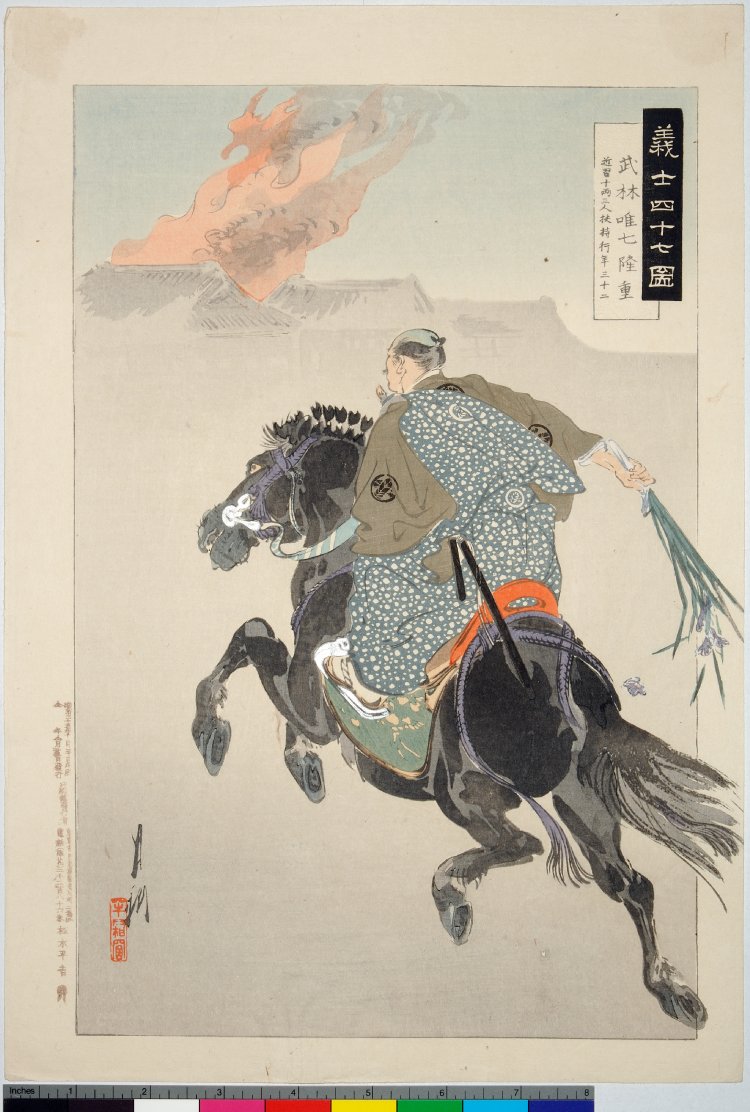
Takebayashi Tadashichi Takashige 武林唯七隆重 / Gishi Shijushichi zu 義士四十七図
Woodblock print
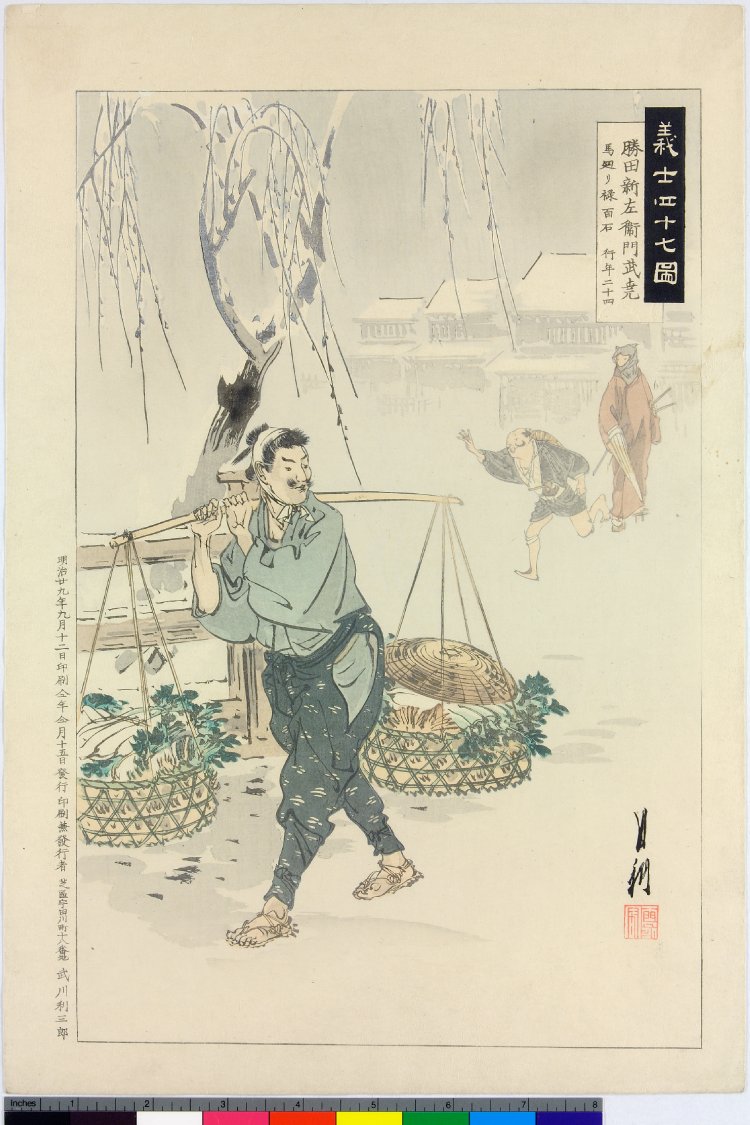
Katsuta Shinzaemon Taketaka 勝田新左衛門武尭 / Gishi shijushichi zu 義士四十七図
Woodblock print
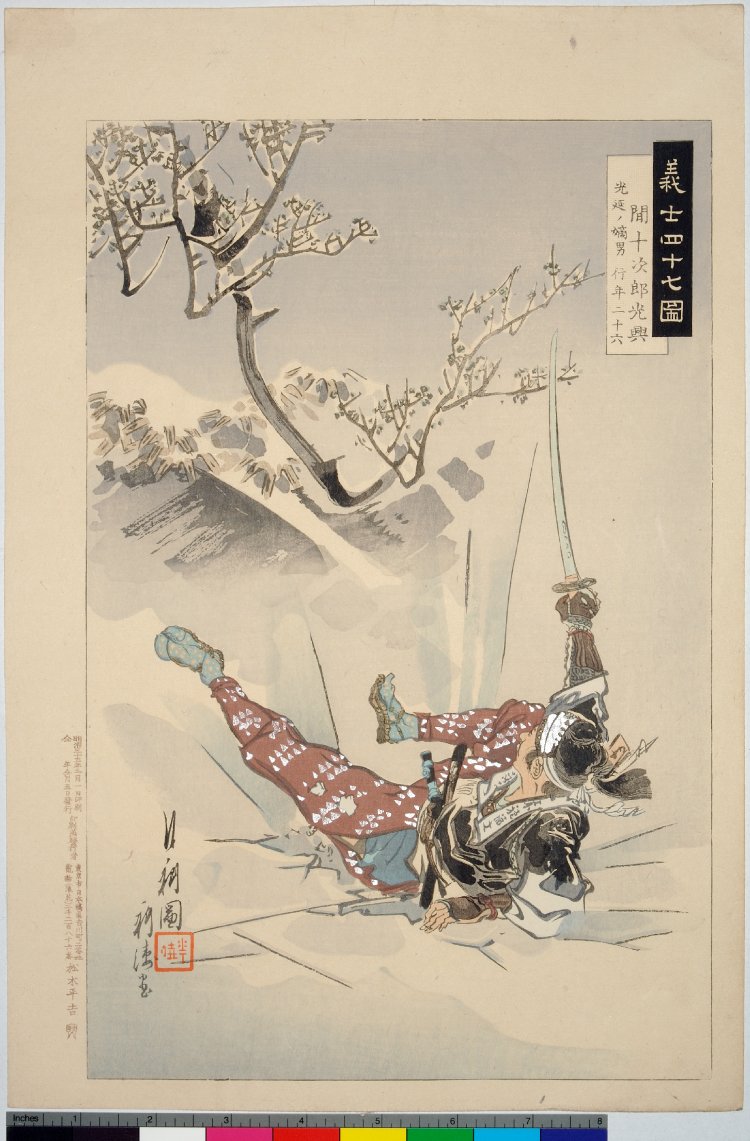
Hazama Jujiro Mitsuoki 間十次郎光興 / Gishi shijushichi zu 義士四十七図
Woodblock print
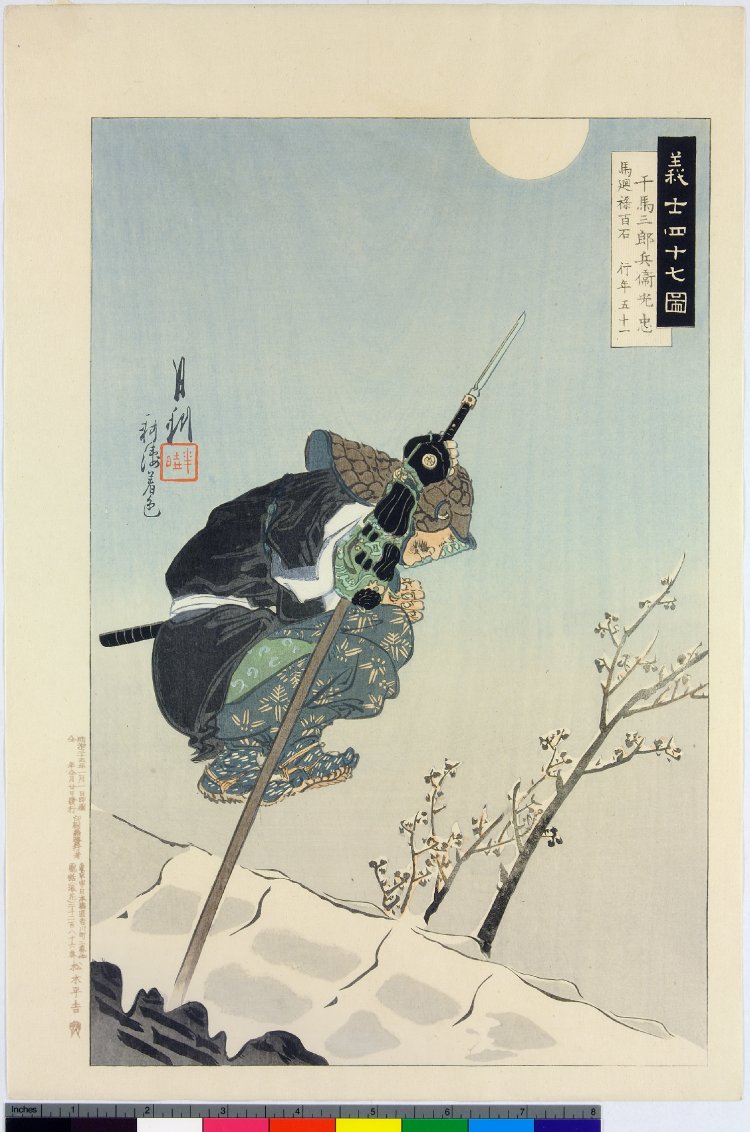
Senba Saburobe Mitsutada 千馬三郎兵衛光忠 / Gishi shijushichi zu 義士四十七図
Woodblock print
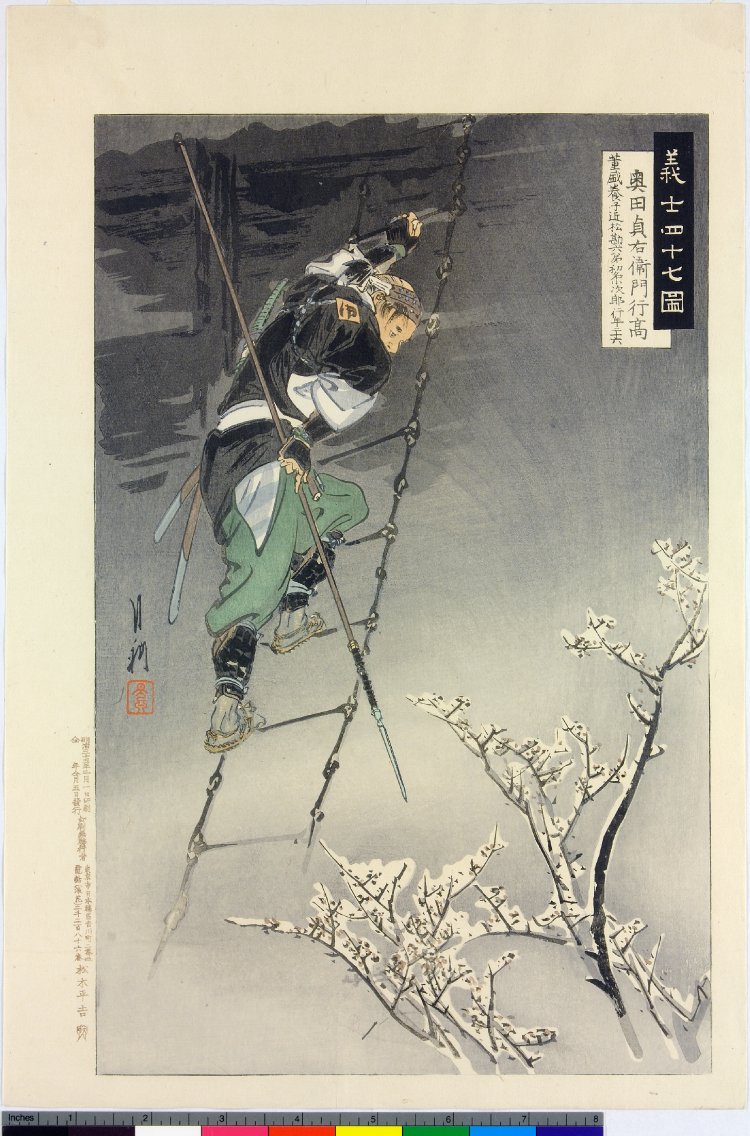
Okuda Sadaemon Yukitaka 奥田貞右衛門行高 / Gishi shijushichi zu 義士四十七図
Woodblock print
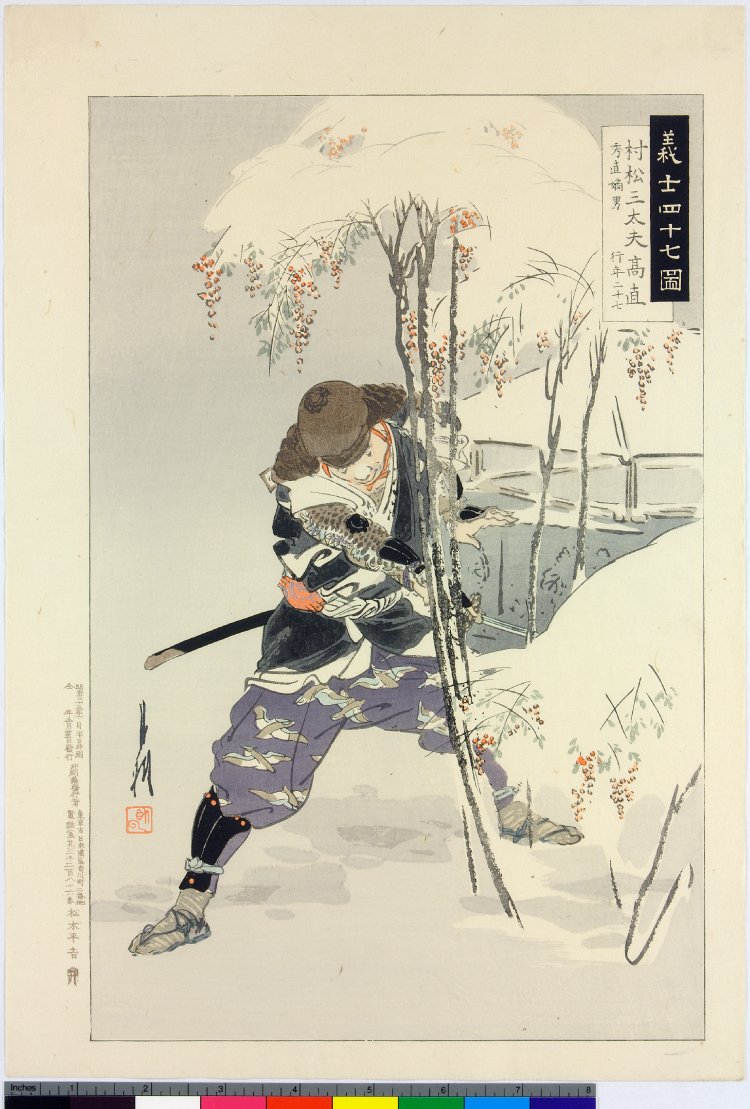
Muramatsu Sandayu Takanao 村松三太夫高直 / Gishi shijushichi zu 義士四十七図
Woodblock print

Kataoka Gengoe Takafusa 片岡源五右衛高房 / Gishi shijushichi zu 義士四十七図
Woodblock print
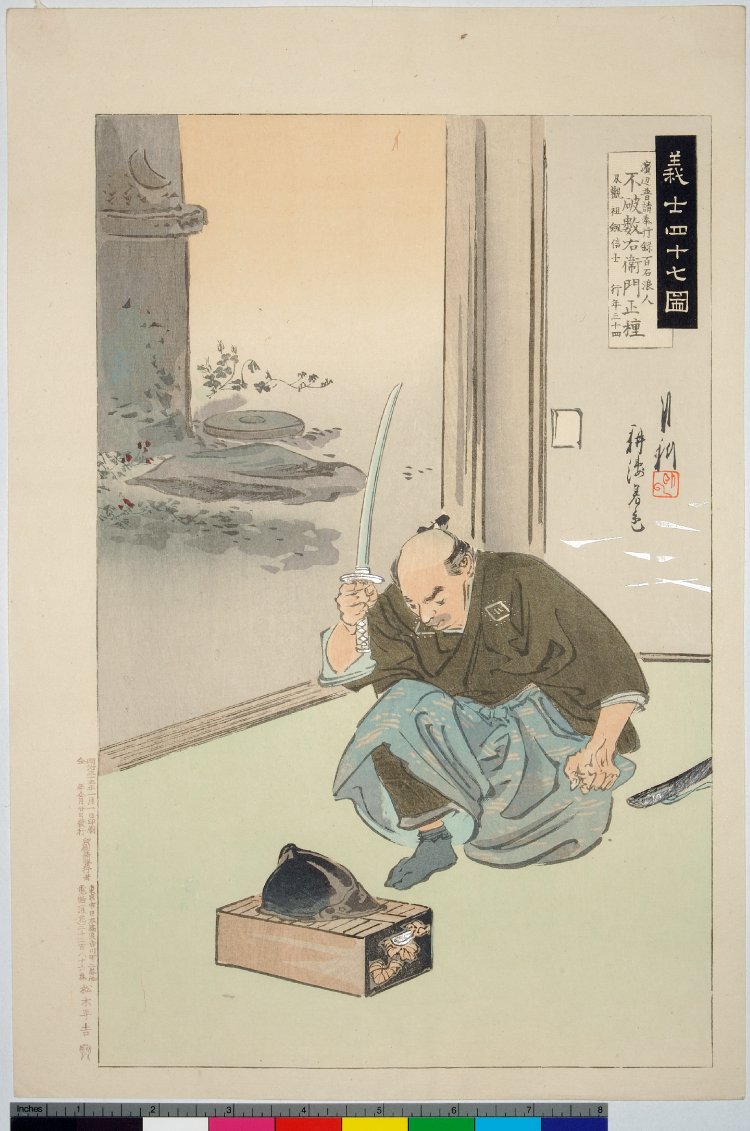
Fuwa Kazuemon Masatane 不破数右衛門正種 / Gishi shijushichi zu 義士四十七図
Woodblock print
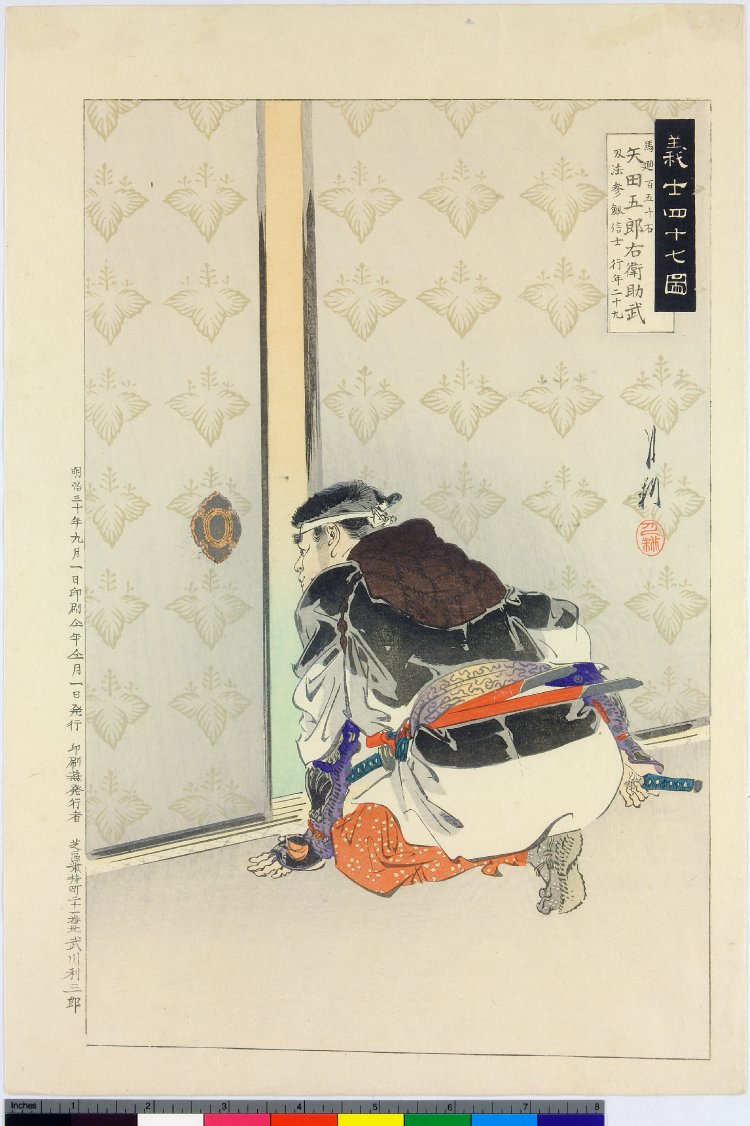
Yada Goroemon Suketake 矢田五郎右衛門助武 / Gishi shijushichi zu 義士四十七図
Woodblock print
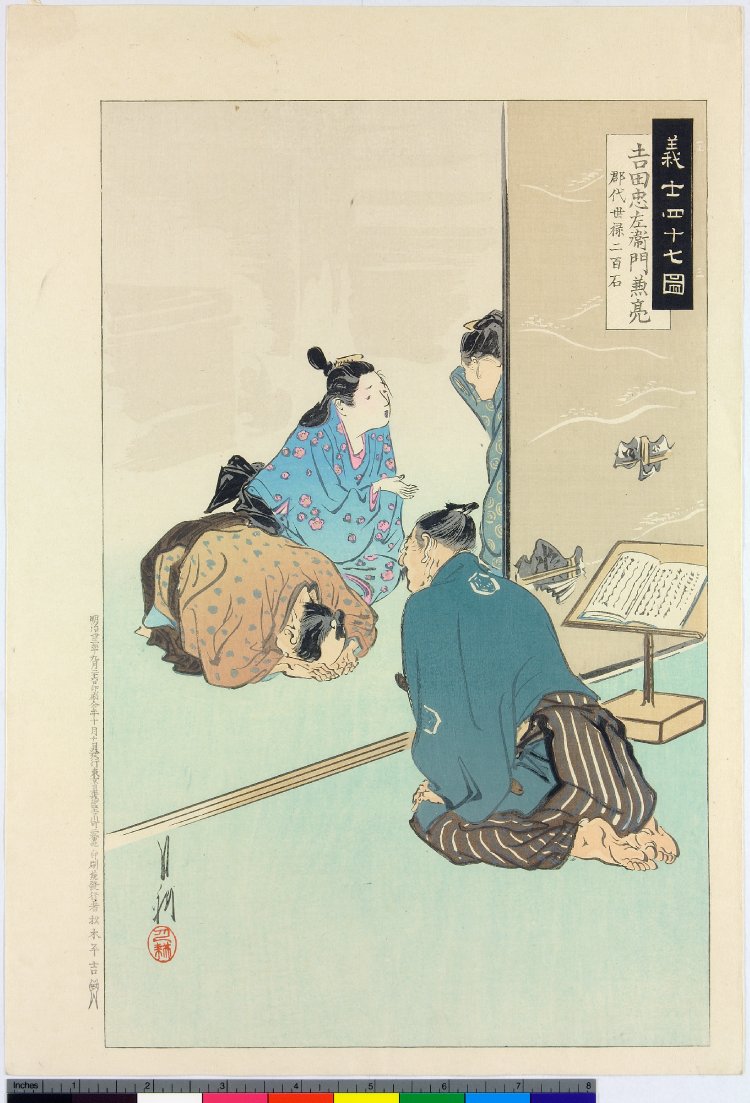
Yoshida Chuzaemon Kanesuke 吉田忠左衛門兼亮 / Gishi shijushichi zu 義士四十七図
Woodblock print
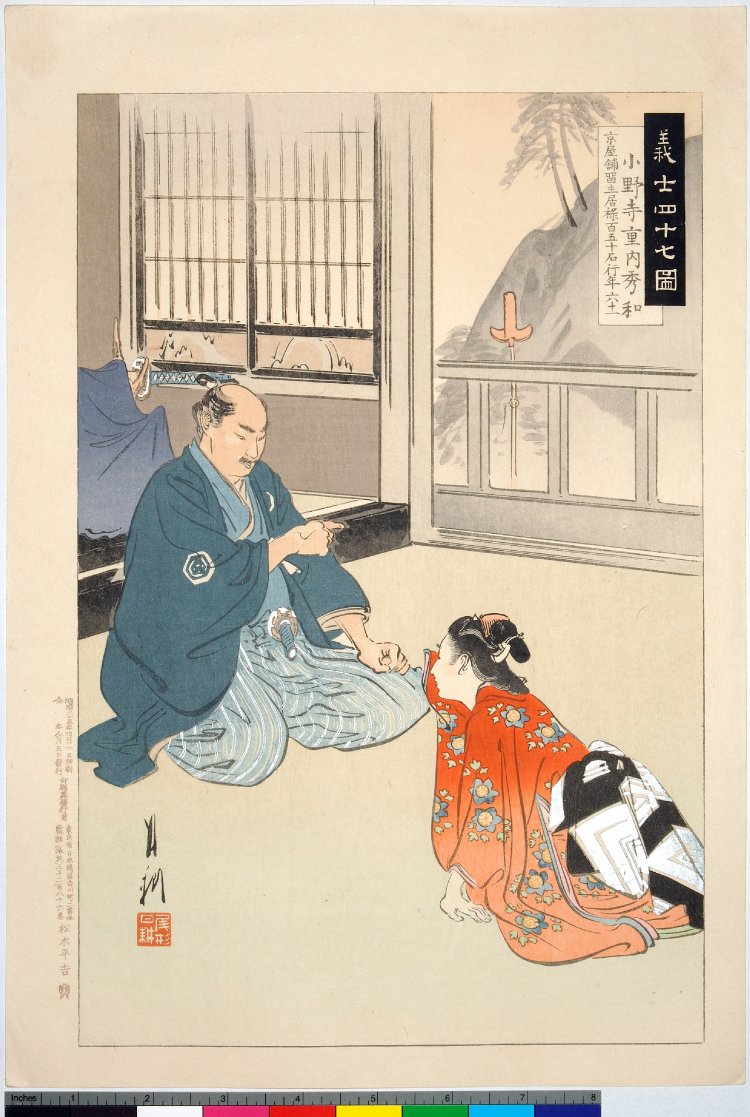
Onodera Junai Hidekazu 小野寺十内秀和 / Gishi shijushichi zu 義士四十七図
Woodblock print
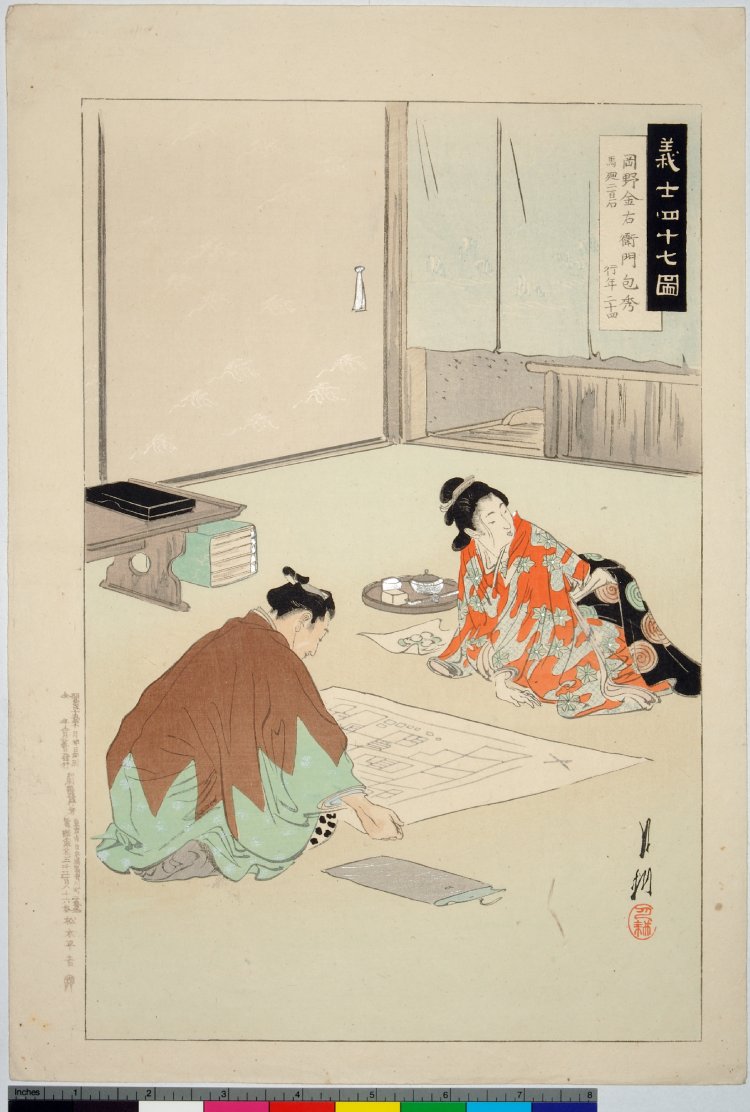
Okano Kinemon Kanehide 岡野金右衛門包秀 / Gishi shijushichi zu 義士四十七図
Woodblock print
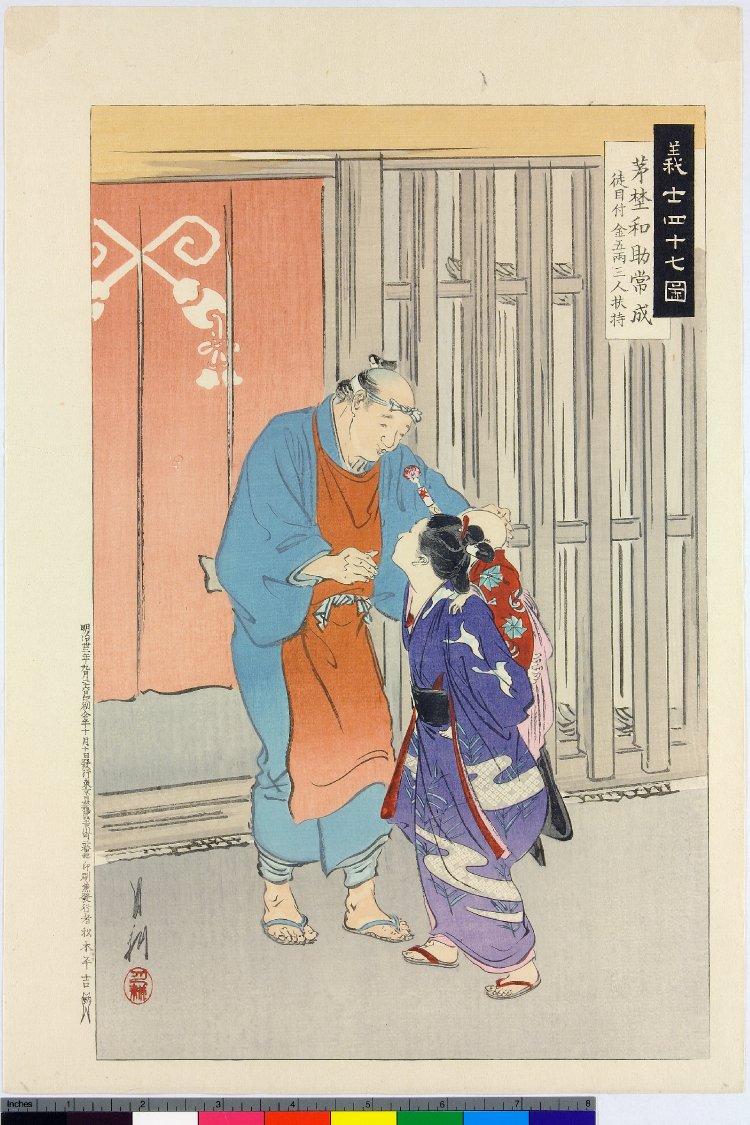
Kayano Wasuke Tsunenari 茅野和助常成 / Gishi shijushichi zu 義士四十七図
Woodblock print

Nakamura Kansuke Masatoki 中村勘助正辰 / Gishi shijushichi zu 義士四十七図
Woodblock print
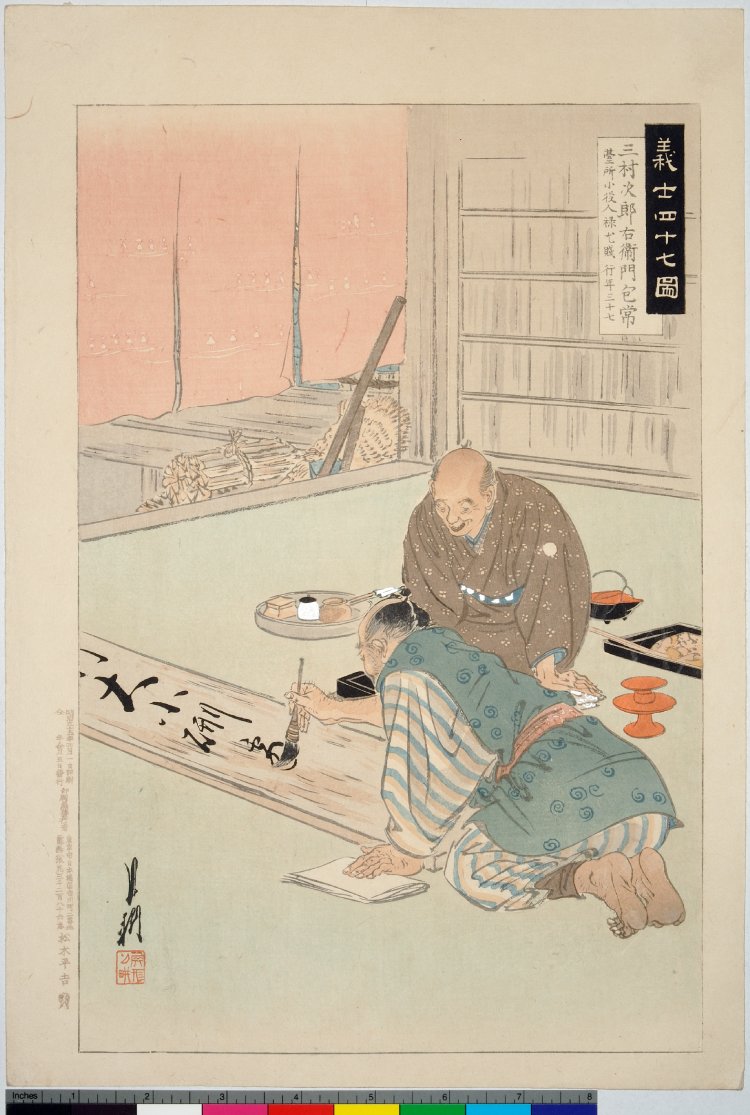
Mimura Jiroemon Kanetsune 三村次郎右衛門包常 / Gishi shijushichi zu 義士四十七図
Woodblock print
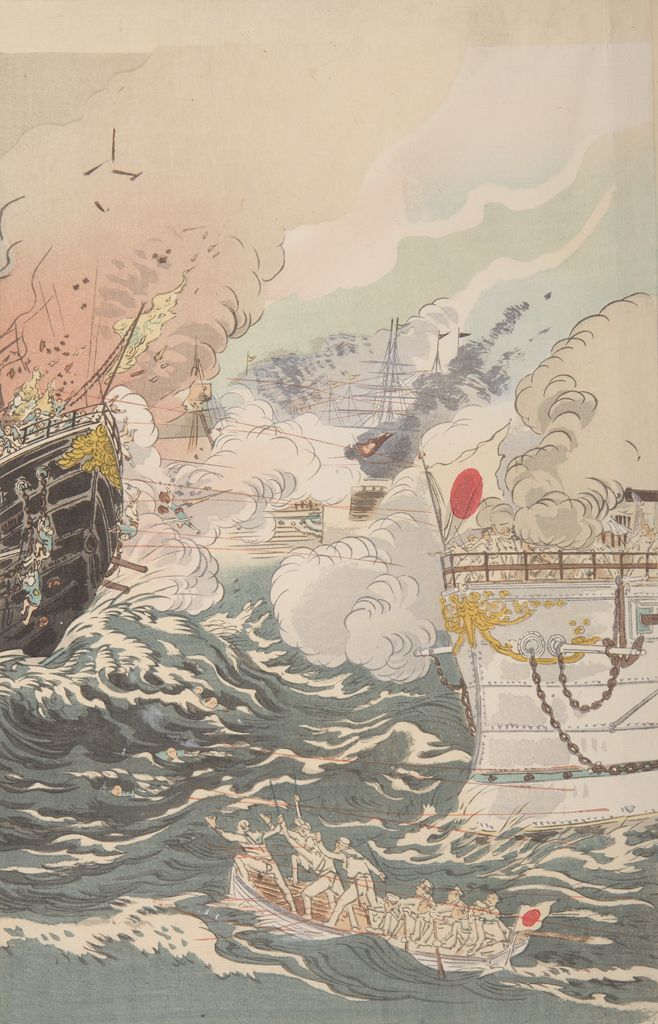
Triptych: Battle of Taikozan Oki: Victory for the Japanese Navy Offshore (Nishin sensō Taikozan Oki Nikkan senshō no zu)
Meiji period,
Woodblock printed "ōban"-sized triptych; ink and color on paper
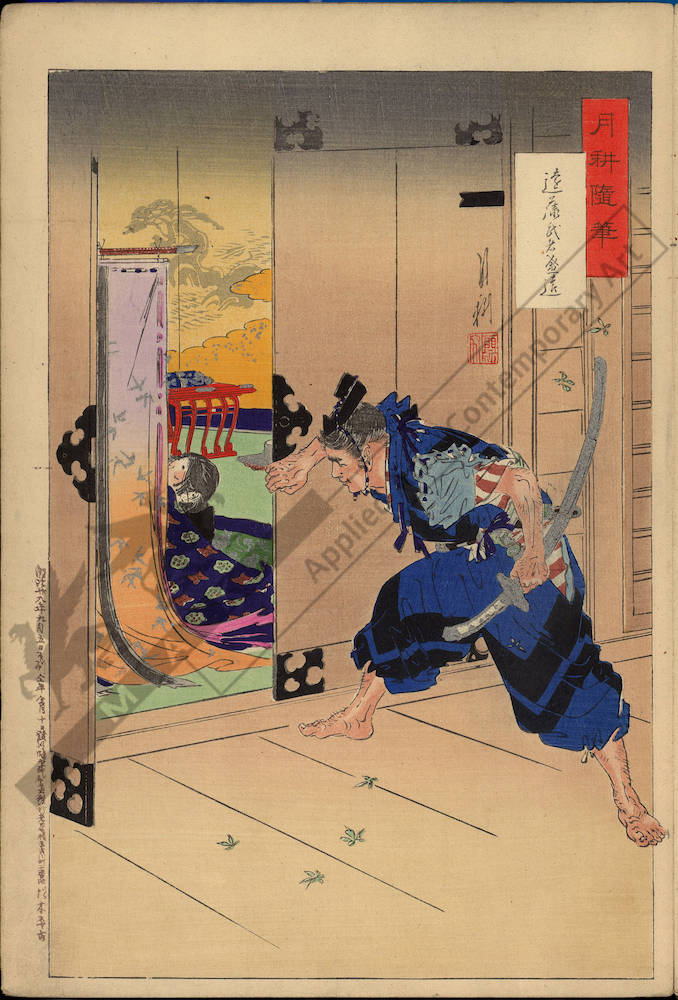
Endo Musha Morito
Woodblock print
totalCount
Woodblock print
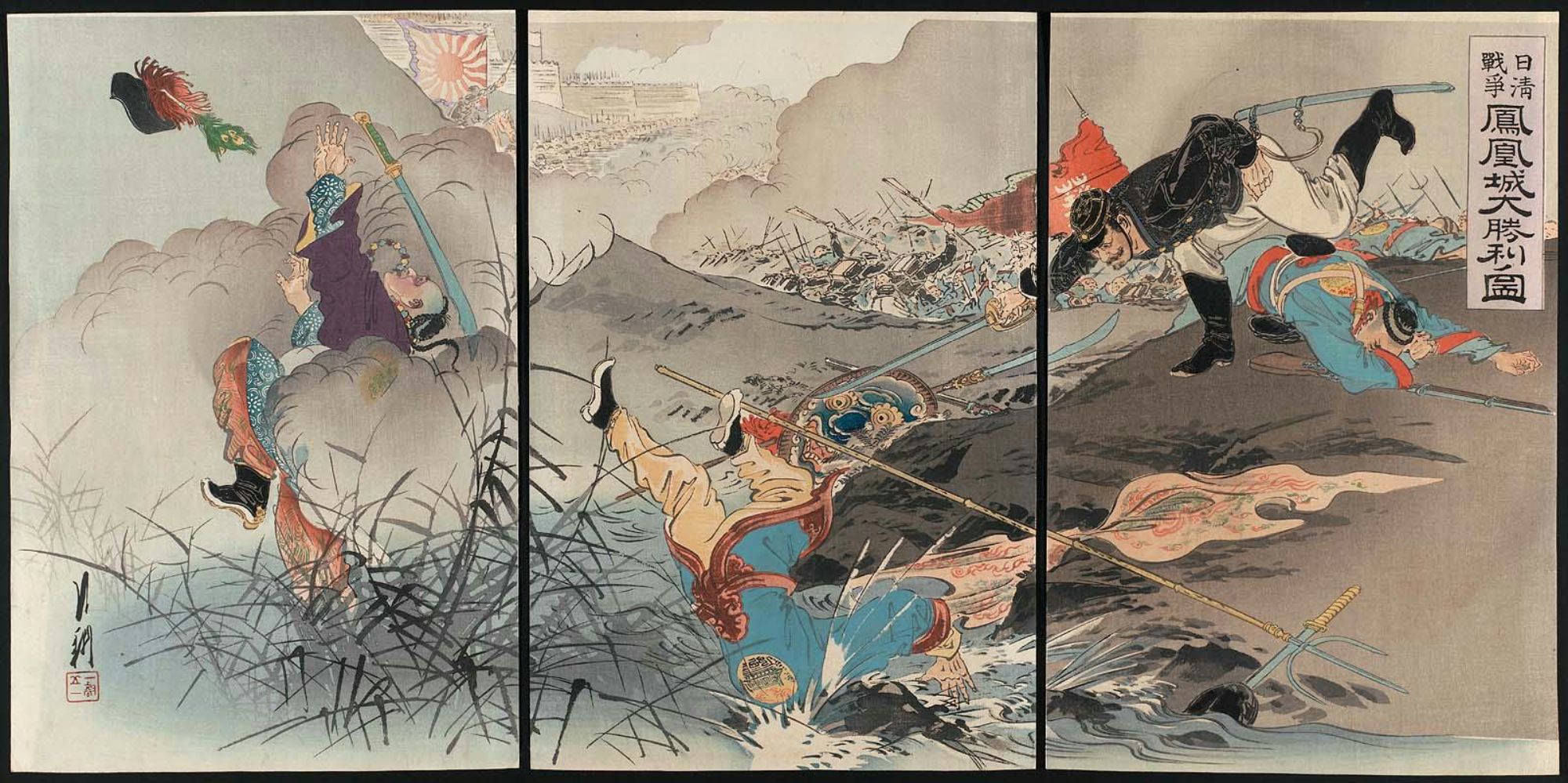
Sino-Japanese War: Picture of the Great Victory at Fenghuangcheng (Nisshin sensô, Hôôjô dai shôri no zu)
Woodblock print
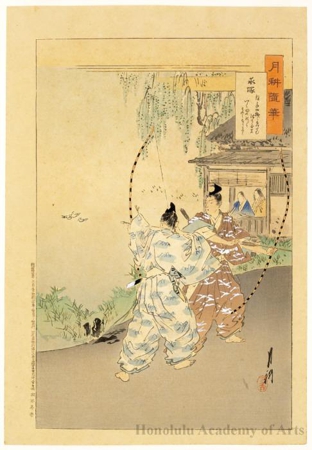
Motomezuka
Woodblock print
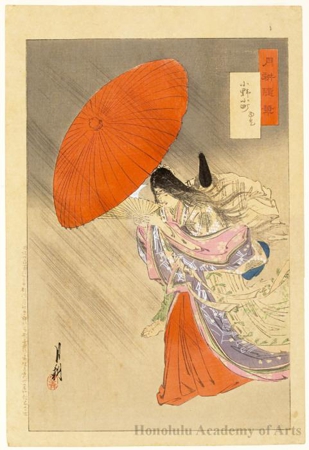
Ono no Komachi: Praying for Rain
Woodblock print
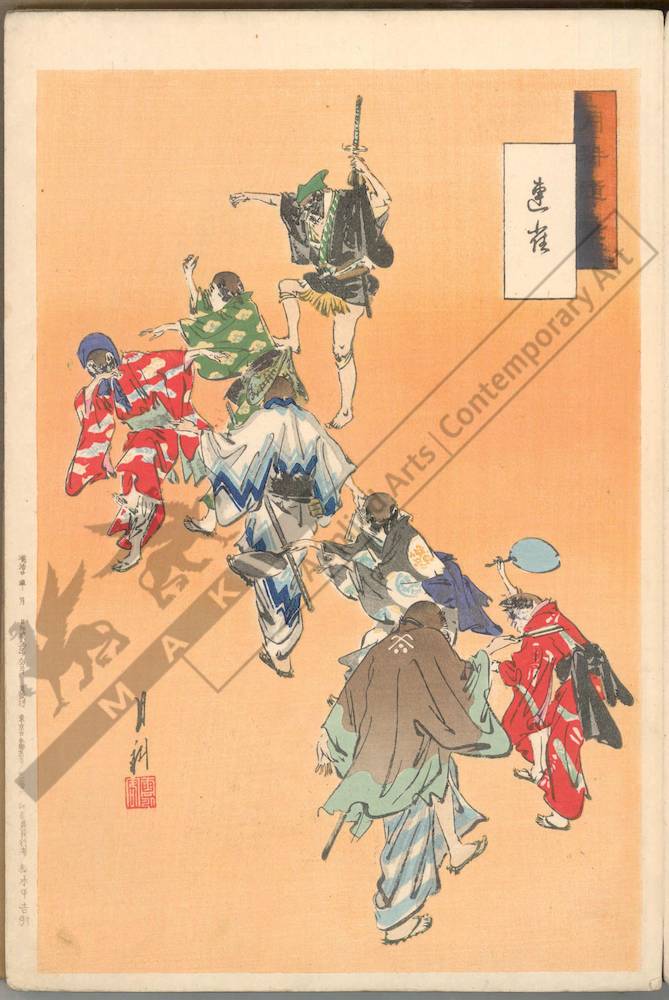
Sparrow Dance (Renjaku), from the series Gekkô Zuihitsu (Gekkô's Miscellany)
Woodblock print
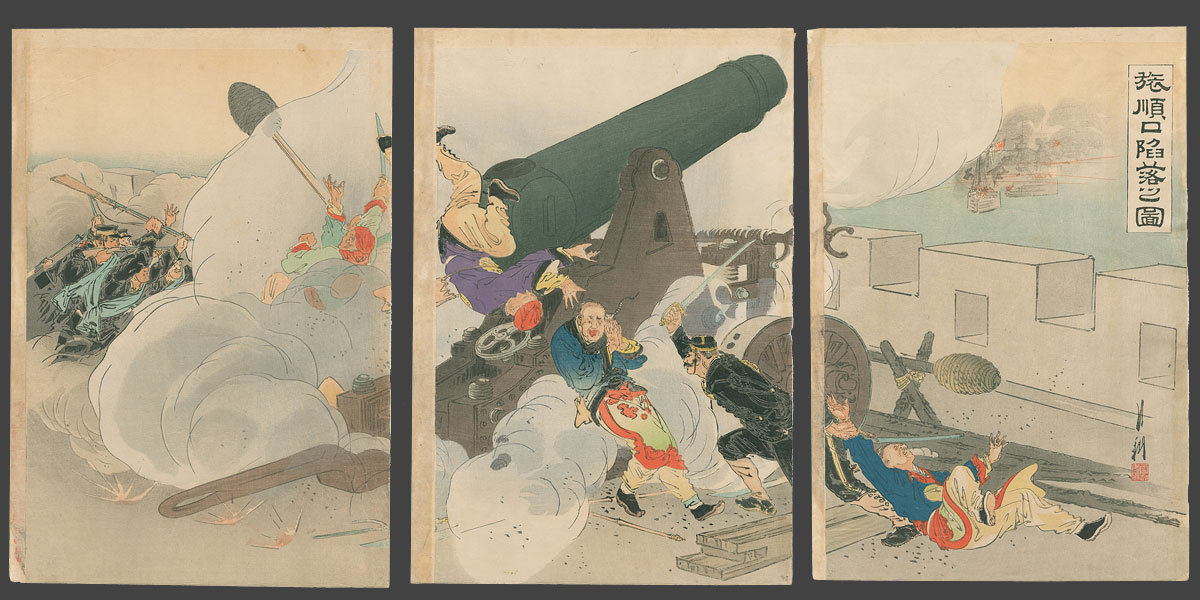
Surrender of Port Arthur
Woodblock print
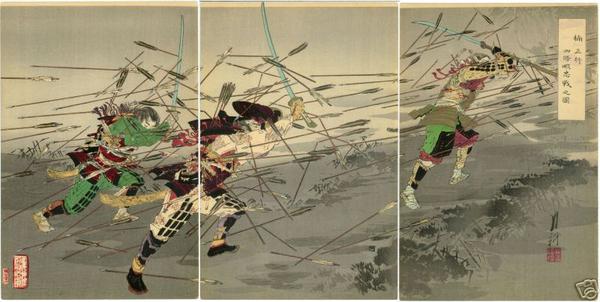
Last Stand of the Kusunoki Clan at Shijonawate — Kusunoki Shijonawate chusen nozu - Masatsura
Woodblock print
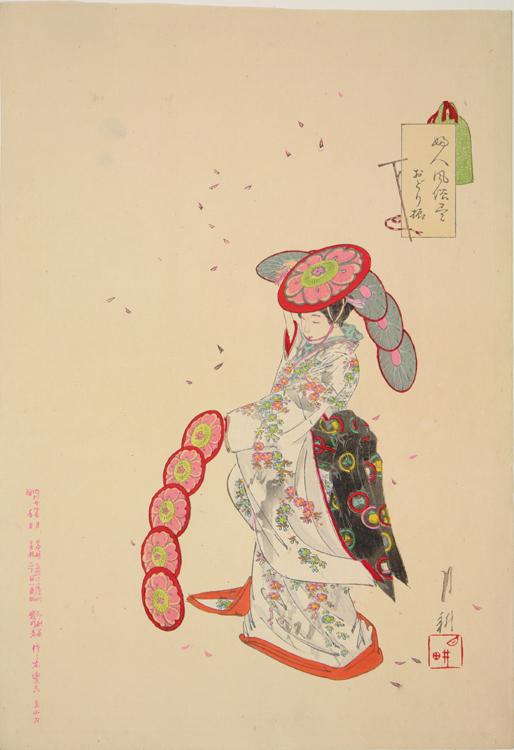
Dancing Girl, from the series Activities of Women
Woodblock print

Orchid
Woodblock print
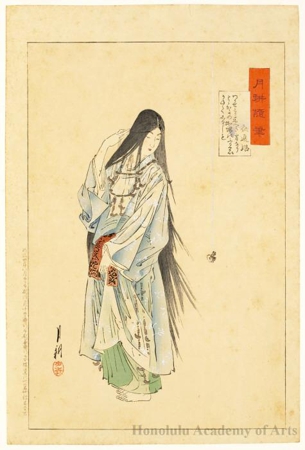
Princess Sotoori (Sotoori-hime), from the series Sketches by Gekkô (Gekkô zuihitsu)
Woodblock print
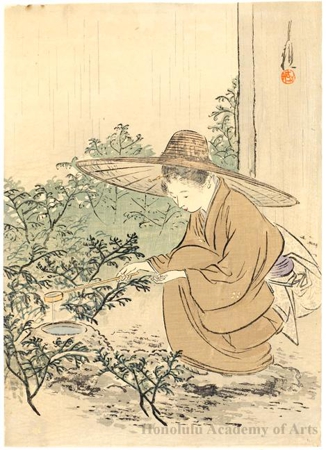
Opening the Teahouse
Woodblock print

Flower vendor and woman who arranges flowers
Woodblock print
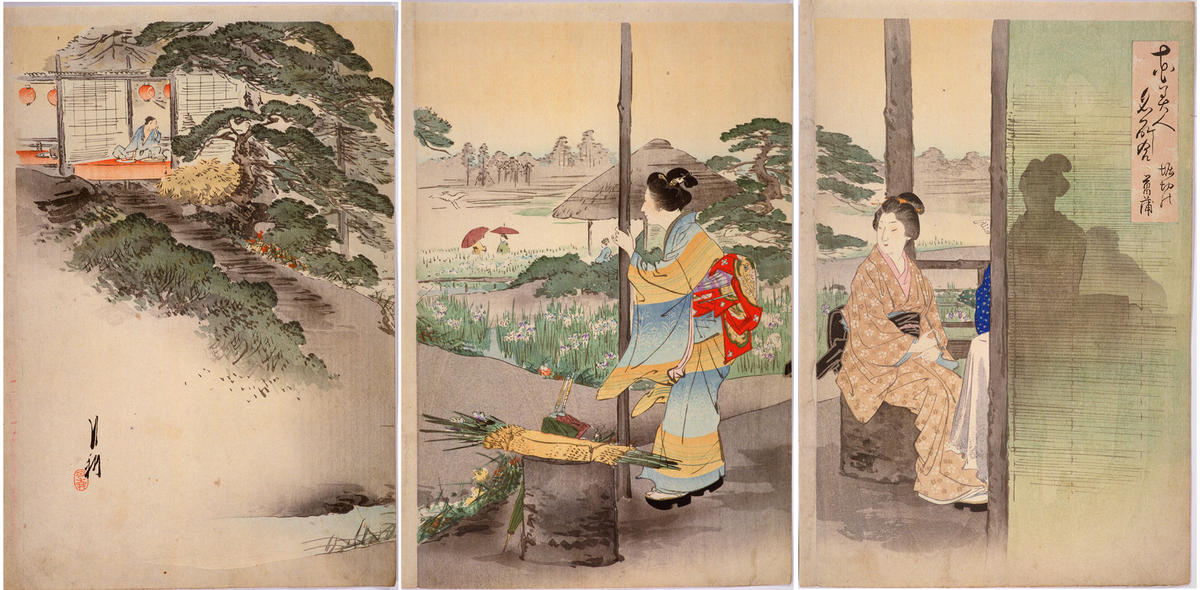
Irises at Horikiri — 堀切の菖蒲
Woodblock print
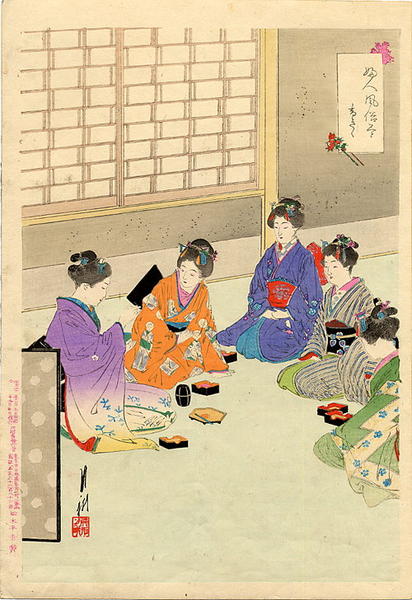
Incense ceremony
Woodblock print
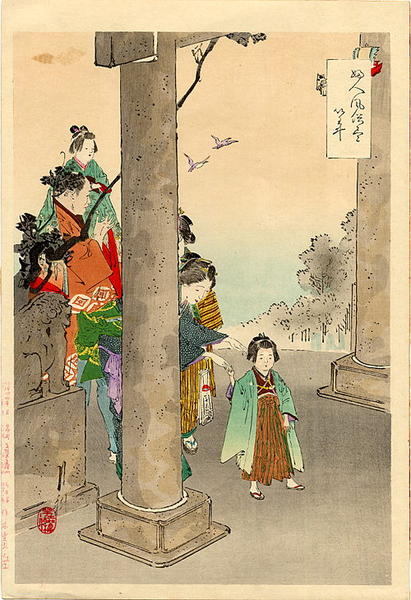
Celebration - Visiting the Shrine for Shichigosan — Iwai
Woodblock print
Hide and seek
Woodblock print