Katsushika Hokusai
葛飾北斎
Also known as: Hokusai, Shunro, Sori, Kako, Taito, Iitsu, Gakyo Rojin Manji
1760–1849
Biography
Katsushika Hokusai (葛飾北斎, 1760–1849) stands as one of the most prolific, inventive, and internationally influential artists in the history of Japanese art. Over a career spanning more than seven decades, he produced an estimated thirty thousand paintings, sketches, woodblock prints, and illustrated books, reinventing himself and his art with a restlessness that became legendary. His most iconic image, "The Great Wave off Kanagawa," is arguably the single most recognized work of Japanese art in the world, a composition so powerful that it transcended its origins to reshape the visual imagination of artists across Europe and beyond.
Hokusai was born on October 31, 1760, in the Katsushika district of Edo, the sprawling capital that would later become Tokyo. The details of his earliest years remain somewhat obscure. He was likely born into an artisan family; by some accounts his father was Nakajima Ise, a mirror-maker for the shogun, though Hokusai may have been adopted. What is certain is that from a young age he displayed an insatiable curiosity about the visual world. He later recalled that by the age of six he had developed an obsession with drawing the forms of things.
At around fourteen, Hokusai was apprenticed to a wood-block engraver, where he learned the technical craft of carving the blocks used to produce printed images. This hands-on knowledge of the printing process would inform his work for the rest of his life, giving him an unusual command over the relationship between design and reproduction. In 1778, at the age of eighteen, he entered the studio of Katsukawa Shunsho, one of the leading ukiyo-e masters of the day, renowned for his portraits of kabuki actors. Under Shunsho's guidance, the young artist adopted the name Shunro and began producing actor prints and illustrations in the house style. His earliest published works, appearing around 1779, were competent contributions to the genre, but they already hinted at a restless ambition that would not be contained by any single school or tradition.
The death of Shunsho in 1793 marked a turning point. Hokusai was expelled from the Katsukawa school — or left of his own accord, depending on the source — and entered a period of intense experimentation. He immersed himself in the study of Chinese painting, classical Japanese Yamato-e and Rinpa traditions, and, remarkably, Western copper-engraving techniques that had filtered into Japan through the Dutch trading post at Nagasaki. This eclectic absorption of styles was reflected in the bewildering succession of names he adopted: Sori, Kako, Taito, Iitsu, and eventually Gakyo Rojin Manji, "the old man mad about painting." Over the course of his lifetime, he changed his artistic name more than thirty times, each new name signaling a fresh phase of creative ambition.
During the 1790s and early 1800s, Hokusai turned his attention to surimono — privately commissioned prints of exceptional refinement, produced in small editions for poetry clubs and wealthy patrons. These exquisite works, often combining verse with images of still lifes, birds, landscapes, and seasonal motifs, allowed him to experiment with lavish metallic pigments, embossing, and other techniques that were prohibitively expensive for commercial editions. Simultaneously, he became one of the most sought-after book illustrators in Edo, contributing designs to novels, poetry anthologies, and instructional manuals.
It was during this middle period that Hokusai began to develop the landscape sensibility that would define his greatest achievements. While ukiyo-e had traditionally focused on the "floating world" of courtesans, actors, and urban pleasures, Hokusai increasingly turned his eye toward the natural world — mountains, rivers, waterfalls, and the ocean — as well as the daily lives of ordinary working people. He was not the first ukiyo-e artist to depict landscapes, but he brought to the genre a compositional boldness, a sense of cosmic scale, and a feeling for the dynamic forces of nature that had no precedent in the tradition.
Hokusai's greatest series were produced when he was already in his seventies. Between approximately 1830 and 1832, he designed "Thirty-six Views of Mount Fuji" (Fugaku Sanjurokkei), the series that would secure his immortality. Originally planned as thirty-six prints, the set proved so popular that ten additional compositions were added, bringing the total to forty-six. The series presented Japan's sacred mountain from every conceivable angle and distance — glimpsed through barrel-makers' hoops, looming behind fishing boats in a storm, framed by cherry blossoms, or dominating the horizon as travelers crossed vast plains. The first print in the series, "The Great Wave off Kanagawa," depicted a towering, claw-like wave threatening to engulf small fishing boats while Mount Fuji sat serene and diminutive in the background. Its composition — the dramatic diagonal of the wave, the contrast between human vulnerability and natural force, the startling use of imported Prussian blue pigment — was unlike anything seen before in Japanese or Western art.
Another monumental late work was the "Hokusai Manga," a fifteen-volume collection of sketches that Hokusai began publishing in 1814 and which continued to appear posthumously until 1878. The volumes contain thousands of images depicting everything from human figures in every posture and occupation to animals, plants, landscapes, architectural studies, supernatural beings, and pure abstractions of natural forces like wind and water. The Manga was conceived partly as a drawing manual for students, but it transcended that purpose to become a vast visual encyclopedia of the observable world, animated by Hokusai's inexhaustible curiosity and impish wit.
When Japan ended its long period of isolation in the 1850s, Japanese woodblock prints began to flood into Europe, where they ignited the phenomenon of "Japonisme" that swept through the French art world in the 1860s and 1870s. Hokusai was at its center. Claude Monet hung Japanese prints in his dining room at Giverny. Edgar Degas studied their asymmetric compositions and flattened perspectives. James McNeill Whistler drew on their tonal subtlety. The Art Nouveau movement absorbed their flowing organic lines. Hokusai's prints helped European artists break free from the conventions of academic perspective, contributing directly to the development of Impressionism, Post-Impressionism, and early modernism.
Hokusai died on May 10, 1849, in Edo, at the age of eighty-eight. According to a widely reported account, his last words were: "If only Heaven will give me just another ten years... just another five more years, then I could become a real painter." Today, Hokusai is recognized not only as the supreme master of the Japanese woodblock print but as one of the most important artists in world history. His works are held in major collections worldwide, including the British Museum, the Metropolitan Museum of Art, the Art Institute of Chicago, and the dedicated Sumida Hokusai Museum in Tokyo.
Key Facts
- Active Period
- 1760–1849
- Movement
- Ukiyo-e
- Works Indexed
- 200
Frequently Asked Questions
What is Katsushika Hokusai known for?
Katsushika Hokusai (葛飾北斎, 1760–1849) stands as one of the most prolific, inventive, and internationally influential artists in the history of Japanese art. Over a career spanning more than seven decades, he produced an estimated thirty thousand paintings, sketches, woodblock prints, and illustrated books, reinventing himself and his art with a restlessness that became legendary. His most iconic image, "The Great Wave off Kanagawa," is arguably the single most recognized work of Japanese art in the world, a composition so powerful that it transcended its origins to reshape the visual imagination of artists across Europe and beyond.
When was Katsushika Hokusai active?
Katsushika Hokusai was active from 1760 to 1849. They were associated with the Ukiyo-e movement.
What artistic movements influenced Katsushika Hokusai?
Katsushika Hokusai's work was shaped by the Ukiyo-e tradition in Japanese woodblock printmaking. Ukiyo-e: Ukiyo-e ("pictures of the floating world") is the dominant tradition of Japanese woodblock printing, flourishing from the seventeenth through nineteenth centuries.
Where can I see Katsushika Hokusai's original prints?
Original prints by Katsushika Hokusai can be found in collections including Victoria and Albert Museum, Art Institute of Chicago, Cleveland Museum of Art.
External Resources
Woodblock Prints by Katsushika Hokusai (200)

Picnic party
c. 1801/07
Color woodblock print; surimono

Admiring wisteria
c. 1801-07
Color woodblock print; ebangire, surimono

Parody of the play "Musume Dojoji"
c. 1801/05
Color woodblock print; kokonotsugiri-ban, surimono

Mount Fuji with Cherry Trees in Bloom
c. 1801/05
Color woodblock print; surimono

A Wayside Scene (Oji)
1801–04
Color woodblock print; oban surimono

Birds of the Capital (Miyakodori)
c. 1802
Color woodblock printed book; 1 vol.

Asakusa Festival (Asakusa matsuri), from the illustrated book "Picture Book of Amusements of the East (Ehon Azuma asobi)"
c. 1802
Color woodblock print; double-page illustration from book

Plum Blossom and the Moon from the Book Mount Fuji in Spring (Haru no Fuji)
c. 1803
Woodblock- printed book

Parody of Ariwara no Narihira's eastern journey
c. 1803
Color woodblock print; oban, surimono

Visitors to the Hachiman shrine
c. 1803/04
Color woodblock print

Bon Festival Dance
c. 1804/06
Color woodblock print; surimono

Returning Sails at Yabase (Yabase no kiban), from the series Eight Views of Omi in Etching Style (Doban Omi hakkei)
1804/16
Color woodblock print; horizontal koban

Snow at Dusk at Hira (Hira no bosetsu), from the series Eight Views of Omi in Etching Style (Doban Omi hakkei)
1804/16
Color woodblock print; horizontal koban

Shono, from an untitled series of the fifty-three stations of the Tokaido
c. 1804
Color woodblock print; kokonotsugiri-ban

Travelers' tea house
c. 1804
Color woodblock print; ebangire, surimono

Girl at the window
c. 1804
Color woodblock print; surimono

Descending Geese at Katada (Katada no rakugan), from the series Eight Views of Omi in Etching Style (Doban Omi hakkei)
1804/16
Color woodblock print; horizontal koban

Illustration of products in Yoshida
1804
Color woodblock print

Comb Products in Tsuchiyama
c. 1804
Color woodblock print

Eight Views of Omi in Etching Style (Doban Omi hakkei) and cover sheet
1804/16
Color woodblock print; horizontal koban

Evening Glow at Seta (Seta no sekisho), from the series Eight Views of Omi in Etching Style (Doban Omi hakkei)
1804/16
Color woodblock print; horizontal koban

Women Visiting the Shrine of Shoichii Taro Inari Daimyo
about 1804
Color woodblock print; long surimono

Evening Bell at Mii (Mii no bansho), from the series Eight Views of Omi in Etching Style (Doban Omi hakkei)
1804/16
Color woodblock print; horizontal koban

Night Rain at Karasaki (Karasaki no yoru no ame), from the series Eight Views of Omi in Etching Style (Doban Omi hakkei)
1804/16
Color woodblock print; horizontal koban

Clearing Weather at Awazu (Awazu no seiran), from the series Eight Views of Omi in Etching Style (Doban Omi hakkei)
1804/16
Color woodblock print; horizontal koban

Boating parties on the Sumida River
c. 1808/12
Color woodblock print; nagaban, surimono

New Year's Day at Ogi-ya brothel
1811
Color woodblock prints; oban pentaptych

A Keg of Sake and a Basket of Oranges
1820
Color woodblock print; surimono

Empress Jito (Jito Tenno) from the series "One Hundred Poems as Explained by the Wet Nurse (Hyakunin isshu uba ga etoki)"
c. 1835
Color woodblock print; oban

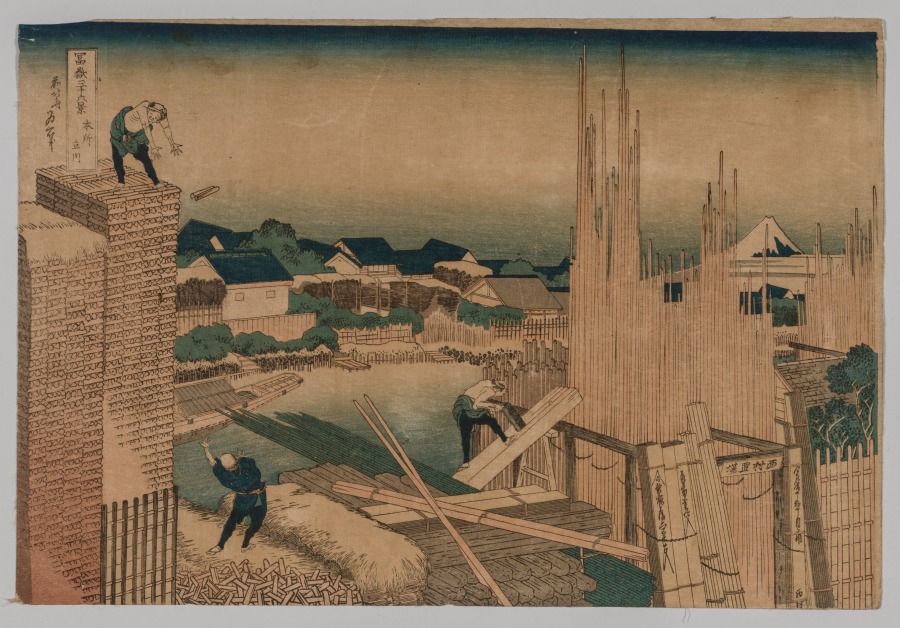
Surugadai in Edo (Toto surugadai), from the series Thirty-six Views of Mt. Fuji (Fugaku sanjurokkei)
Woodblock print
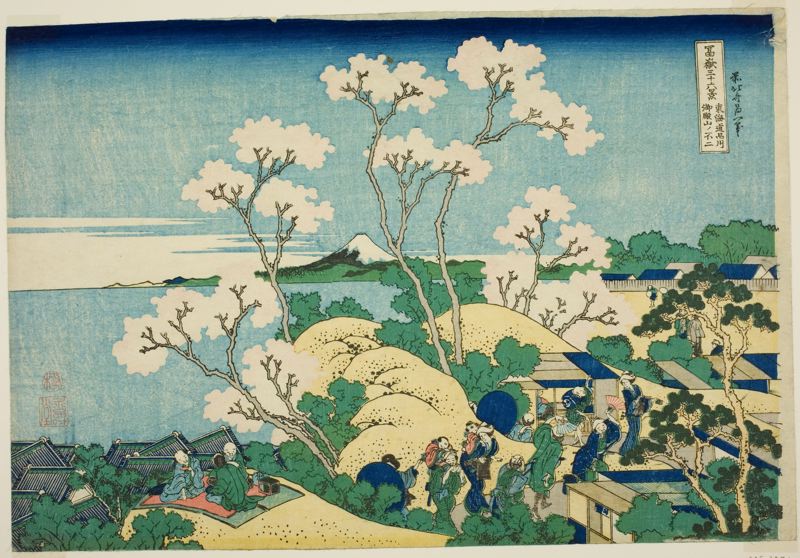
Goten Hill at Shinagawa on the Tokaido (Tokaido Shinagawa Gotenyama), from the series Thirty-six Views of Mt. Fuji (Fugaku sanjurokkei)
Woodblock print
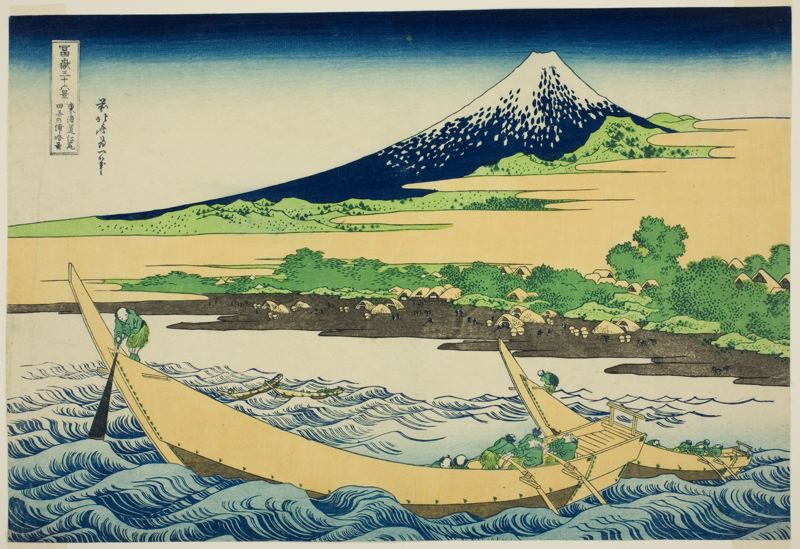
Taganoura Bay near Ejiri on the Tokaido (Tokaido Ejiri tagono ura ryakuzu), from the series Thirty-six Views of Mt. Fuji (Fugaku sanjuokkei)
Woodblock print
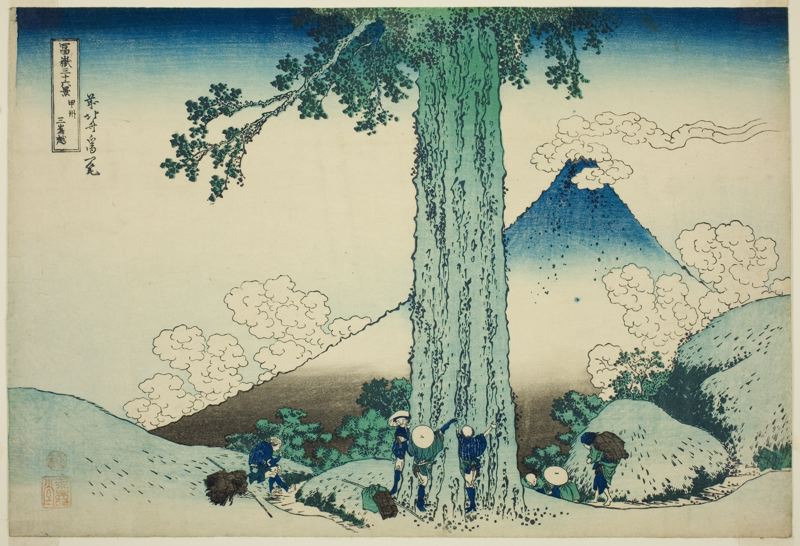
Mishima Pass in Kai Province (Koshu Mishimagoe), from the series Thirty-Six Views of Mount Fuji (Fugaku sanjurokkei)
Woodblock print
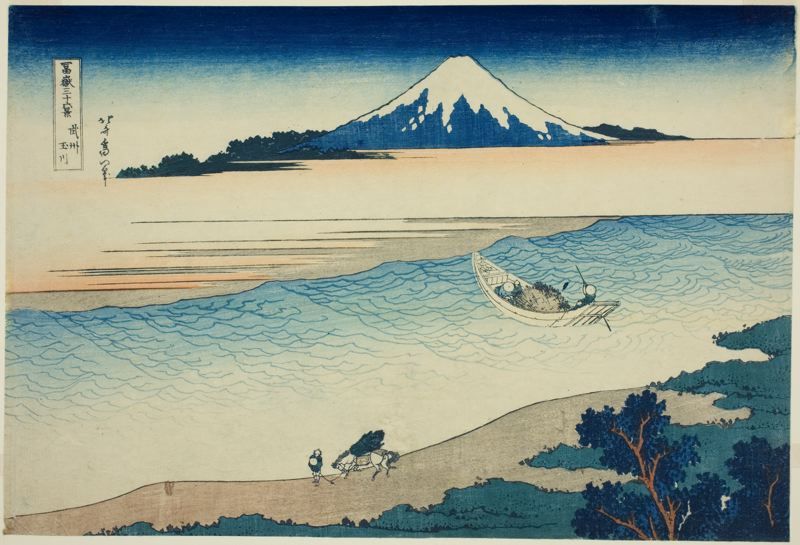
Tama River in Musashi Province (Bushu Tamagawa), from the series Thirty-six Views of Mount Fuji (Fugaku sanjurokkei)
Woodblock print
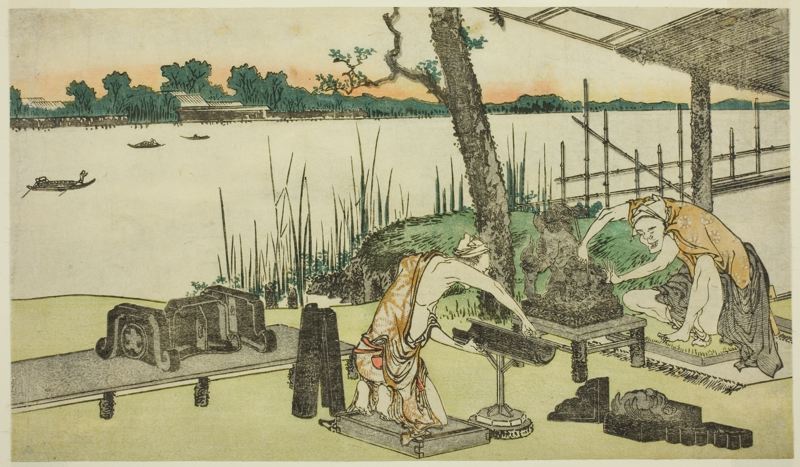
Potters at Work - Imado
Woodblock print

Morning Glories and Tree-frog, from an untitled series of Large Flowers
Woodblock print
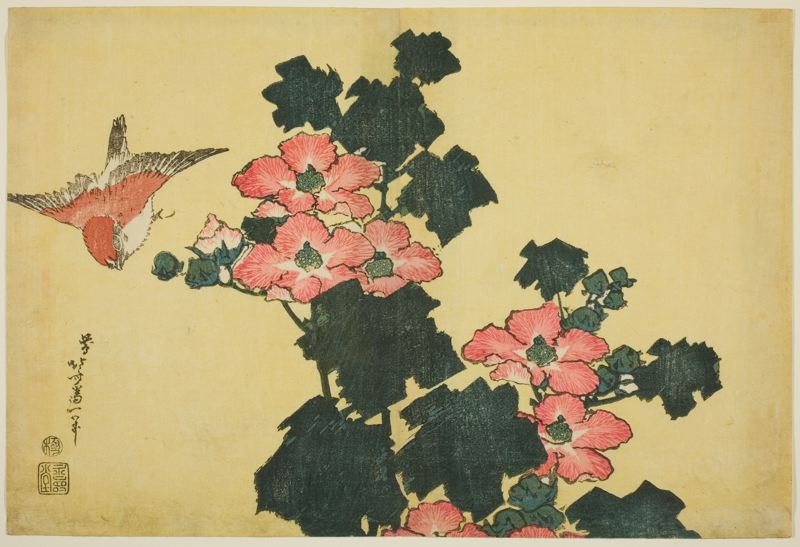
Cotton Roses and Sparrow, from an untitled series of Large Flowers
Woodblock print
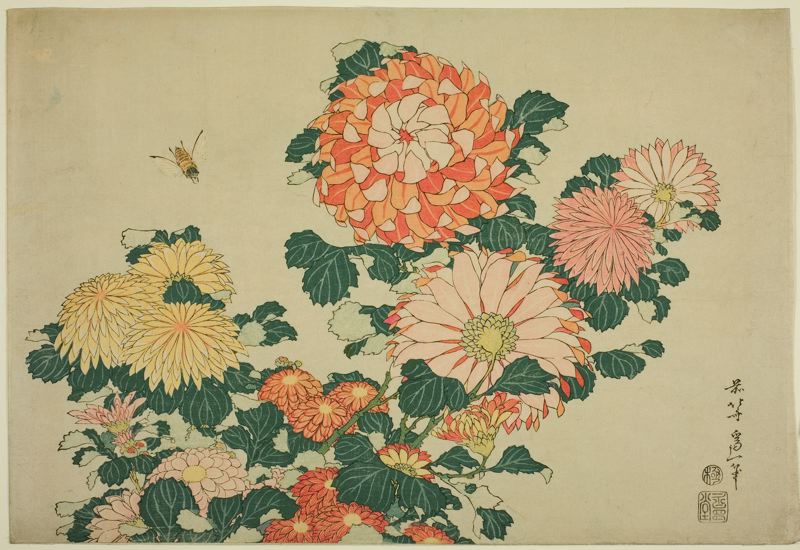
Chrysanthemums and Bee, from an untitled series of Large Flowers
Woodblock print
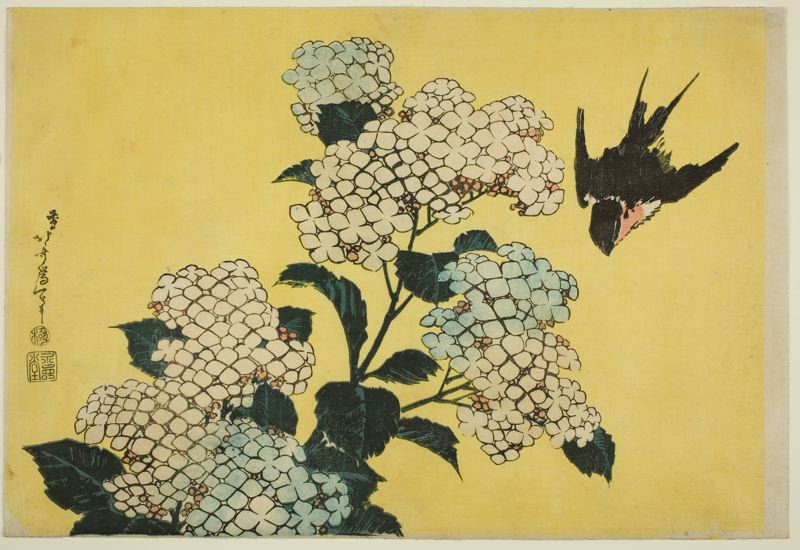
Hydrangea and Swallow, from an untitled series of large flowers
Woodblock print
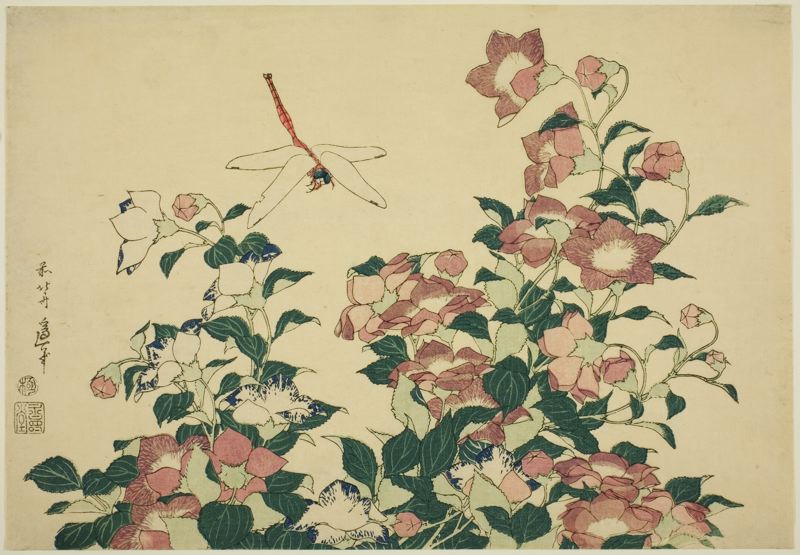
Bell-flower and Dragonfly, from an untitled series of large flowers
Woodblock print
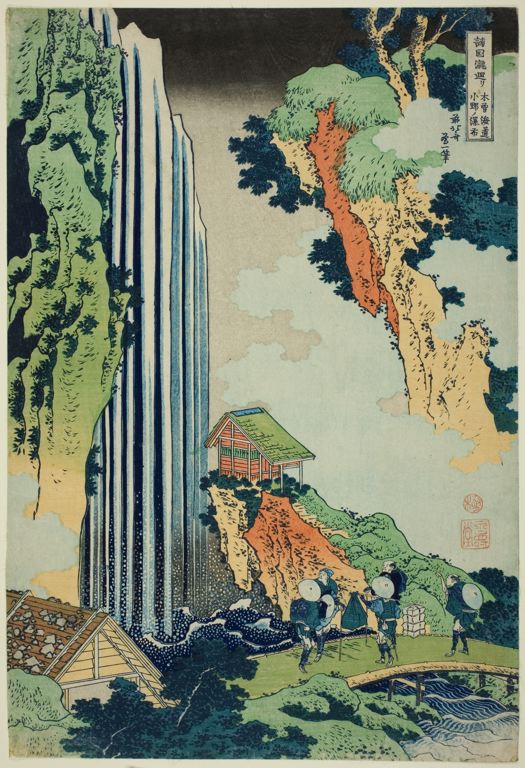
Ono Falls on the Kiso Kaido Road (Kisokaido Ono no bakufu), from the series Tour of the Waterfalls in Various Provinces (Shokoku Taki meguri)
Woodblock print
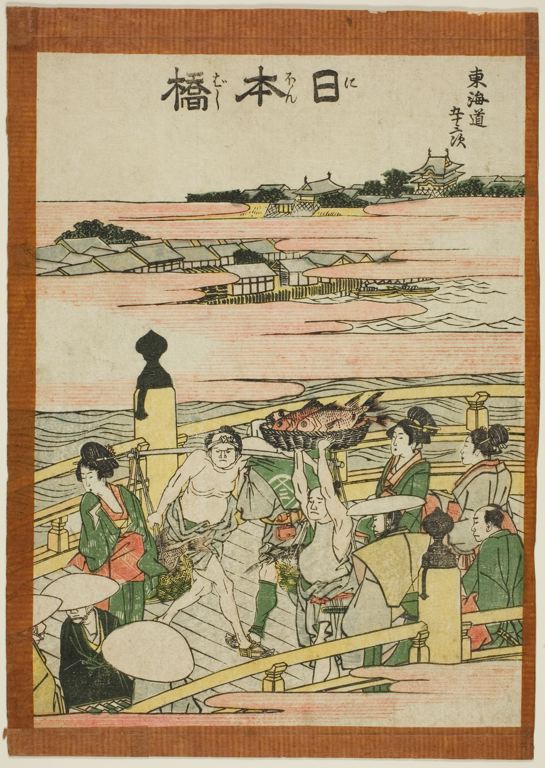
Nihonbashi, from the series Fifty-three Stations of the Tokaido (Tokaido gojusan tsugi)
Woodblock print
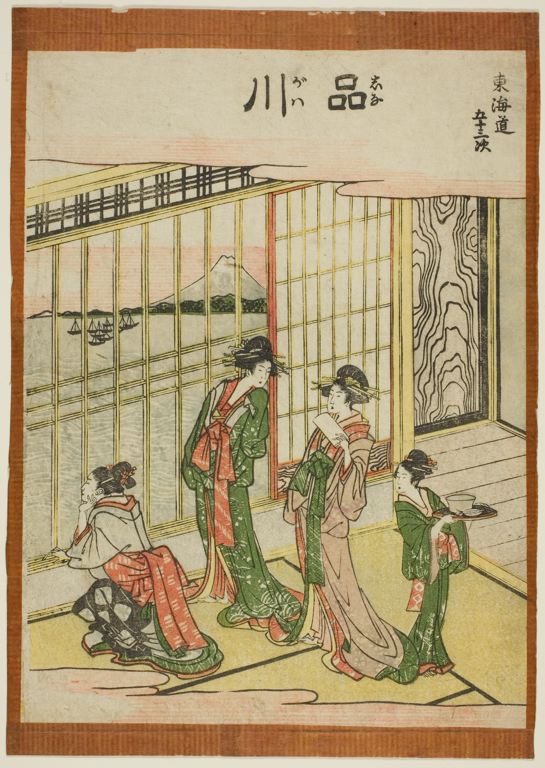
Shinagawa, from the series Fifty-three Stations of the Tokaido (Tokaido gojusan tsugi)
Woodblock print
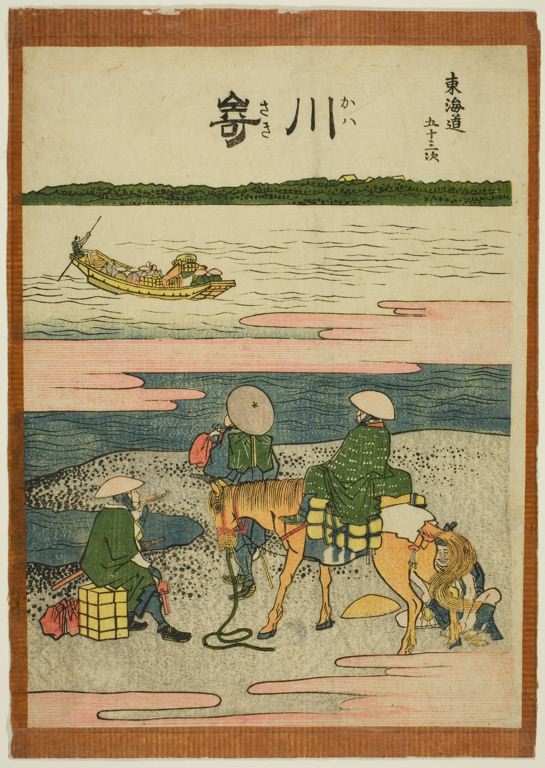
Kawasaki, from the series Fifty-three Stations of the Tokaido (Tokaido gojusan tsugi)
Woodblock print
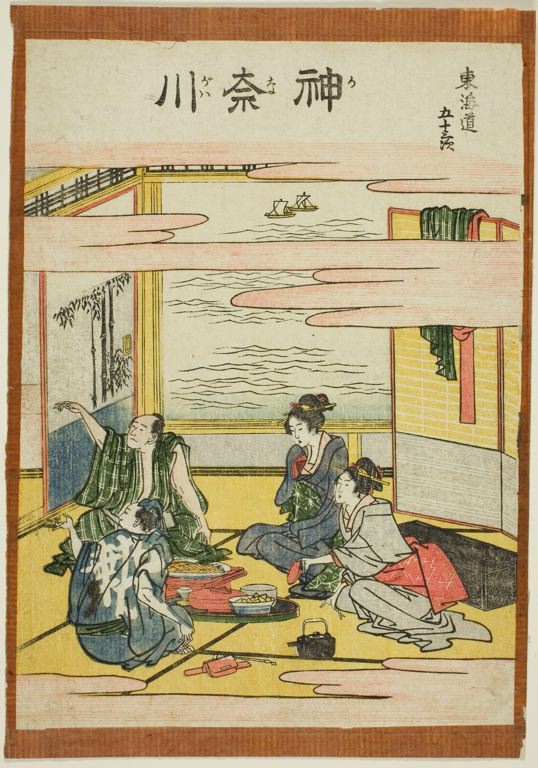
Kanagawa, from the series Fifty-three Stations of the Tokaido (Tokaido gojusan tsugi)
Woodblock print
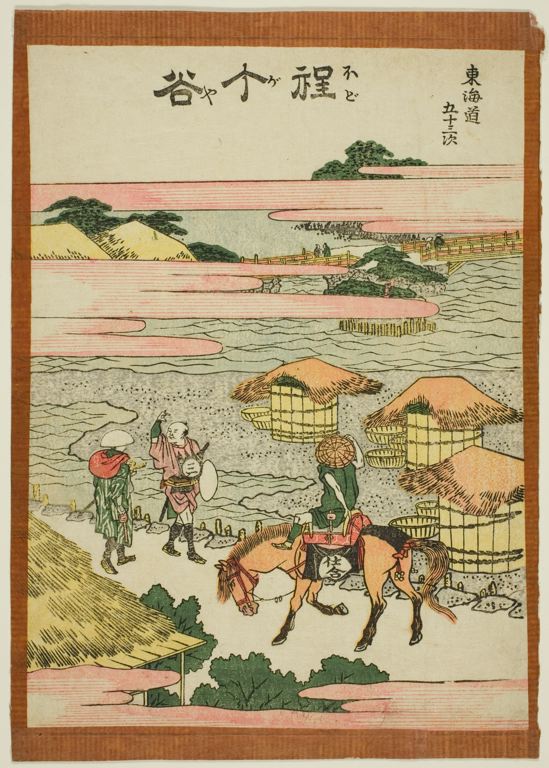
Hodogaya, from the series Fifty-three Stations of the Tokaido (Tokaido gojusan tsugi)
Woodblock print
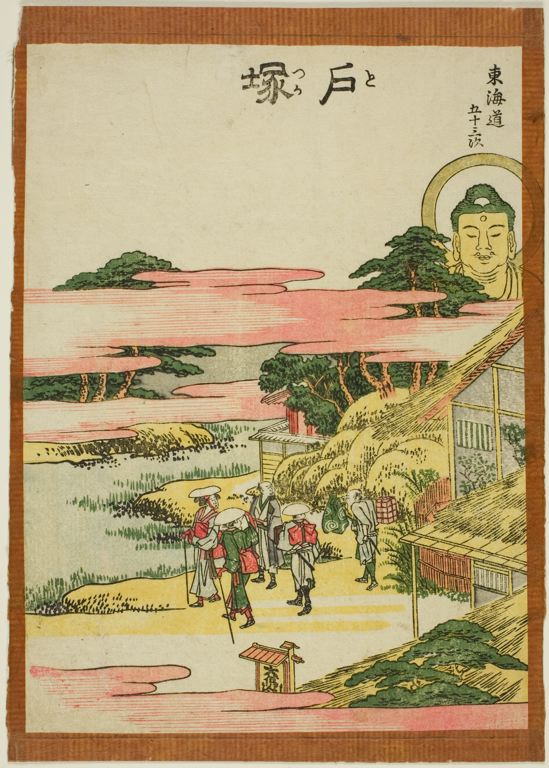
Totsuka, from the series Fifty-three Stations of the Tokaido (Tokaido gojusan tsugi)
Woodblock print
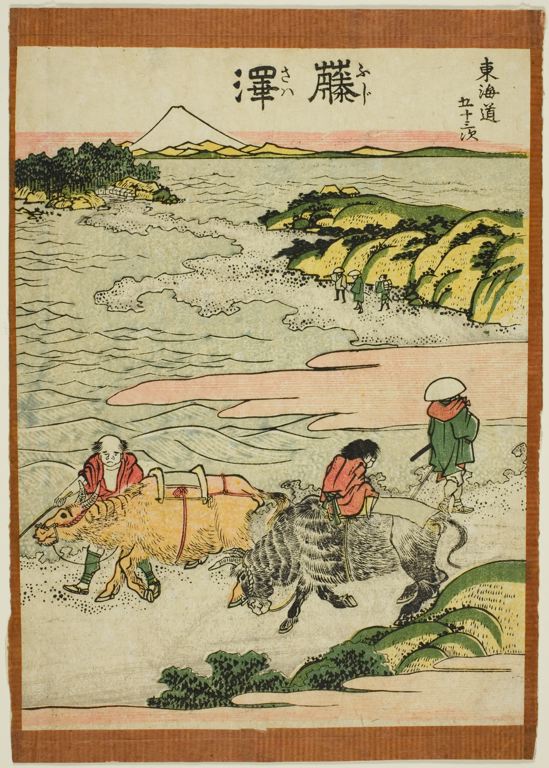
Fujisawa, from the series Fifty-three Stations of the Tokaido (Tokaido gojusan tsugi)
Woodblock print
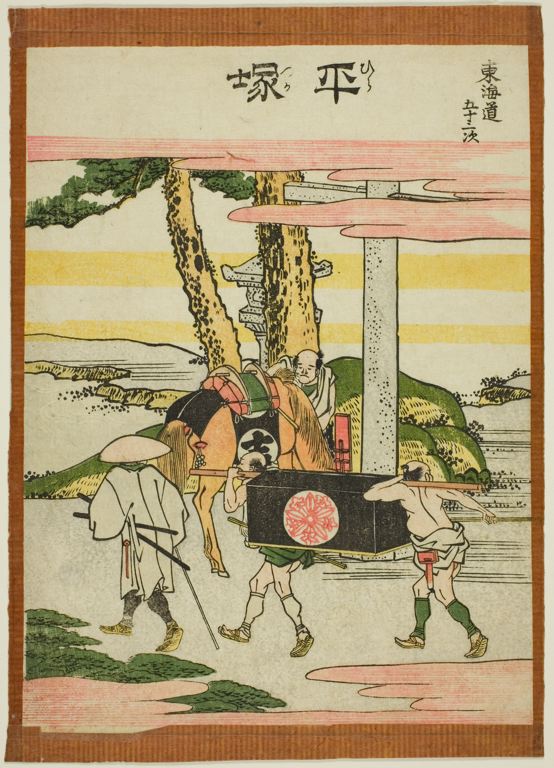
Hiratsuka, from the series Fifty-three Stations of the Tokaido (Tokaido gojusan tsugi)
Woodblock print
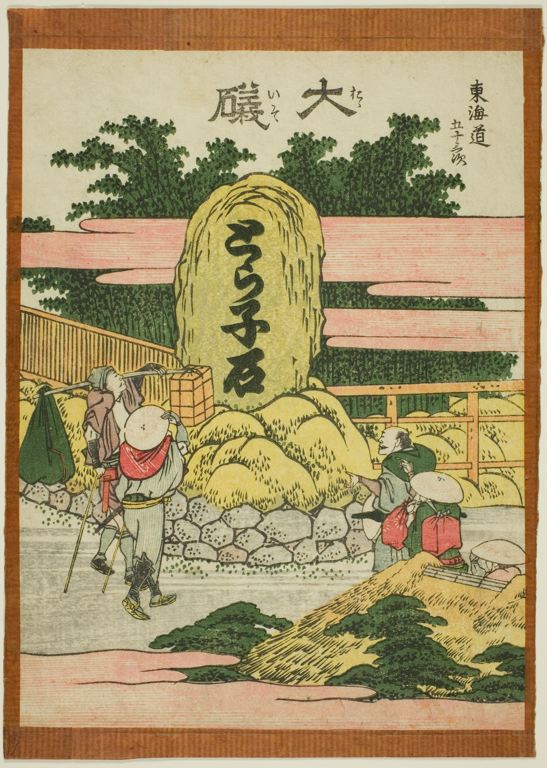
Oiso, from the series Fifty-three Stations of the Tokaido (Tokaido gojusan tsugi)
Woodblock print
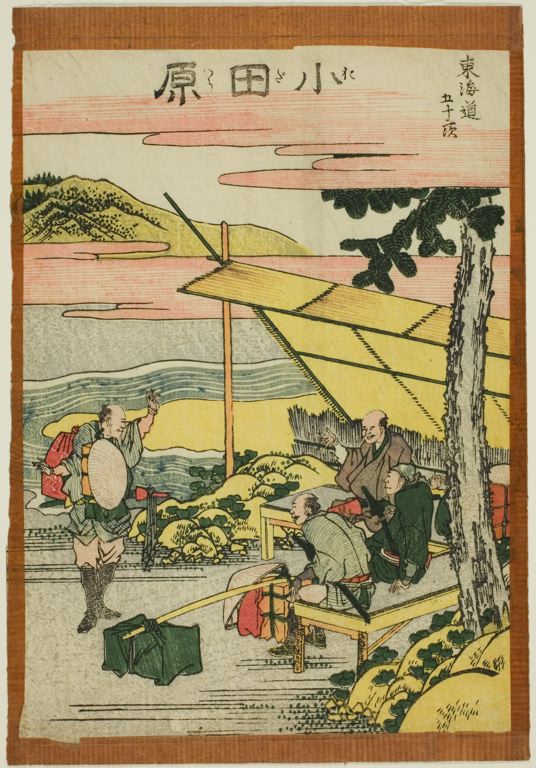
Odawara, from the series Fifty-three Stations of the Tokaido (Tokaido gojusan tsugi)
Woodblock print

Senju Hana-machi Yori Chobo no Fuji (Mount Fuji Seen from Senju Pleasure Quarter), from the series Thirty-Six Views of Mount Fuji (Fugaku sanjurokkei)
Woodblock print

Illustration of The Bluebell (Asagao), Chapter 20 of the Tale of Genji (Genji monogatari)
19th century
Almost looks like a painting/drawing

A Group of Young Women Entering the Garden of a Horticulturist
n.d.
Color woodblock print; surimono

Evening bell at Mii Temple
Unknown
Color woodblock print

Enoshima
Unknown
Color woodblock print

Banshoku zuko, one vol. of 5 published
n.d.
Book; woodblock printed

An Autumn Gift
n.d.
Color woodblock print; surimono

The Marsh Where the Snipe Takes Flight (Shigi tatsu sawa), from the series "Three Evening Poems (Sanseki no uchi)"
n.d.
Color woodblock print; kokonotsugiri-ban, surimono

Goldfish farm
n.d.
Color woodblock print; nagaban, surimono