Biography
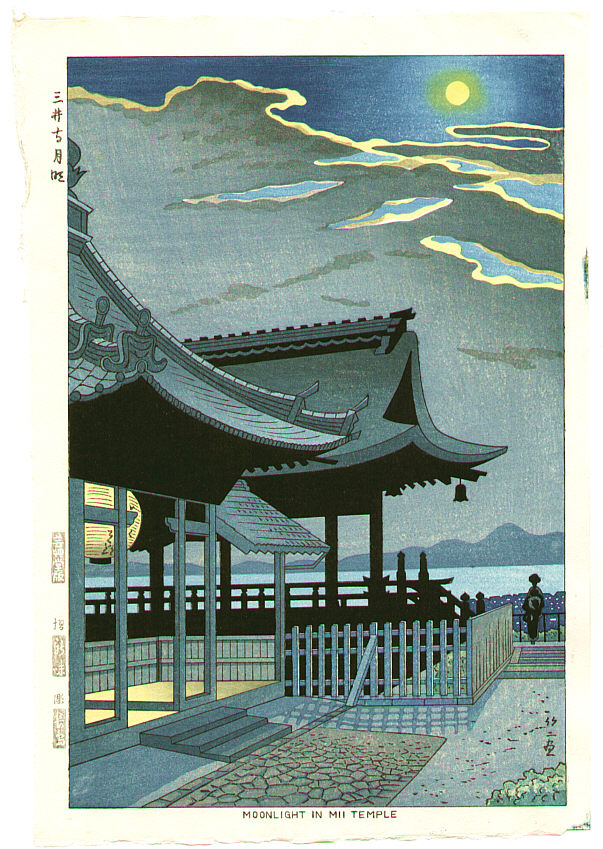
Jun'ichiro Sekino (1914–1988) was one of the most influential Japanese woodblock print artists of the twentieth century, a leading figure in the sosaku-hanga ("creative prints") movement known for his mastery of color, his bold compositions, and his remarkable range of subjects spanning portraits, landscapes, theater, and folk culture.
Born in 1914 in the Yasukata district of Aomori City, Aomori Prefecture, in northern Honshu, Sekino was the son of a merchant dealing in agricultural products. He grew up in the same city as Shiko Munakata, who would later become internationally famous as a printmaker, and their shared artistic milieu fueled Sekino's early interest in art. While still in elementary school, he began exploring printmaking, and during middle school he started a magazine called Ryokuju-mu ("Dream of Green Foliage") devoted to poetry and prints.
Sekino's formal training began in 1931, when he studied intaglio printmaking and lithography under Kon Junzo. He also trained at the Etching Institute under Nishida Takeo, learning etching and oil painting. His early dedication bore fruit when, in 1936, he submitted an etching of Aomori harbor to the government-sponsored Bunten exhibition and won a first prize. He became a member of the Nihon Hanga Kyokai (Japan Print Association) in 1938. The following year, in 1939, he made a pivotal move to Tokyo and became a pupil of Koshiro Onchi, the founder and spiritual leader of the sosaku-hanga movement. He joined Onchi's weekly Ichimoku-kai (First Thursday Society) gatherings, where he deepened his knowledge of Japanese woodblock printing techniques alongside Western etching and painting methods.
Sekino drew inspiration from a wide range of artistic traditions. He admired the Edo-period masters Sharaku and Hiroshige as well as Western printmakers including Toulouse-Lautrec, Rembrandt, and Albrecht Durer. This eclecticism informed his lifelong approach to printmaking, in which he blended Eastern and Western sensibilities to create work that was unmistakably personal yet rooted in a deep understanding of both traditions.
The Second World War interrupted Sekino's artistic development. During the war years, he worked in an ammunition factory and printmaking was effectively halted. In the immediate postwar period, he supported himself by creating book illustrations and participating in collaborative woodblock print sets depicting vanishing Japanese customs and landscapes, works that carried a nostalgic resonance in a rapidly changing nation.
By the early 1950s, Sekino had established himself as one of Japan's foremost printmakers. He held his first solo exhibition in 1953 and began exhibiting internationally in 1955, winning major awards at print competitions in Tokyo, Ljubljana, and the United States. In 1958, the Rockefeller Foundation and the American Japan Society invited him to the United States, where he traveled to New York and taught at the Pratt Graphic Art Center as their first visiting professor. This international engagement continued throughout the 1960s: in 1963 he taught printmaking at Oregon State University and the University of Washington at the invitation of Gordon Gilkey, and in 1965 he began teaching at Kobe University in Japan.
Sekino's magnum opus is his monumental reinterpretation of the Fifty-three Stations of the Tokaido, a project that consumed fifteen years of work from 1959 to 1974. Taking as its starting point the celebrated ukiyo-e series by Hiroshige, Sekino reimagined each station along the historic highway between Edo and Kyoto through a modern sosaku-hanga lens. He designed and carved the blocks himself, with printing carried out by master printers Kobayashi Sokichi, Yoneda Minoru, and Iwase Koichi. The completed series was exhibited at the Isetan Department Store in Tokyo in 1974 and received its first American showing at the University of Oregon Museum of Art in 1975. The Japanese government recognized the achievement with the Ministry of Education Award.
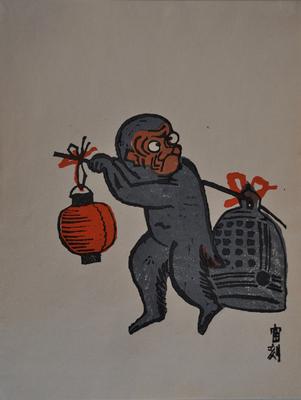
Beyond the Tokaido series, Sekino produced an extraordinarily varied body of work over his career, totaling more than four hundred prints. His Thirty-six Portraits captured artists, poets, actors, and cultural figures, including portraits of his mentors Onchi and Munakata. He created evocative depictions of Bunraku puppet theater, portraying master puppeteers such as Bungoro, Eizo, and Monjuro, as well as kabuki actors including Kichiemon Nakamura. His landscape and travel prints included the Old Capital series and Prints of the Narrow Road to the Deep North, inspired by the poet Matsuo Basho's famous journey. He also produced collections of Aomori and Japanese folk toys.
Sekino's artistic range extended across multiple printmaking techniques. While woodblock printing was his primary medium, he was also accomplished in etching, lithography, and mixed techniques including overprinting. His work is characterized by bold, vibrant colors, decisive compositions, and an ability to convey both the intimacy of a portrait and the sweep of a landscape with equal conviction. His subjects encompassed kabuki actors, sumo wrestlers, geishas, maiko, traditional architecture, and modern urban scenes.
Throughout the 1970s and 1980s, Sekino continued to travel and create. He visited France and Spain in 1976 and China in 1979. In 1981, he was awarded the Purple Medal Ribbon by the Japanese government and received a special award from the Imperial Household Agency. A major solo exhibition was held at the Central Museum in Tokyo in 1982, and in 1987 he received a fourth-class medal from the Japanese government.
Sekino died in Tokyo on April 13, 1988, at the age of seventy-four. His works are held in major collections worldwide, including the Museum of Modern Art in New York, the Art Institute of Chicago, the Museum of Fine Arts Boston, the British Museum, the Bibliotheque Nationale in Paris, the Los Angeles County Museum of Art, and the Portland Art Museum. His achievement in bridging traditional Japanese woodblock art with modern creative expression established him as one of the defining voices of the sosaku-hanga movement.
Key Facts
- Active Period
- 1914–1988
- Nationality
- 🇯🇵Japan
- Movement
- Sōsaku-hanga
- Works Indexed
- 206
Frequently Asked Questions
What is Jun'ichiro Sekino known for?
Jun'ichiro Sekino (1914–1988) was one of the most influential Japanese woodblock print artists of the twentieth century, a leading figure in the sosaku-hanga ("creative prints") movement known for his mastery of color, his bold compositions, and his remarkable range of subjects spanning portraits, landscapes, theater, and folk culture.
When was Jun'ichiro Sekino active?
Jun'ichiro Sekino was active from 1914 to 1988. They were associated with the Sōsaku-hanga movement.
What artistic movements influenced Jun'ichiro Sekino?
Jun'ichiro Sekino's work was shaped by the Sōsaku-hanga tradition in Japanese woodblock printmaking. Sōsaku-hanga: The "creative prints" movement (c.
What subjects did Jun'ichiro Sekino depict?
Jun'ichiro Sekino's prints frequently feature portraits, landscapes, birds & flowers, urban scenes, mountains, snow scenes.
Where can I see Jun'ichiro Sekino's original prints?
Original prints by Jun'ichiro Sekino can be found in collections including ukiyo-e.org, Art Institute of Chicago.
How much do Jun'ichiro Sekino prints cost?
Jun'ichiro Sekino prints offer excellent value for collectors interested in postwar Japanese printmaking. As a leading figure of the sosaku-hanga (creative prints) movement and a student of Onchi Koshiro, Sekino combined bold graphic design with deeply personal subject matter. Prices generally range from $150 for smaller or less well-known prints to $3,000–$5,000 for major works. As a sosaku-hanga artist, Sekino designed, carved, and printed all his own works — there are no posthumous editions possible, since no publisher held his blocks. Most prints are numbered limited editions, typically in runs of 30 to 100. Look for the edition number (e.g., "15/50") penciled in the margin, along with Sekino's signature and date. His most valuable works are from the 1950s–1960s, when he was at his creative peak and gaining international recognition through exhibitions in the United States and Europe. Exhibition provenance significantly affects value. Prints shown at the São Paulo Biennale, Venice Biennale, or major U.S. museum exhibitions can command premiums of 50–100% over comparable works without exhibition history. His portrait series (especially of children and craftsmen), Aizu winter landscapes, and abstract compositions from the 1960s are the most sought-after subjects. Small numbered editions: $800–$5,000. Larger editions and later career works: $150–$800. Sekino's market has been rising steadily as institutional interest in sosaku-hanga grows.
External Resources
Series by Jun'ichiro Sekino
Woodblock Prints by Jun'ichiro Sekino (206)
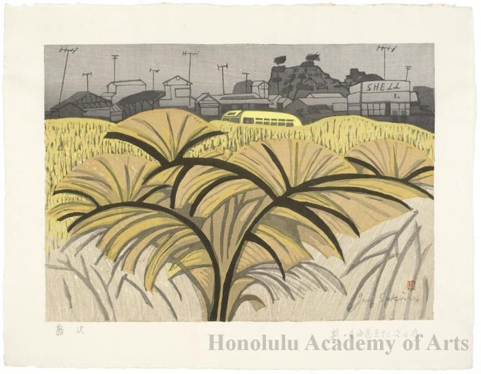
Fujisawa: Pampas Grass Road
Woodblock print
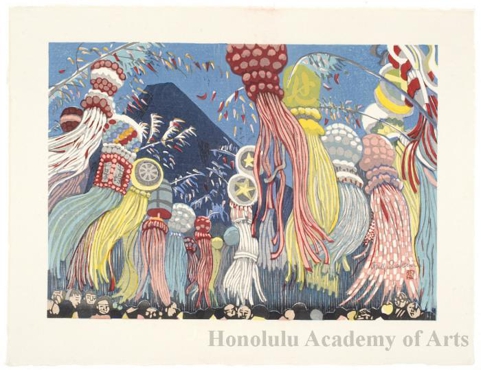
Hiratsuka : Star Festival in July
Woodblock print
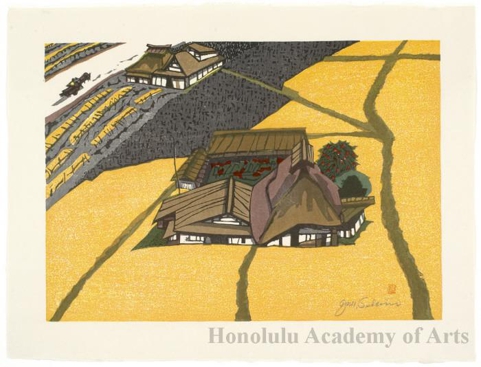
Öiso: Harvest Season
Woodblock print
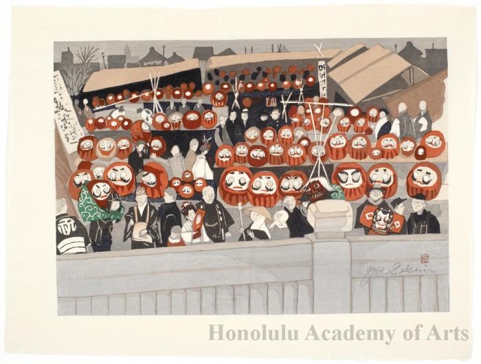
Odawara: Dharma Market
Woodblock print
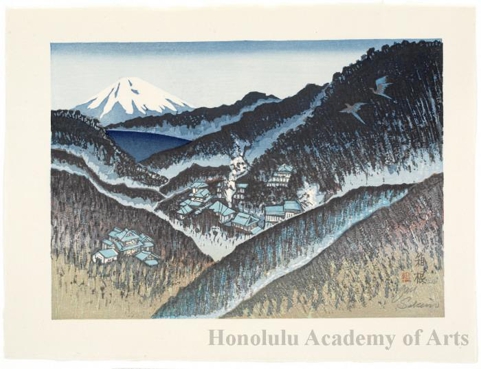
Hakone: Mt. Fuji over the Lake
Woodblock print
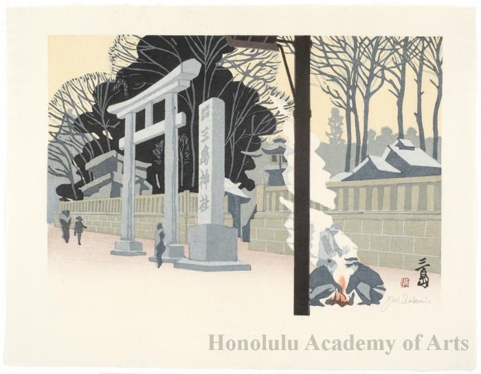
Mishima : Mishima Shrine
Woodblock print
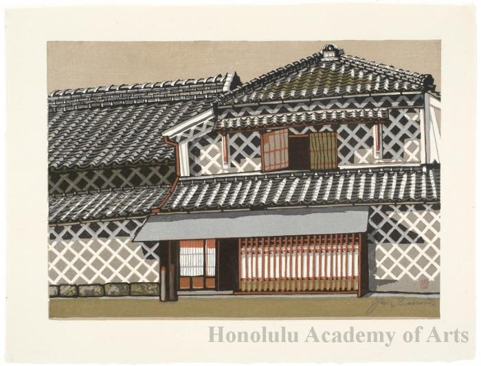
Numazu: Latticework Tile Wall
Woodblock print
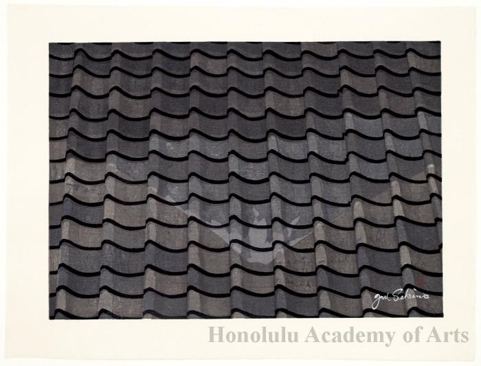
Hara: Roof-tile Reflections of Mt. Fuji
Woodblock print
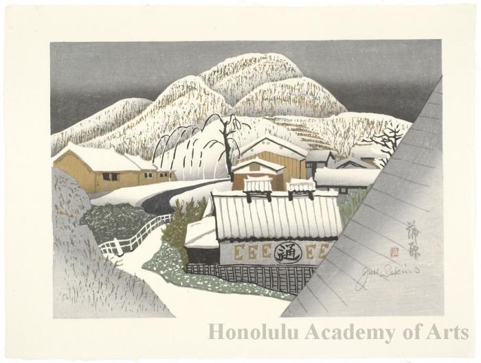
Kambara: Deep Snow
Woodblock print
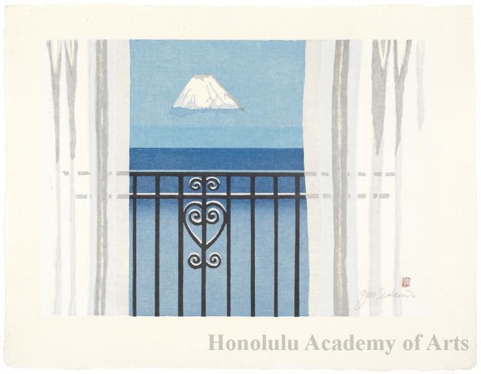
Yui: Mt. Fuji through the Window
Woodblock print
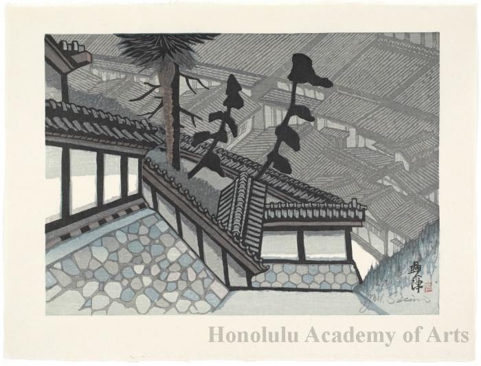
Okitsu: View from Seiken-ji
Woodblock print
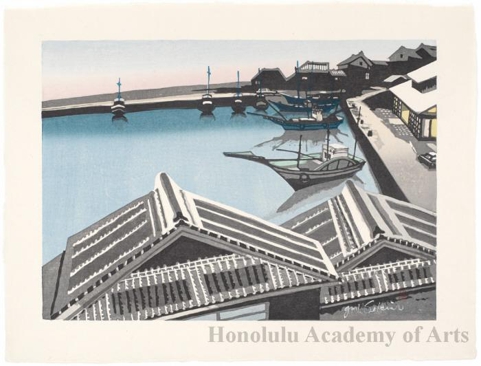
Eijiri: Shimizu Port
Woodblock print
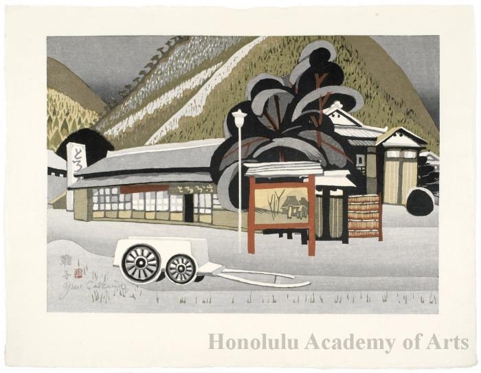
Mariko: Grated Yam Soup Shop
Woodblock print
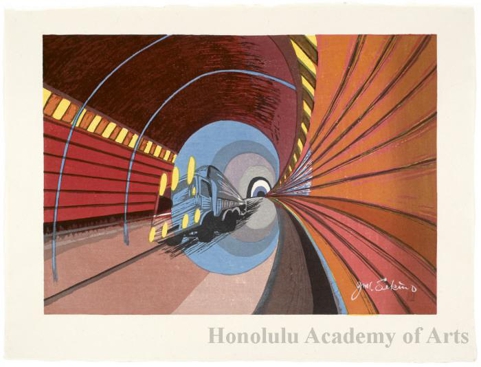
Okabe: High Speed Tunnel
Woodblock print
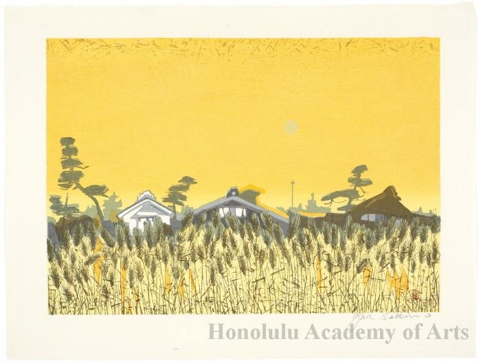
Fujieda: Wheat Field at Twilight
Woodblock print
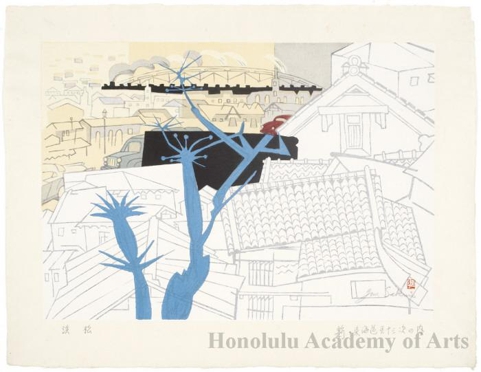
Hamamatsu: Factories in the MorningÅ
Woodblock print
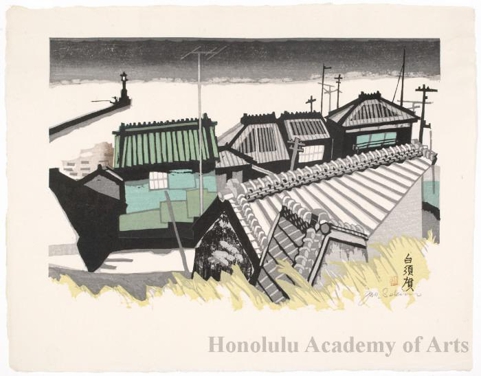
Shirasuka: Fishing Village
Woodblock print
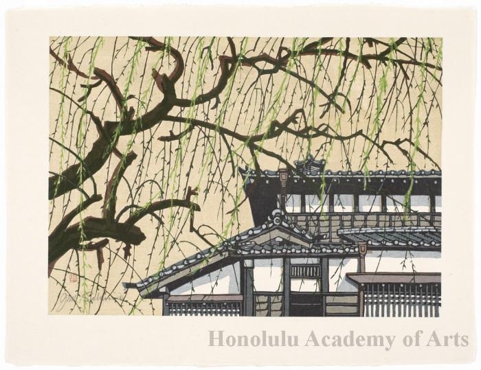
Yoshida: Willow and Private Estate
Woodblock print
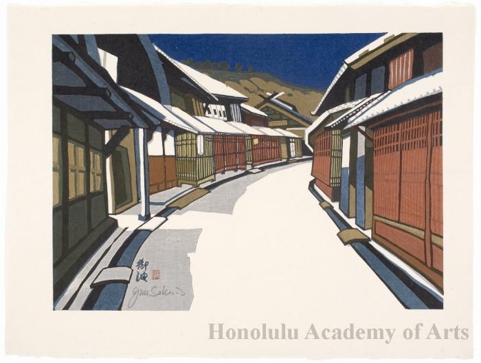
Goyu: Scarlet Latticework
Woodblock print
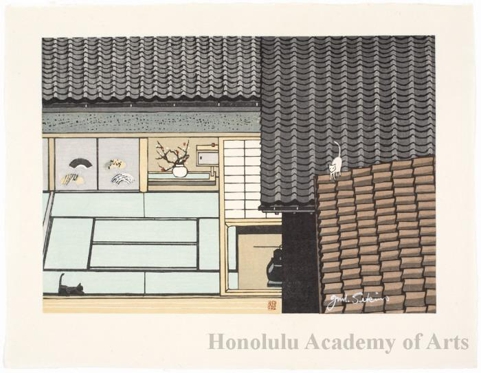
Akasaka: Lovesick cats
Woodblock print

Fujikawa: Farmhouses
Woodblock print
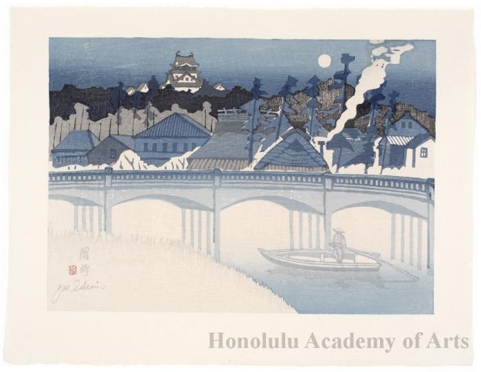
Okazaki: Castle and Sugö Bridge
Woodblock print
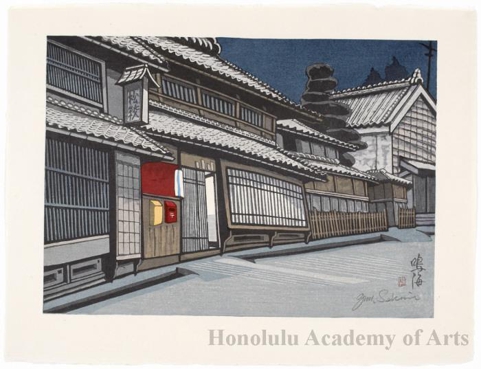
Narumi: Snowflake Tie-dye Wholesale Store
Woodblock print
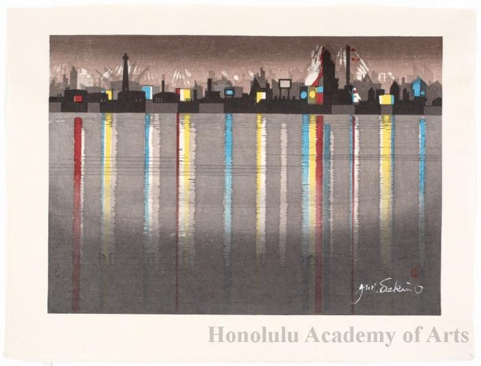
Yokkaichi: Oil Refinery Complex at Night
Woodblock print
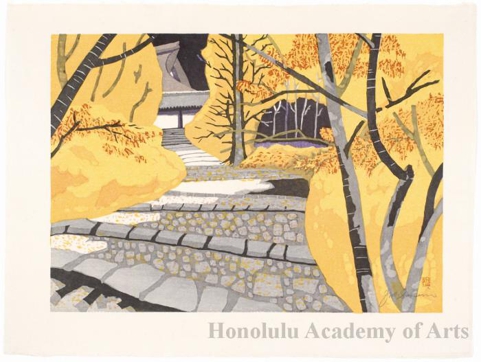
Ishiyakushi: Fall Colors
Woodblock print
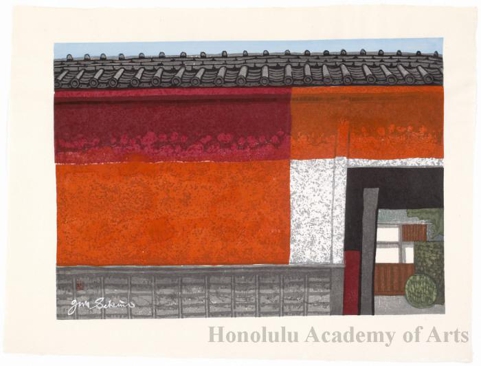
Kameyama: Samurai Mansion
Woodblock print
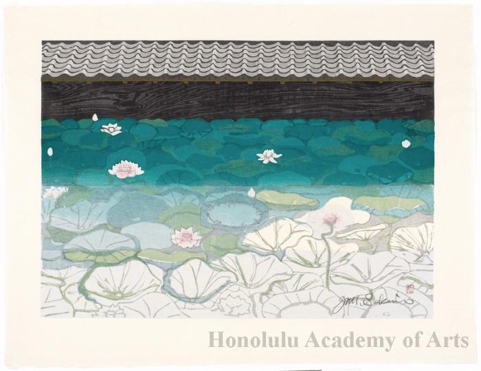
Seki: Lotus Pond
Woodblock print

Sakanoshita: Morning at the Mountain Top
Woodblock print
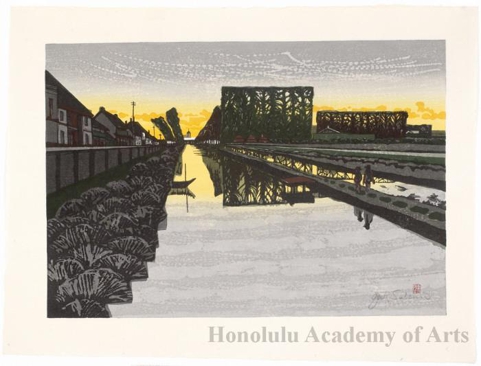
Minakuchi: Twilight River
Woodblock print
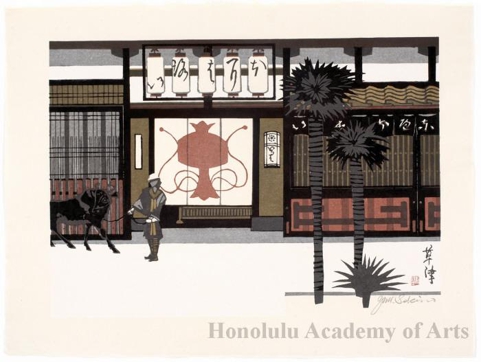
Kusatsu: Entrance to the Tea House
Woodblock print
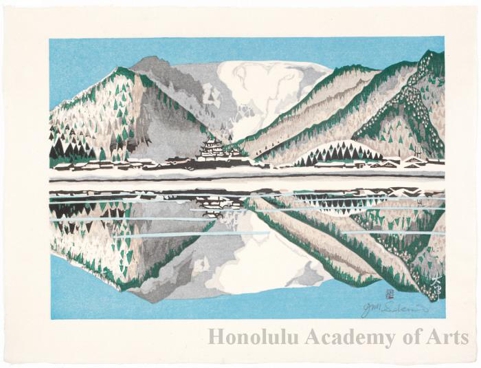
Ötsu: Clear Day after Snowfall at the Lake
Woodblock print
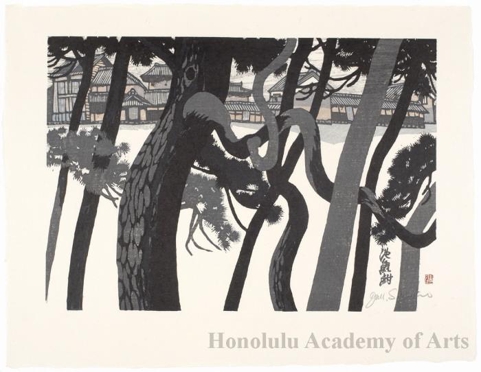
Chiryü: Roadside Pine Trees
Woodblock print
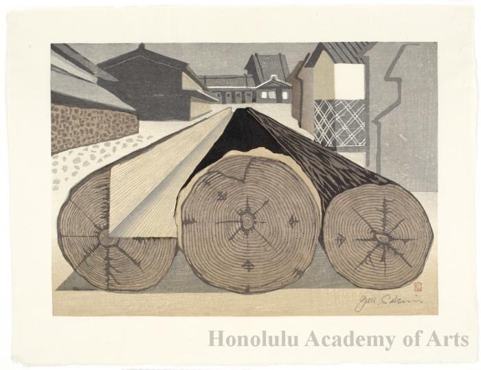
Fukuroi: Annual Growth Rings
Woodblock print
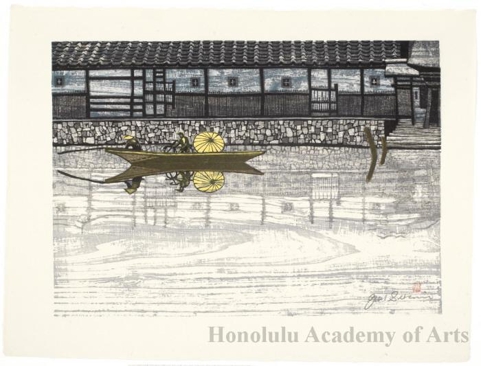
Mitsuke: Stone Embankment Along theRiver
Woodblock print
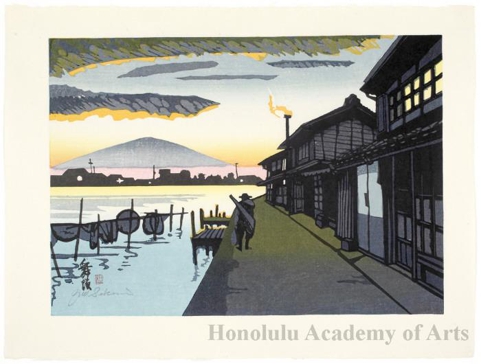
Maisaka: Morning Glow
Woodblock print
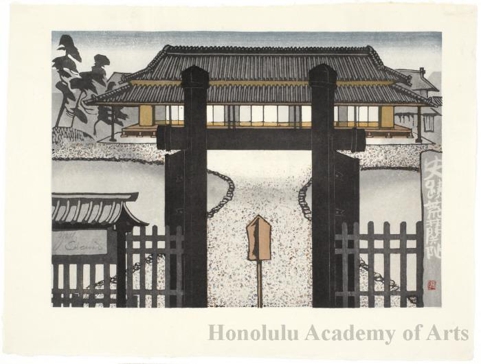
Arai: Remains of the Barrier Compound
Woodblock print
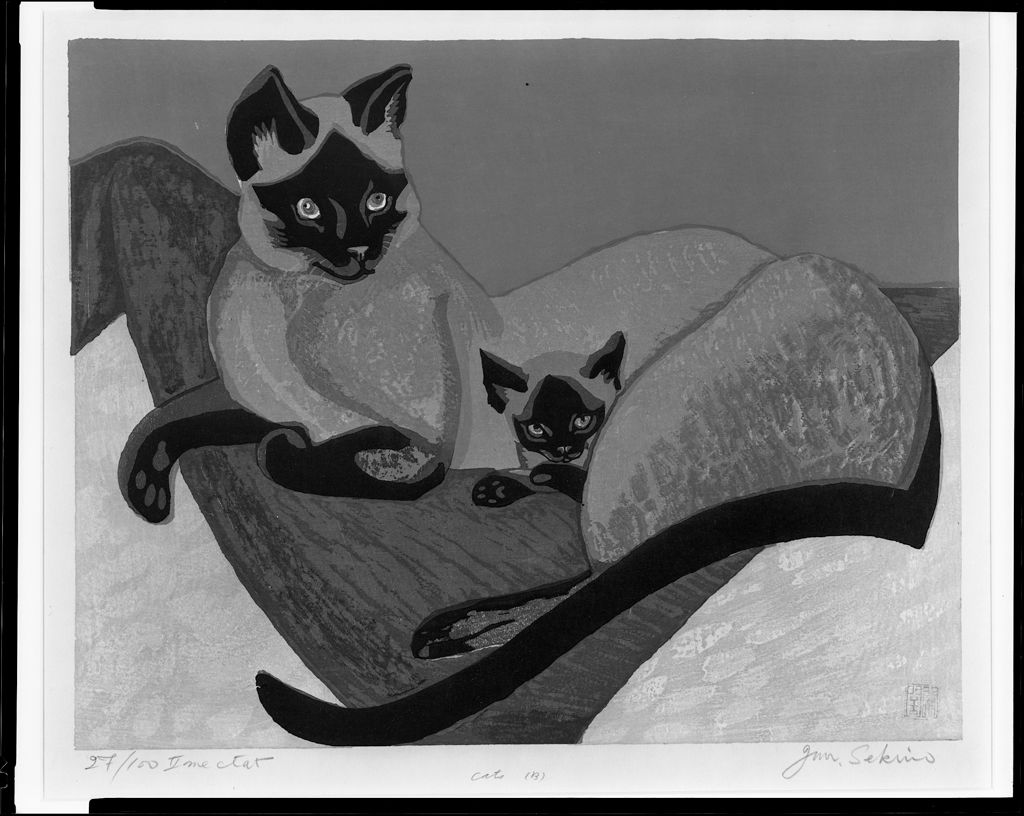
Cats
Woodblock print
![[Boy with bird on his head] by Jun'ichiro Sekino](https://1.api.artsmia.org/800/135553.jpg)
[Boy with bird on his head]
20th century
Screen print, color on paper (?)
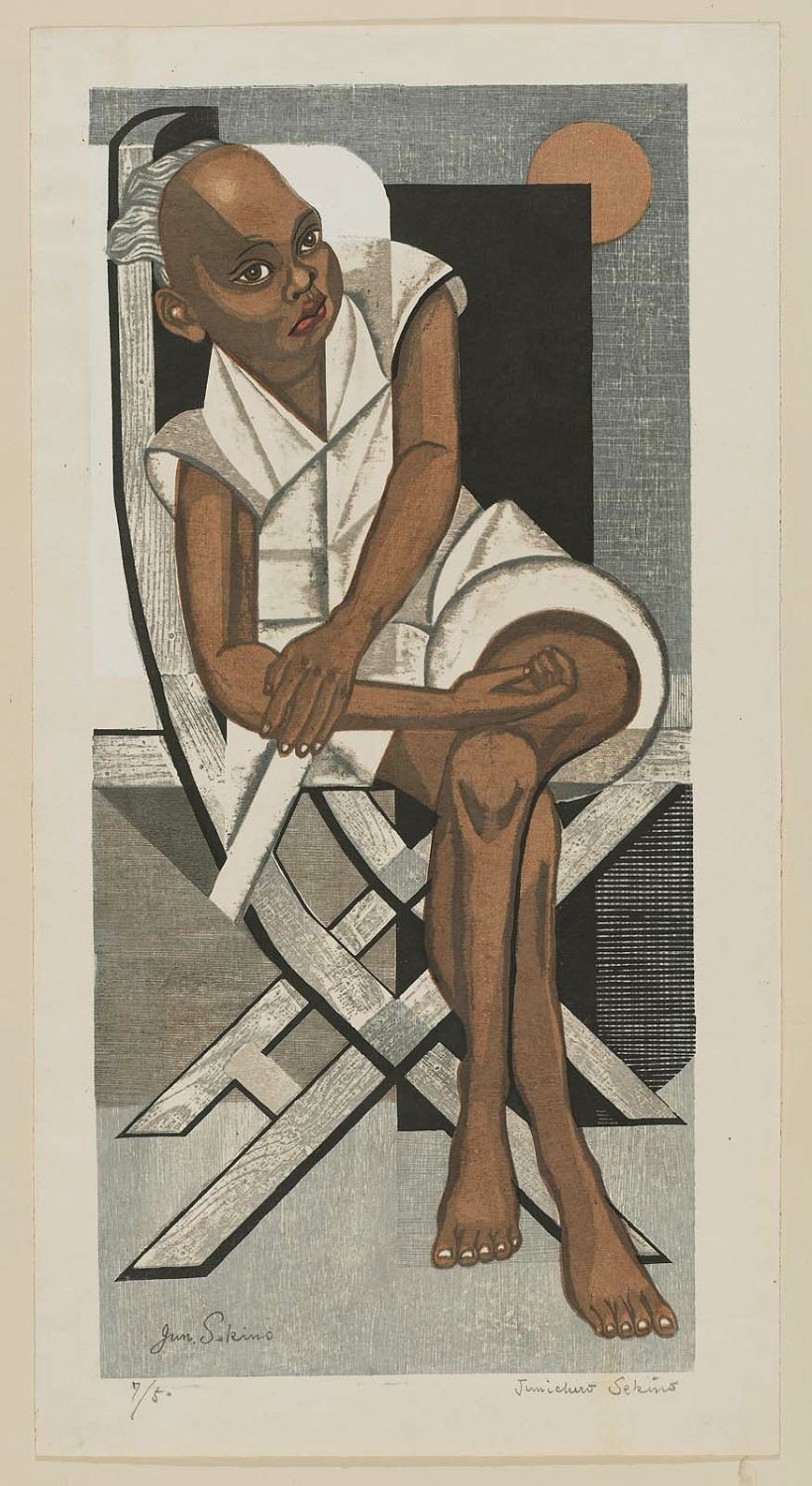
Black Boy
Woodblock print
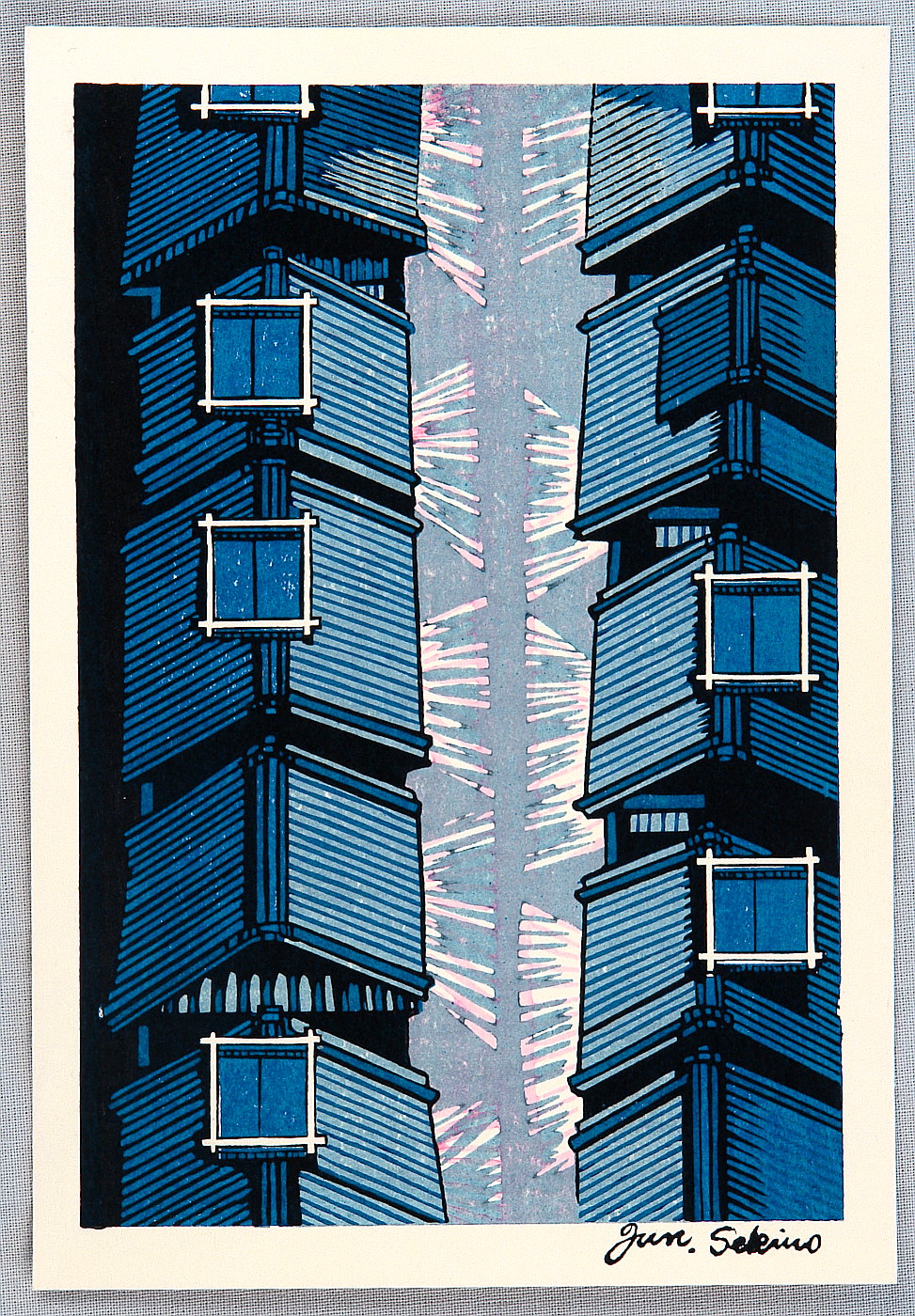
Bird's Eye View of Sentocho
Woodblock print
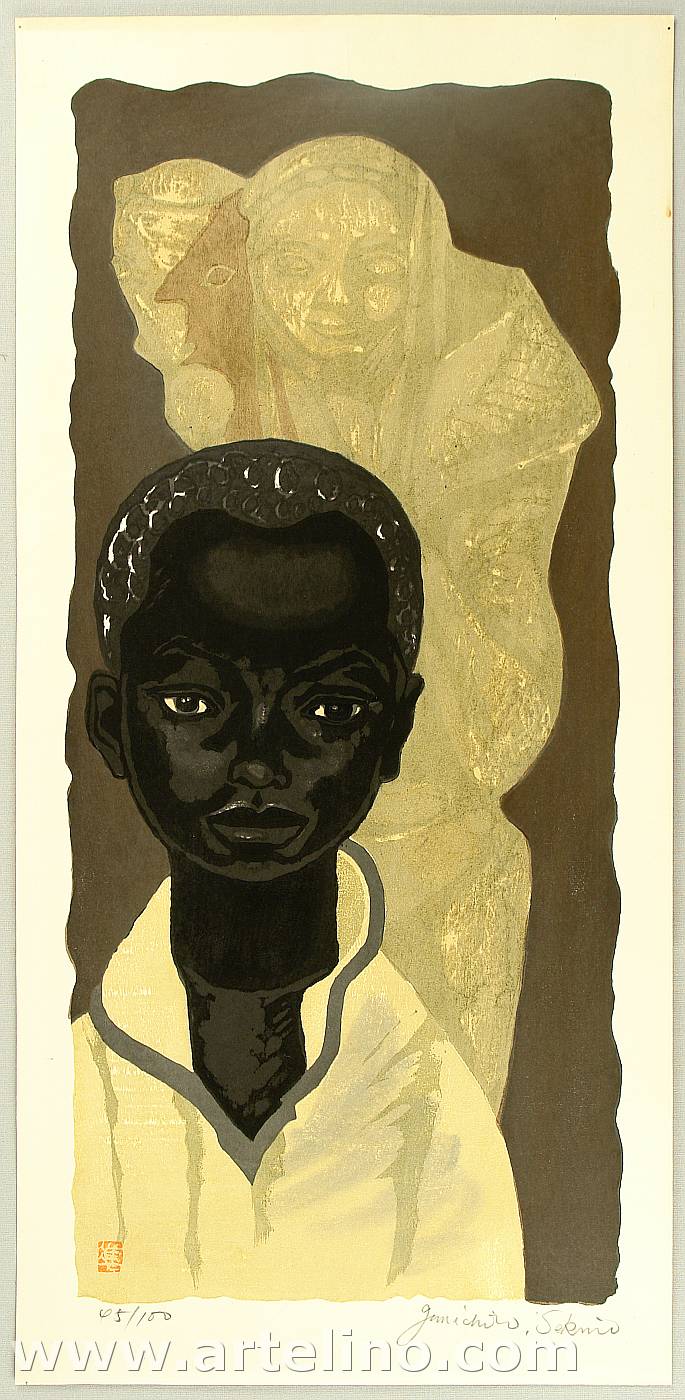
Boy and Villagers
Woodblock print
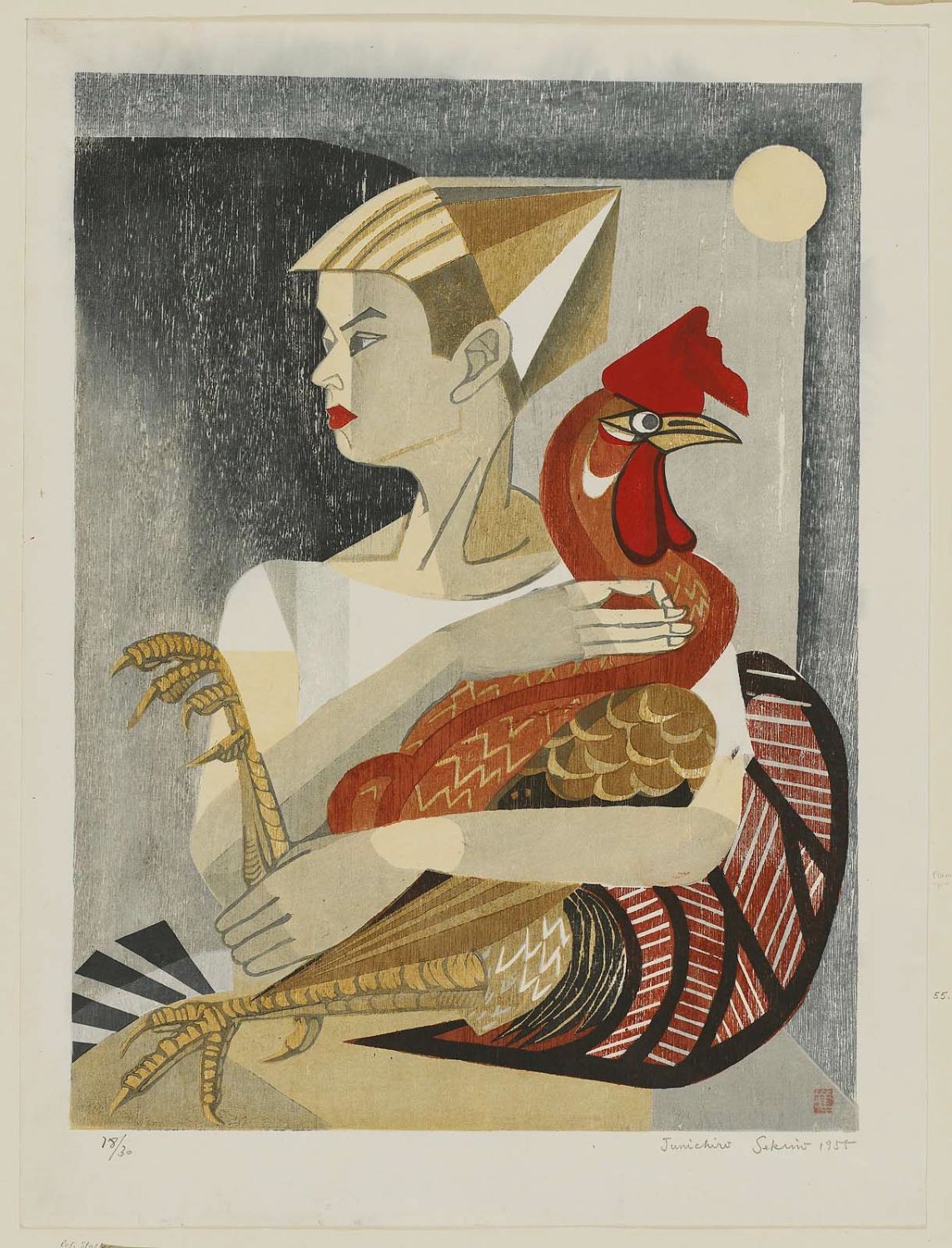
A Boy and His Rooster (Artist's son, Jumpei, aged 12)
Woodblock print

A Girl and Her Swan (Artist's daughter, Ayuko)
Woodblock print
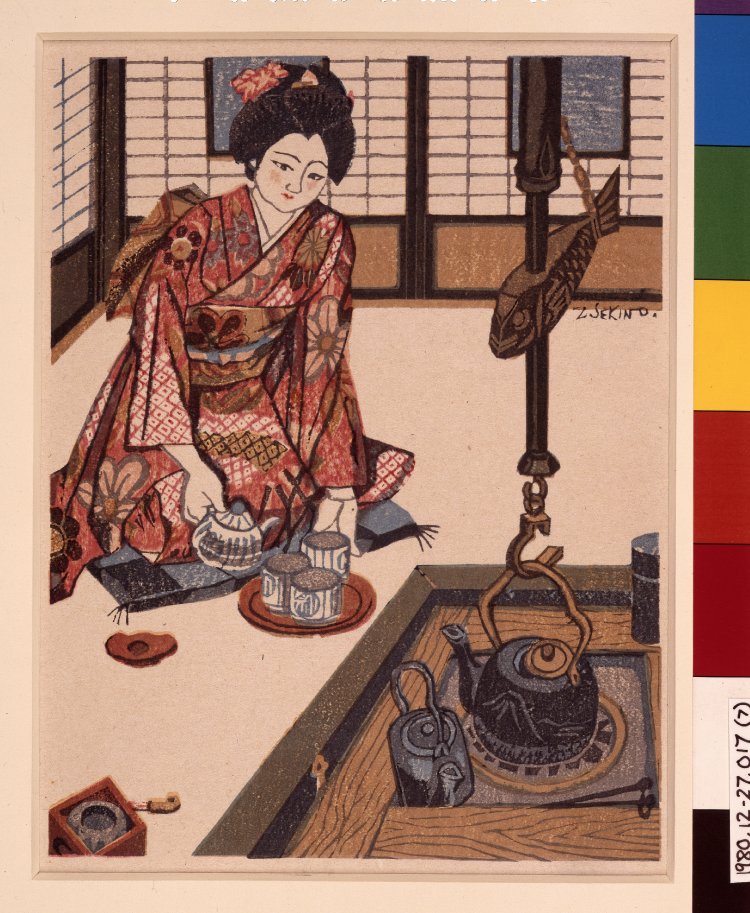
Tohoku no irori ha (Home-life in Winter-time (Northern Japan)) / Nihon jozoku sen (Woman's Customs in Japan)
Woodblock print

Girl
20th century
Color woodblock print
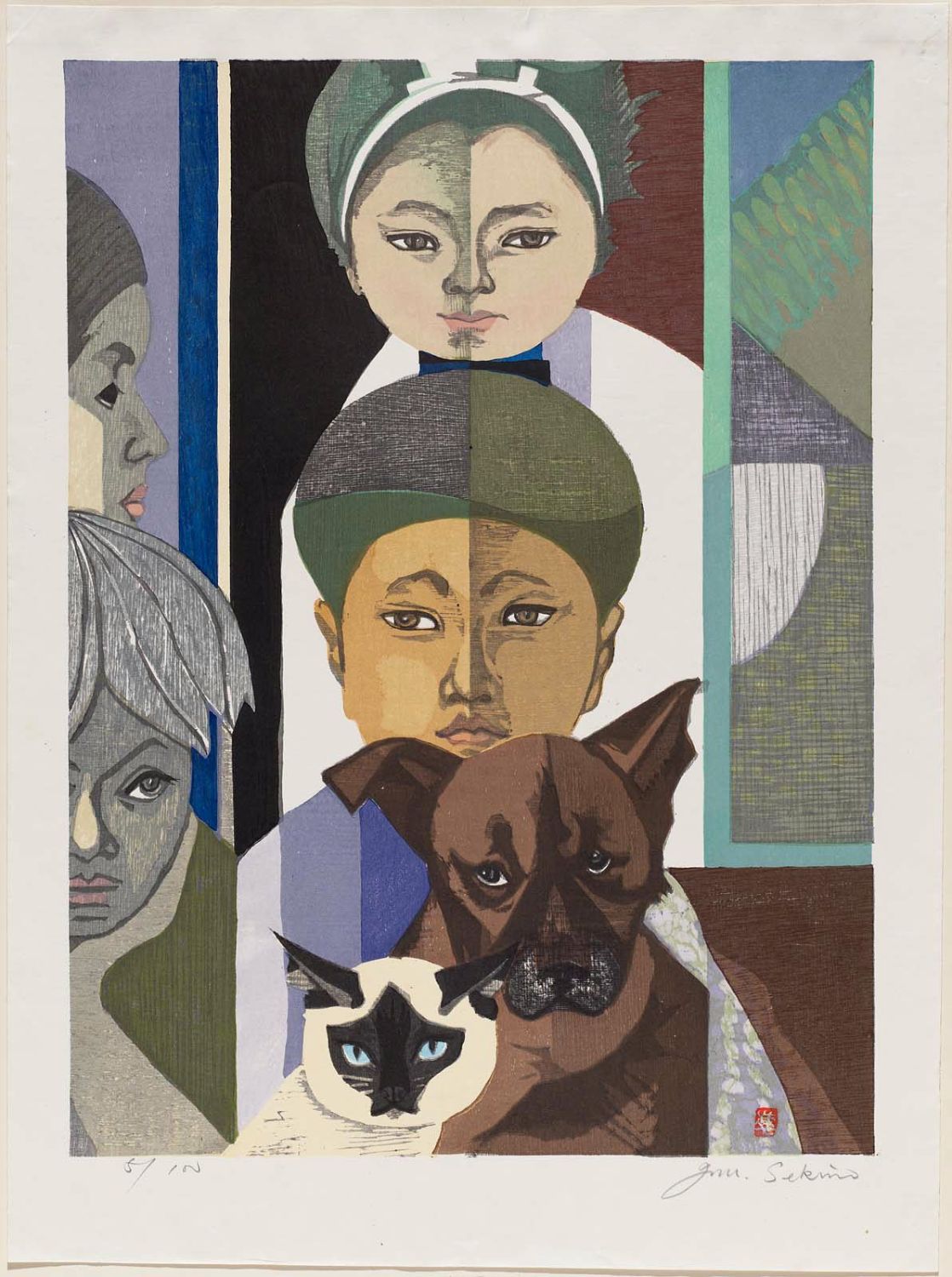
My Family
Woodblock print

Peasant Girl on Street
Woodblock print
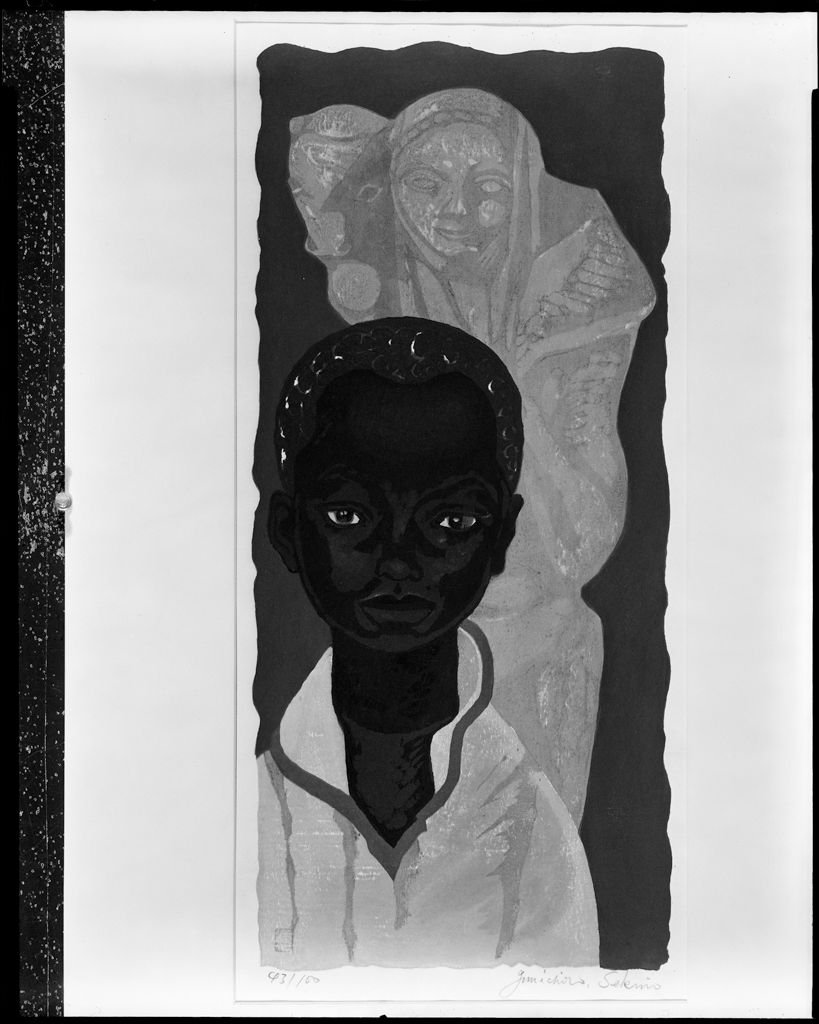
Sculpture of a Boy
Woodblock print
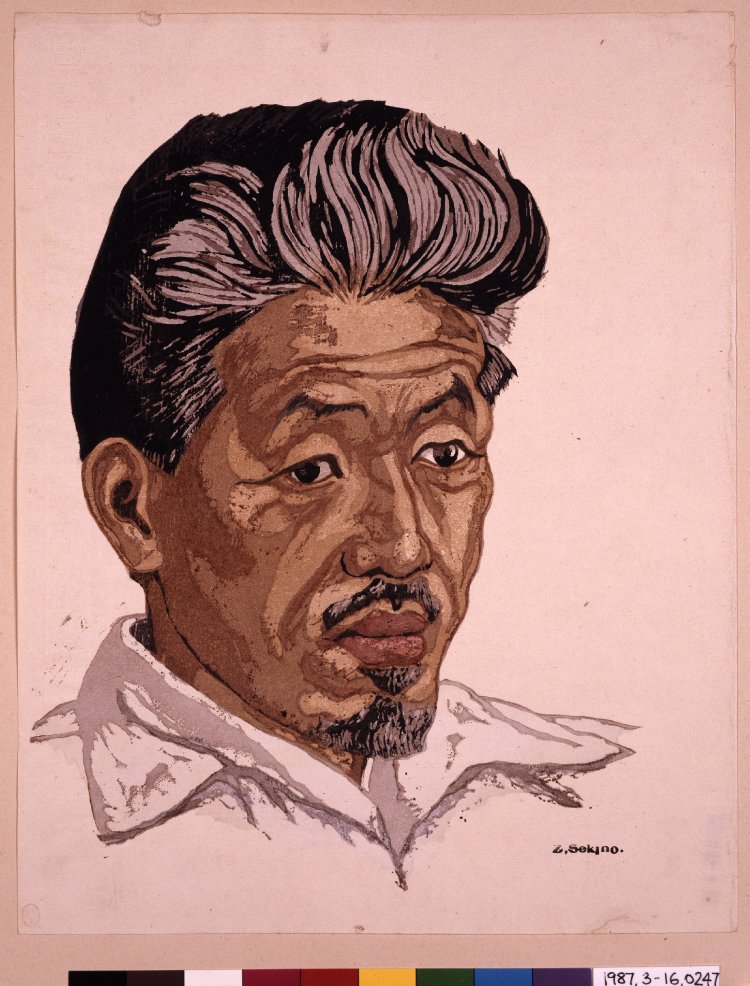
Onchi Koshiro zo (Portrait of Onchi Koshiro) / Ichimoku-shu (First Thursday Collection, Vol 1)
Woodblock print
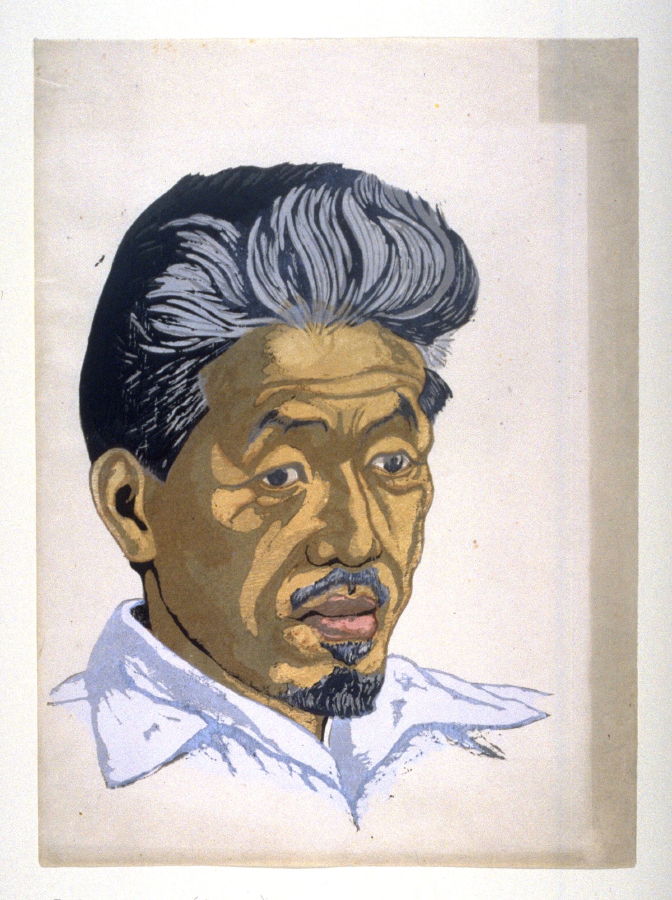
Portrait of Koshiro Onchi
Woodblock print
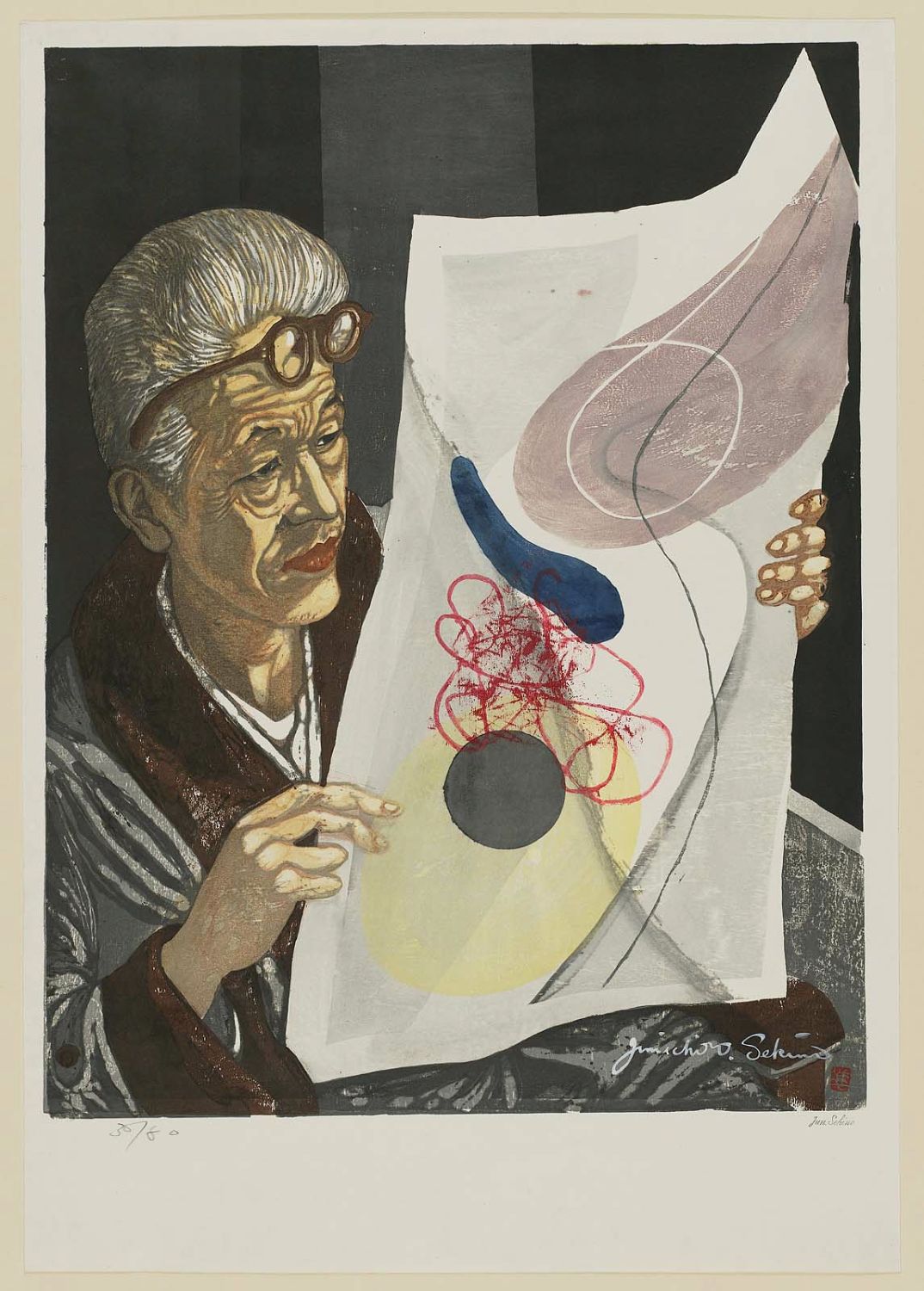
Portrait of Onchi Koshiro
Woodblock print
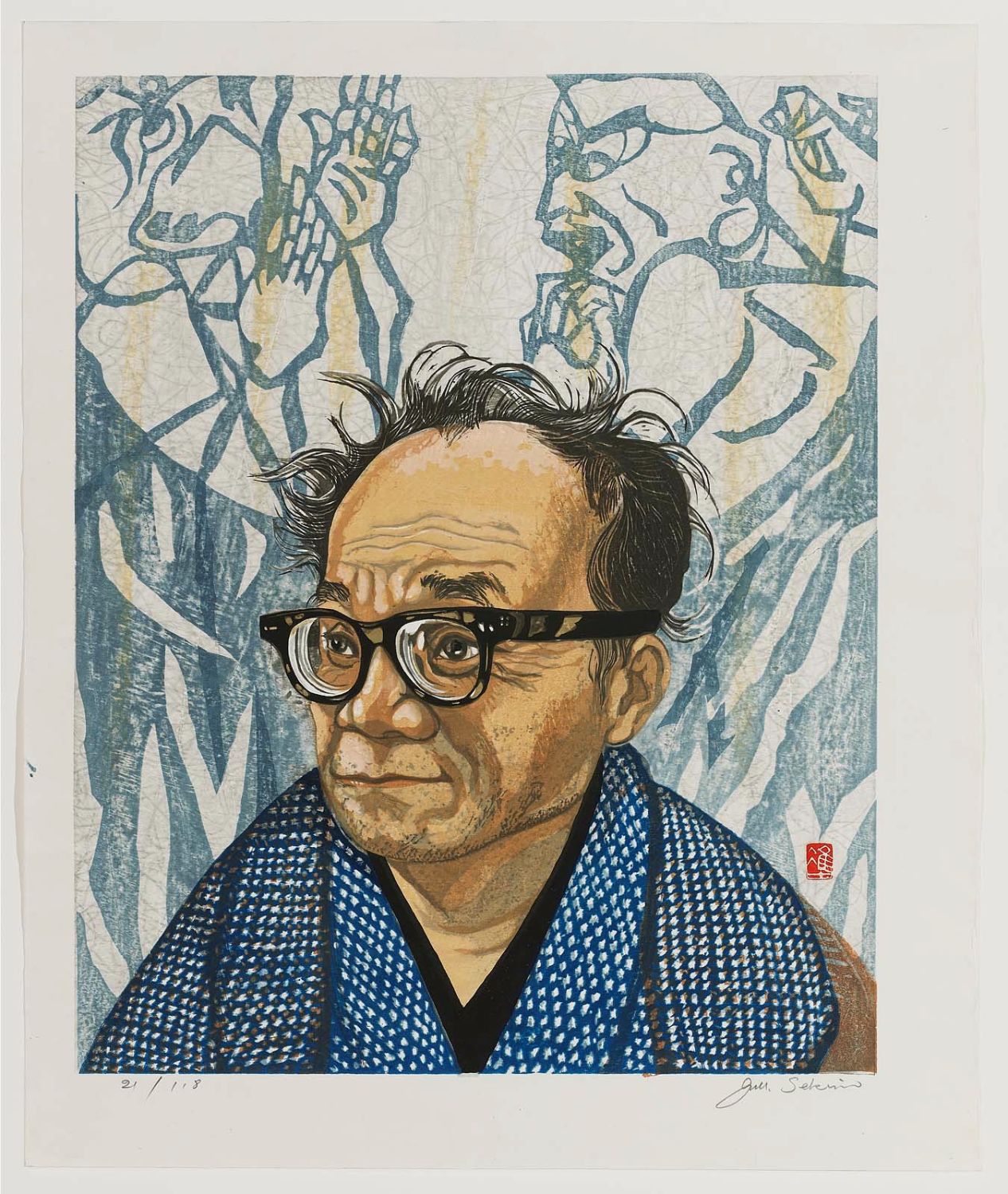
Portrait of Munakata Shiko
Woodblock print
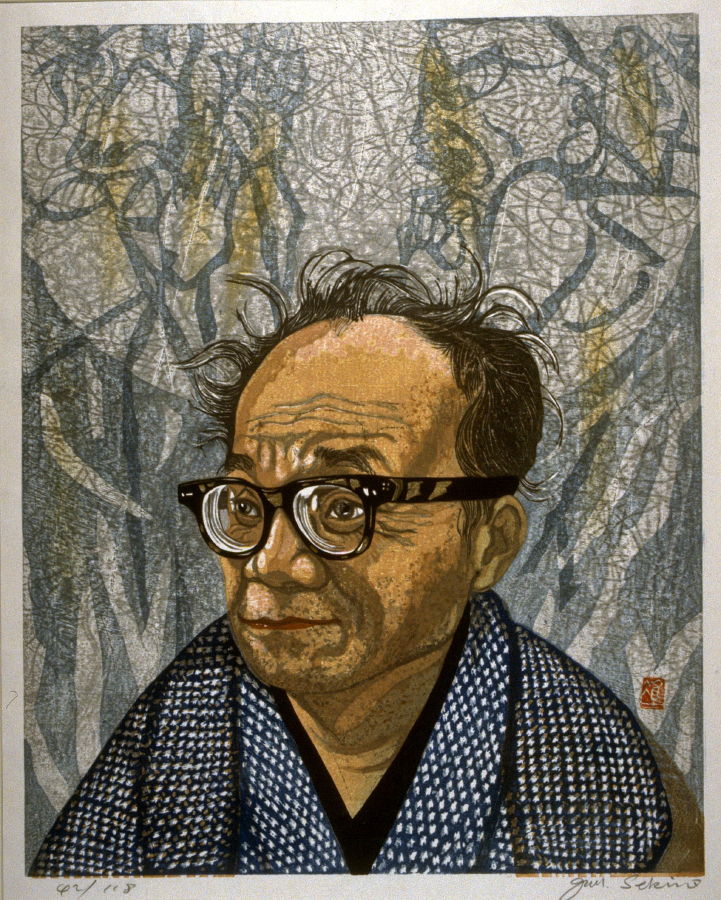
Portrait of Shiko Munakata
Woodblock print
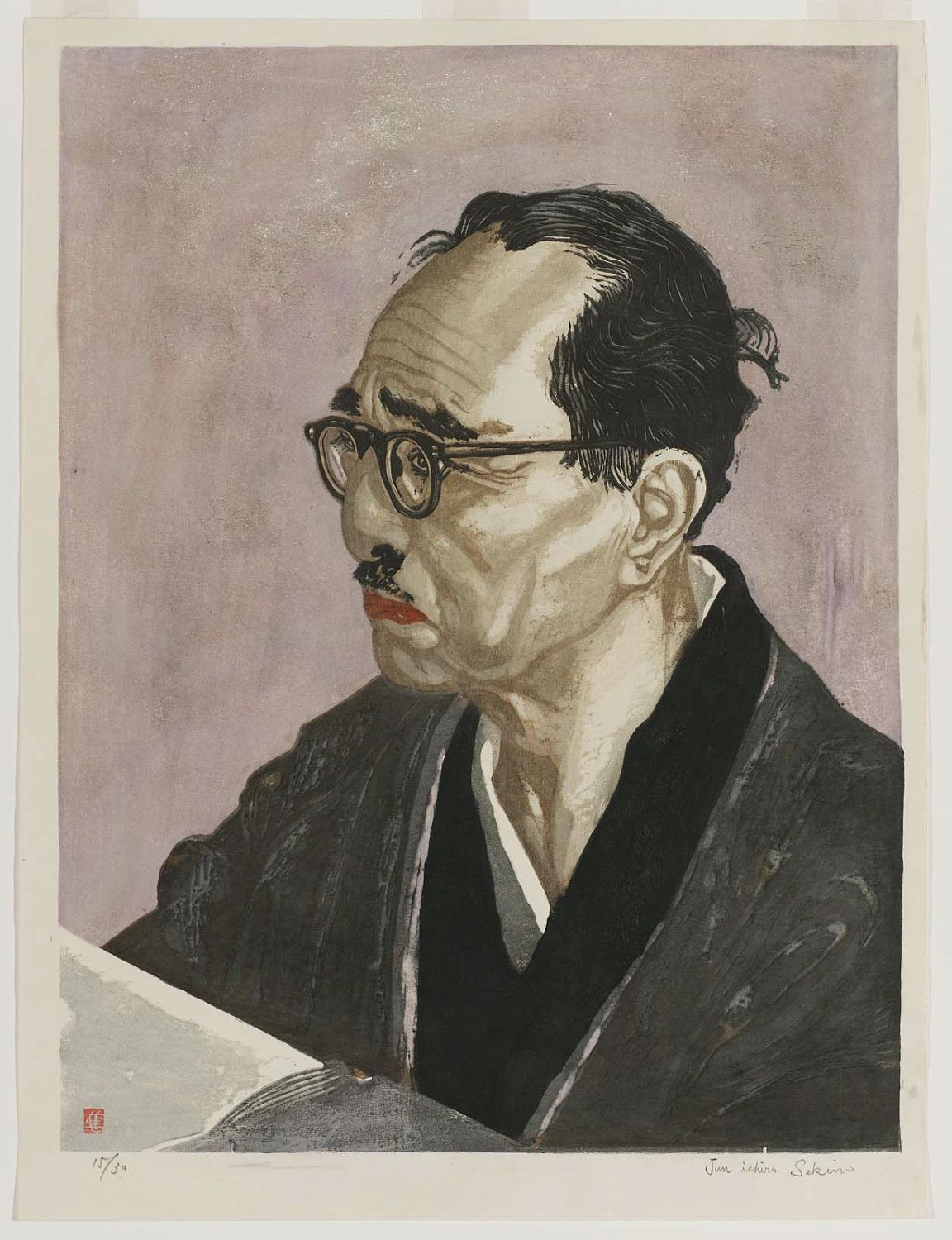
Portrait of Hinatsu Konosuke (1890–1971)
Woodblock print
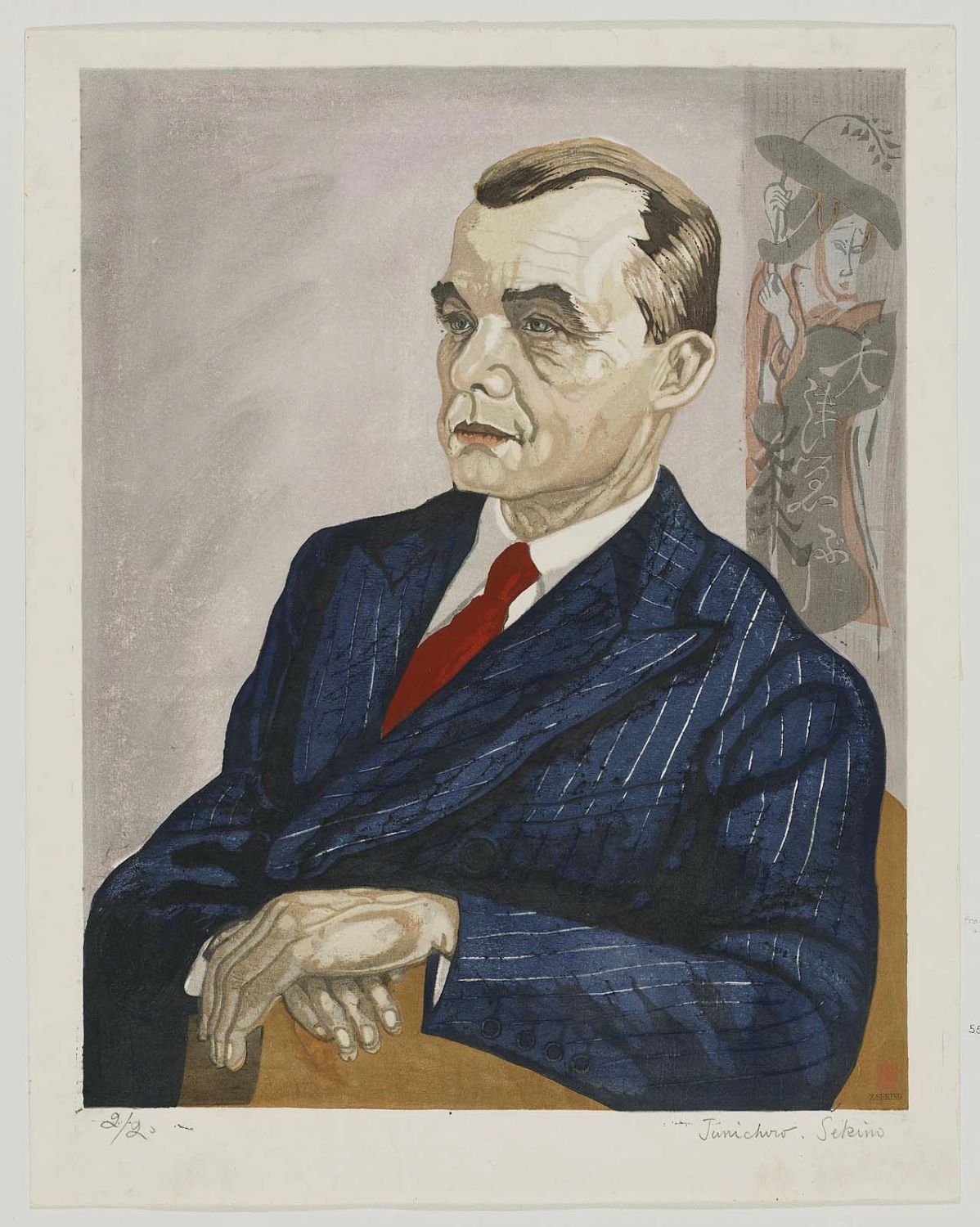
Portrait of Mr. Fritz W. Bilfinger
Woodblock print

Portrait of Mrs. Fritz W. Bilfinger
Woodblock print
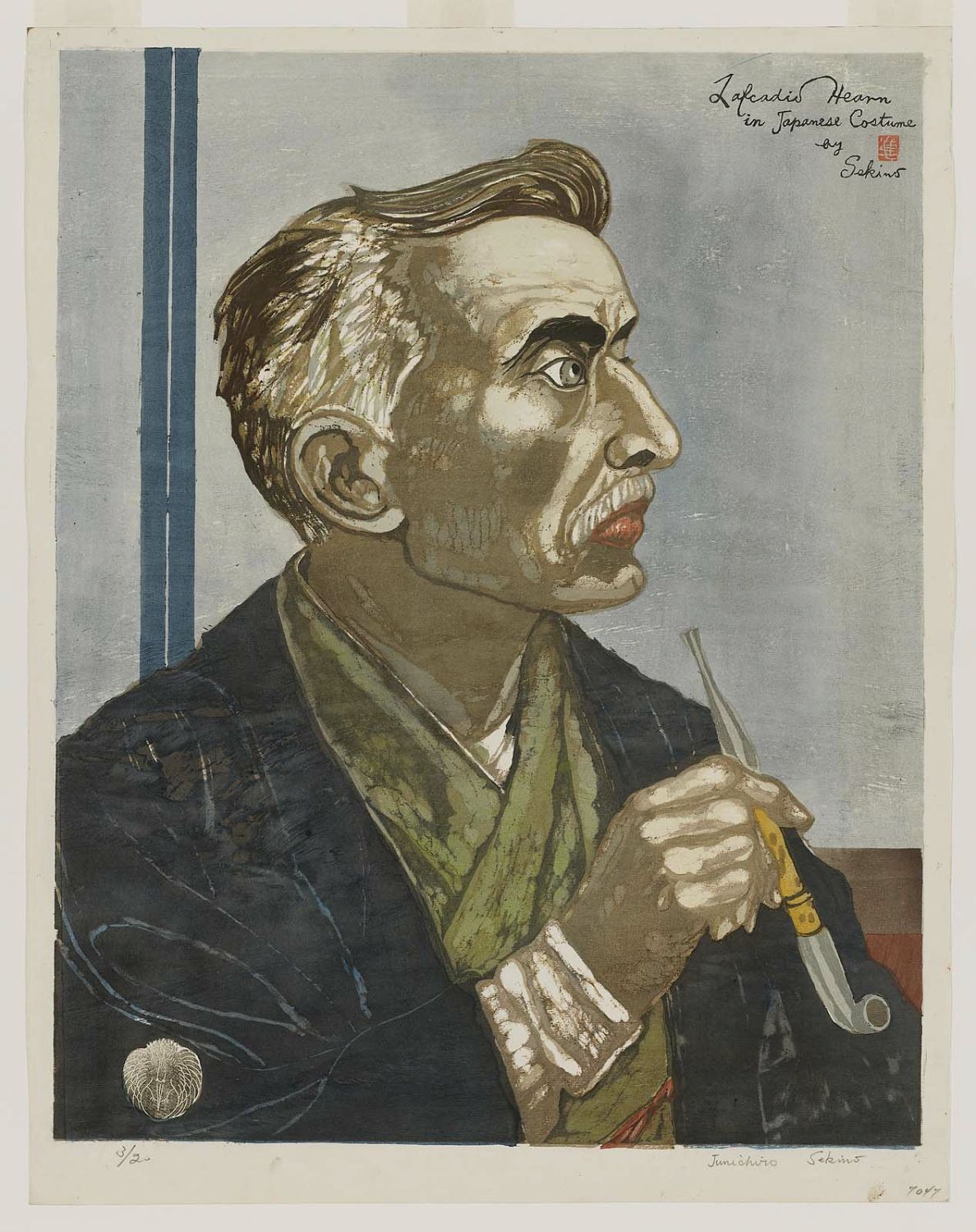
Lafcadio Hearn in Japanese Costume
Woodblock print
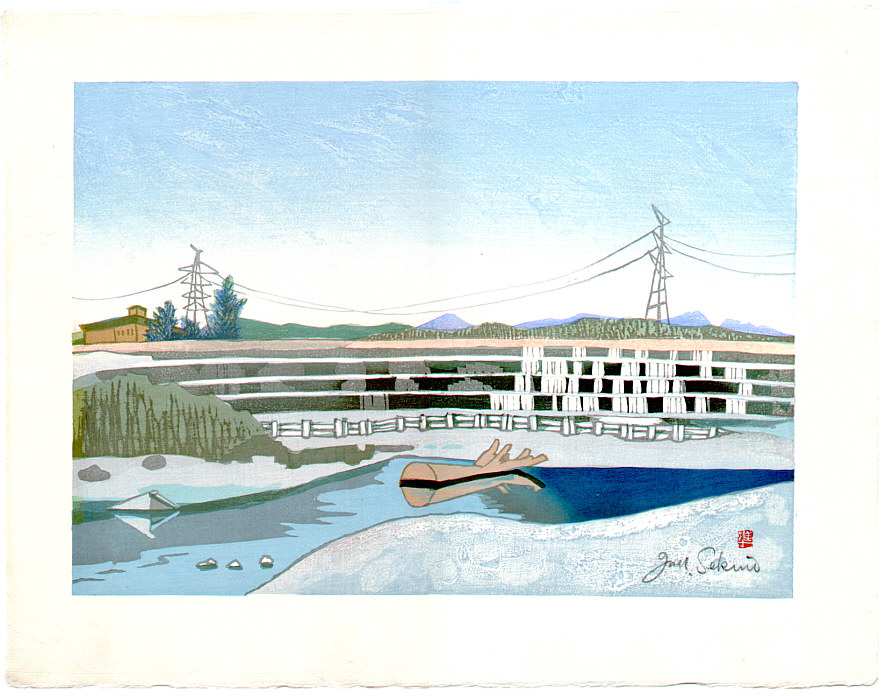
Kawasaki, from the series 53 Stations of the Tokaido
Woodblock print
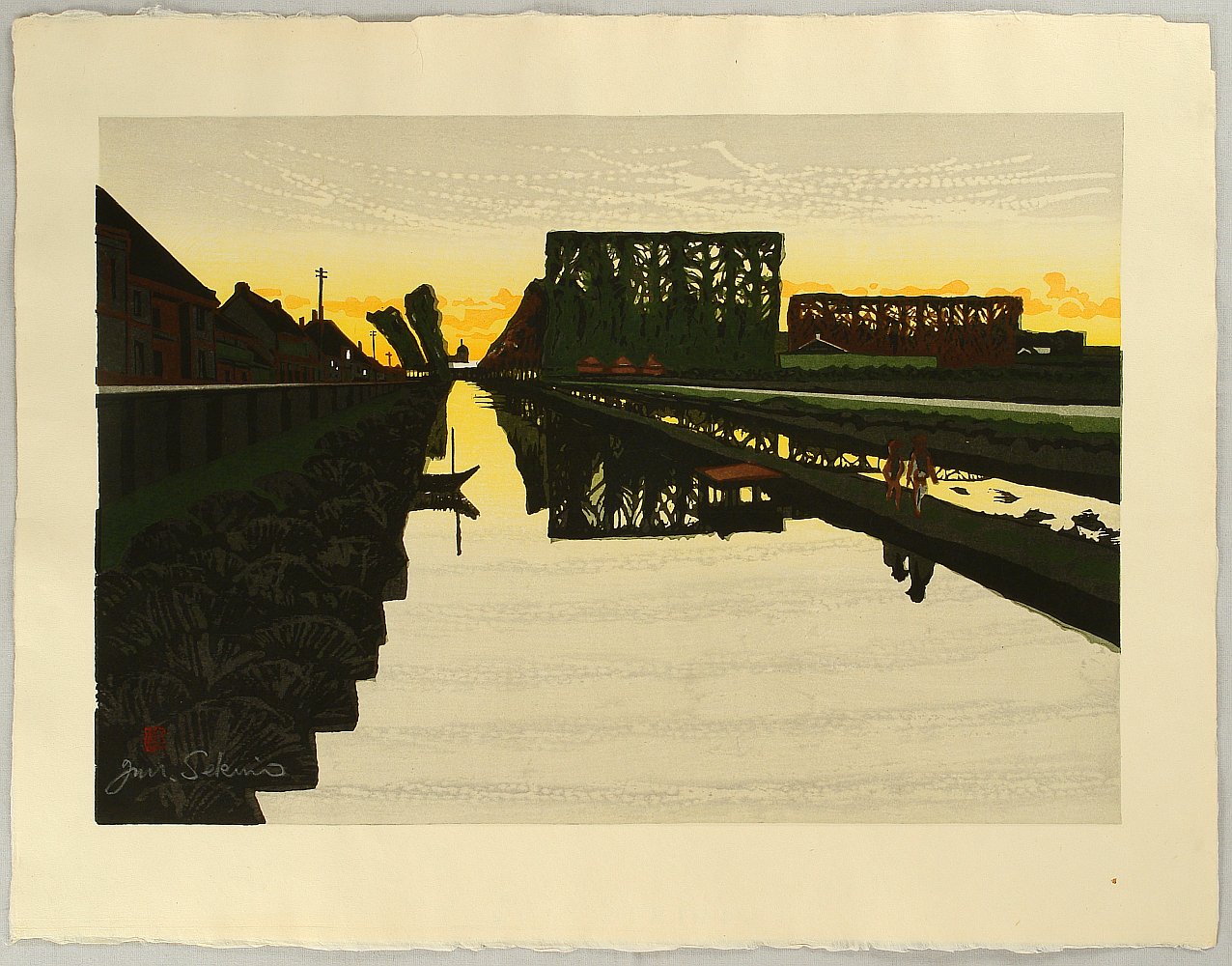
Minakuchi, from the series 53 Stations of the Tokaido
Woodblock print
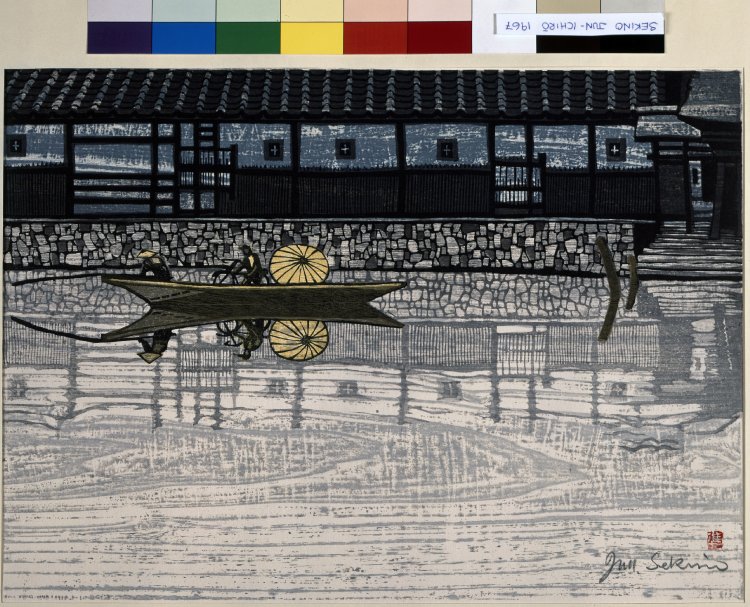
Mitsuke / Tokaido gojusan tsugi ('Fifty-three Stations of the Tokaido Road)
Woodblock print