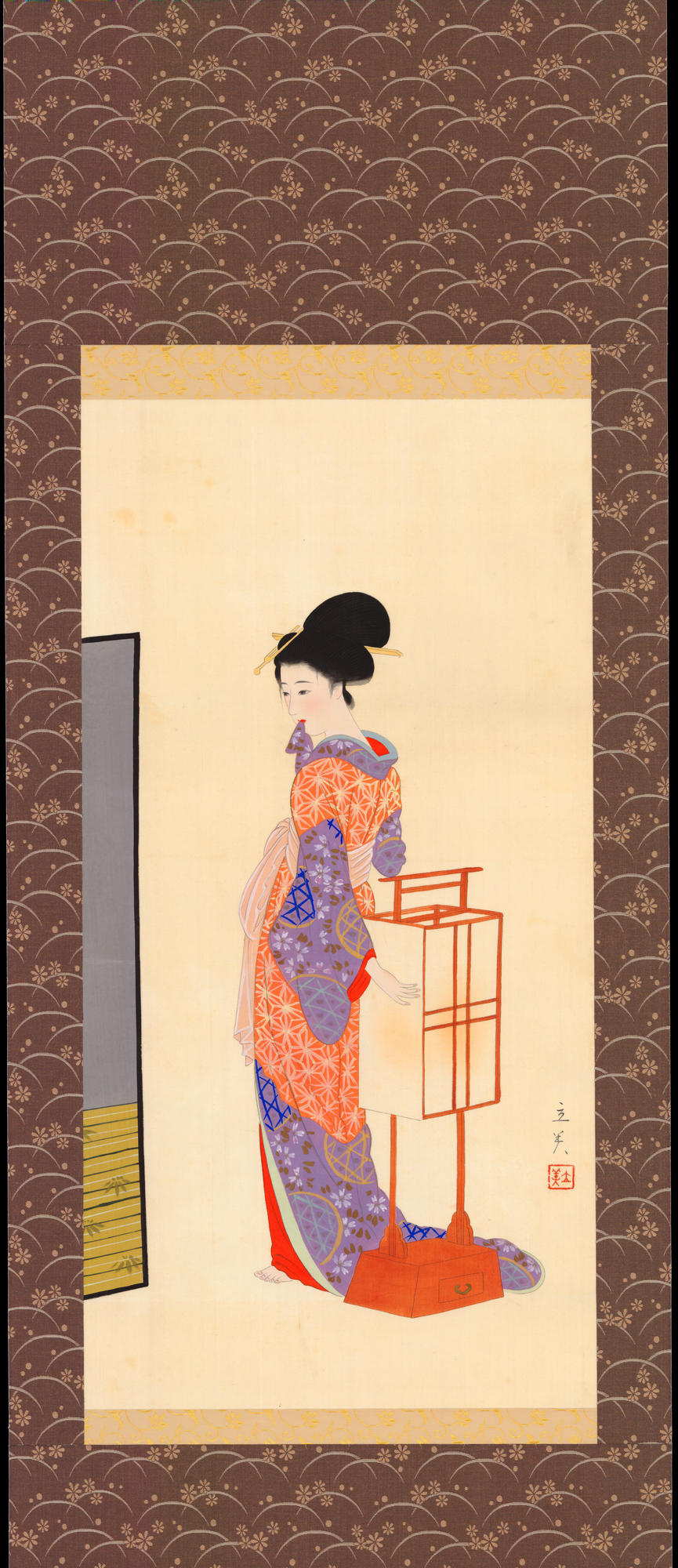
Biography
Shimura Tatsumi (志村立美, 1907–1980) was a Japanese artist renowned for his bijin-ga (beautiful women) prints and paintings that depicted kimono-clad women with a serene, timeless elegance. Over a career spanning five decades, Shimura evolved from a commercial illustrator and shin-hanga print designer into an independent artist who produced some of the most graceful and psychologically nuanced images of Japanese women in the postwar period.
Born in 1907 in Takasaki, Gunma Prefecture, northwest of Tokyo, Shimura moved to the capital as a teenager to pursue an artistic career. He studied under Yamakawa Shuho, himself a student of Ikeda Terukata, placing Shimura within the distinguished Kaburagi Kiyokata lineage that produced so many of the shin-hanga movement's leading bijin-ga artists. This training gave him a thorough command of nihonga painting technique and the conventions of the bijin-ga genre, both of which informed his entire career.
In his early years, Shimura worked as a magazine illustrator, producing cover art and story illustrations for popular publications. This commercial work honed his ability to create images of women that were immediately appealing and emotionally engaging while maintaining high artistic standards. During the 1930s and 1940s, he also produced woodblock print designs in the shin-hanga collaborative model, with his designs carved and printed by professional craftsmen under the direction of publishers.
Shimura's shin-hanga prints from this period depict women in traditional kimono engaged in quiet, contemplative activities — arranging flowers, reading, gazing into mirrors, or simply sitting in repose. His style is notable for its refined simplicity and the warmth of his characterizations. Unlike the more idealized beauties of Shinsui or the bold modernists of Kobayakawa, Shimura's women possess an approachable, gentle beauty that suggests real personality beneath the elegant surface.
In the postwar decades, Shimura's career shifted direction as the shin-hanga publishing model declined. He increasingly produced prints in a more independent manner, designing, and in some cases supervising or participating in the carving and printing processes himself, moving closer to the sosaku-hanga ideal of the artist as sole creator. This later body of work, produced primarily from the 1950s through the 1970s, is characterized by a more personal and expressive approach to the bijin-ga tradition. The women in these later prints are rendered with greater psychological depth and a subtler palette, their poses and expressions suggesting inner states of thought and feeling.
Shimura exhibited regularly at major Japanese art exhibitions and received recognition as one of the leading postwar bijin-ga artists. He was also known for his book illustrations and calendar art, which brought his images of beautiful women to a wide popular audience in Japan. He died in 1980, leaving a body of work that spans the transition from the collaborative shin-hanga era to the more individualistic artistic climate of postwar Japan. His prints are held in collections including the Machida City Museum of Graphic Arts and the Honolulu Museum of Art.
Key Facts
- Active Period
- 1907–1980
- Nationality
- 🇯🇵Japan
- Movement
- Shin-hanga
- Works Indexed
- 69
Frequently Asked Questions
What is Shimura Tatsumi known for?
Shimura Tatsumi (志村立美, 1907–1980) was a Japanese artist renowned for his bijin-ga (beautiful women) prints and paintings that depicted kimono-clad women with a serene, timeless elegance. Over a career spanning five decades, Shimura evolved from a commercial illustrator and shin-hanga print designer into an independent artist who produced some of the most graceful and psychologically nuanced images of Japanese women in the postwar period.
When was Shimura Tatsumi active?
Shimura Tatsumi was active from 1907 to 1980. They were associated with the Shin-hanga movement.
What artistic movements influenced Shimura Tatsumi?
Shimura Tatsumi's work was shaped by the Shin-hanga tradition in Japanese woodblock printmaking. Shin-hanga: The "new prints" movement (c.
Where can I see Shimura Tatsumi's original prints?
Original prints by Shimura Tatsumi can be found in collections including ukiyo-e.org, Japanese Art Open Database, Ohmi Gallery, Scholten Japanese Art.
How much do Shimura Tatsumi prints cost?
Shimura Tatsumi is appreciated by collectors for his graceful, psychologically nuanced depictions of kimono-clad women that span the shin-hanga and postwar eras. His work offers an accessible entry point to bijin-ga collecting, with most prints selling in the $800–$3,500 range. His career divides into two phases: collaborative shin-hanga prints from the 1930s-1940s, and more independently produced prints from the 1950s-1970s. The earlier prints tend to be scarcer and more technically refined, while the later prints offer a more personal artistic vision. Both phases have their admirers, and the market values examples from each period. Shimura's most sought-after subjects are standing or seated women in elaborate kimono, rendered with his characteristic warmth and psychological sensitivity. Prints with strong color preservation and clean condition are essential for strong prices. Later editions and prints with fading or toning: $400–$1,200. Good mid-career examples: $1,500–$3,500. Finest early shin-hanga prints and major later compositions: $4,000–$8,000.
Woodblock Prints by Shimura Tatsumi (69)
Lantern - 行燈
1940
Woodblock print
Tatsumi, Shimura
1953
Woodblock print

Maihime (Dancing Girl)
1953
Woodblock print
TotalCount
1953
Woodblock print

Reflection in a Mirror- Marumage — Marumage (Natsu)
1953
Woodblock print
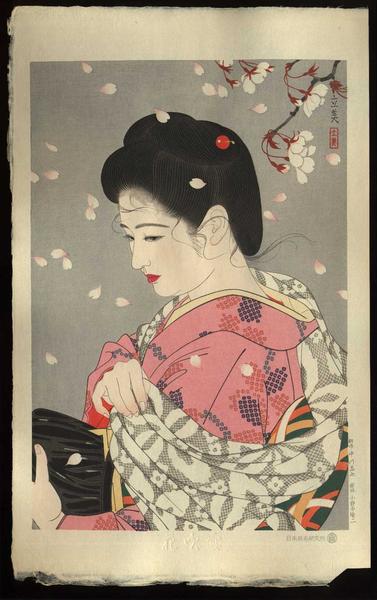
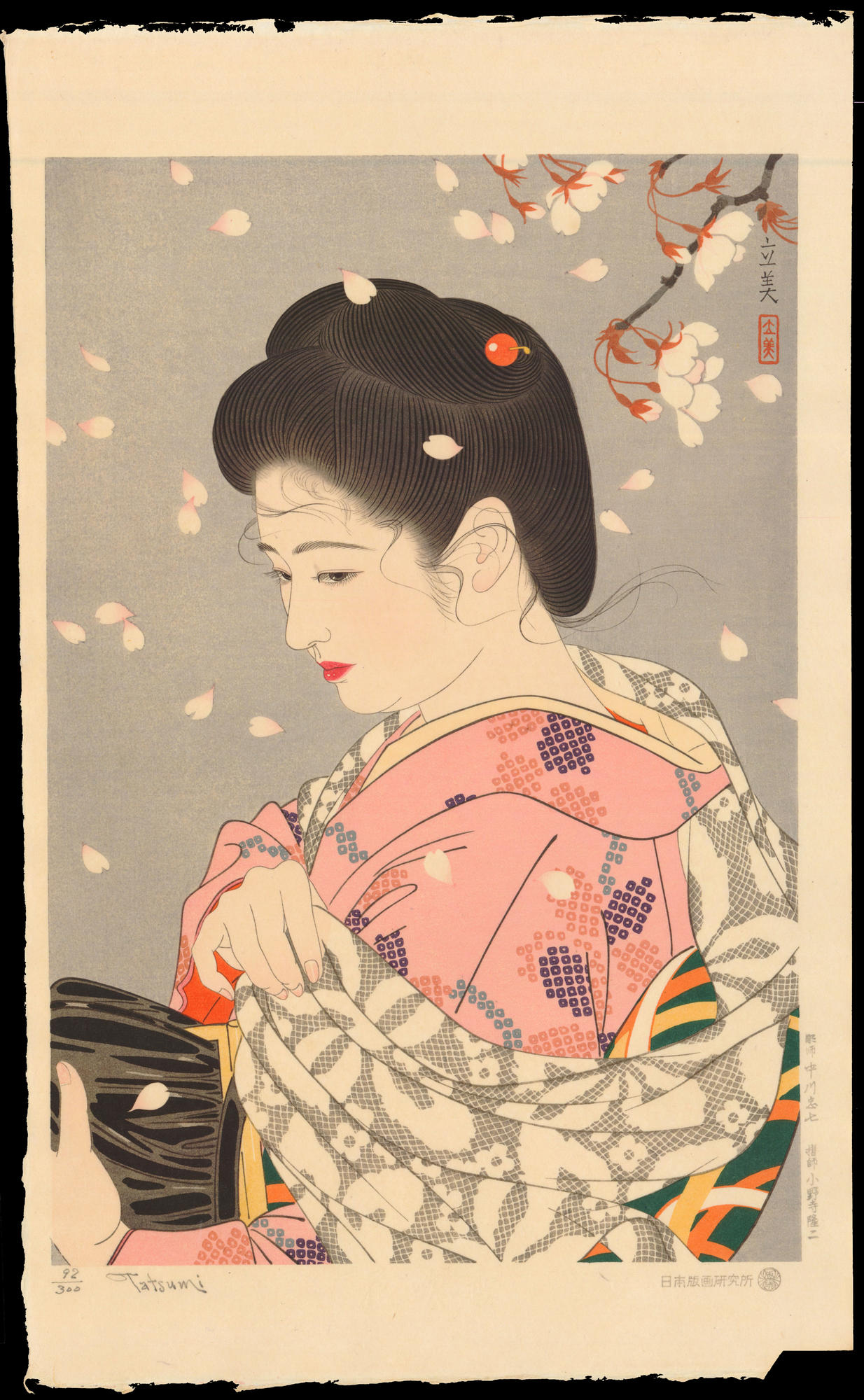
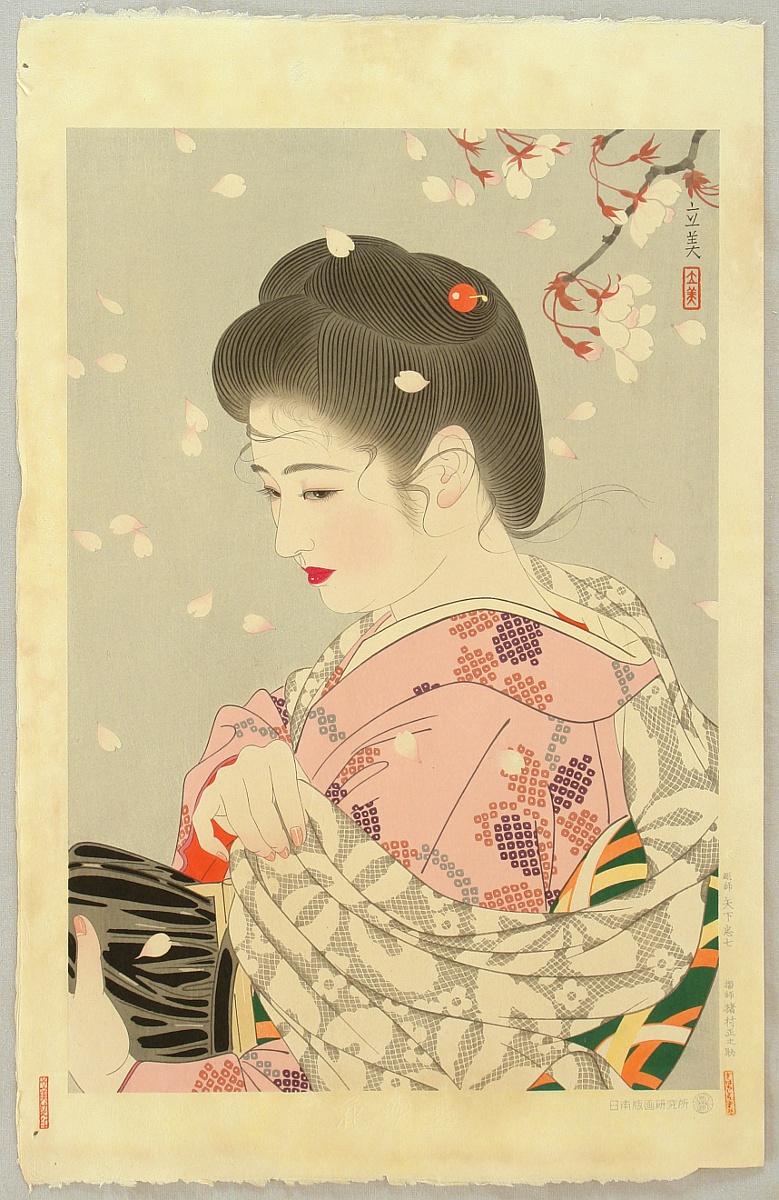
Hanafubuki (Falling Cherry Blossoms) — 花吹雪
1953
Woodblock print
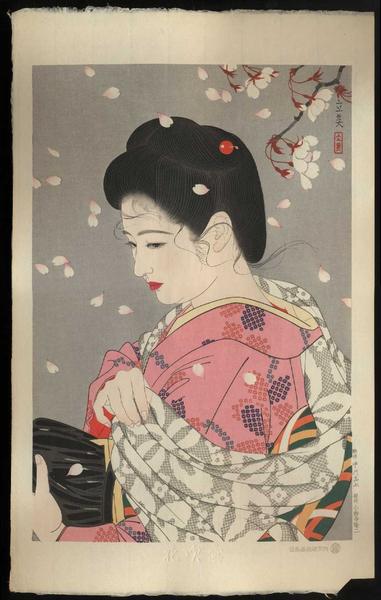
Hanafubuki (Falling Cherry Blossoms) — 花吹雪
1953
Woodblock print
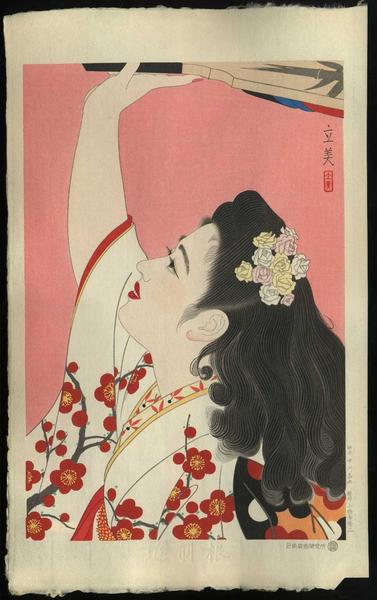
Oibane, Playing Battledore and Shuttlecock — 追羽根
1953
Woodblock print

Reflection in a Mirror- Marumage — Marumage (Natsu)
1953
Woodblock print
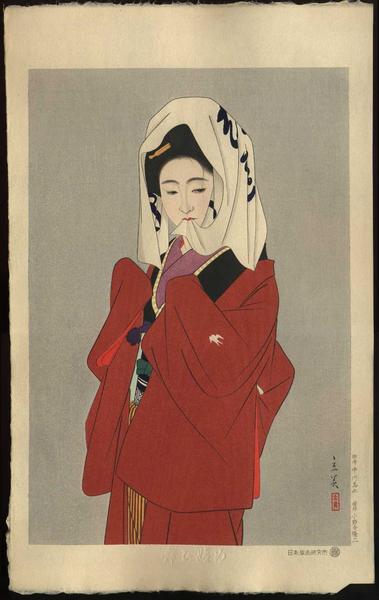
Maihime (Dancing Girl)
1953
Woodblock print
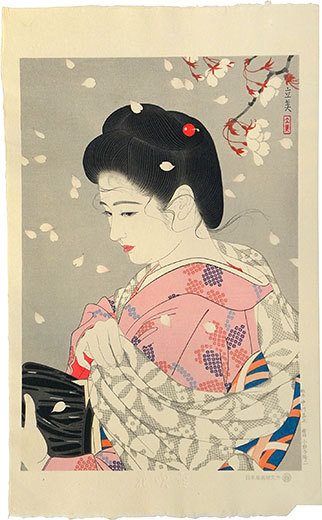
Five Figures of Modern Beauties: Cherry Blossoms Blizzard (Gendai Bijin Fuzoku Gotai: Hana Fubuki)
1953
Woodblock print
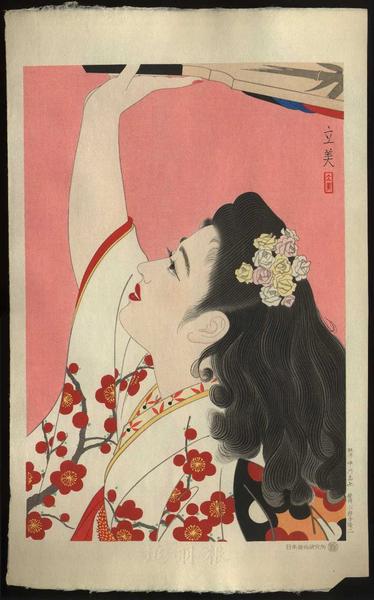
Oibane, Playing Battledore and Shuttlecock — 追羽根
1953
Woodblock print
![Five Figures of Modern Beauties: Playing Battledore and Shuttlecock (Gendai Bijin Fuzoku Gotai: Oibane [hagoita?]) by Shimura Tatsumi](https://data.ukiyo-e.org/scholten/images/2f5ba4099713181f9c0b7569fd92899f.jpg)
Five Figures of Modern Beauties: Playing Battledore and Shuttlecock (Gendai Bijin Fuzoku Gotai: Oibane [hagoita?])
1953
Woodblock print
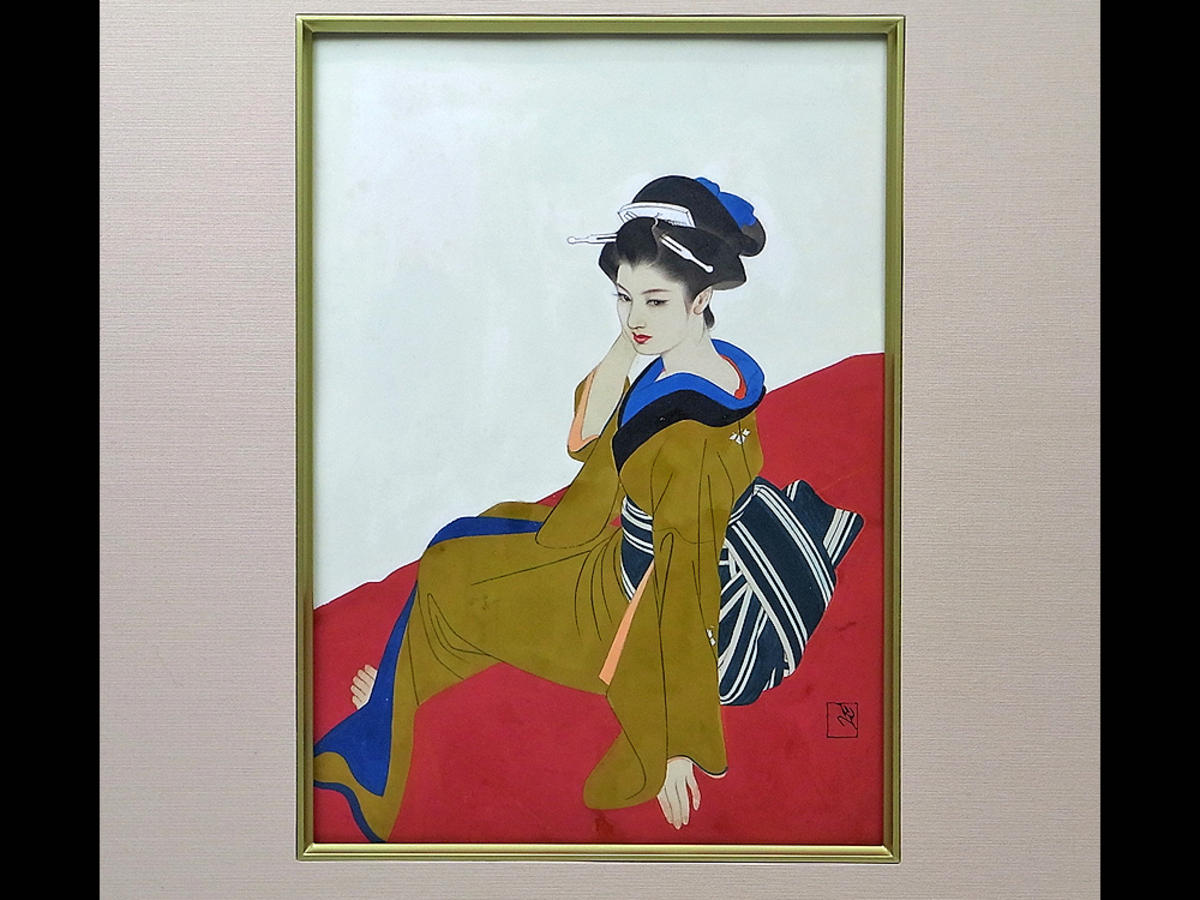
Bijin on red seat
1960
Woodblock print
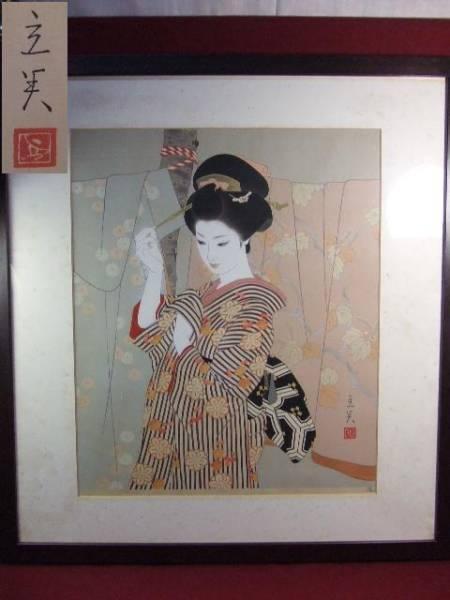
Short Sleeve Kimono — 小袖幕
1970
Woodblock print
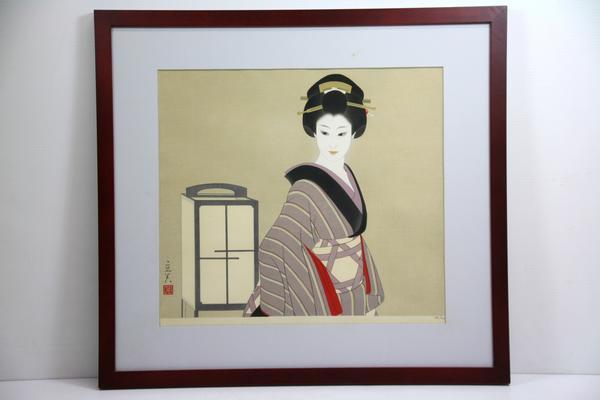
Illumination — あかり
circa 1970-1990
Woodblock print
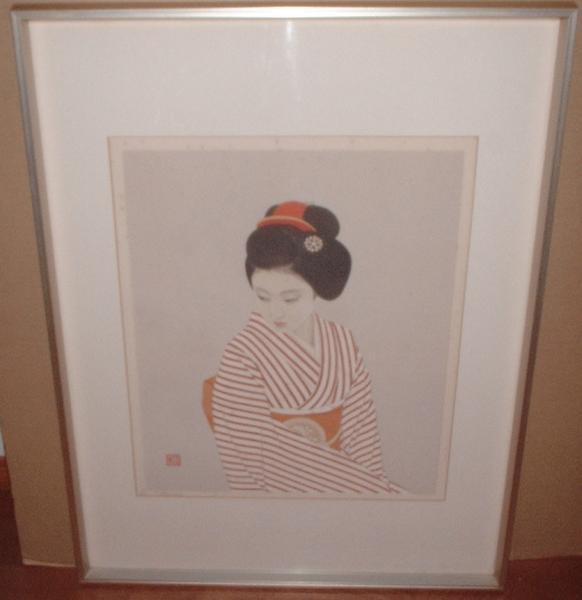
Maiko
1977
Woodblock print
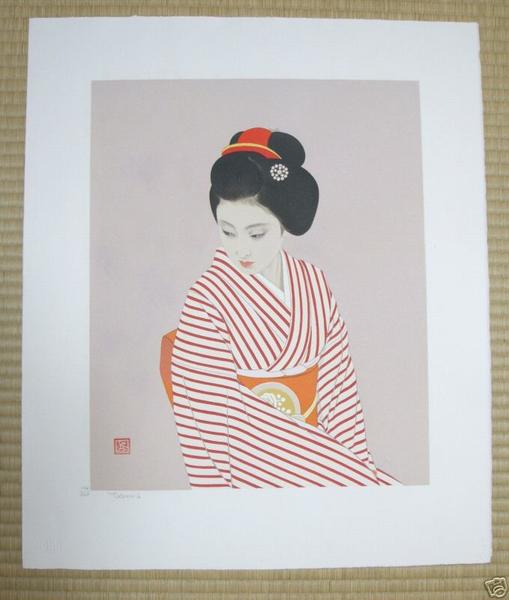
Maiko
1977
Woodblock print
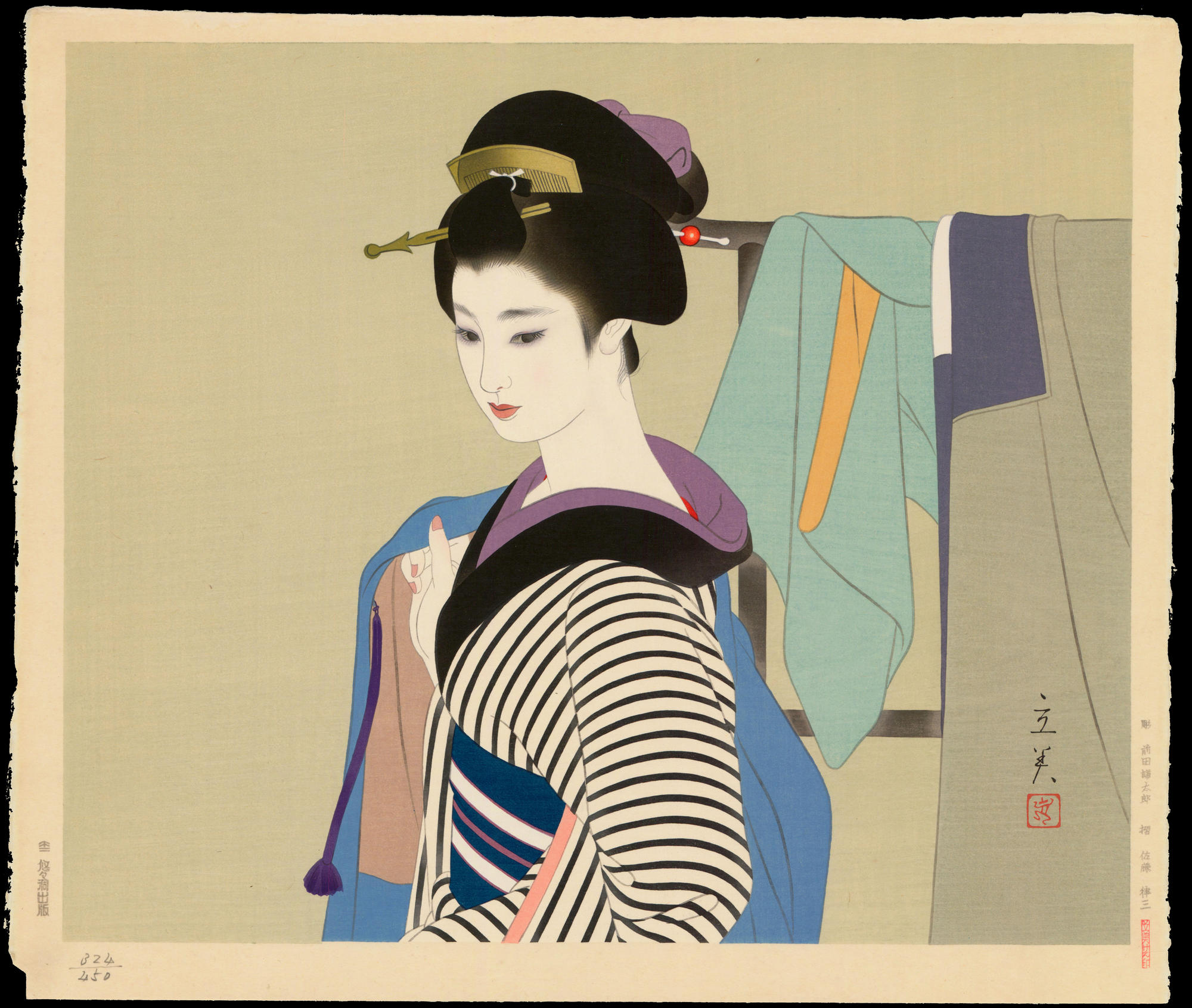
Haori - はおり
c. 1980 (this item: First edition)
Woodblock print
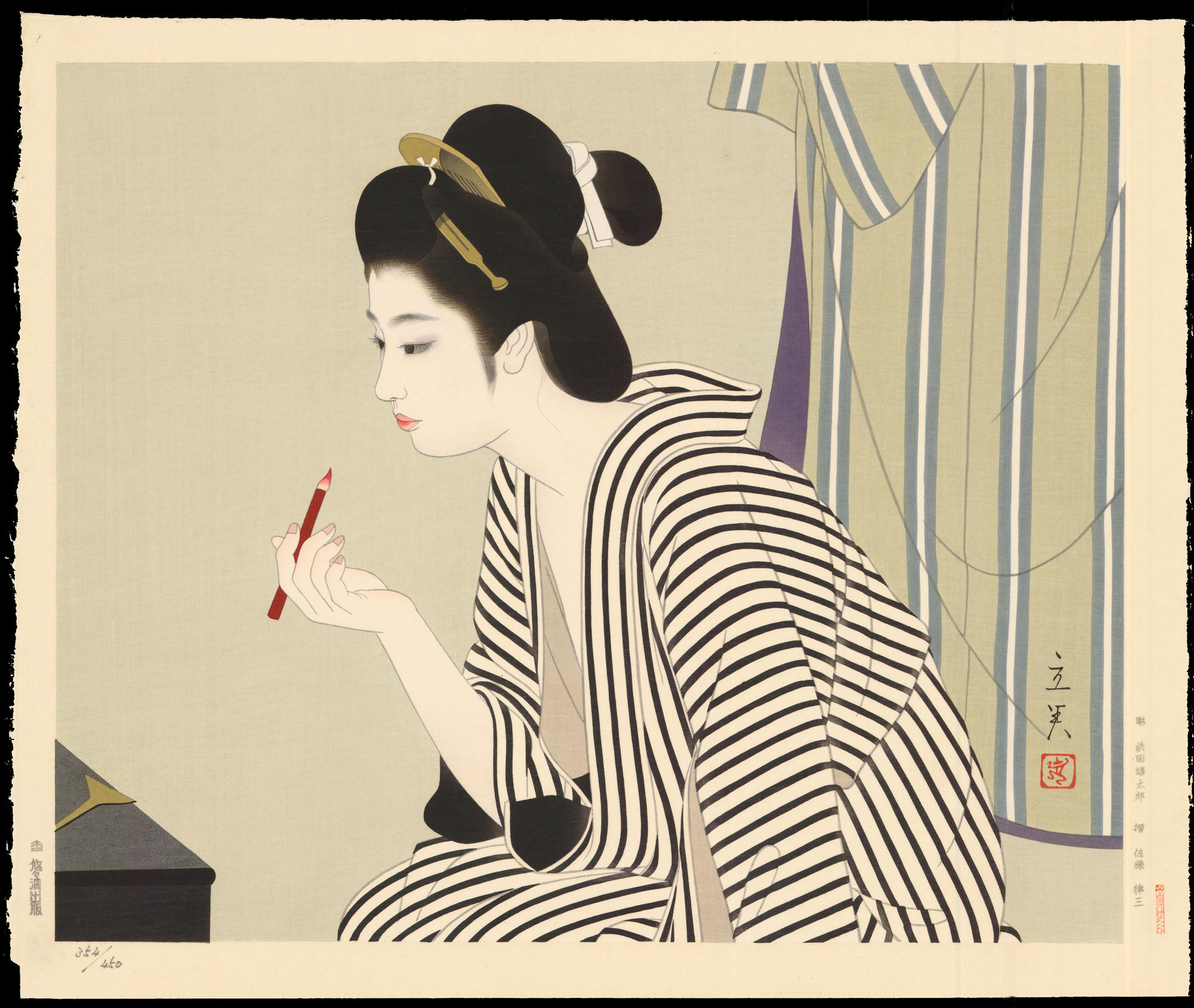
Lipstick - 口紅
c. 1980 (this item: First edition)
Woodblock print
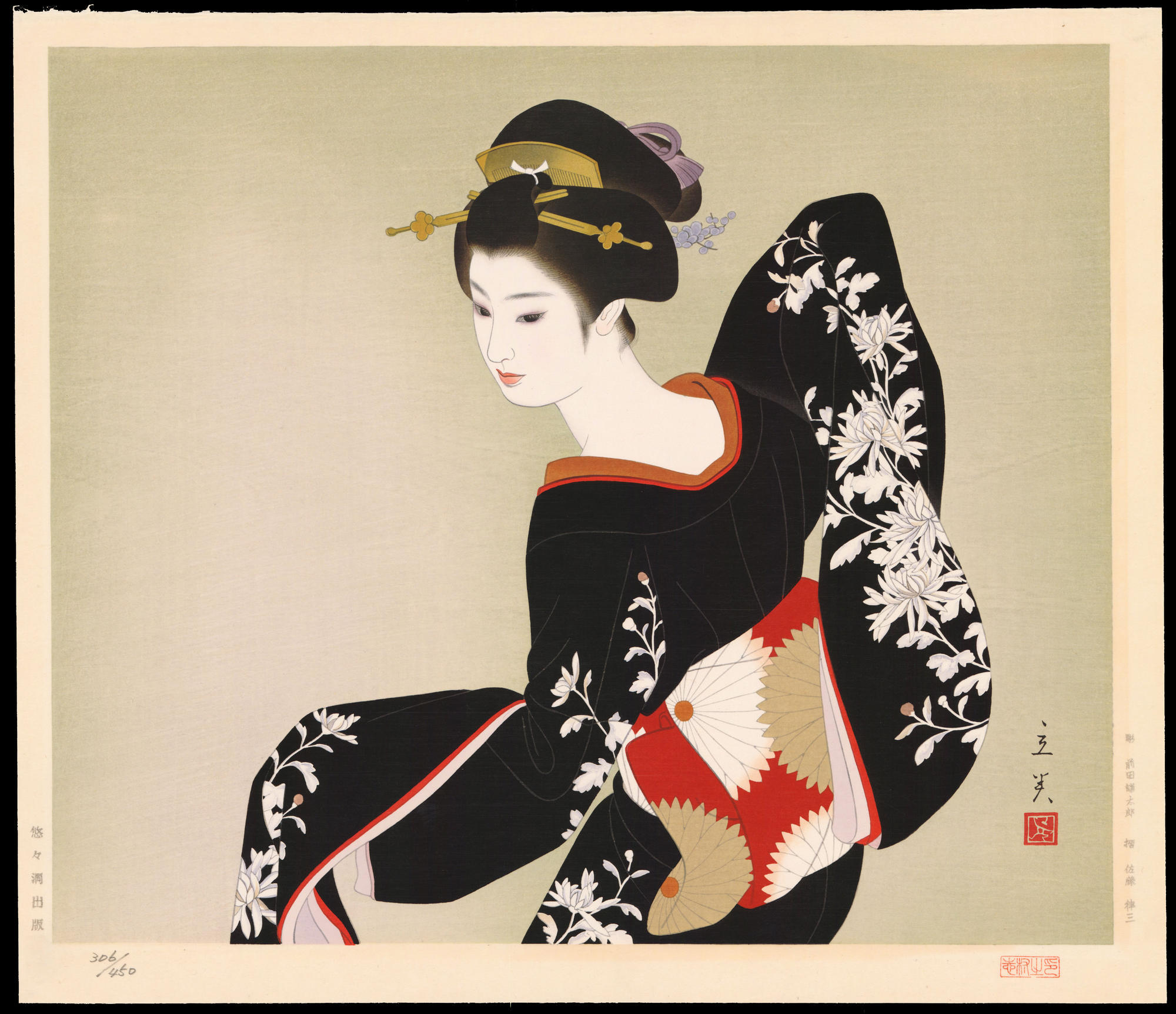
Gesture - しぐさ
c. 1980 (this item: First edition)
Woodblock print
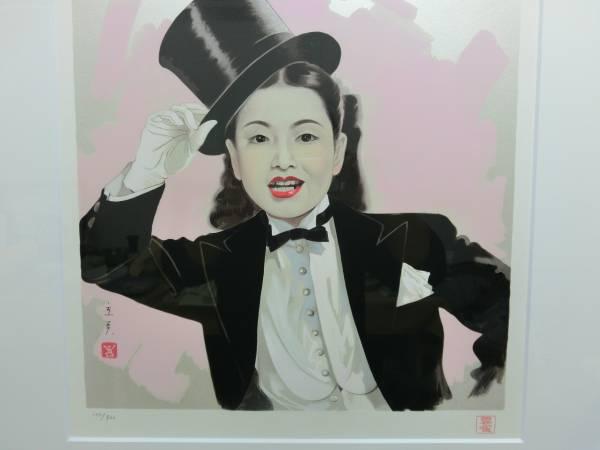
Sad Whistle — 悲しき口笛
1996
Woodblock print
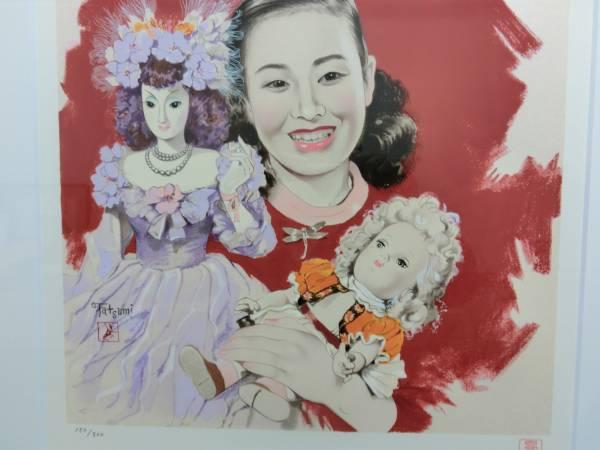
Two Pair of Eyes — 二人の瞳
1996
Woodblock print
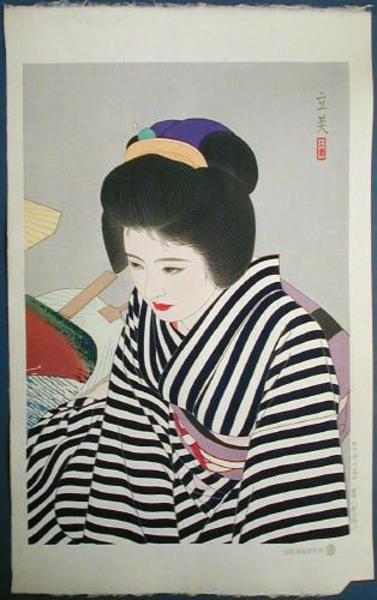
Late Summer - Natsu Takete — 夏たけて
Not set
Woodblock print
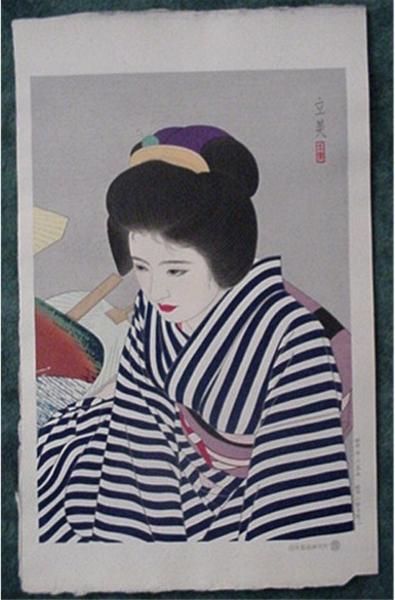
Late Summer - Natsu Takete — 夏たけて
Not set
Woodblock print
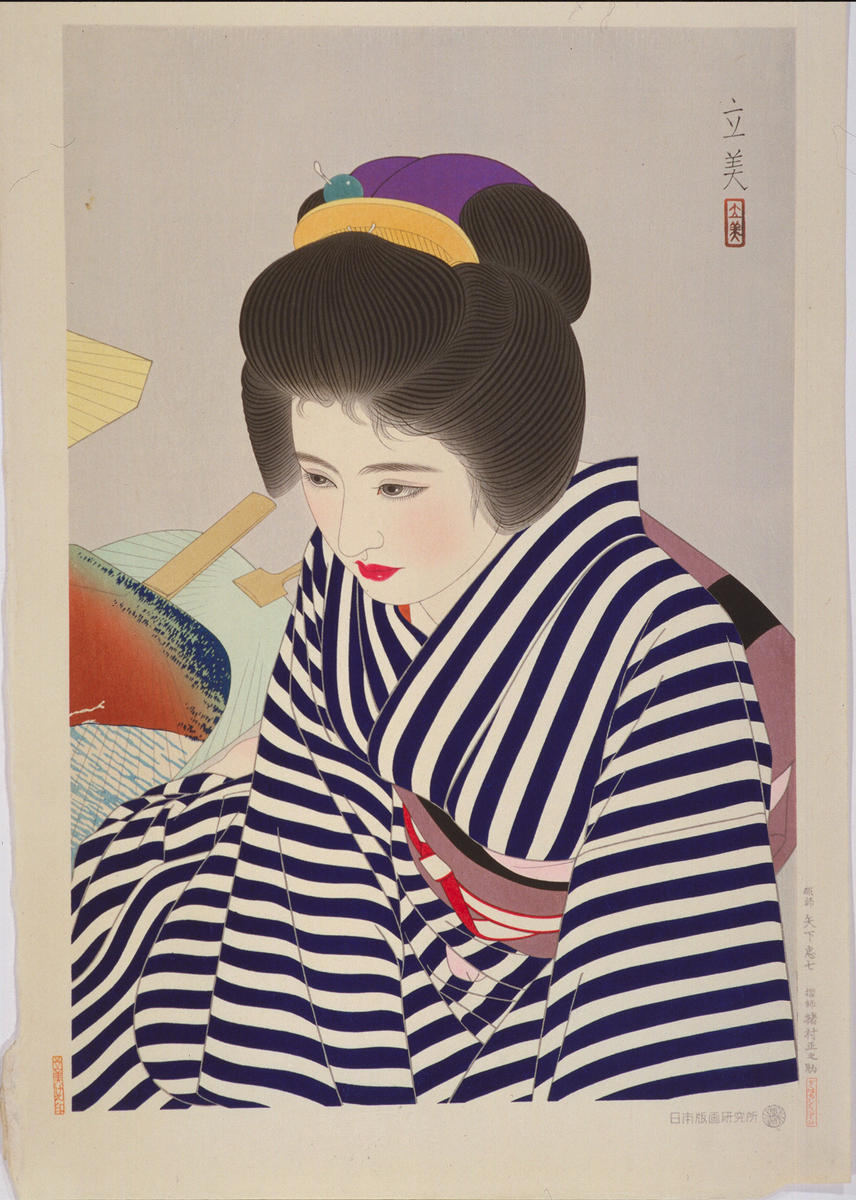
Gendai Bijin Fuzoku Gotai Late Summer Natsu Takete
Woodblock print
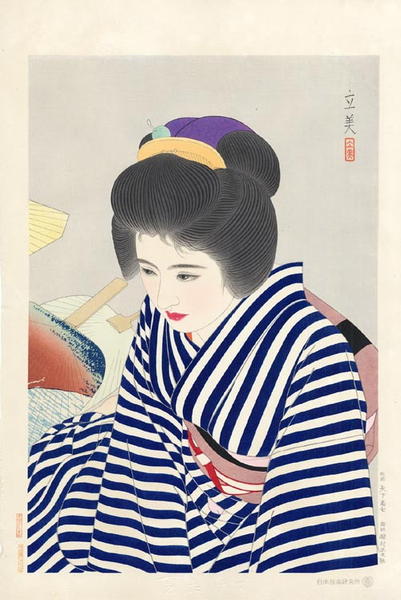
Late Summer - Natsu Takete — 夏たけて
Not set
Woodblock print
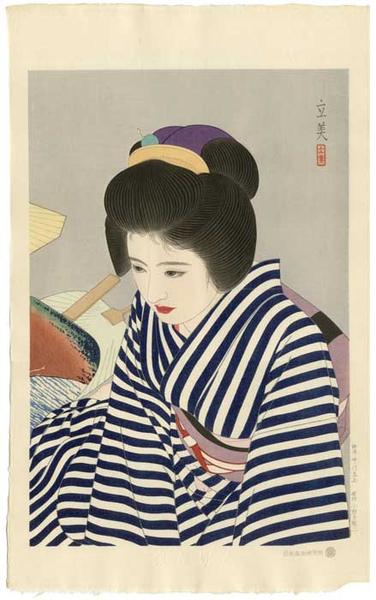
Late Summer - Natsu Takete — 夏たけて
Not set
Woodblock print

Late Summer - Natsu Takete — 夏たけて
Not set
Woodblock print
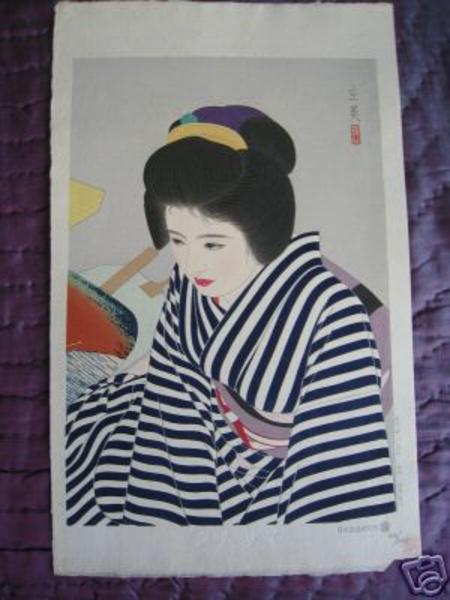
Late Summer - Natsu Takete — 夏たけて
Not set
Woodblock print
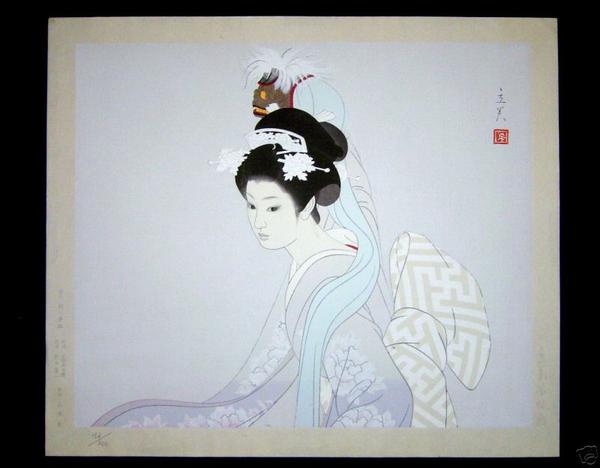
Kagami-Jishi
Not set
Woodblock print
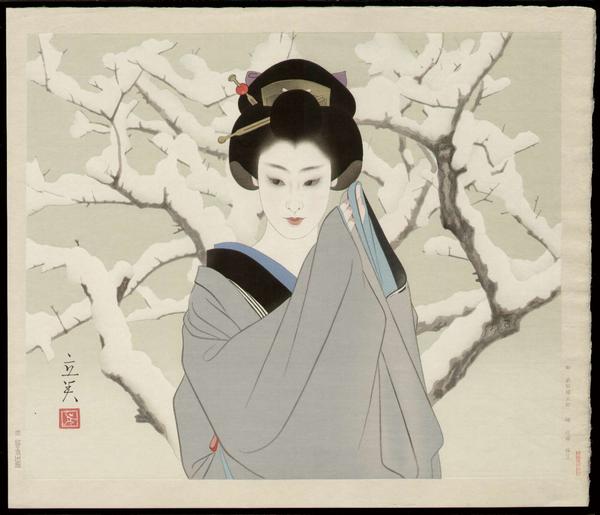
Snow-
Not set
Woodblock print
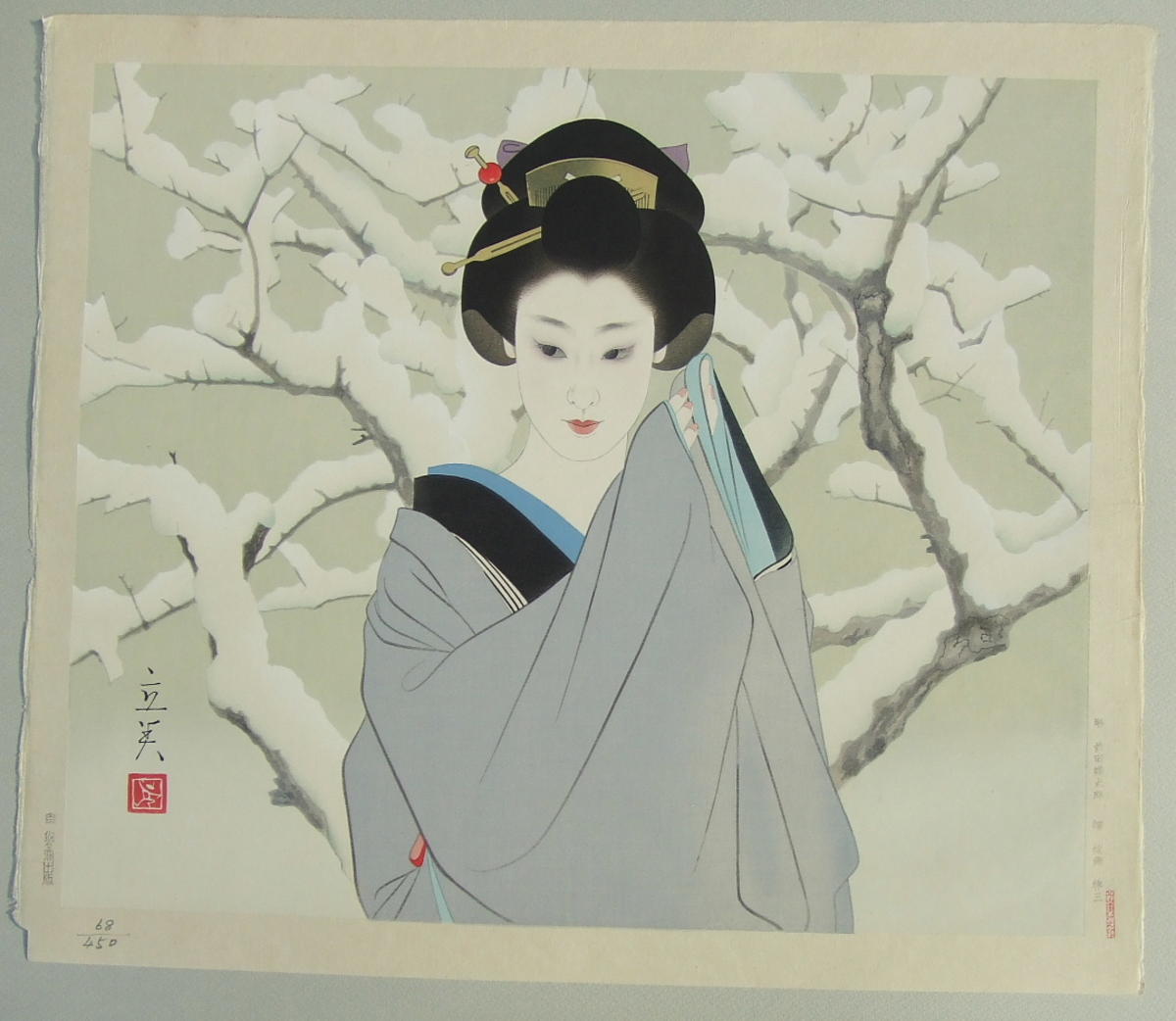
Snow-
Not set
Woodblock print

Snow-
Not set
Woodblock print
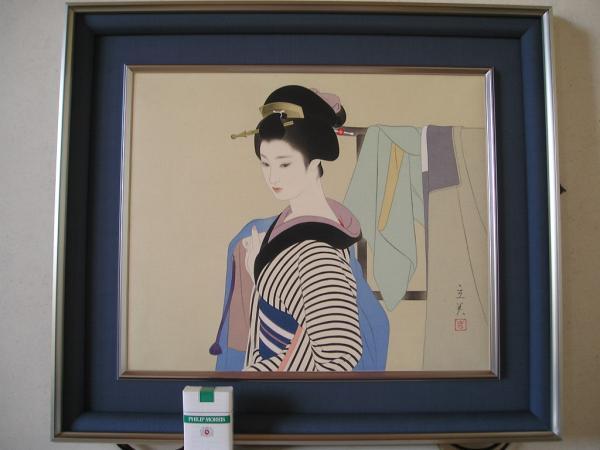
Haori- Japanese Formal Coat
Not set
Woodblock print
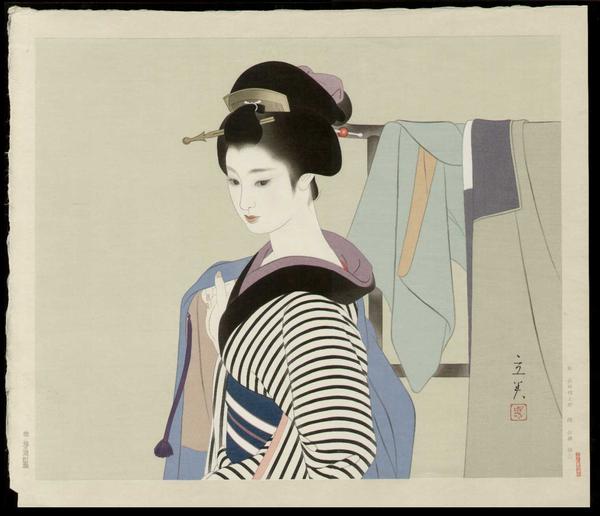
Haori- Japanese Formal Coat
Not set
Woodblock print
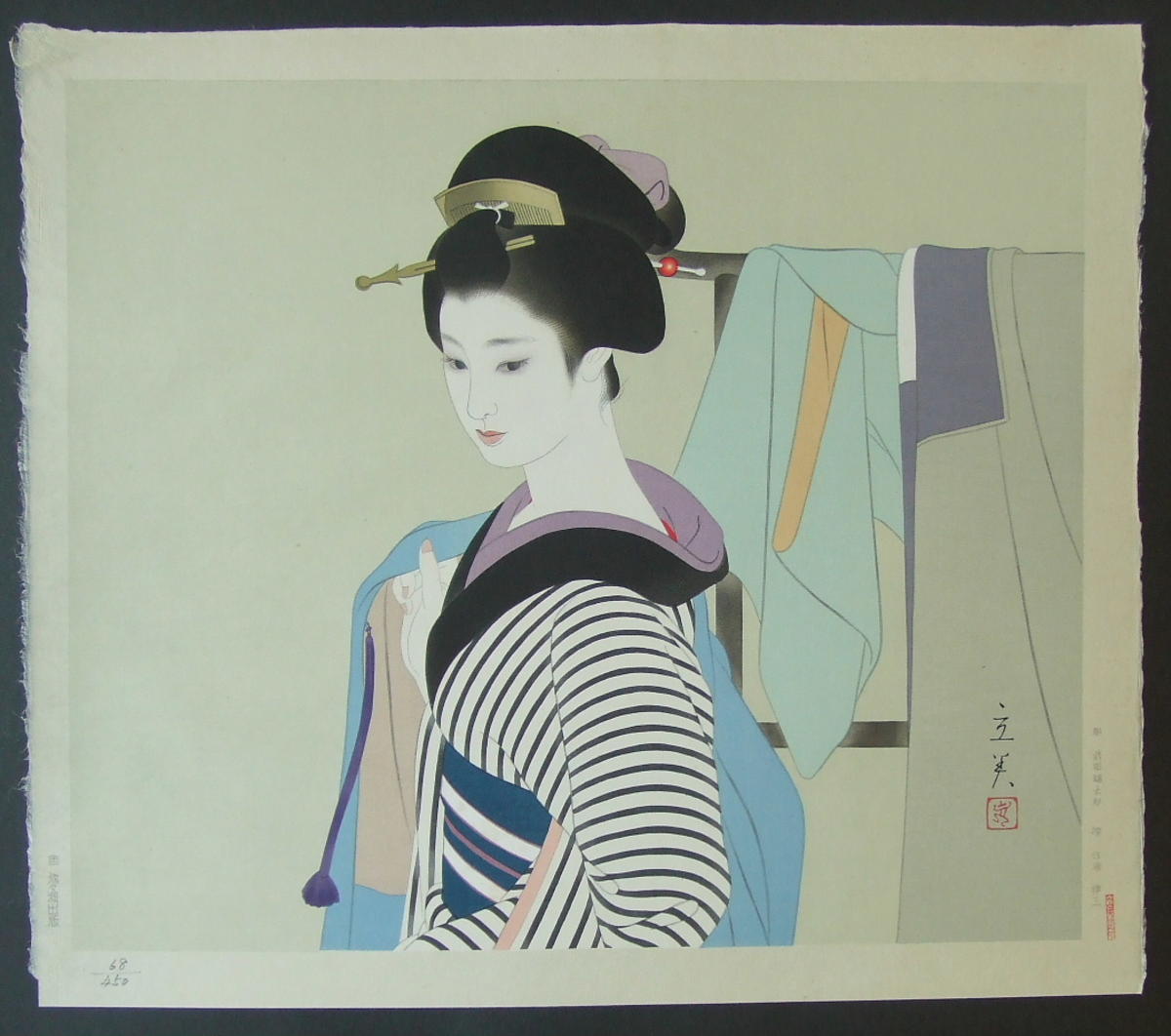
Haori- Japanese Formal Coat
Not set
Woodblock print
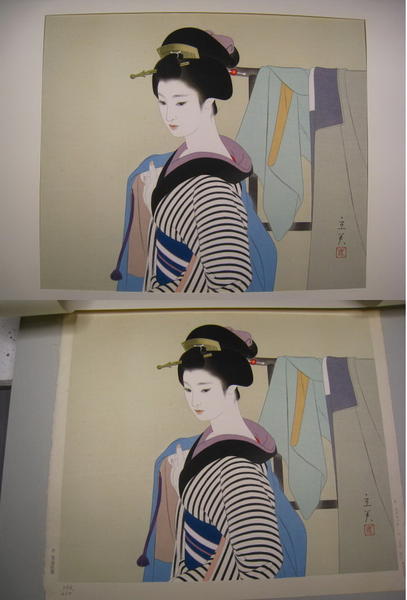
Haori- Japanese Formal Coat
Not set
Woodblock print
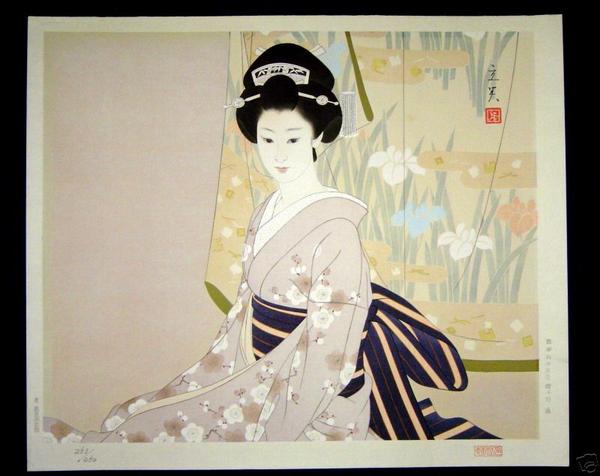
Iris — あやめ
Not set
Woodblock print
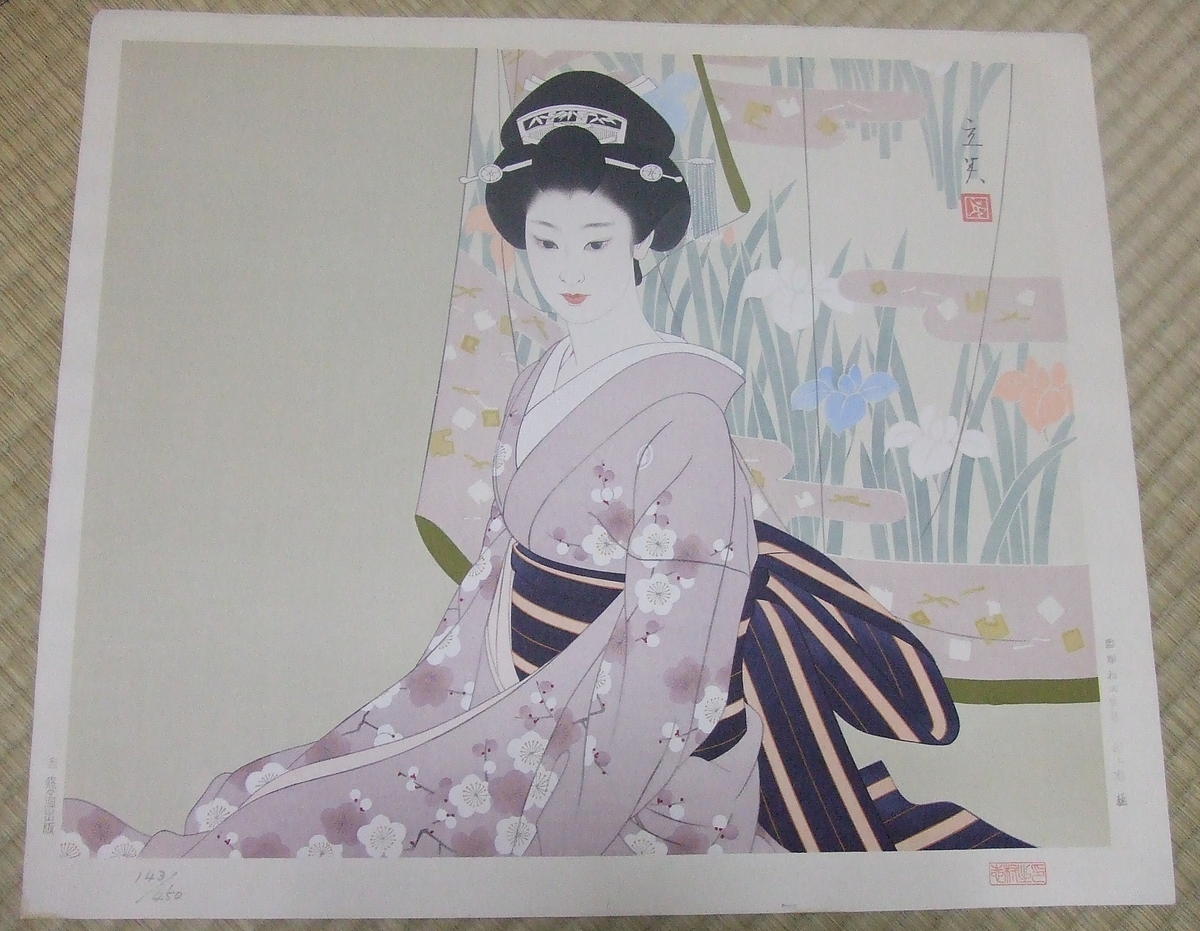
Iris — あやめ
Not set
Woodblock print
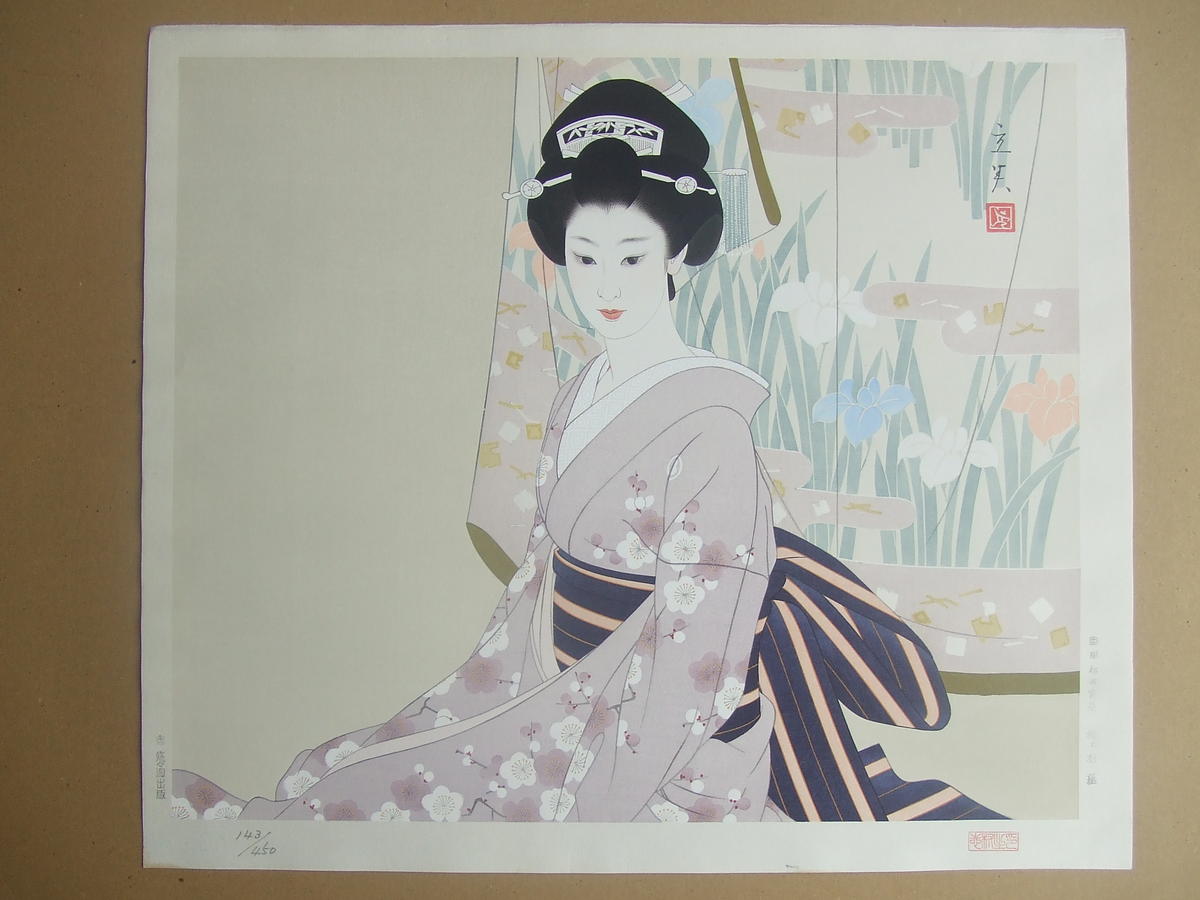
Iris — あやめ
Not set
Woodblock print
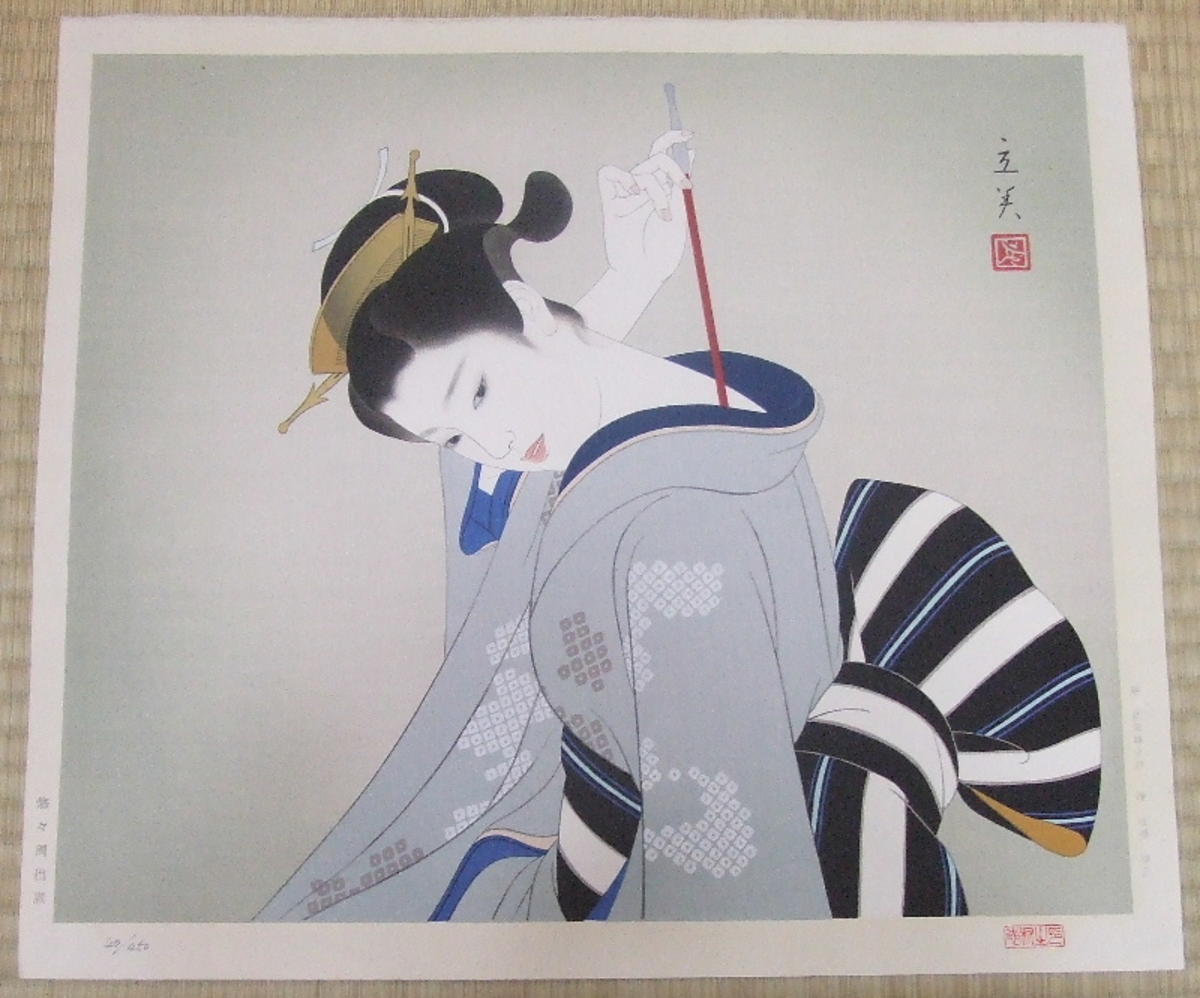
Saseru
Not set
Woodblock print
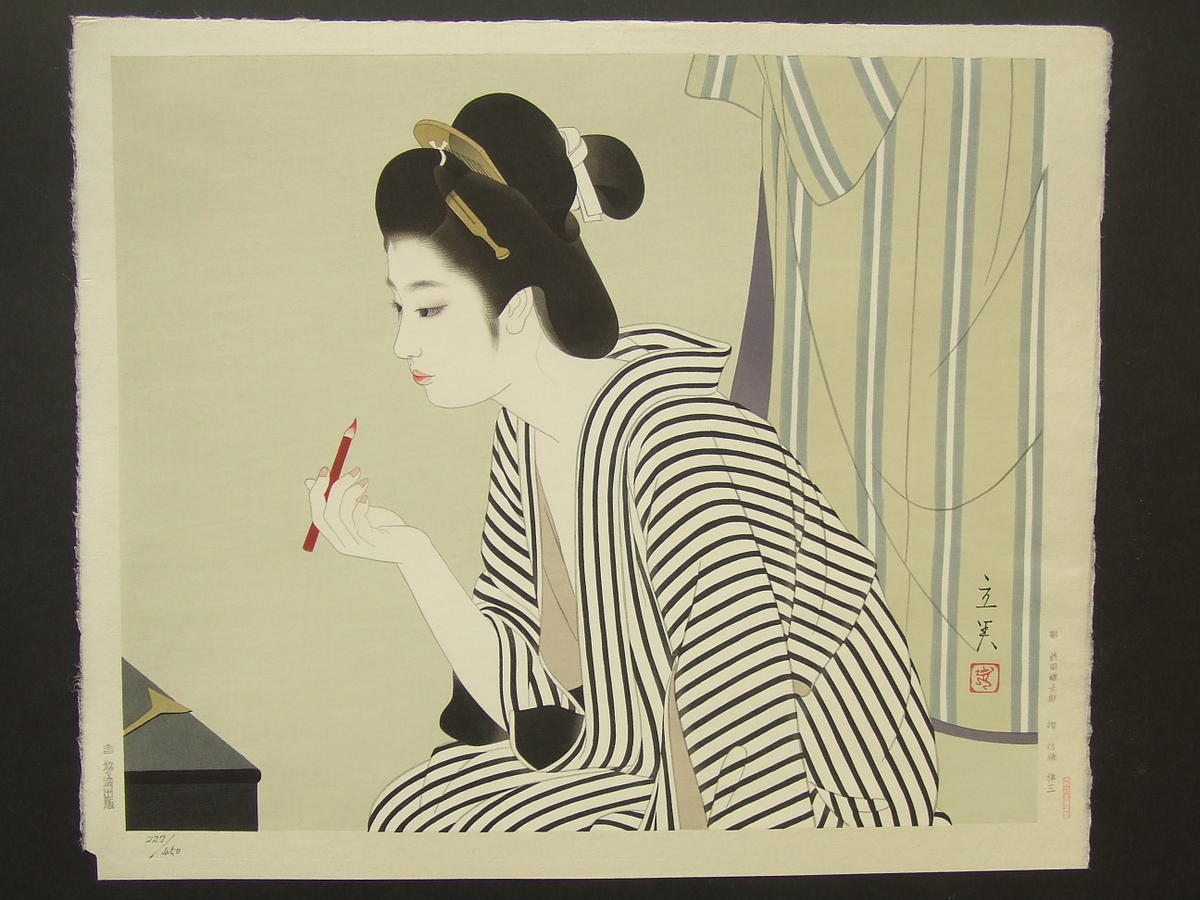
Lipstick- Kuchibeni
Not set
Woodblock print

Garden Corner
Not set
Woodblock print
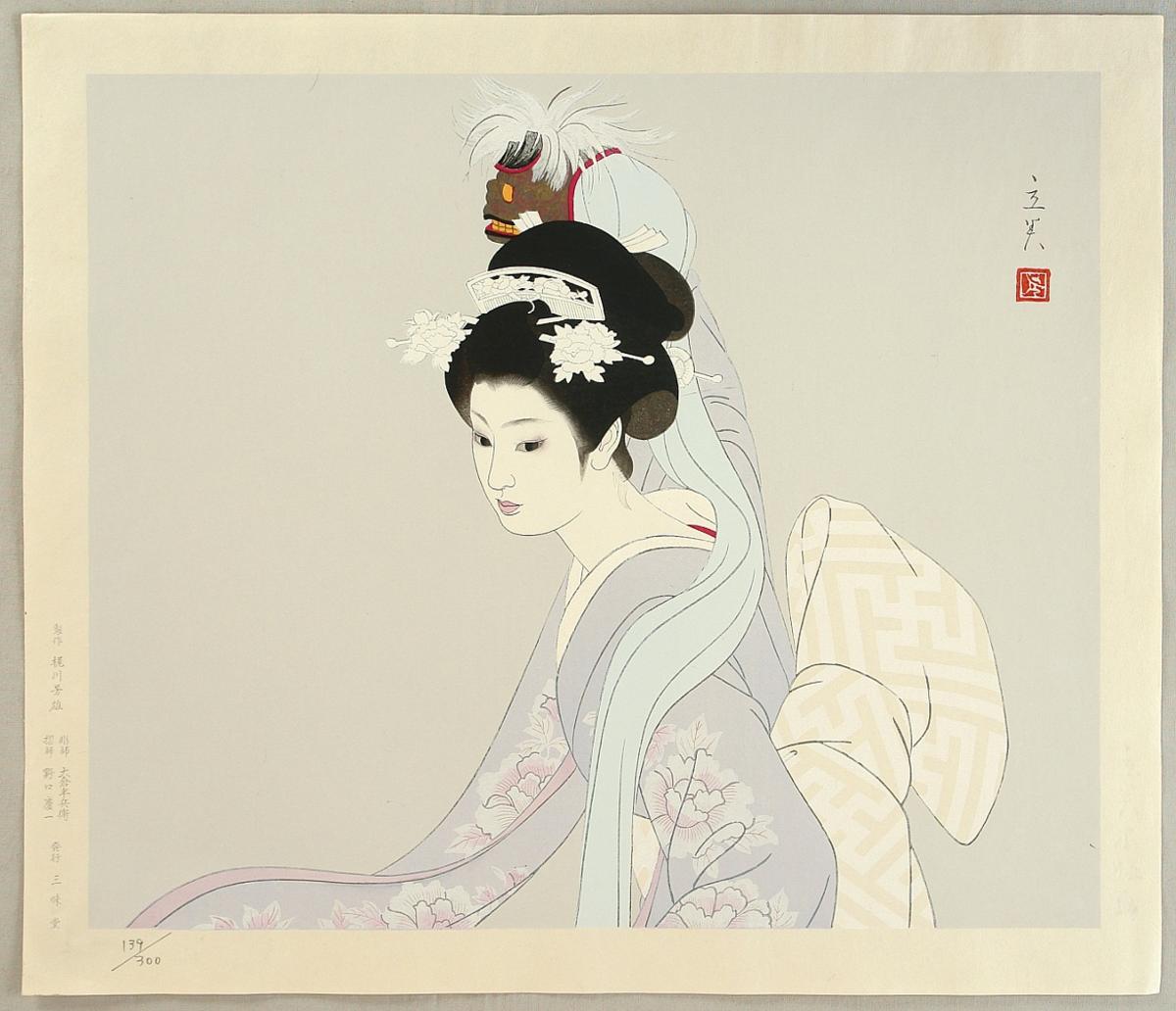
Kagami-Jishi
Not set
Woodblock print

Dance- gesture — MAI- Shigusa
Not set
Woodblock print
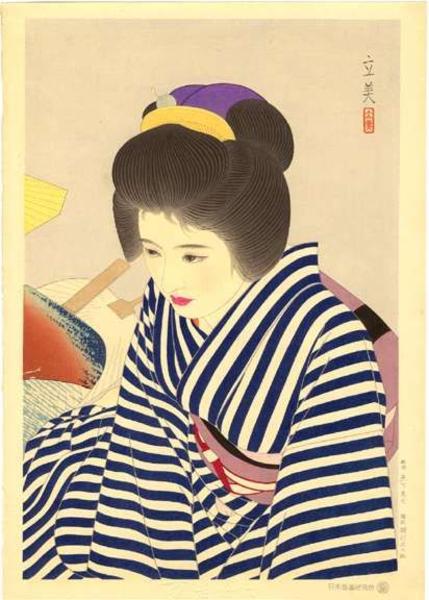
Late Summer - Natsu Takete — 夏たけて
Not set
Woodblock print
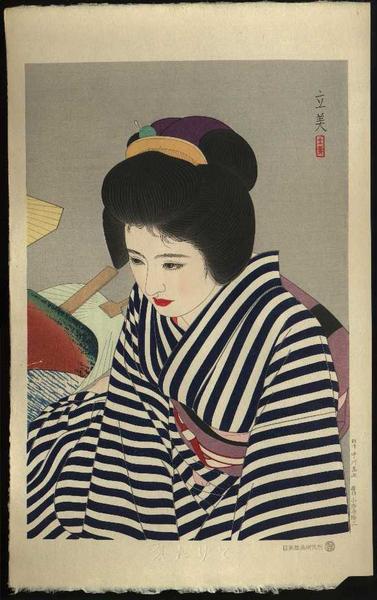
Gendai Bijin Fuzoku Gotai Late Summer Natsu Takete
Woodblock print
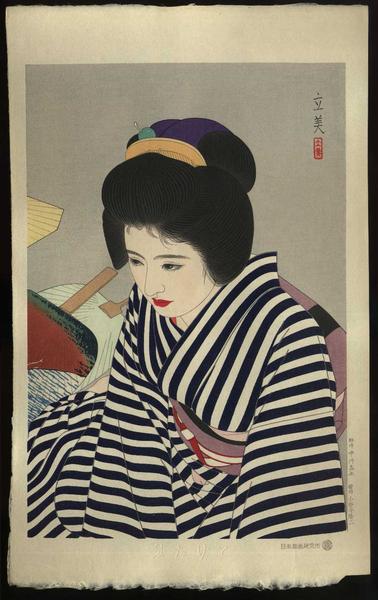
Gendai Bijin Fuzoku Gotai Late Summer Natsu Takete
Woodblock print

Snow - 雪
Not set
Woodblock print

Akashi-Cho - 明石町
Not set
Woodblock print
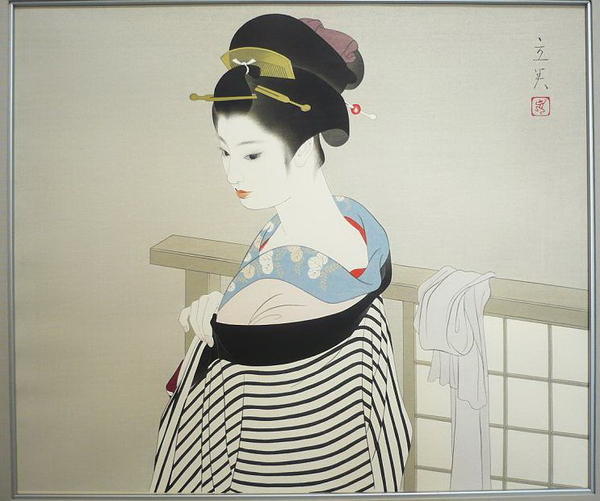
Preparation — 仕度
Not set
Woodblock print
Late Summer - Natsu Takete — 夏たけて
Not set
Woodblock print
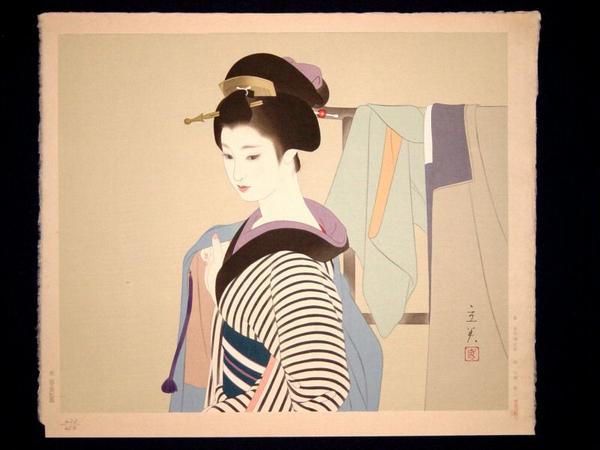
Haori- Japanese Formal Coat
Not set
Woodblock print

Unknown Bijin 2
Not set
Woodblock print
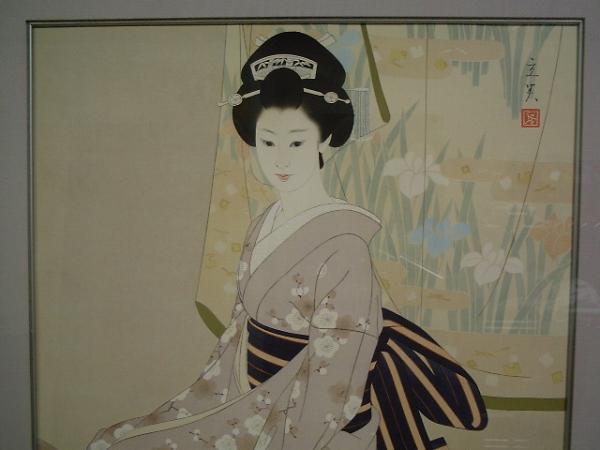
Iris — あやめ
Not set
Woodblock print

Saseru
Not set
Woodblock print
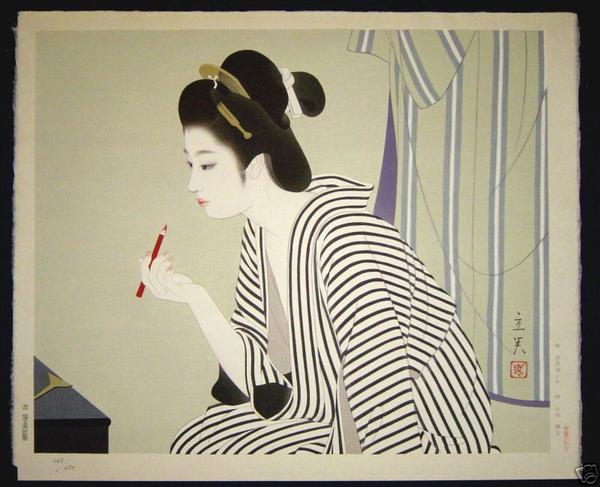
Lipstick- Kuchibeni
Not set
Woodblock print
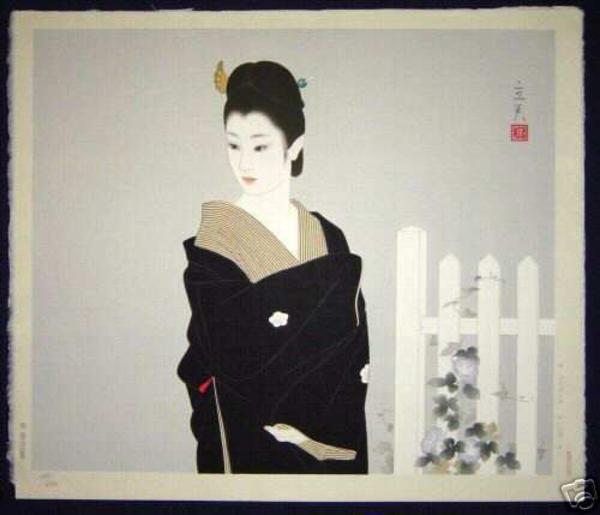
Garden Corner
Not set
Woodblock print

Ikio
Not set
Woodblock print