Biography
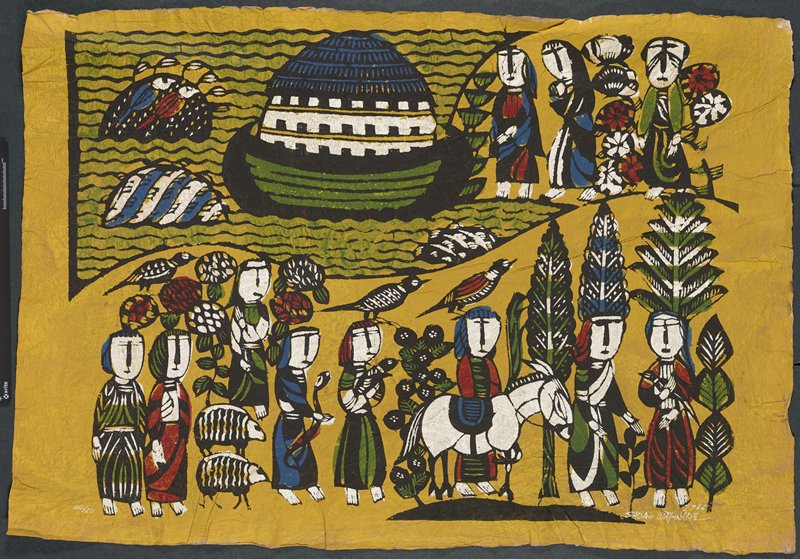
Sadao Watanabe (渡辺禎雄, 1913–1996) was a Japanese printmaker who achieved international renown for his unique fusion of the traditional Japanese stencil-dyeing technique known as katazome with Christian Biblical subjects. His bold, richly colored prints depicting scenes from the Old and New Testaments brought together two seemingly disparate cultural traditions — Japanese folk craft and Western religious narrative — in a synthesis that was both artistically innovative and deeply devotional, earning him a devoted following among collectors, theologians, and art lovers worldwide.
Born on July 7, 1913, in Tokyo, Watanabe grew up in modest circumstances. His father died when he was young, and financial hardship marked his early years. As a teenager he was baptized as a Christian, a faith commitment that would shape his entire artistic career. His conversion was unusual in Japan, where Christians have always constituted a tiny minority of the population, and the tension between his Japanese cultural identity and his adopted Western faith became the creative engine of his art.
Watanabe's artistic development was decisively shaped by his encounter with the mingei (folk craft) movement and its founder Yanagi Soetsu. Yanagi's philosophy celebrated the beauty of humble, functional objects made by anonymous craftsmen, and his circle included the printmaker Munakata Shiko, whose bold woodblock prints inspired Watanabe to pursue printmaking as a vehicle for artistic and spiritual expression. Through the mingei movement, Watanabe also discovered the traditional Japanese textile dyeing technique of katazome, in which designs are applied to fabric using hand-cut stencils and rice-paste resist. He recognized in katazome a technique perfectly suited to his artistic vision and adapted it from textile production to printmaking on paper.
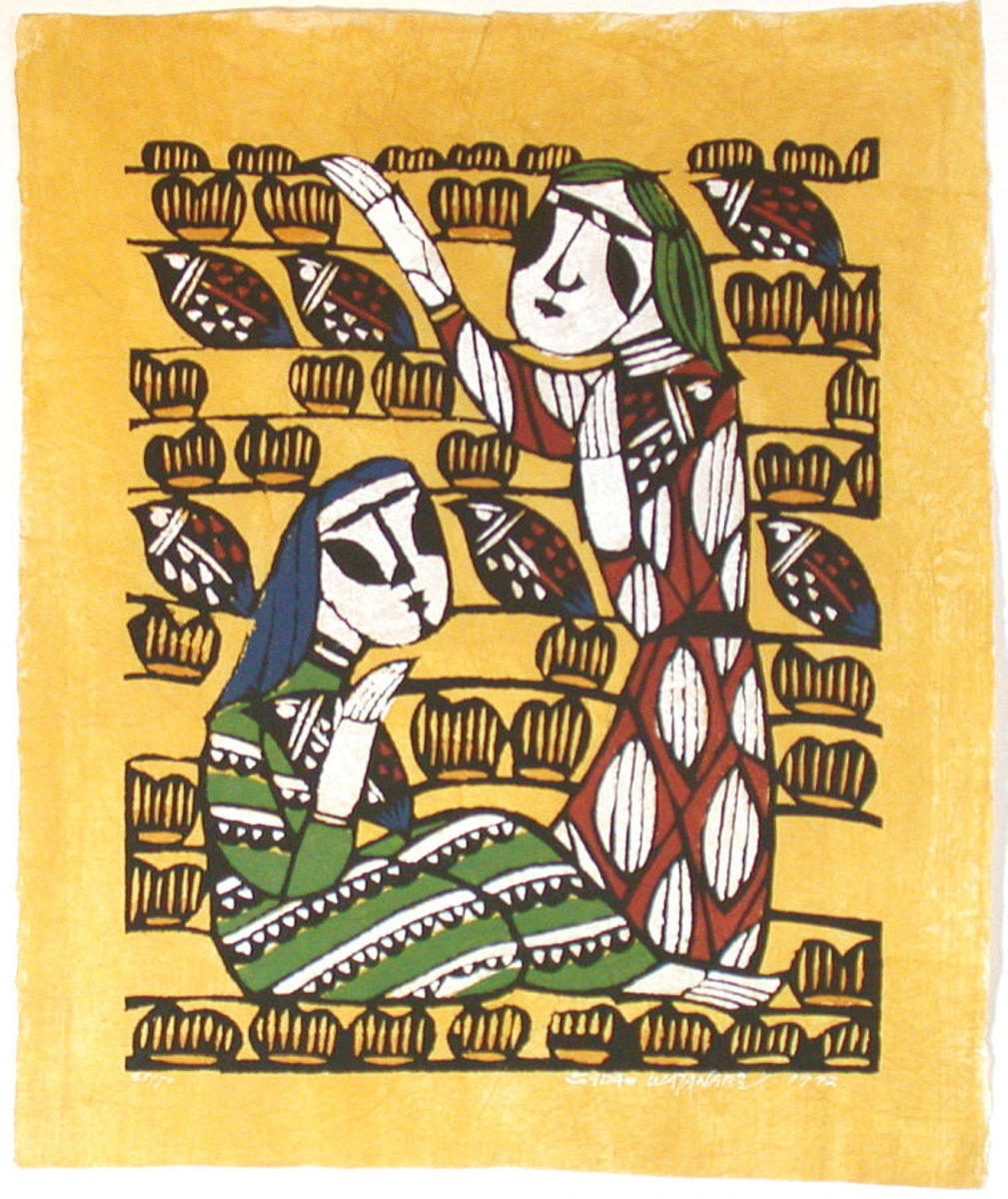
The katazome technique as practiced by Watanabe involved cutting intricate designs into mulberry paper stencils, applying rice paste through the stencils onto handmade washi paper, and then dyeing the paper with pigments. The resist paste prevented the dye from penetrating the covered areas, creating bold patterns of color and white space. The technique naturally produced the strong outlines, flat color areas, and simplified forms that became Watanabe's stylistic hallmarks. The process was labor-intensive and demanded great skill in stencil cutting, but Watanabe performed every step himself, consistent with the sosaku-hanga principle of the artist as sole creator.
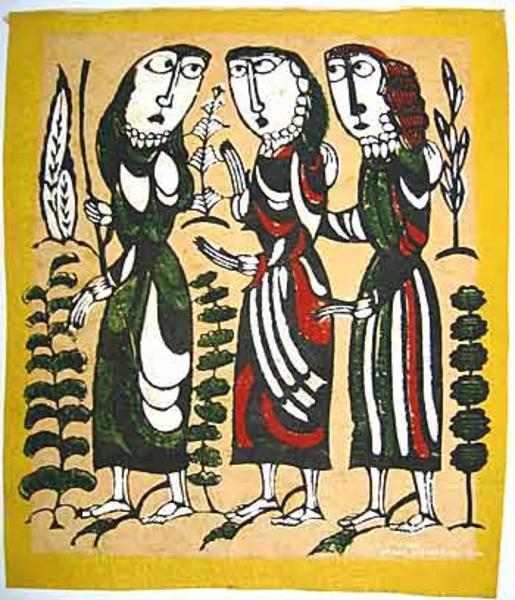
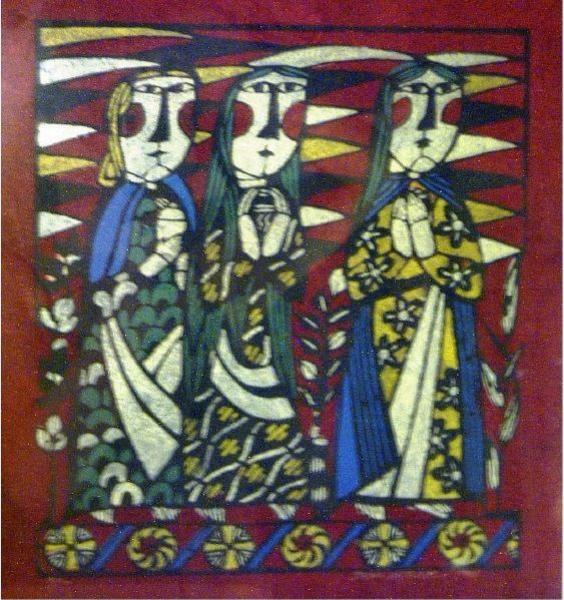
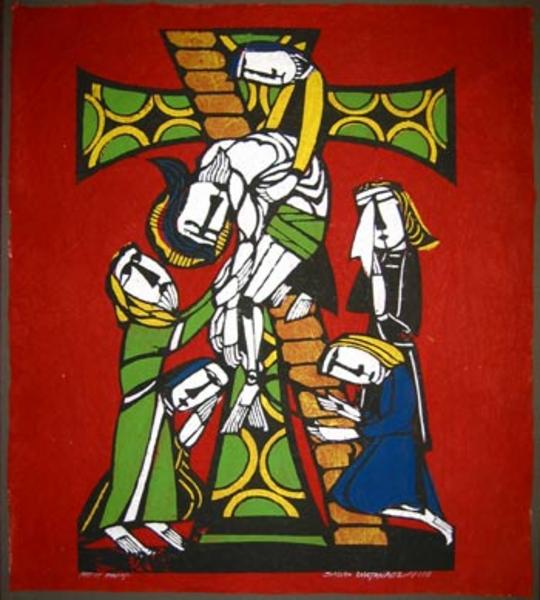
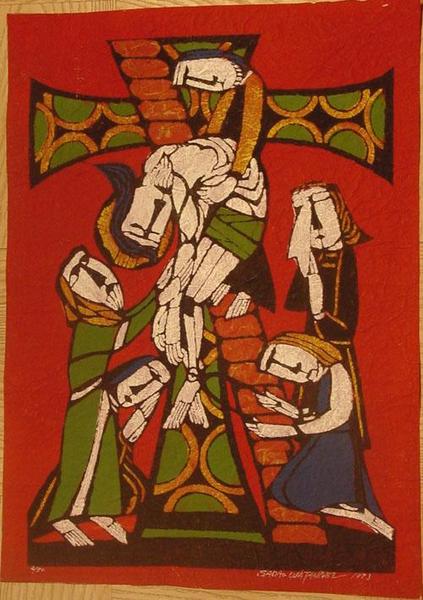
Watanabe's subjects were drawn almost exclusively from the Bible. He depicted the Nativity, the Last Supper, the Crucifixion, the Resurrection, the Good Samaritan, Noah's Ark, Adam and Eve, and dozens of other Biblical scenes and figures. What made these works remarkable was not merely the subject matter but the way Watanabe interpreted Western religious narratives through a distinctly Japanese visual language. His Biblical figures wear clothing that suggests Japanese folk garments, their faces are rendered with the simplified features of Japanese folk art, and the overall compositions draw on the decorative traditions of Japanese textile design. Yet the works are never merely quaint or culturally dissonant — they convey a genuine spiritual sincerity that transcends cultural boundaries.
His international reputation grew steadily from the 1960s onward. Exhibitions in the United States, Europe, and throughout Asia brought his work to audiences who responded both to its visual appeal and its spiritual content. Churches, seminaries, and religious institutions became major collectors, and his prints were reproduced on Christmas cards, book covers, and liturgical materials around the world. The Vatican Museum acquired his work, as did the Museum of Modern Art in New York, the British Museum, the National Museum of Modern Art in Tokyo, and numerous other institutions.
Watanabe received many honors during his career, including the Kanagawa Cultural Award and recognition from both Japanese and international art organizations. He continued working productively until near the end of his life, his late prints displaying the same bold design sense and spiritual conviction that had characterized his work from the beginning. He died on September 30, 1996, in Kamakura, at the age of eighty-three.
The legacy of Sadao Watanabe lies in his demonstration that religious art need not be bound by the conventions of a single cultural tradition. By interpreting the Christian Gospel through the visual vocabulary of Japanese folk craft, he created a body of work that speaks across cultural boundaries with a directness and warmth that continues to move viewers decades after his death. His prints remain widely collected and exhibited, treasured both as works of art and as expressions of faith.
Key Facts
- Active Period
- 1913–1996
- Nationality
- 🇯🇵Japan
- Movement
- Sōsaku-hanga
- Works Indexed
- 104
Frequently Asked Questions
What is Sadao Watanabe known for?
Sadao Watanabe (渡辺禎雄, 1913–1996) was a Japanese printmaker who achieved international renown for his unique fusion of the traditional Japanese stencil-dyeing technique known as katazome with Christian Biblical subjects. His bold, richly colored prints depicting scenes from the Old and New Testaments brought together two seemingly disparate cultural traditions — Japanese folk craft and Western religious narrative — in a synthesis that was both artistically innovative and deeply devotional, earning him a devoted following among collectors, theologians, and art lovers worldwide.
When was Sadao Watanabe active?
Sadao Watanabe was active from 1913 to 1996. They were associated with the Sōsaku-hanga movement.
What artistic movements influenced Sadao Watanabe?
Sadao Watanabe's work was shaped by the Sōsaku-hanga tradition in Japanese woodblock printmaking. Sōsaku-hanga: The "creative prints" movement (c.
Where can I see Sadao Watanabe's original prints?
Original prints by Sadao Watanabe can be found in collections including Art Institute of Chicago, Art Gallery of Greater Victoria, Harvard Art Museums, Japanese Art Open Database.
How much do Sadao Watanabe prints cost?
Sadao Watanabe is one of the most widely collected sosaku-hanga artists, particularly among Western collectors drawn to his unique combination of Japanese stencil-dyeing technique and Christian Biblical subjects. His large editions and broad popularity keep prices accessible, with most prints selling for $200-$1,000. He is an excellent entry-level artist for new collectors of Japanese prints. Watanabe used the katazome (stencil-dyeing) technique rather than woodblock, cutting his own stencils and applying natural dyes by hand to washi paper. Because he produced works in large editions — sometimes several hundred impressions of a single design — supply is ample and prices remain moderate. Original hand-dyed prints should not be confused with commercially reproduced posters and cards, which have no collectible value. Small prints or common subjects: $100-$300. Medium-sized popular Biblical scenes: $400-$1,200. Large-format or early limited-edition works: $1,500-$5,000. Watanabe's market is supported by a devoted international collecting base, particularly among churches, seminaries, and religious art collectors. His prints appear regularly at both Western and Japanese auction houses.
Woodblock Prints by Sadao Watanabe (104)
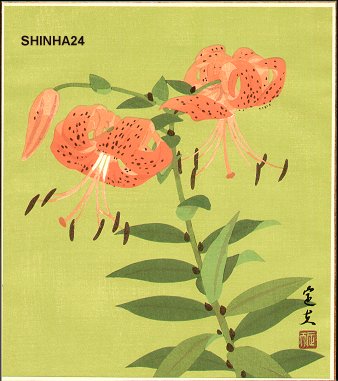
Tiger Lilies
Woodblock print
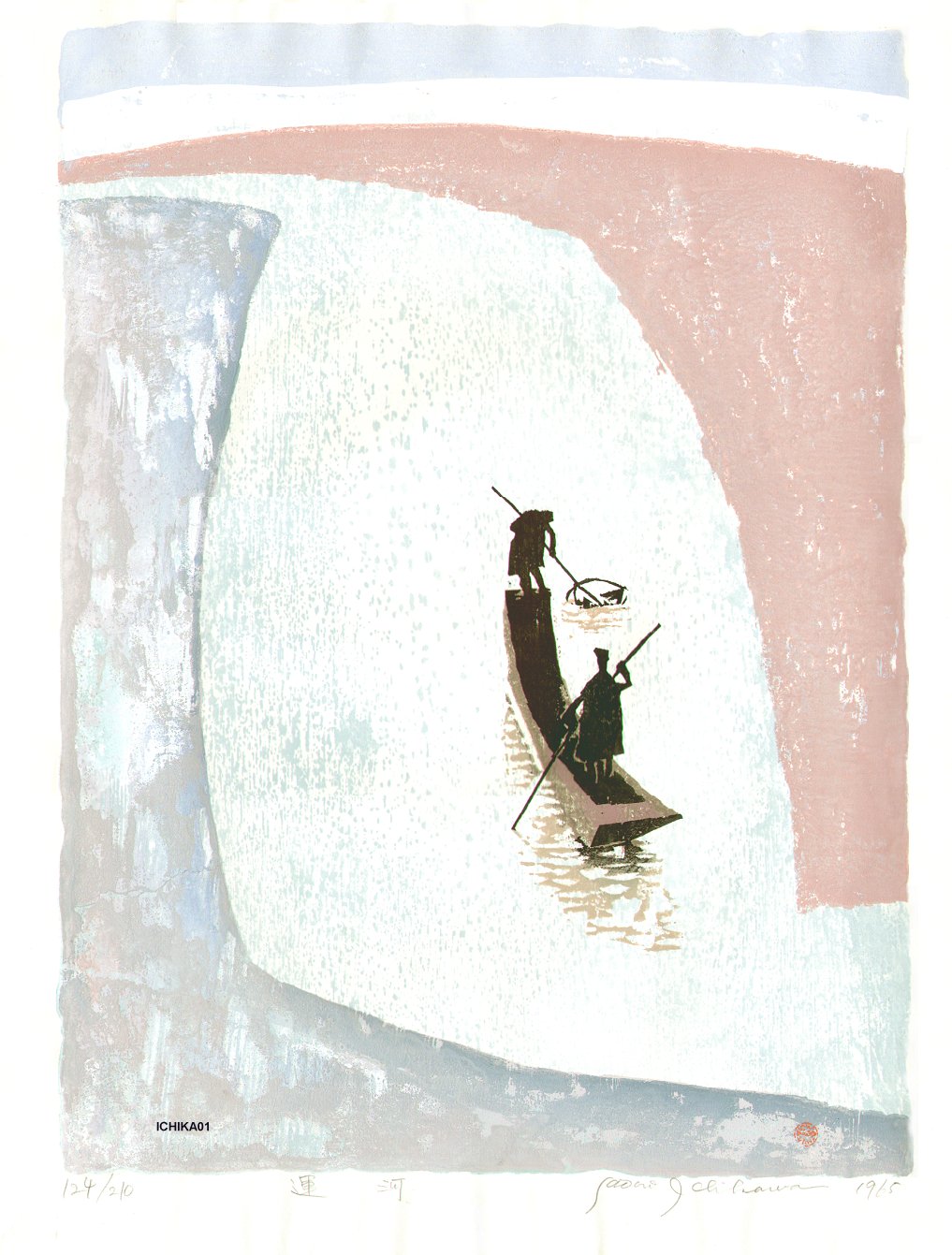
Fishermen
Woodblock print
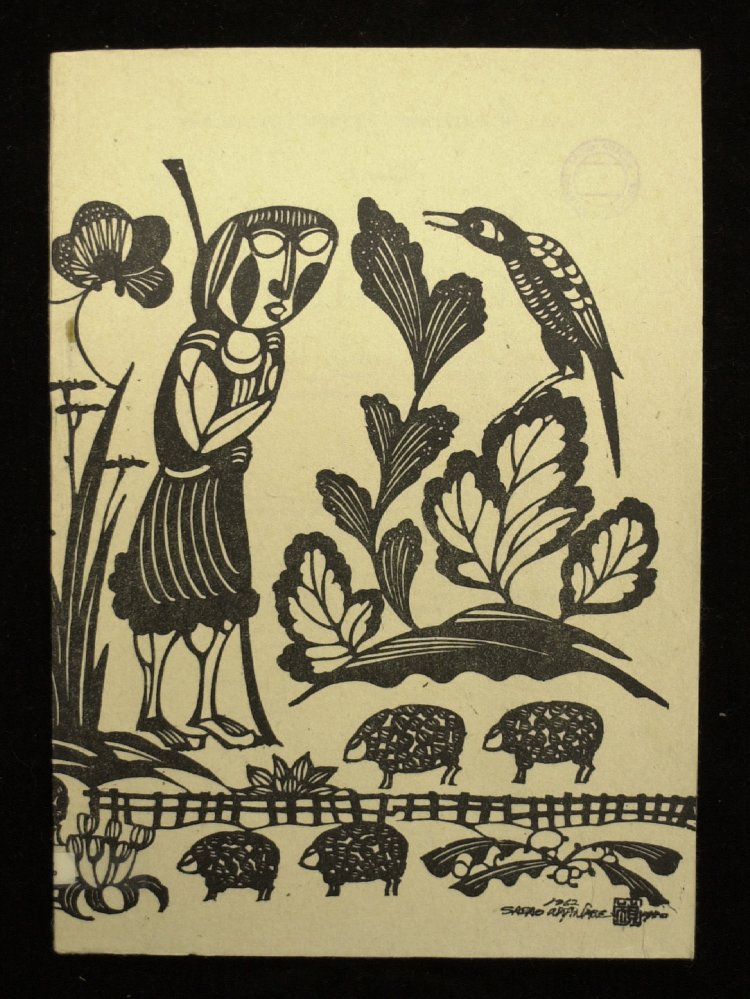
Untitled (sadao-watanabe)
Woodblock print
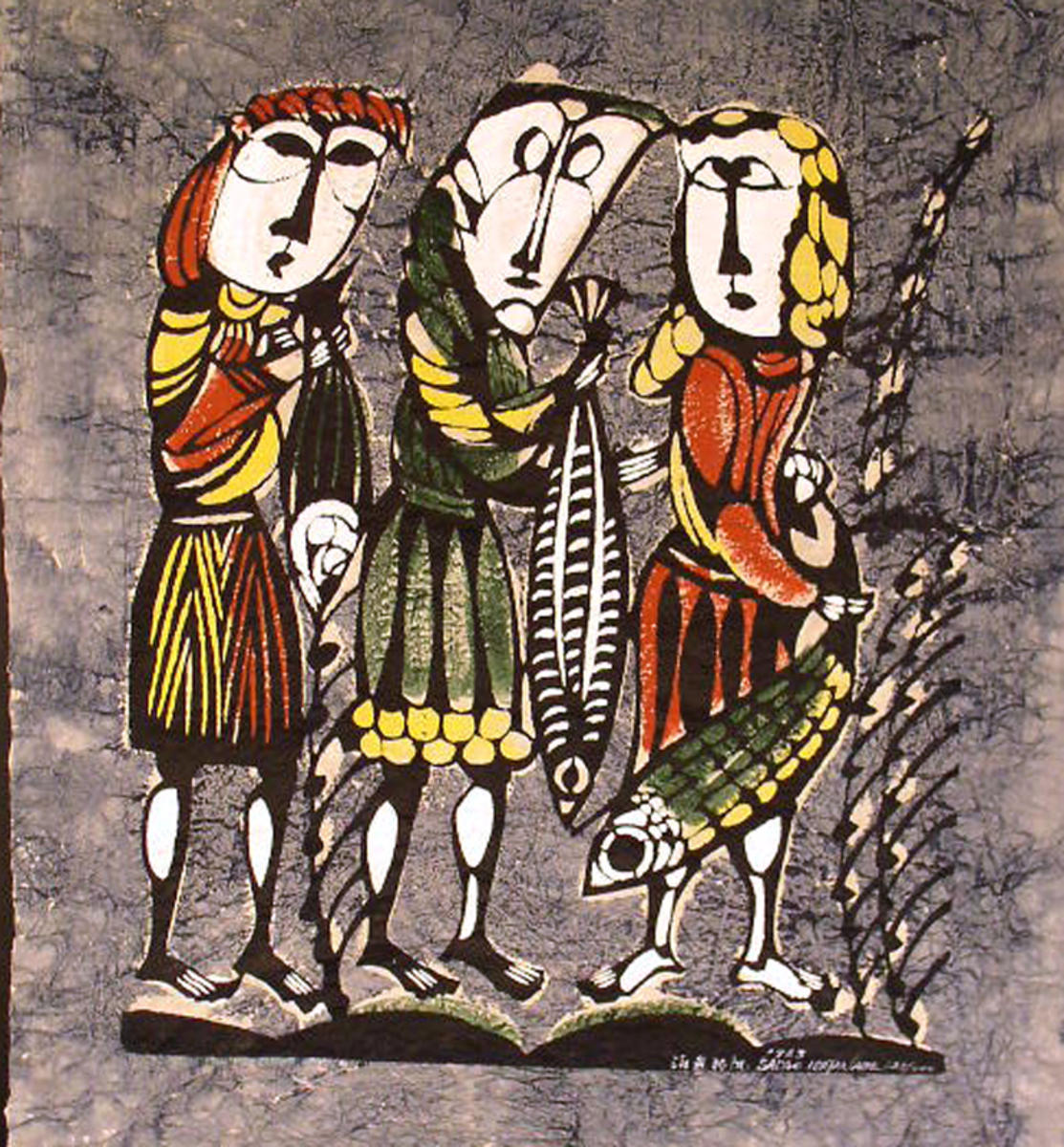
Untitled (sadao-watanabe)
Woodblock print
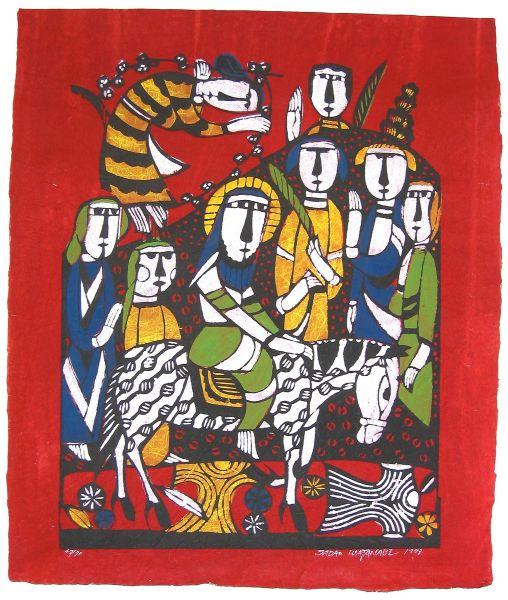
Untitled (sadao-watanabe)
Woodblock print
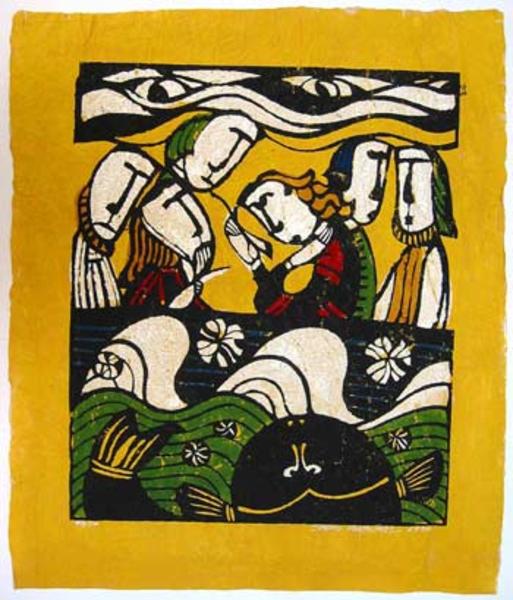
Untitled (sadao-watanabe)
Woodblock print
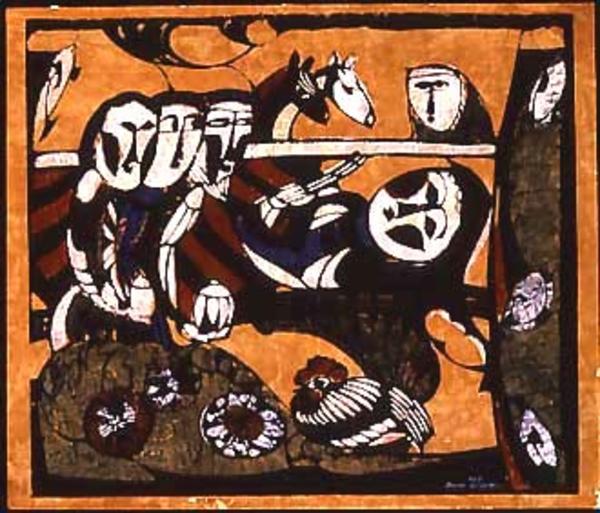
Untitled (sadao-watanabe)
Woodblock print
Untitled (sadao-watanabe)
Woodblock print
Untitled (sadao-watanabe)
Woodblock print
Untitled (sadao-watanabe)
Woodblock print
Untitled (sadao-watanabe)
Woodblock print
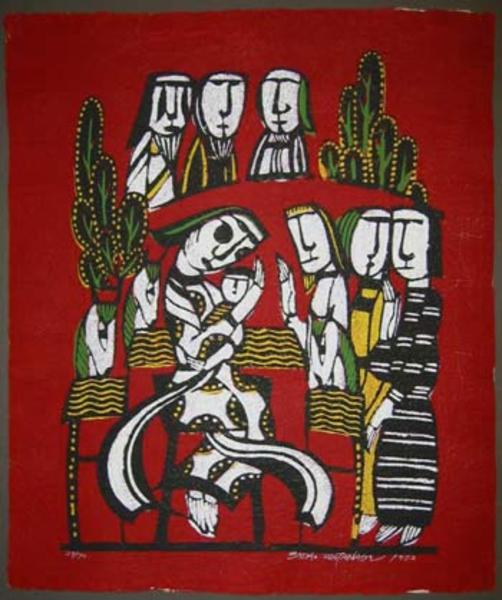
Untitled (sadao-watanabe)
Woodblock print

Untitled (sadao-watanabe)
Woodblock print
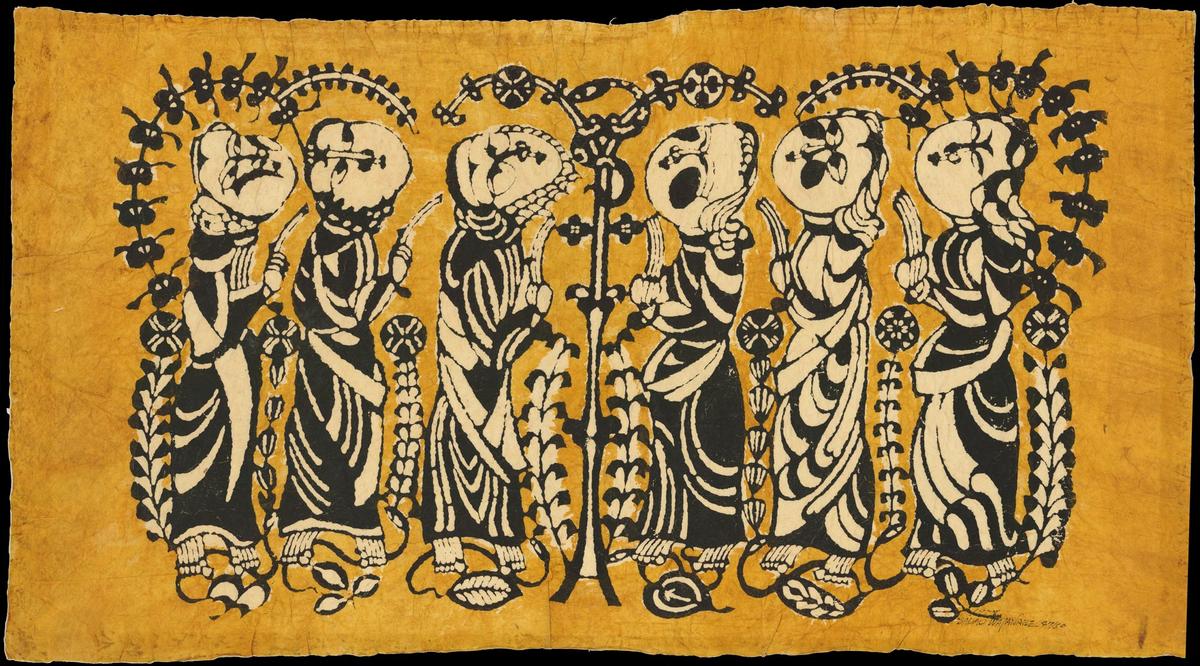
Untitled (sadao-watanabe)
Woodblock print
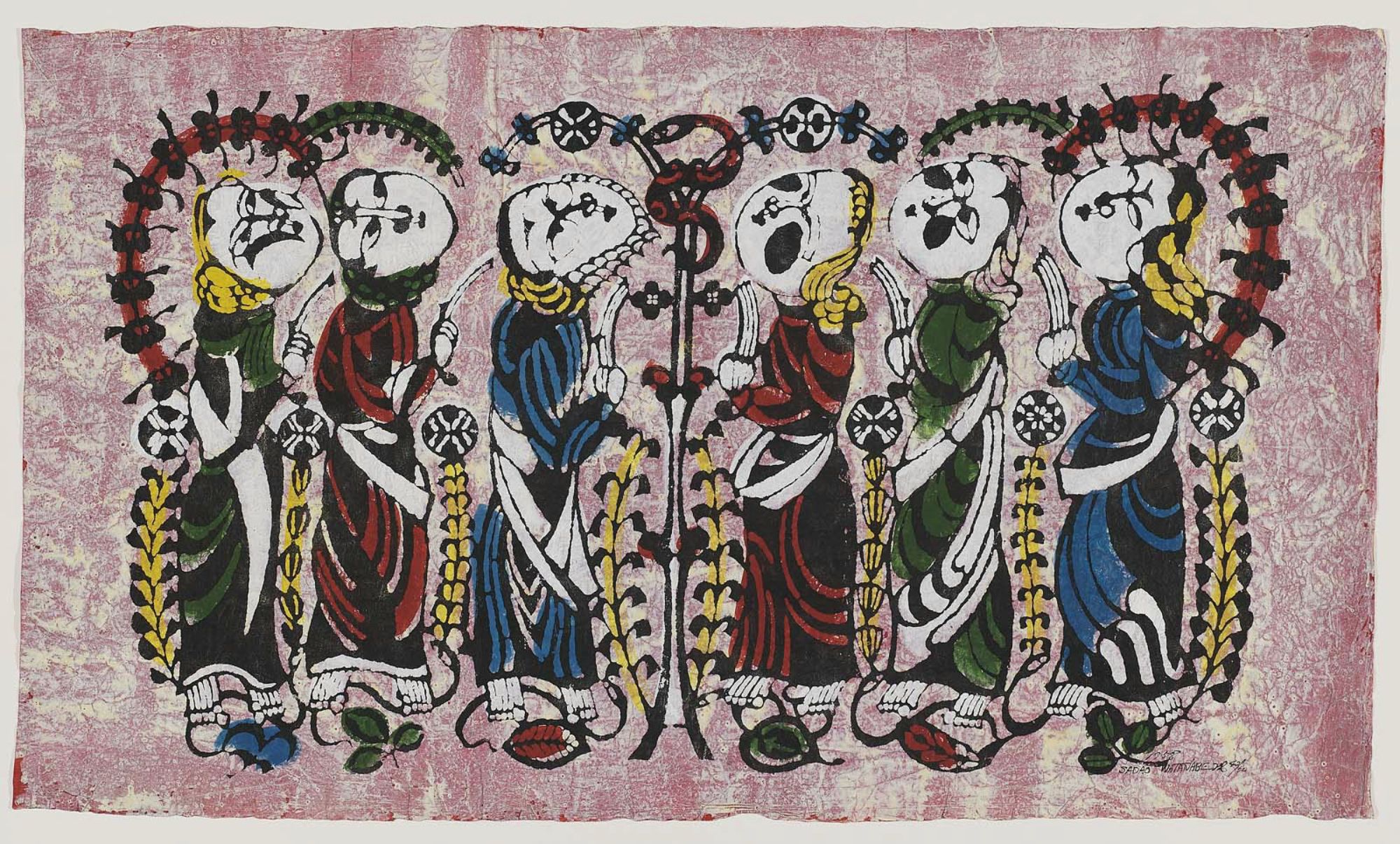
Untitled (sadao-watanabe)
Woodblock print
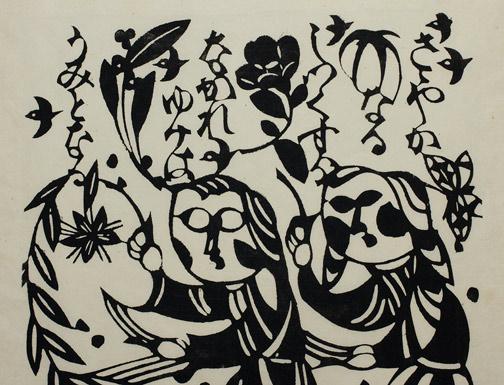
Untitled (sadao-watanabe)
Woodblock print
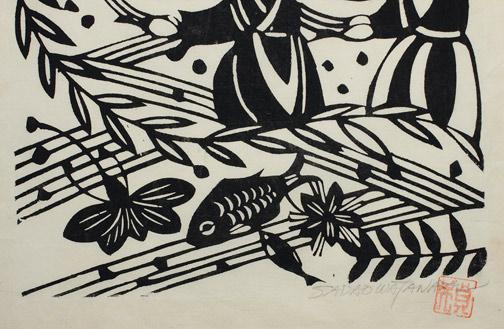
Untitled (sadao-watanabe)
Woodblock print
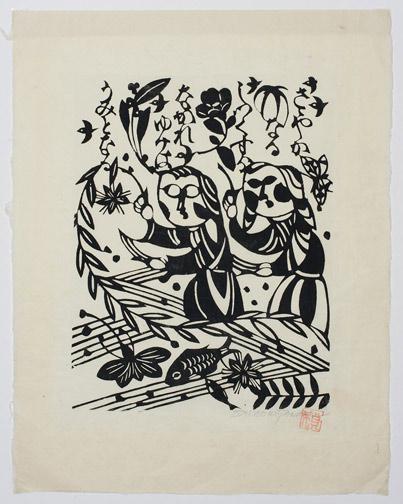
Untitled (sadao-watanabe)
Woodblock print
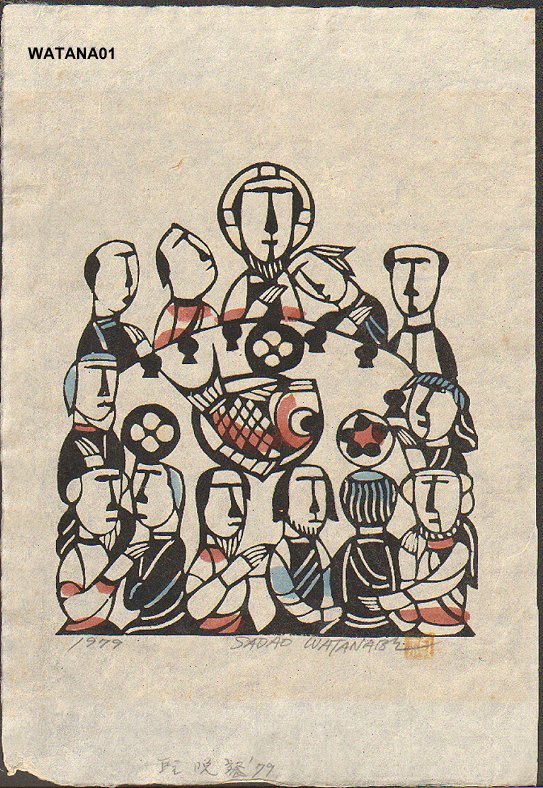
Untitled (sadao-watanabe)
Woodblock print
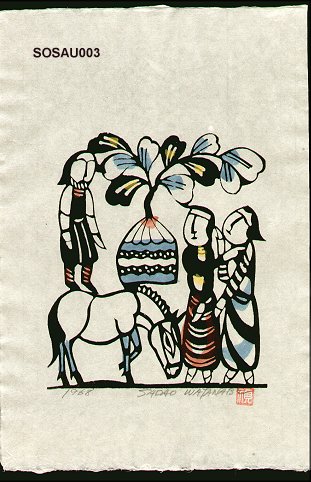
Untitled (sadao-watanabe)
Woodblock print
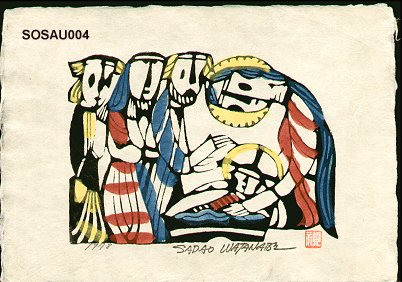
Untitled (sadao-watanabe)
Woodblock print
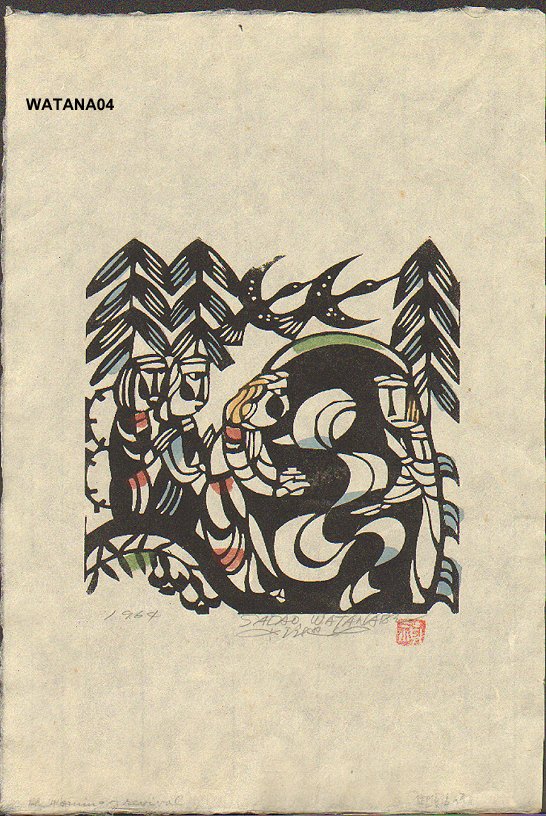
Biblical Scene - Morning of ressurection
Woodblock print

Boston Ivy and Bamboo
Woodblock print

Christ and Disciples on Sea of Galilee(?)
Woodblock print
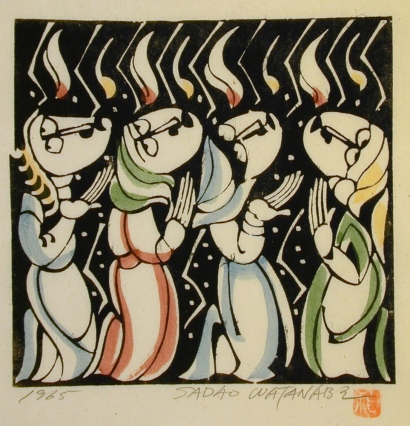
Pentecost
Woodblock print
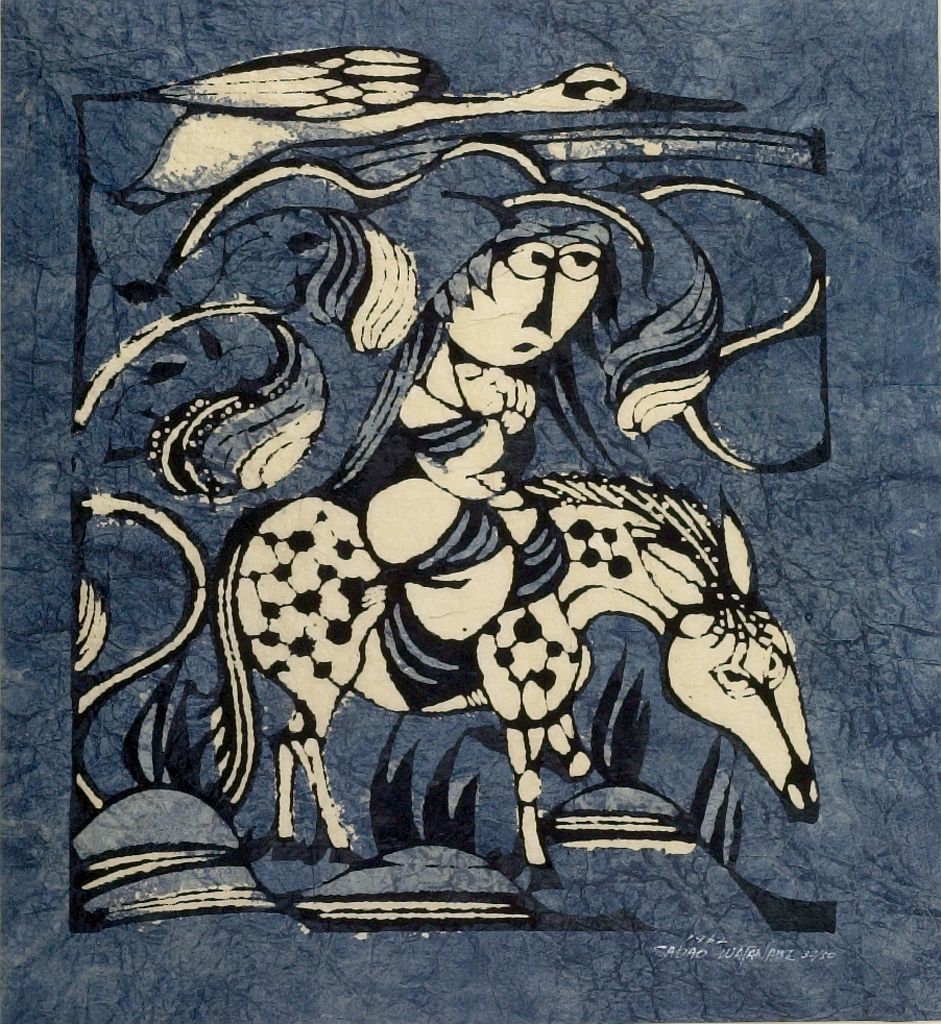
Escape, Shôwa period, dated 1962
Woodblock print
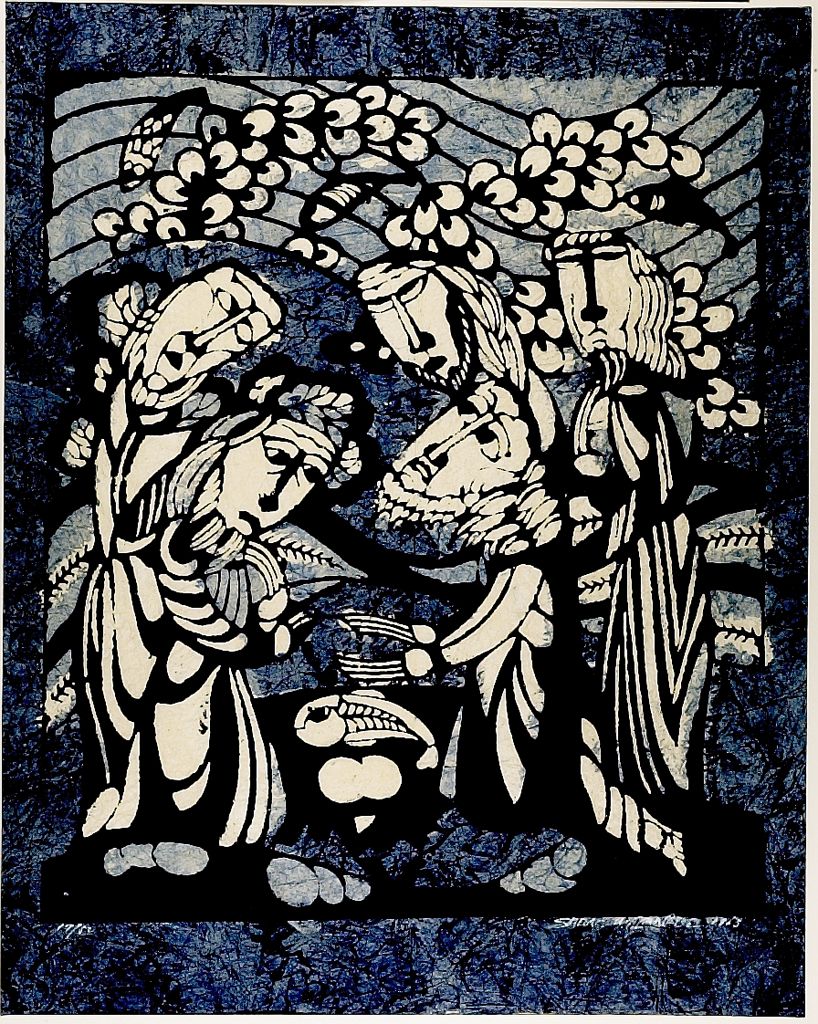
Christ of the Miracle of Loaves and Fish, Shôwa period, dated 1967
Woodblock print
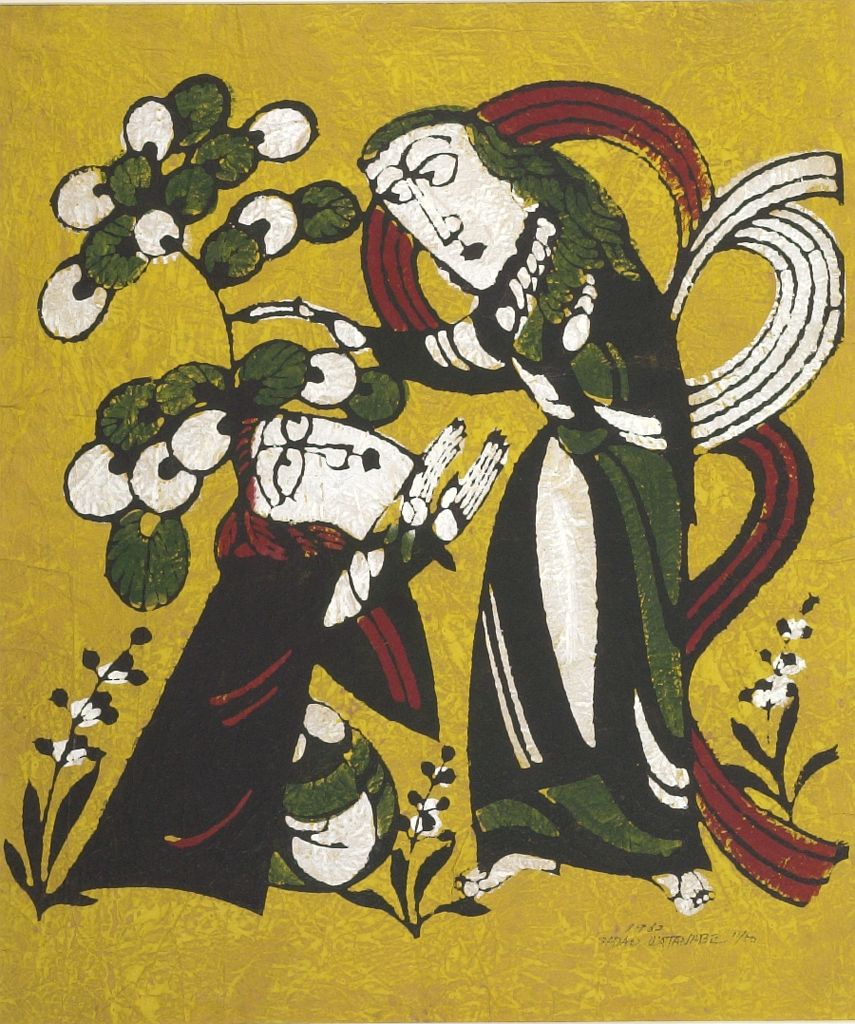
Woman of Canaan, Shôwa period, dated 1962
Woodblock print

Shepherd, Shôwa period, dated 1962
Woodblock print

Visit of the Wisemen to the Stable, Shôwa period, dated 1962
Woodblock print
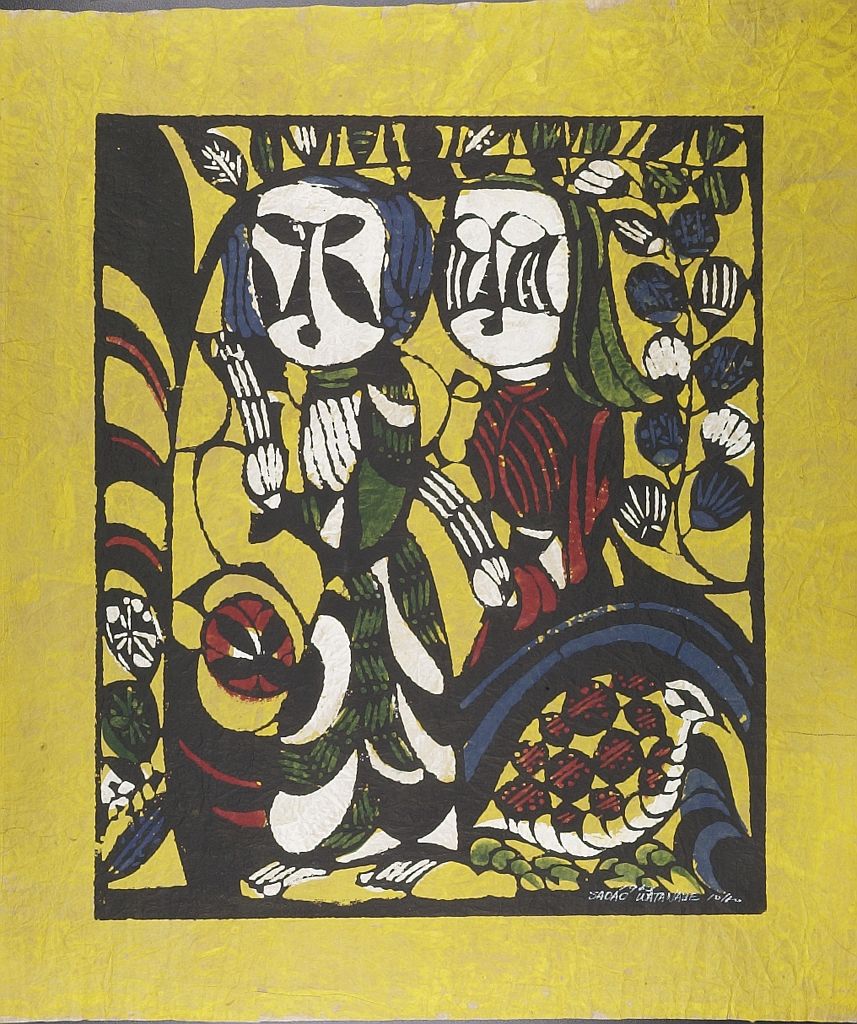
Flower Garden, Shôwa period, dated 1963
Woodblock print
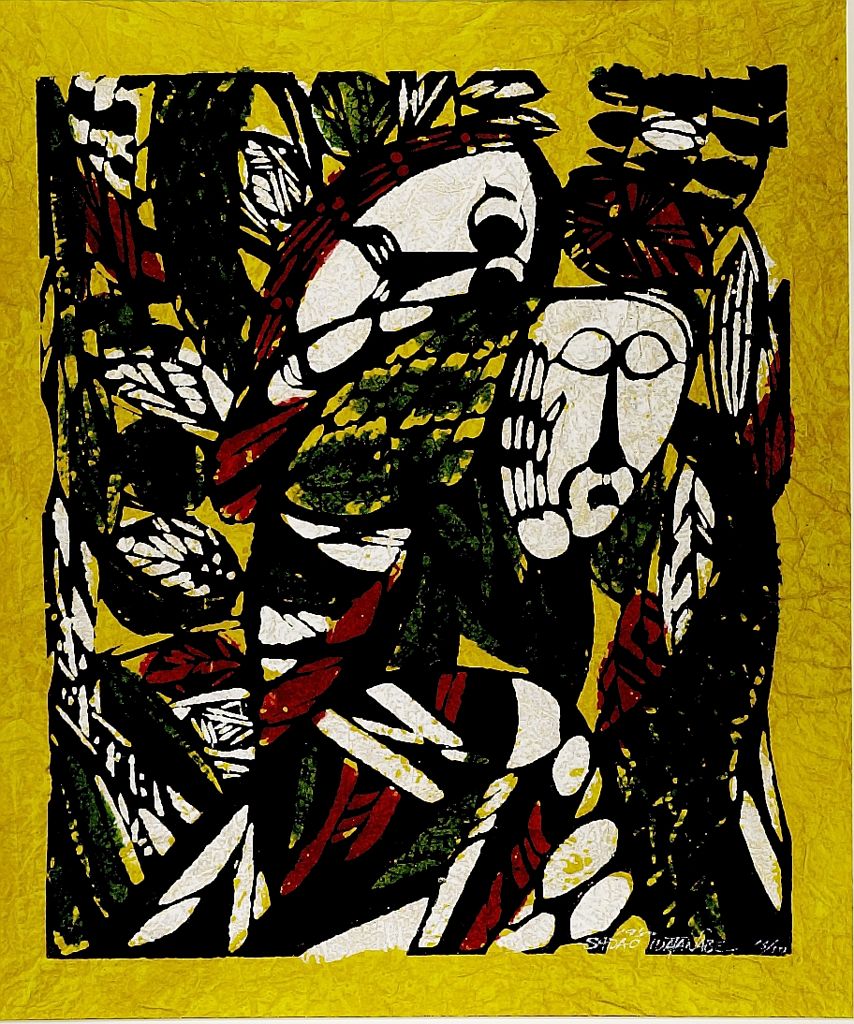
Lazarus, Shôwa period, dated 1960
Woodblock print
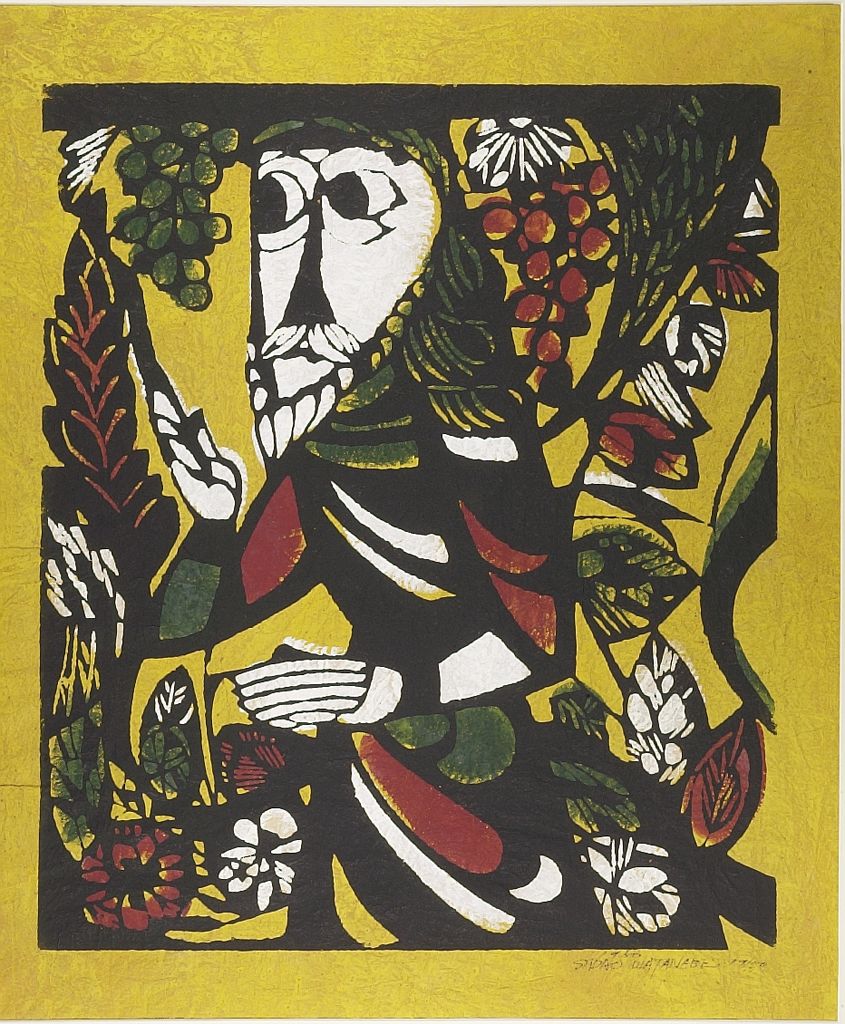
Christ, Shôwa period, dated 1960
Woodblock print

Three Wise Men, Shôwa period, dated 1971
Woodblock print
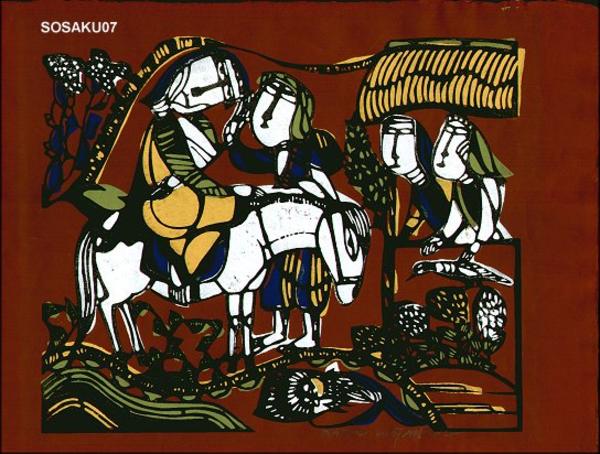
Return of the Prodigal Son
Woodblock print
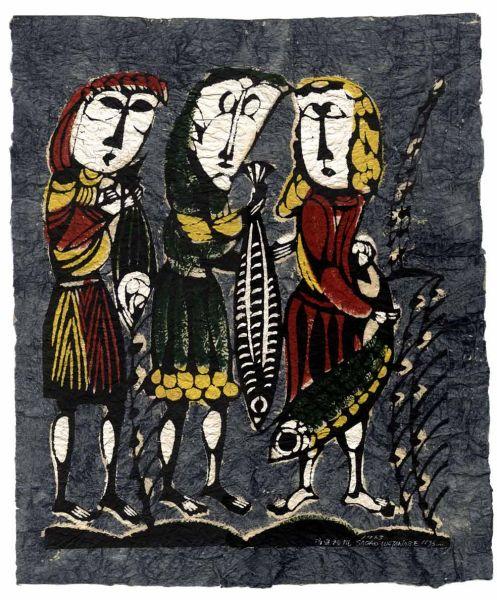
Three Fishermen
Woodblock print
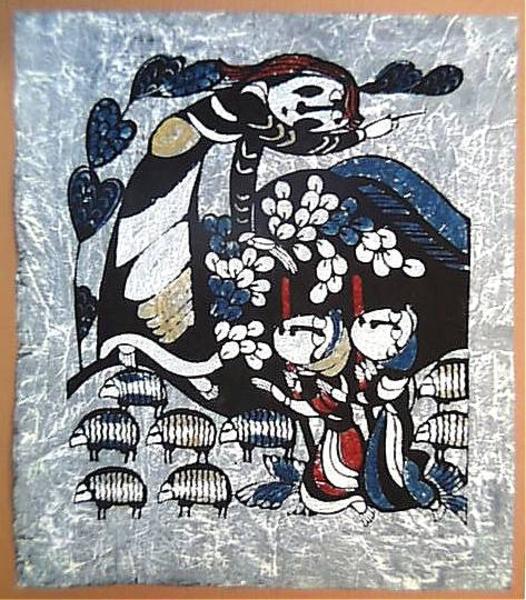
ANGEL AND SHEPHERDS
Woodblock print
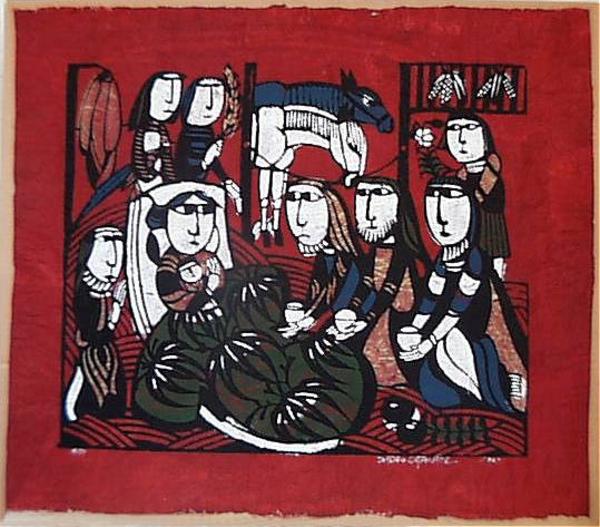
JESUS BIRTH IN A STABLE
Woodblock print

Jonah
Woodblock print

Untitled, Two People
Woodblock print
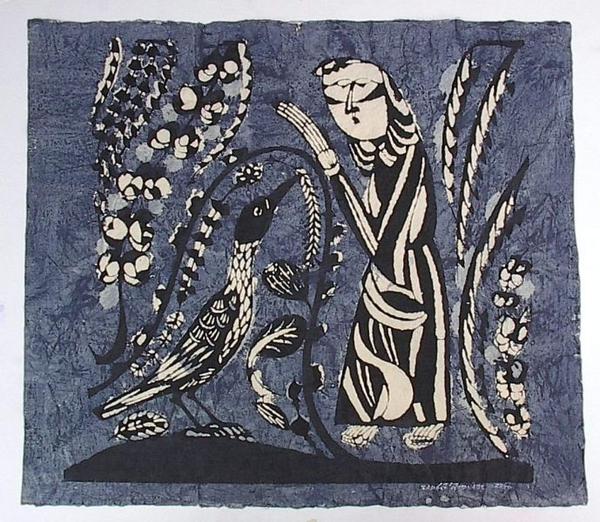
Untitled, Bird and Person
Woodblock print
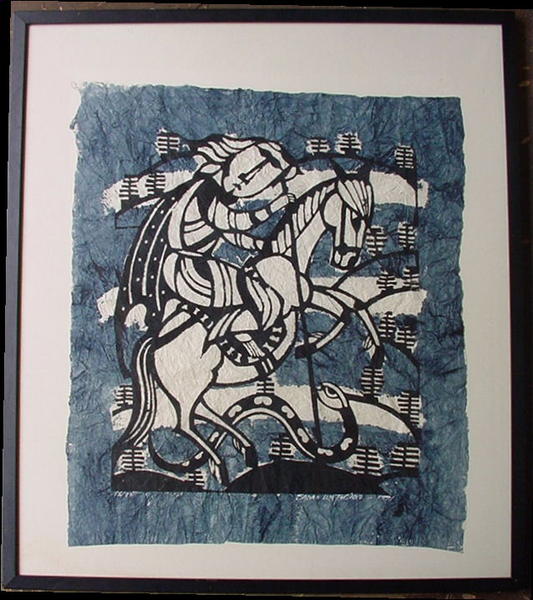
Saint George and the Dragon
Woodblock print
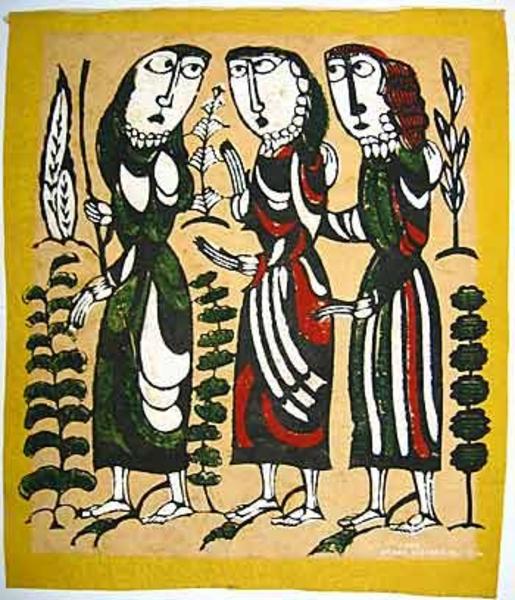
Procession- The Three Marys
Woodblock print
Ladies and Birds
Woodblock print