Biography
Reika Iwami (岩見禮花, 1927–2020) was a Japanese woodblock print artist renowned for her abstract compositions evoking water, waves, and natural phenomena through a distinctive technique combining embossing, metallic pigments, and subtle color gradations. Her prints, which often appear as luminous white or silver reliefs suggesting the movement of water across a surface, represent one of the most original and immediately recognizable bodies of work in postwar Japanese printmaking.
Born in 1927 in Tokyo, Iwami studied at the Women's Art University (Joshibi) in Tokyo, where she received training in both Japanese and Western art techniques. She began exhibiting woodblock prints in the early 1950s and quickly established herself as an artist of distinctive vision within the sosaku-hanga movement. While many of her contemporaries explored figurative subjects or bold graphic abstractions, Iwami was drawn to the subtle, meditative possibilities of near-monochrome compositions that captured the essence of natural forces — particularly the movement of water.
Iwami's signature technique involved deeply embossing thick Japanese paper to create raised surfaces that catch and reflect light, combined with the application of translucent inks, metallic pigments, and sometimes gold or silver leaf. The resulting prints have a luminous, almost iridescent quality that changes depending on the angle of viewing and the quality of ambient light. Many of her most celebrated works appear predominantly white or silver, with the image emerging through the interplay of embossed surfaces and subtle tonal variations rather than through applied color. This approach gave her prints a unique tactile and visual quality that set them apart from conventional woodblock printing.
The subjects that Iwami returned to throughout her career were overwhelmingly drawn from the natural world — waves, rippling water, wind patterns, flowing currents, and the textures of sand and stone. Her "Water" series, produced over several decades, explored the infinite variations of water's movement in compositions that range from the quietly meditative to the dramatically powerful. In some prints, gentle concentric ripples spread across the surface in a pattern of serene regularity; in others, turbulent waves clash and spray in compositions of dynamic energy. The abstraction in these works is rooted in close observation of actual water behavior, giving even her most simplified compositions a convincing sense of natural movement.
Iwami's achievement was widely recognized during her lifetime. She received numerous awards at major print exhibitions, including prizes at the São Paulo Biennale, the Ljubljana International Print Biennial, and the Tokyo International Print Biennial. Her work was selected for exhibition at the Venice Biennale and shown in solo and group exhibitions throughout Japan, Europe, and the United States. She was a member of the Japan Print Association and participated actively in the promotion of creative printmaking both domestically and internationally.
In addition to her water-themed works, Iwami produced prints inspired by other natural phenomena — cloud formations, geological textures, and botanical forms — always rendered in her characteristic technique of embossing and subtle coloration. She also explored the possibilities of large-format printing, creating monumental works that envelop the viewer in their shimmering, light-responsive surfaces.
Iwami continued working productively into her later decades, maintaining the high technical standards and meditative focus that characterized her best work. She died in 2020 at the age of ninety-three, leaving behind a body of work that stands as one of the most distinctive contributions to the sosaku-hanga tradition. Her prints are held in major collections worldwide, including the Museum of Modern Art in New York, the British Museum, the National Museum of Modern Art in Tokyo, and the Art Institute of Chicago.
Key Facts
- Active Period
- 1927–2020
- Nationality
- 🇯🇵Japan
- Movement
- Sōsaku-hanga
- Works Indexed
- 28
Frequently Asked Questions
What is Reika Iwami known for?
Reika Iwami (岩見禮花, 1927–2020) was a Japanese woodblock print artist renowned for her abstract compositions evoking water, waves, and natural phenomena through a distinctive technique combining embossing, metallic pigments, and subtle color gradations. Her prints, which often appear as luminous white or silver reliefs suggesting the movement of water across a surface, represent one of the most original and immediately recognizable bodies of work in postwar Japanese printmaking.
When was Reika Iwami active?
Reika Iwami was active from 1927 to 2020. They were associated with the Sōsaku-hanga movement.
What artistic movements influenced Reika Iwami?
Reika Iwami's work was shaped by the Sōsaku-hanga tradition in Japanese woodblock printmaking. Sōsaku-hanga: The "creative prints" movement (c.
Where can I see Reika Iwami's original prints?
Original prints by Reika Iwami can be found in collections including Art Institute of Chicago, Victoria and Albert Museum, wbp, British Museum.
How much do Reika Iwami prints cost?
Reika Iwami's abstract prints of water and waves are among the most distinctive and recognizable works in the sosaku-hanga tradition. Her unique technique of deep embossing combined with metallic pigments creates prints that shimmer and change depending on viewing angle and lighting conditions, giving them a meditative quality that appeals to collectors of both Japanese prints and contemporary abstract art. Iwami's prints appear at auction with moderate frequency and generally sell well. The key factors affecting value are the quality of the embossing (which must be well-preserved), the condition of any metallic surfaces, and the overall size and ambition of the composition. Her 'Water' series is the most sought-after, with large-format examples commanding the highest prices. As one of the most prominent women artists in the sosaku-hanga movement, Iwami's work has attracted increasing scholarly attention and collector interest. Her prints represent good value relative to male contemporaries of similar stature. Smaller works: $500–$1,000. Medium-scale water prints: $2,000–$4,000. Major large-format works: $5,000–$10,000.
Woodblock Prints by Reika Iwami (28)
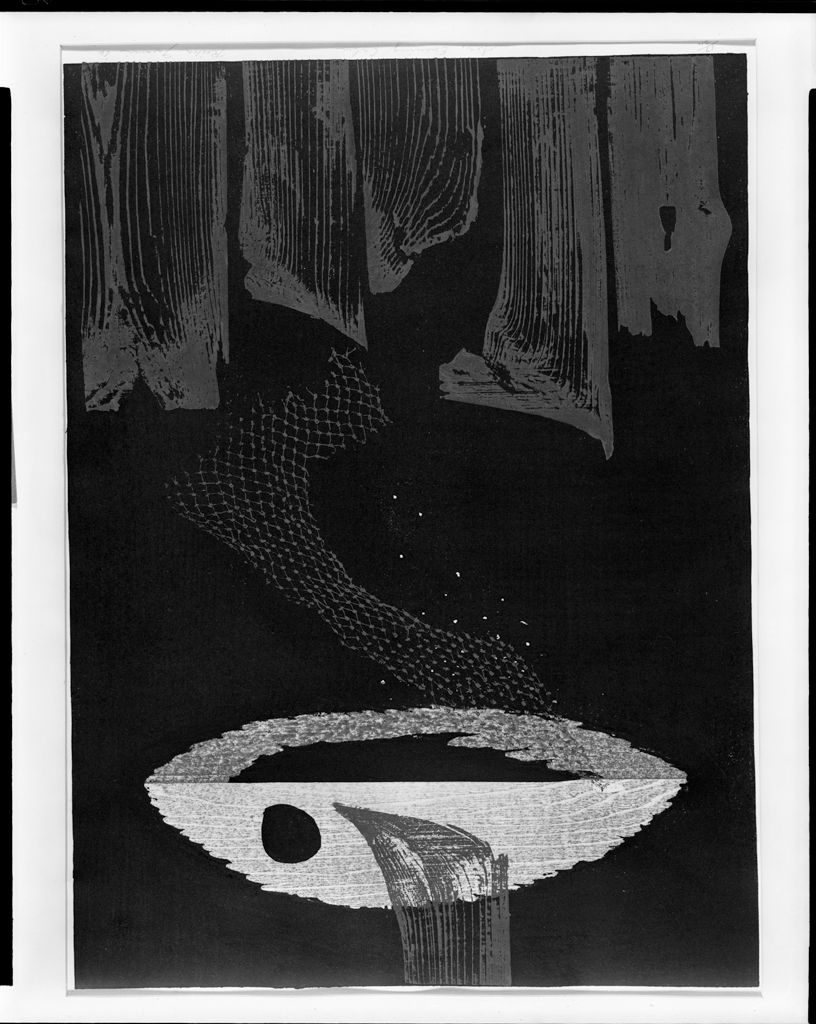
Sea: Evening Calm, Shôwa period, dated 1964
Shôwa period, 1926-1989
Woodblock print
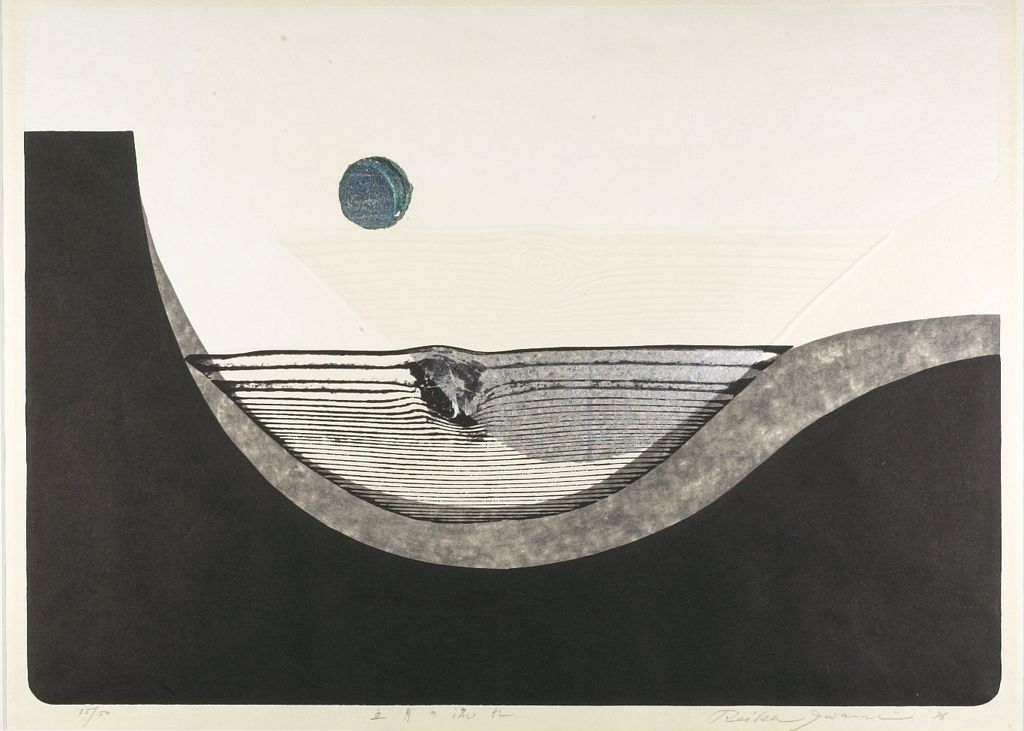
Flowing Waters of May (Gogatsu no nagare), Shôwa period, dated 1976
Shôwa period, 1926-1989
Woodblock print

Round Shadow No. 1
1957
Color woodblock print

Fruit C
1959
Color woodblock print
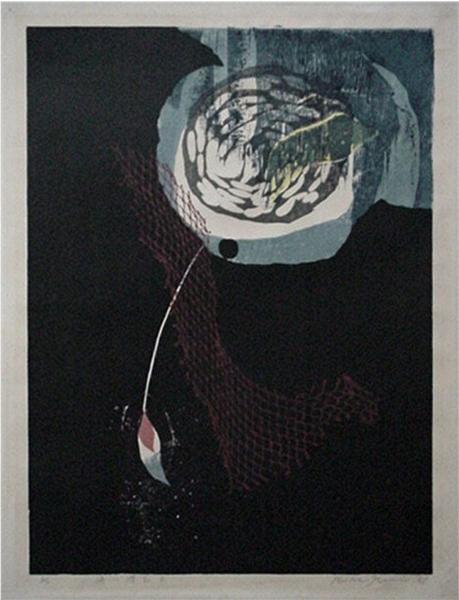
Unknown
1961
Woodblock print
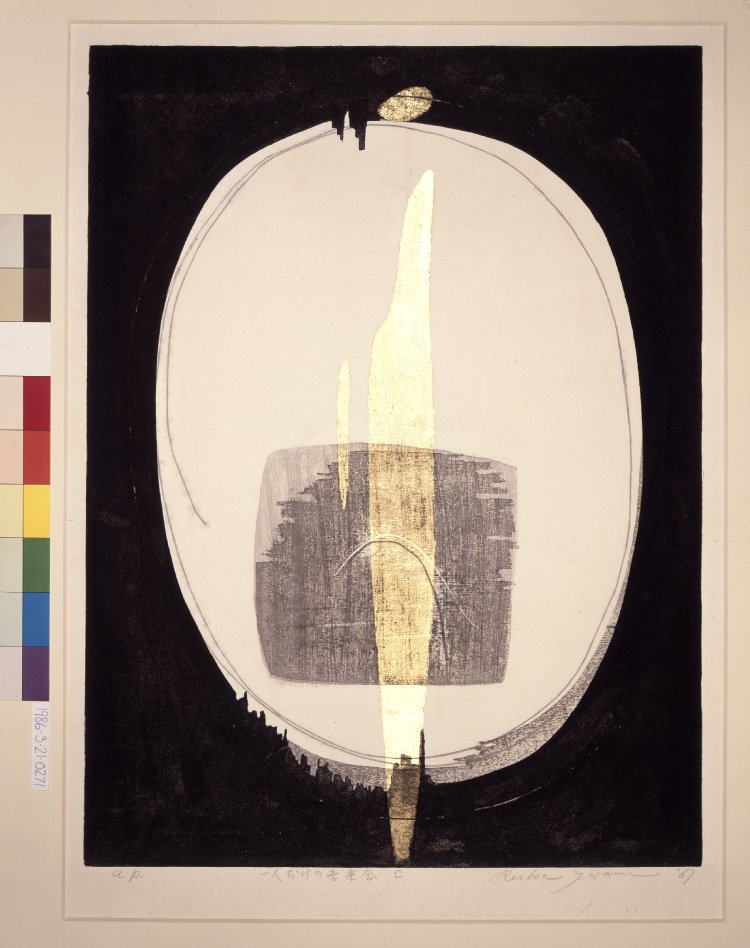
Hitori dake no ongakkai, C (Concert of One, C)
1967
Woodblock print
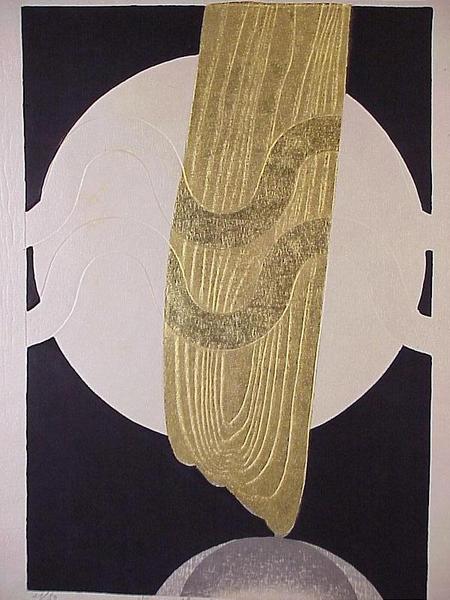
Song of Water S
1971
Woodblock print

Horizon B (Suihen B)
1973
Woodblock print with gold foil

Liberty Bell
1976
Woodblock print
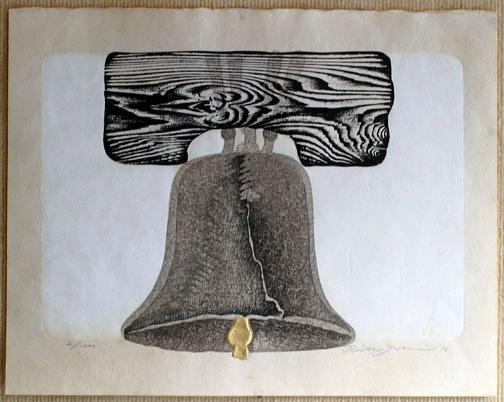
Liberty Bell
1976
Woodblock print
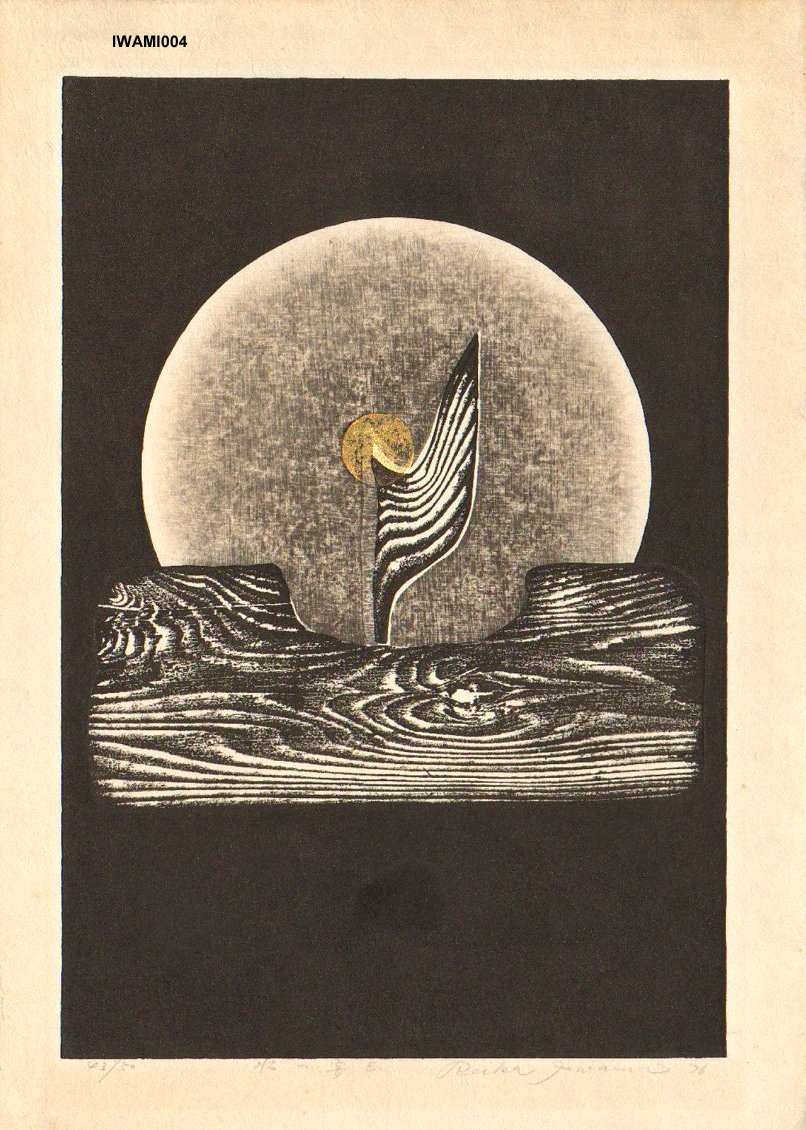
Peaceful water
43/50, 1976
Woodblock print
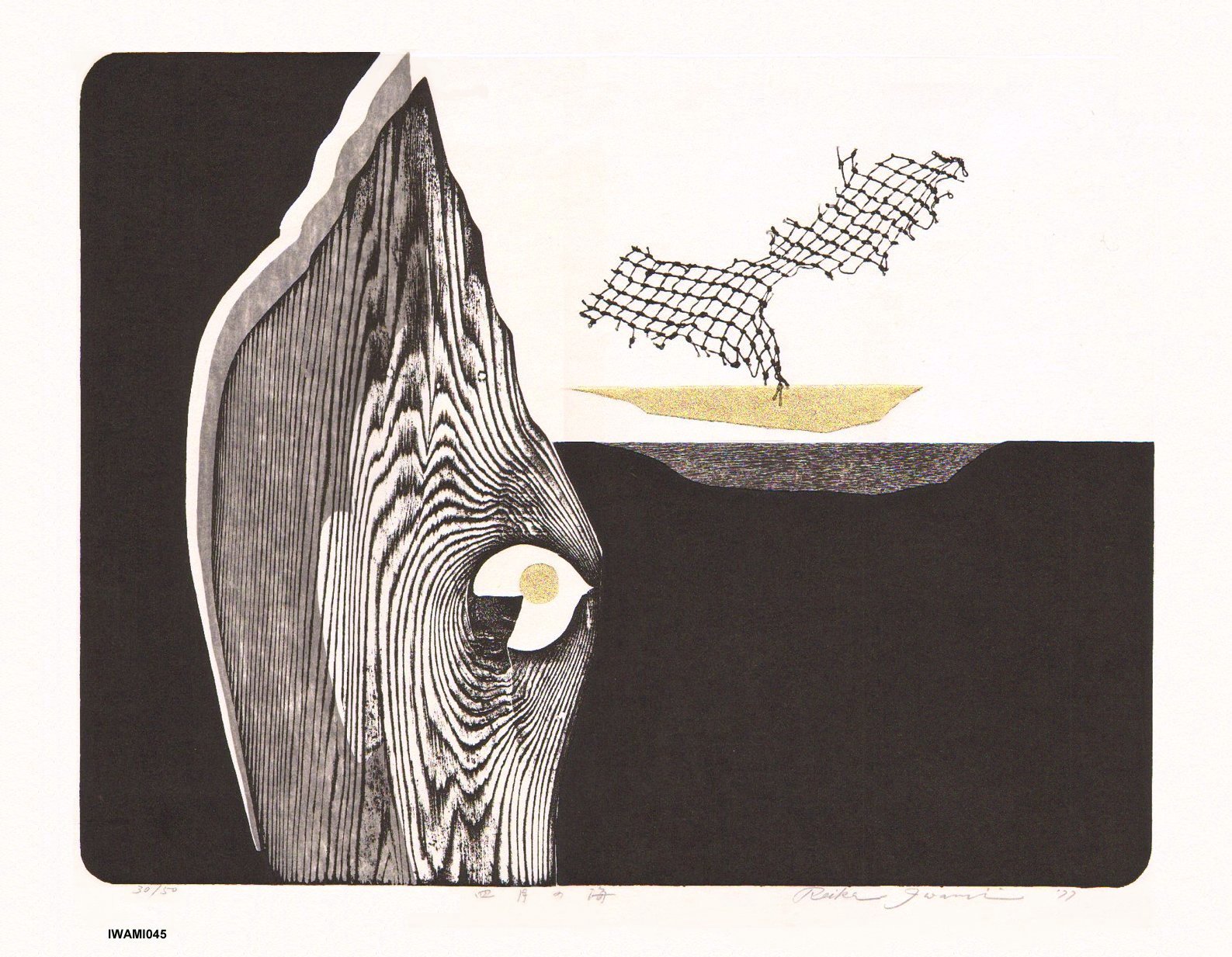
Sea in April
30/50, 1977
Woodblock print

Sea in April
30/50, 1977
Woodblock print

Ode to Water (ed. 31/50)
1978
Woodblock print
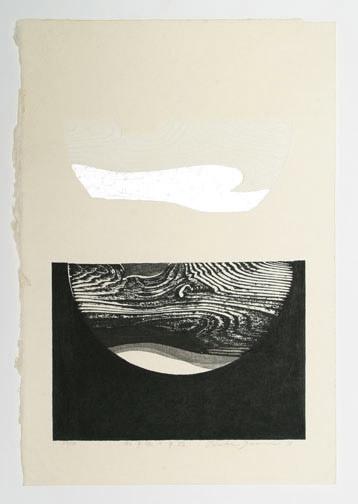
Afternoon on the Horizon (ed. 19/50)
1978
Woodblock print
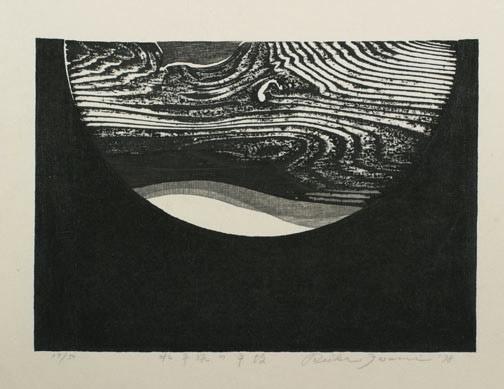
Afternoon on the Horizon (ed. 19/50)
1978
Woodblock print
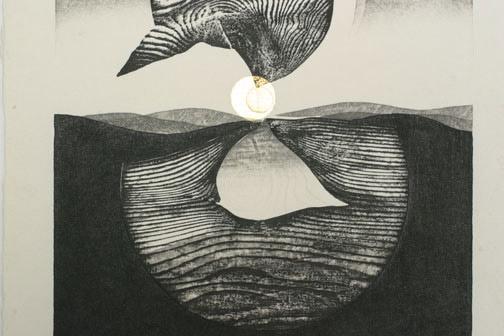
Ode to Water (ed. 31/50)
1978
Woodblock print
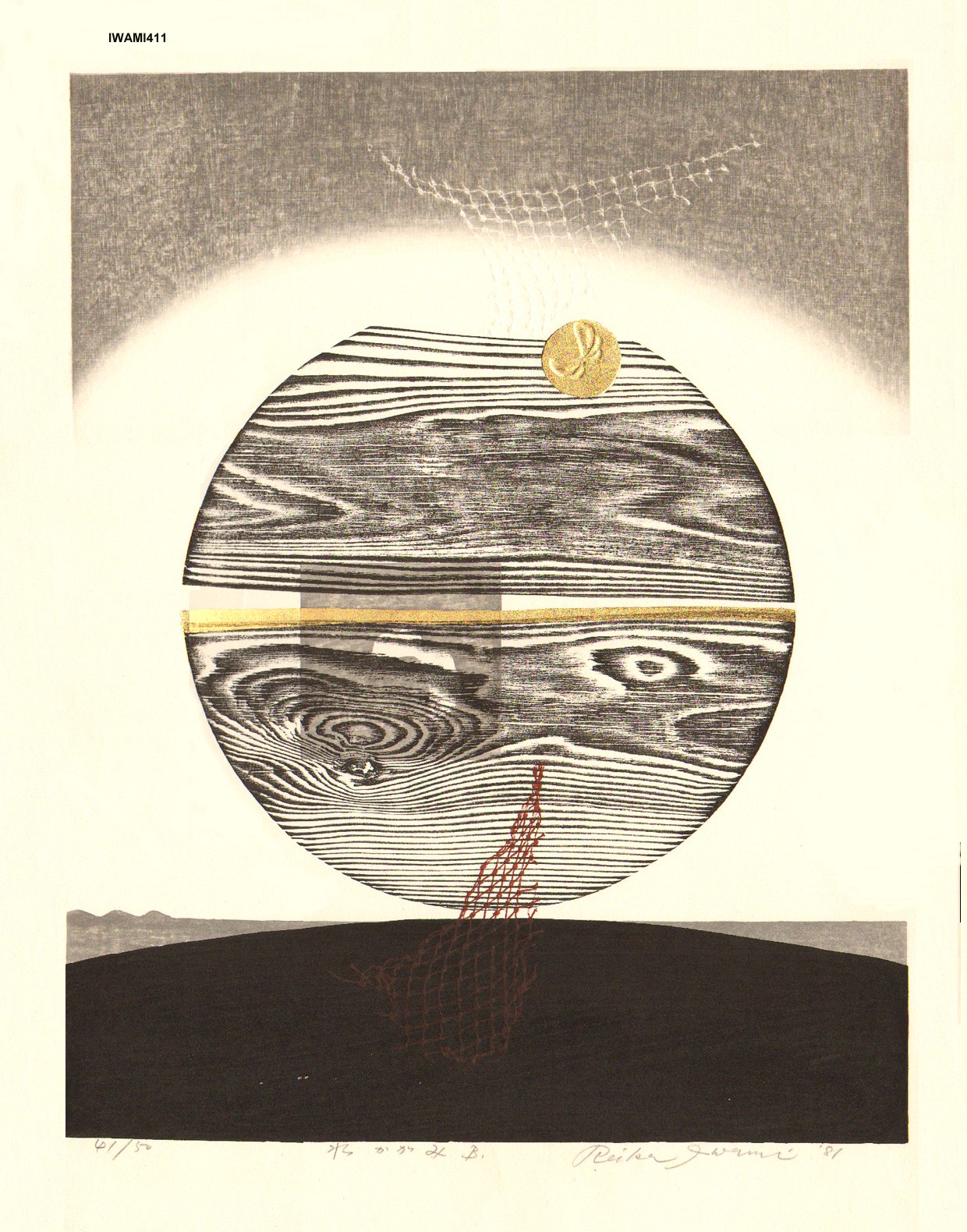
Water Mirror-B
41/50, 1981
Woodblock print
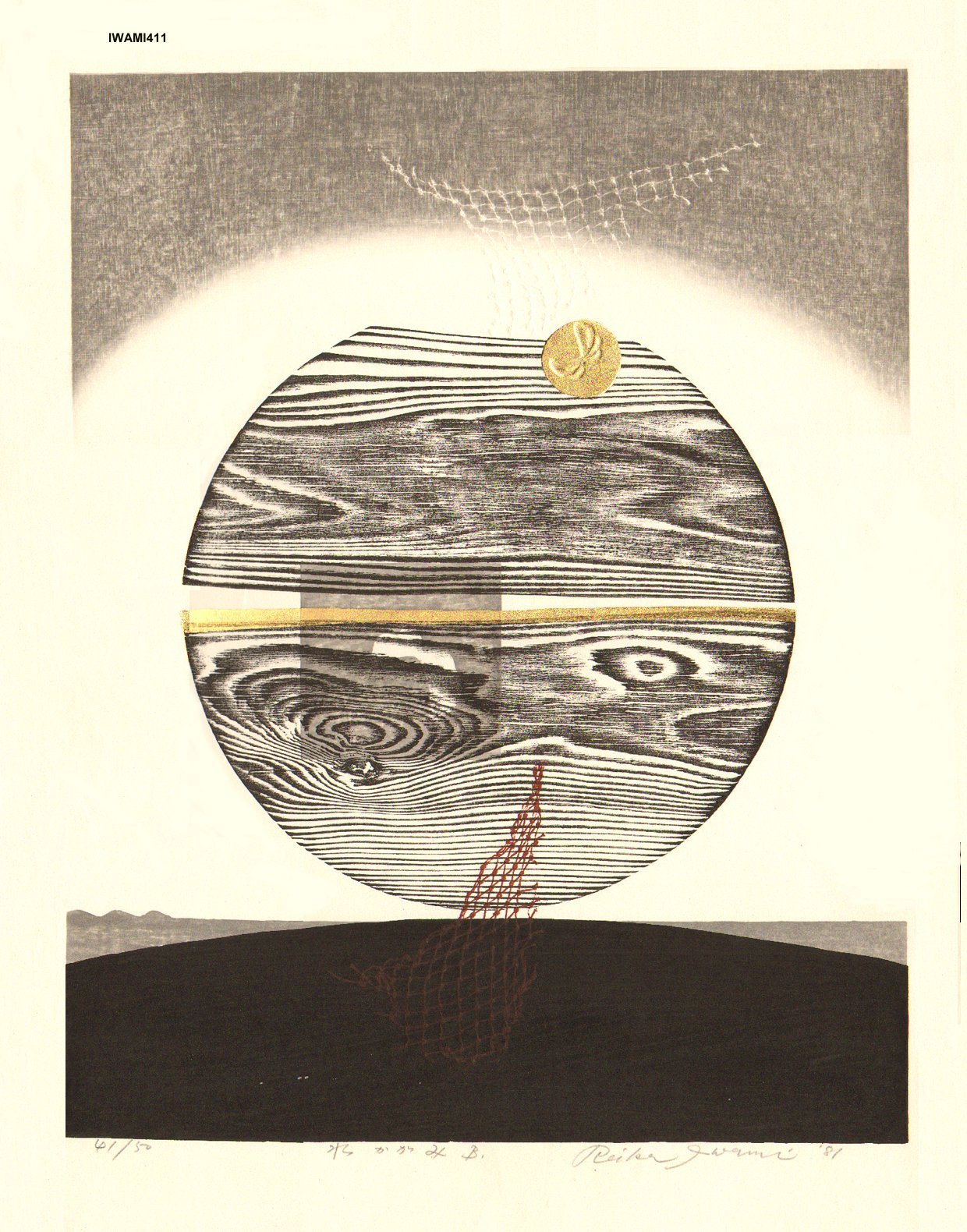
Water Mirror-B
41/50, 1981
Woodblock print
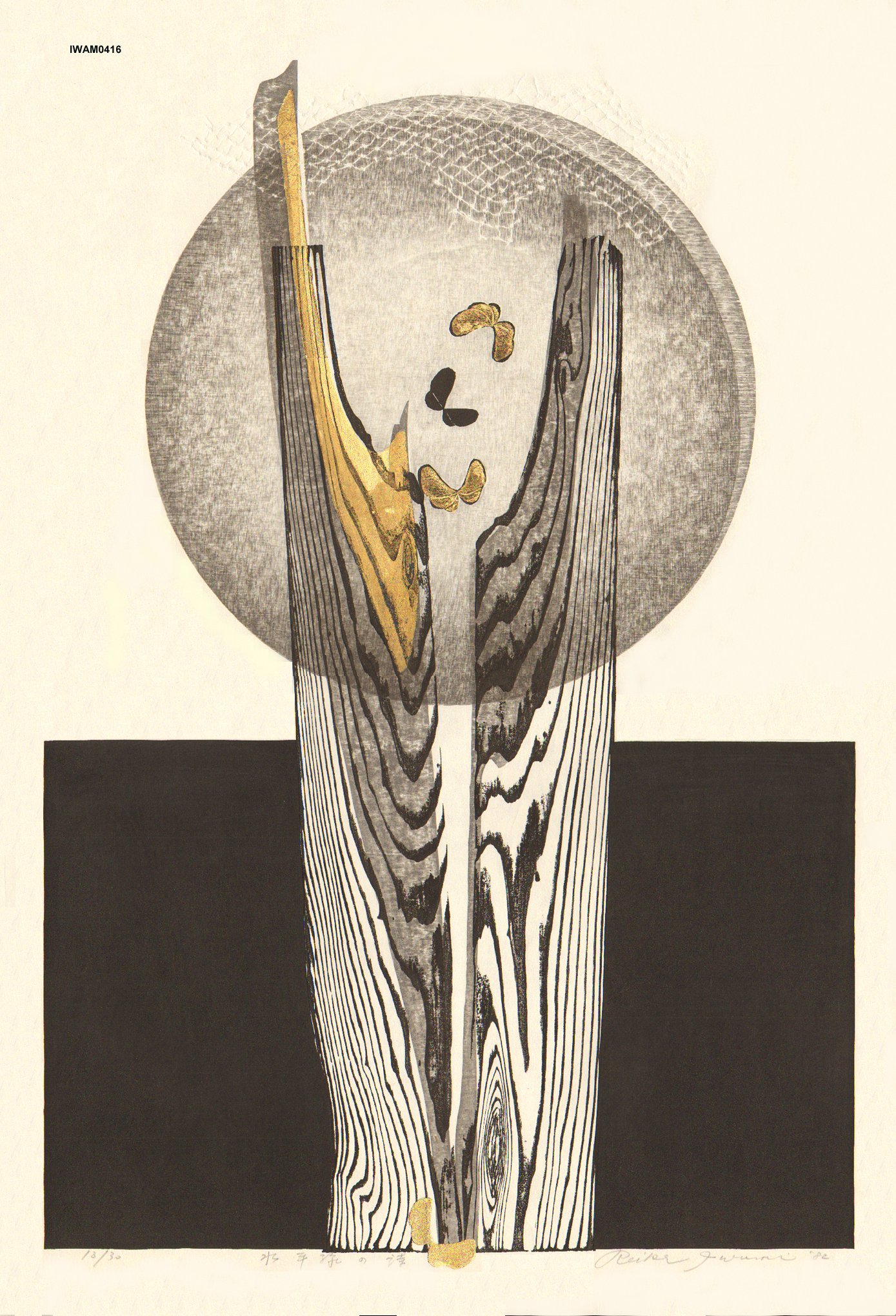
Poem of the Horizon
13/30, 1982
Woodblock print

Ode to the Sea - E
10/70, 1983
Woodblock print
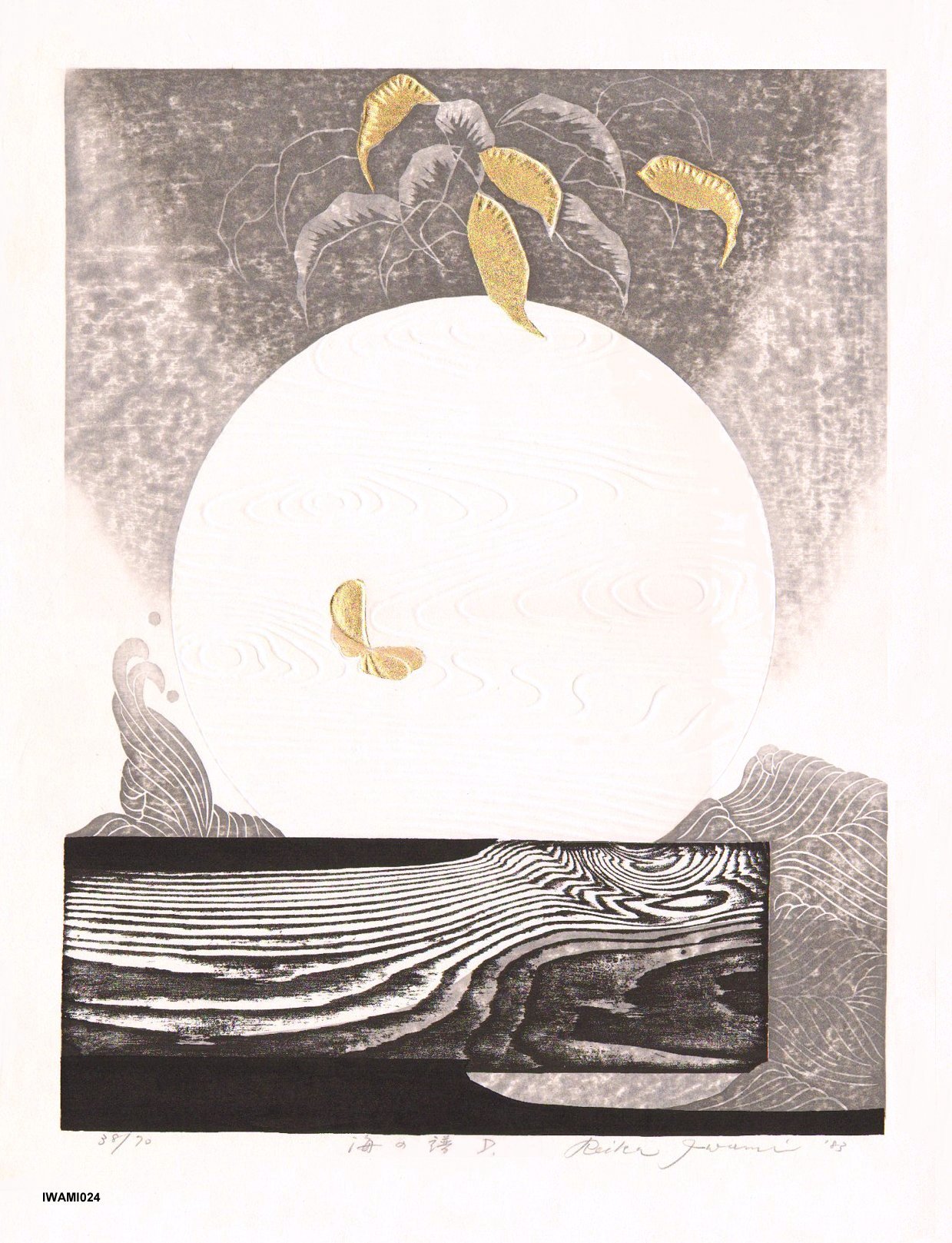
Ode to the Sea - D
38/70, 1983
Woodblock print

Unasaka-B
25/80, 1986
Woodblock print

Ginza Fantasy (One Hundred Views of Tokyo, Message to the 21st Century 東京百景 21世紀へのメッセジ)
1989-99
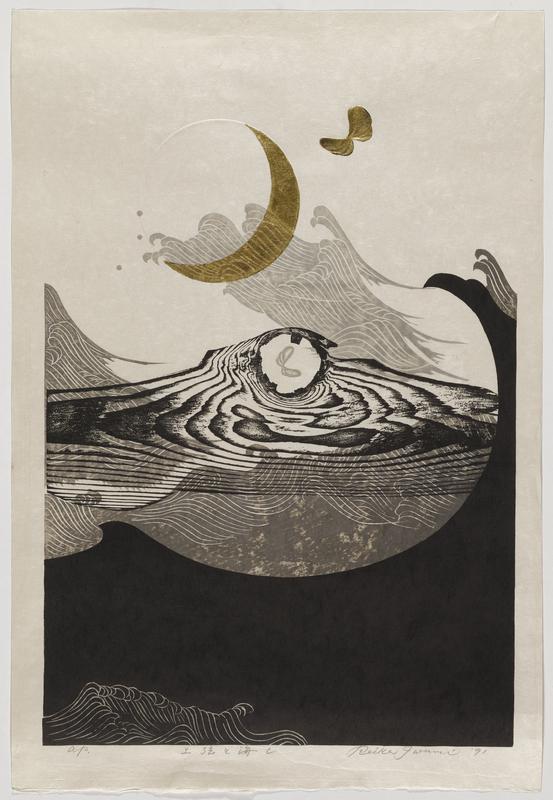
Crescent Moon and Sea C
1991
Woodblock print, ink and gold leaf on paper

Untitled
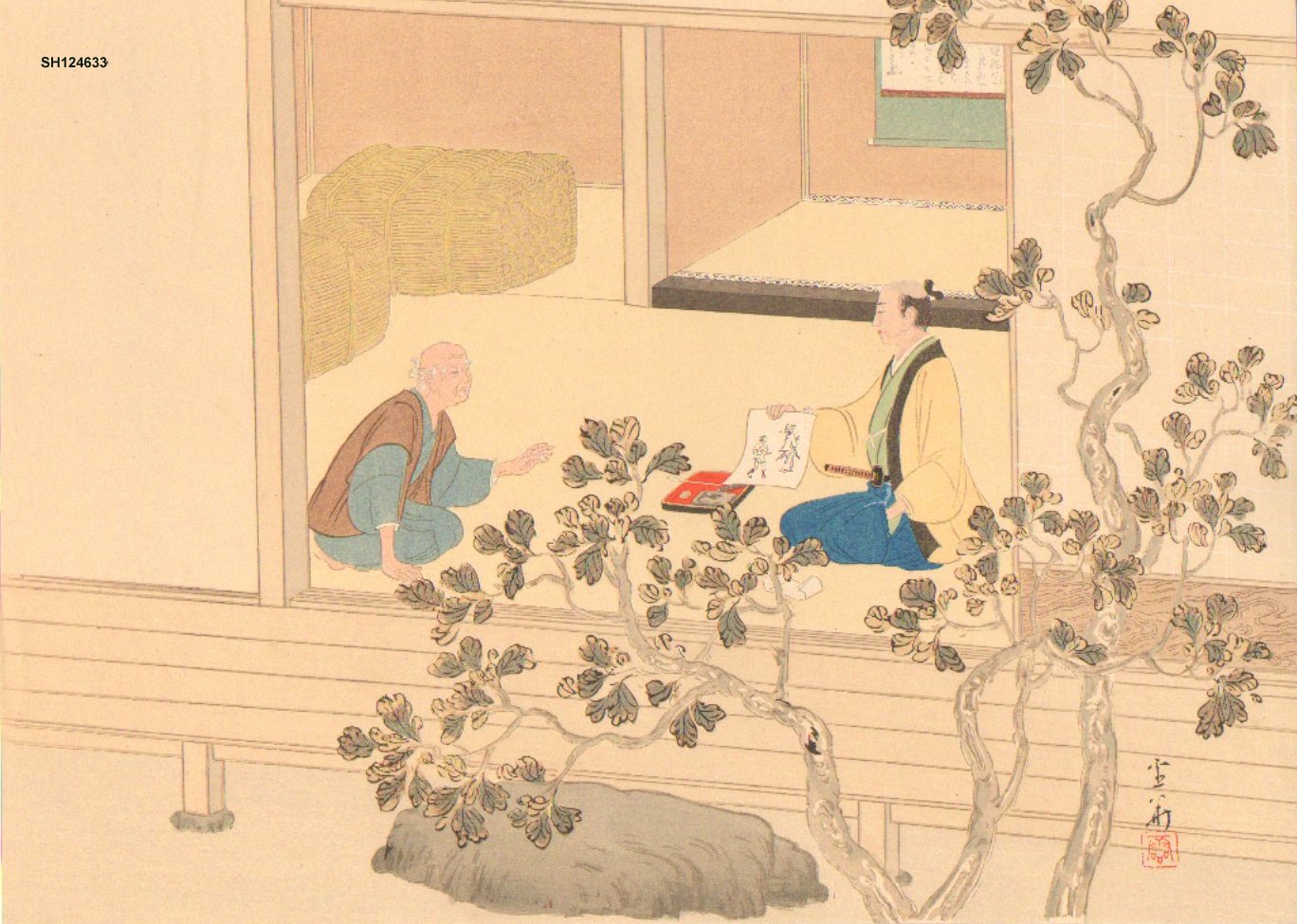
Samurai giving visitor sumi drawing
Not dated (Taisho Period)
Drawing
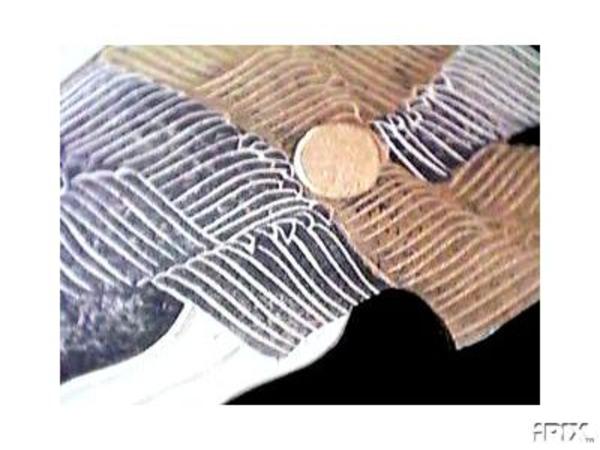
Song of Wave 2
Not set
Woodblock print