
Biography
Okiie Hashimoto (橋本興家, 1899–1993) was a Japanese printmaker renowned for his precise, architecturally focused woodblock prints depicting Japanese temples, castles, traditional buildings, and streetscapes. His geometric compositions and meticulous attention to structural detail distinguished his work within the sosaku-hanga movement, earning him a reputation as the preeminent architectural printmaker of his generation.
Born on November 1, 1899, in Tokyo, Hashimoto grew up in a city where traditional wooden architecture coexisted increasingly with modern Western-style buildings. He studied painting at the Kawabata Art School in Tokyo and later at the Taiheiyoga Kai (Pacific Art Association), where he trained in Western-style painting. His early career was devoted to oil painting, but in the 1930s he turned to woodblock printmaking, finding in the medium a way to combine his interest in architectural form with the sosaku-hanga principle of artistic self-sufficiency.
Hashimoto's prints are immediately recognizable for their architectural precision and geometric clarity. His subjects — temple gates, castle towers, pagodas, shrine entrances, traditional farmhouses, and urban streetscapes — are rendered with an attention to structural proportion and spatial relationship that reflects both his training in Western perspective and his deep appreciation for traditional Japanese building design. The compositions are carefully constructed, with strong vertical and horizontal lines creating frameworks within which architectural forms are depicted with almost engineering-like accuracy.
Yet Hashimoto's prints are far from mere architectural drawings. He brought a refined sense of color and atmosphere to his subjects, using layered woodblock printing to create subtle tonal variations that suggest the play of light across ancient timbers, the patina of weathered stone, and the atmospheric conditions — snow, rain, mist, autumn foliage — that transform familiar buildings into poetic subjects. His palette tends toward the warm earth tones of natural wood and aged tile, punctuated by the vivid reds of temple gates and the deep greens of surrounding gardens.
His career spanned the full arc of the sosaku-hanga movement's postwar development. He exhibited at major Japanese and international print exhibitions, building a reputation as a master of the architectural subject. His prints were acquired by museums and collectors worldwide, drawn to the combination of structural precision and atmospheric beauty that characterized his best work.
Hashimoto's long life — he died on August 22, 1993, at the age of ninety-three — allowed him to document an extraordinary range of Japanese architectural heritage. Many of the buildings he depicted have since been altered, damaged, or demolished, giving his prints additional value as historical records. His works are held in collections including the National Museum of Modern Art in Tokyo, the Machida City Museum of Graphic Arts, and various international museum collections. He remains one of the most distinctive practitioners of the sosaku-hanga tradition, an artist who found in the architecture of Japan an inexhaustible source of artistic inspiration.
Key Facts
- Active Period
- 1899–1993
- Nationality
- 🇯🇵Japan
- Movement
- Sōsaku-hanga
- Works Indexed
- 90
Frequently Asked Questions
What is Okiie Hashimoto known for?
Okiie Hashimoto (橋本興家, 1899–1993) was a Japanese printmaker renowned for his precise, architecturally focused woodblock prints depicting Japanese temples, castles, traditional buildings, and streetscapes. His geometric compositions and meticulous attention to structural detail distinguished his work within the sosaku-hanga movement, earning him a reputation as the preeminent architectural printmaker of his generation.
When was Okiie Hashimoto active?
Okiie Hashimoto was active from 1899 to 1993. They were associated with the Sōsaku-hanga movement.
What artistic movements influenced Okiie Hashimoto?
Okiie Hashimoto's work was shaped by the Sōsaku-hanga tradition in Japanese woodblock printmaking. Sōsaku-hanga: The "creative prints" movement (c.
Where can I see Okiie Hashimoto's original prints?
Original prints by Okiie Hashimoto can be found in collections including Art Institute of Chicago, Victoria and Albert Museum, wbp, Art of Japan.
How much do Okiie Hashimoto prints cost?
Okiie Hashimoto is prized for his precise, elegant woodblock prints of Japanese temples, castles, and traditional architecture. His geometric style and attention to structural detail give his work a distinctive character that appeals to collectors interested in both Japanese prints and architecture. Most prints sell in the $400-$2,000 range. Hashimoto designed, carved, and printed all his own works in editions of 50 to 100. Temple and castle subjects are the most popular with collectors, particularly prints depicting famous landmarks. The precision of carving and registration is important — crisp, well-printed examples command premiums over softer impressions. Smaller or lesser-known subjects: $200-$500. Temple and castle prints from mid-career: $700-$2,000. Major landmark compositions or large-format works: $2,500-$6,000. Hashimoto's market is steady, with particular strength among collectors who appreciate the intersection of art and architecture.
Woodblock Prints by Okiie Hashimoto (90)

Stone Bridge
1960
Woodblock print

Kōgetsudai Sand Garden
1961
Woodblock print, ink and color on paper

Stone and Sand Garden E
1961
Woodblock print, ink and color on paper

Unknown, Japanese Garden
1962
Woodblock print
![Refreshing Autumn (Garden No. 22) (Soshu [Niwa No. 22]) by Okiie Hashimoto](https://www.artic.edu/iiif/2/eee45ac7-53df-b548-1714-ade4aa7a2b88/full/843,/0/default.jpg)
Refreshing Autumn (Garden No. 22) (Soshu [Niwa No. 22])
1963
Color woodblock print; edition 39/70
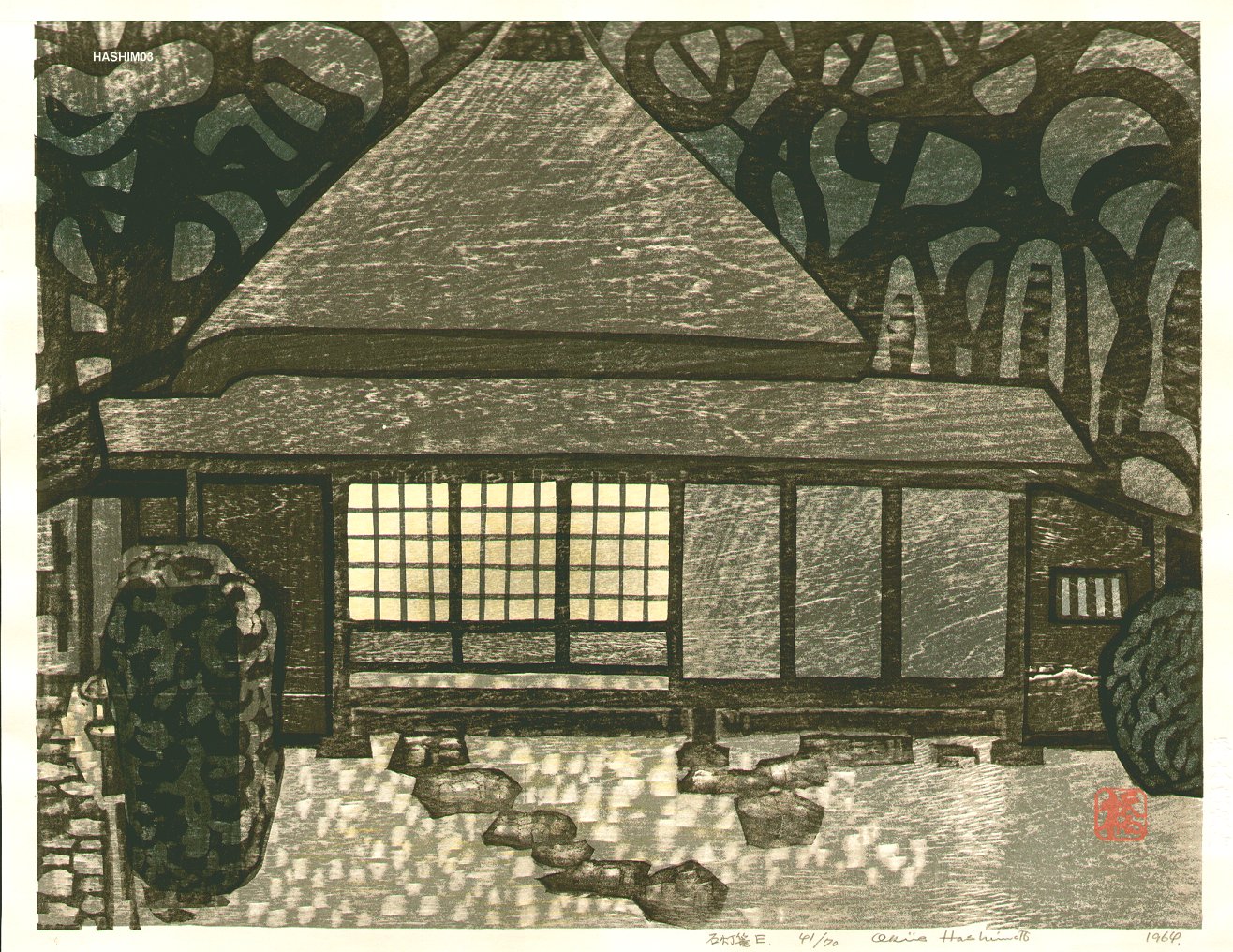
Stone Lantern (E)
61/70, 1964
Woodblock print
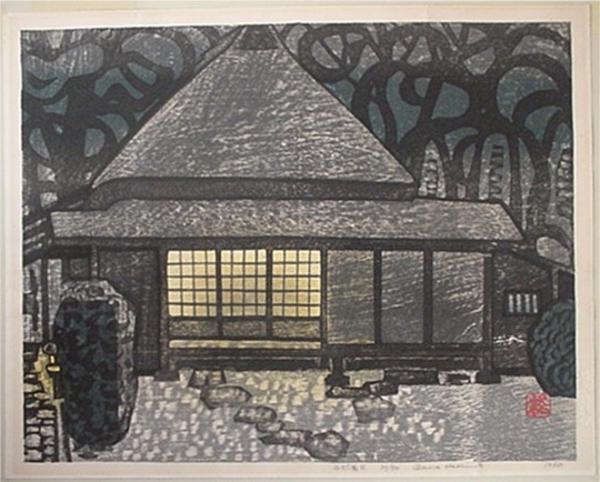
Unknown, house at night
1964
Woodblock print
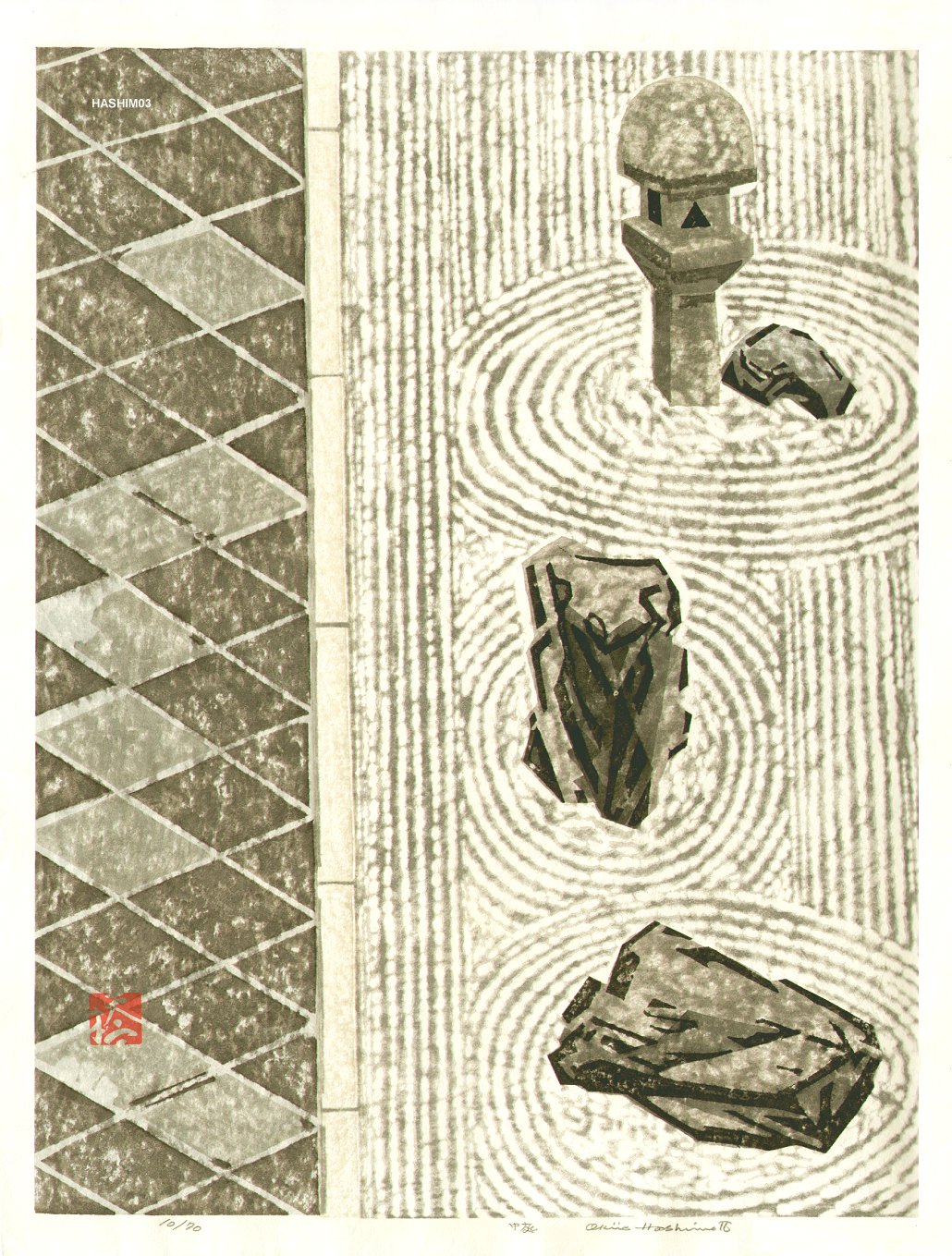
Rock garden
10/70, 1966
Woodblock print
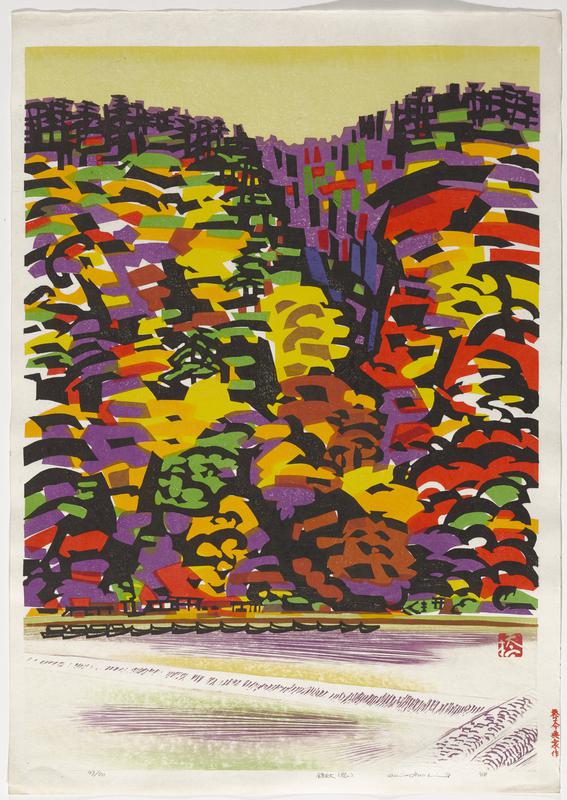
Autumn Colors, Arashiyama
1968
Woodblock print, ink and color on paper

Maple Trees at Kyoko Pond (Kyokochi koyo)
1968
Color woodblock print; edition 16/80

Courtyard B (Nakaniwa B)
1968
Color woodblock print; edition 5/80

Stepped Waterfall (Dandan no taki)
1969
Color woodblock print; edition 9/70
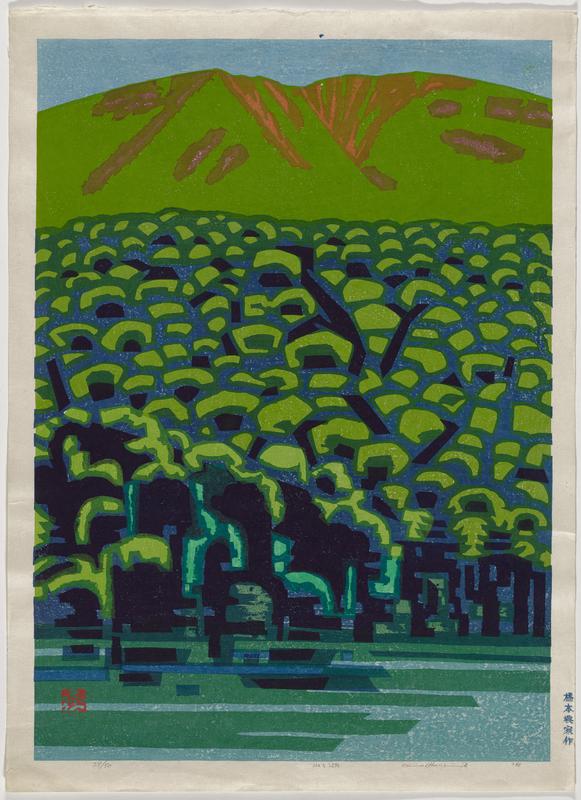
Mountain and Lake
1969
Woodblock print, ink and color on paper

Gradual Waterfall — 段々の滝
1969
Woodblock print
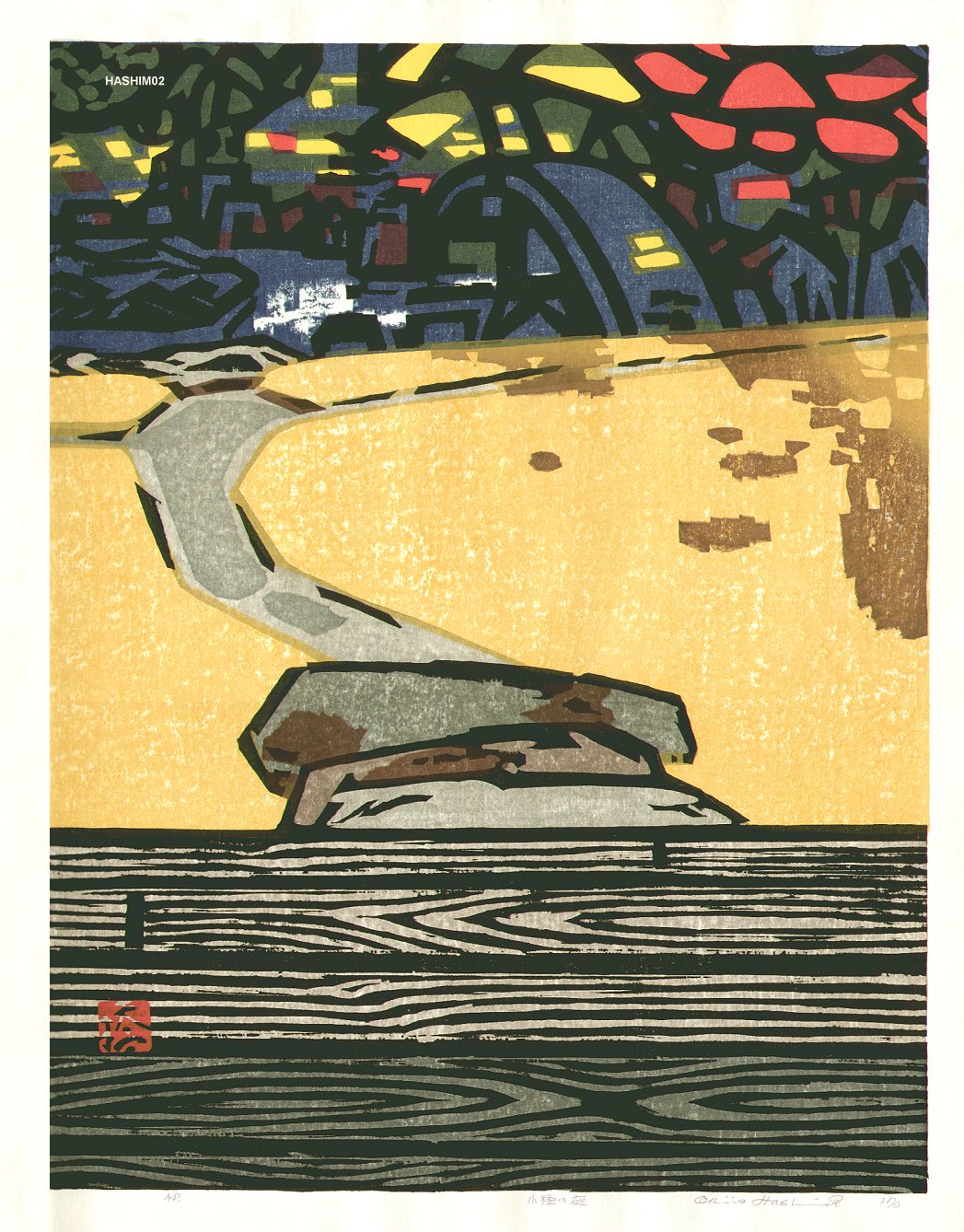
Small Path in Garden
Artist proof, 1970
Woodblock print

Garden with Narrow Path (Komichi no niwa)
1970
Color woodblock print; edition11/80

Garden in Ryuanji (Ryuanji niwa)
1973
Color woodblock print; edition 56/150

Iris (Shobu), No. 2 from the series "Flowers of Japan Series (Nihon no hana rensaku)"
1974
Color woodblock print; edition 1/80
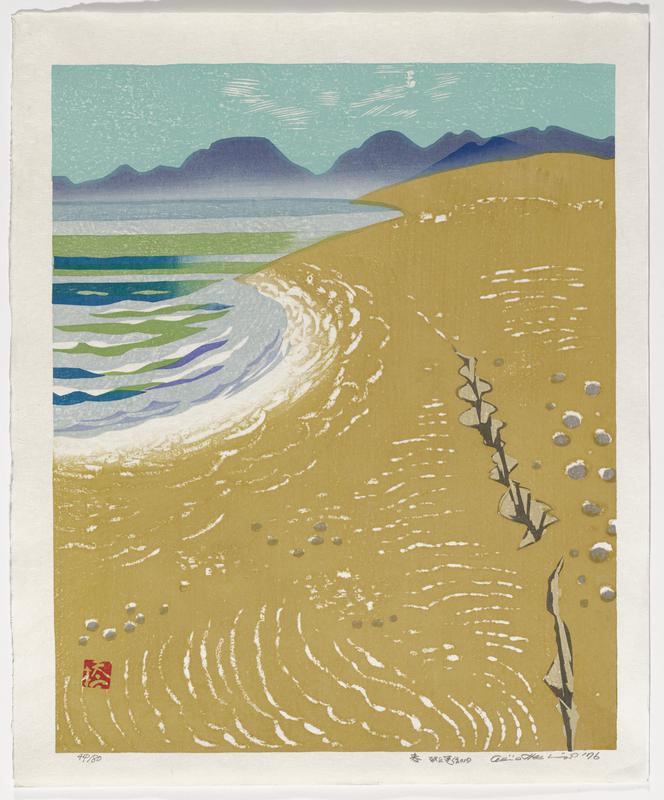
Spring
1976
Woodblock print, ink and color on paper
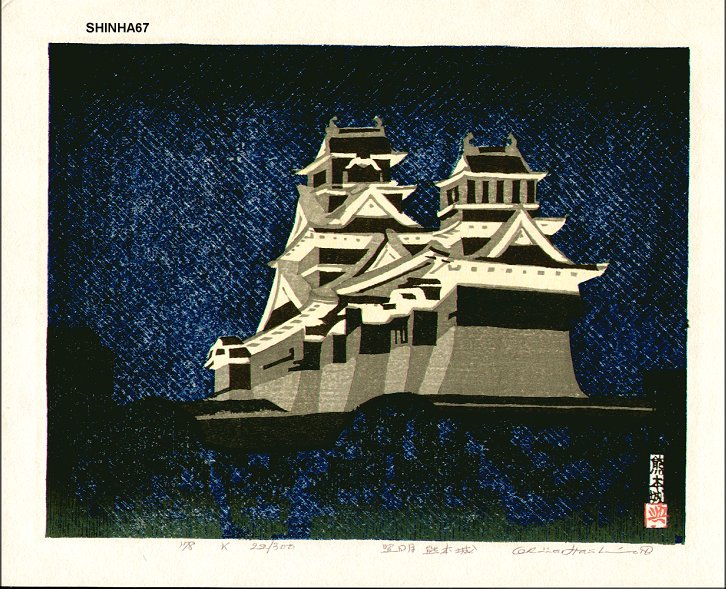
Castle in the moon
22/300, 1978
Woodblock print

Work No.3 20/80
1981
Woodblock print
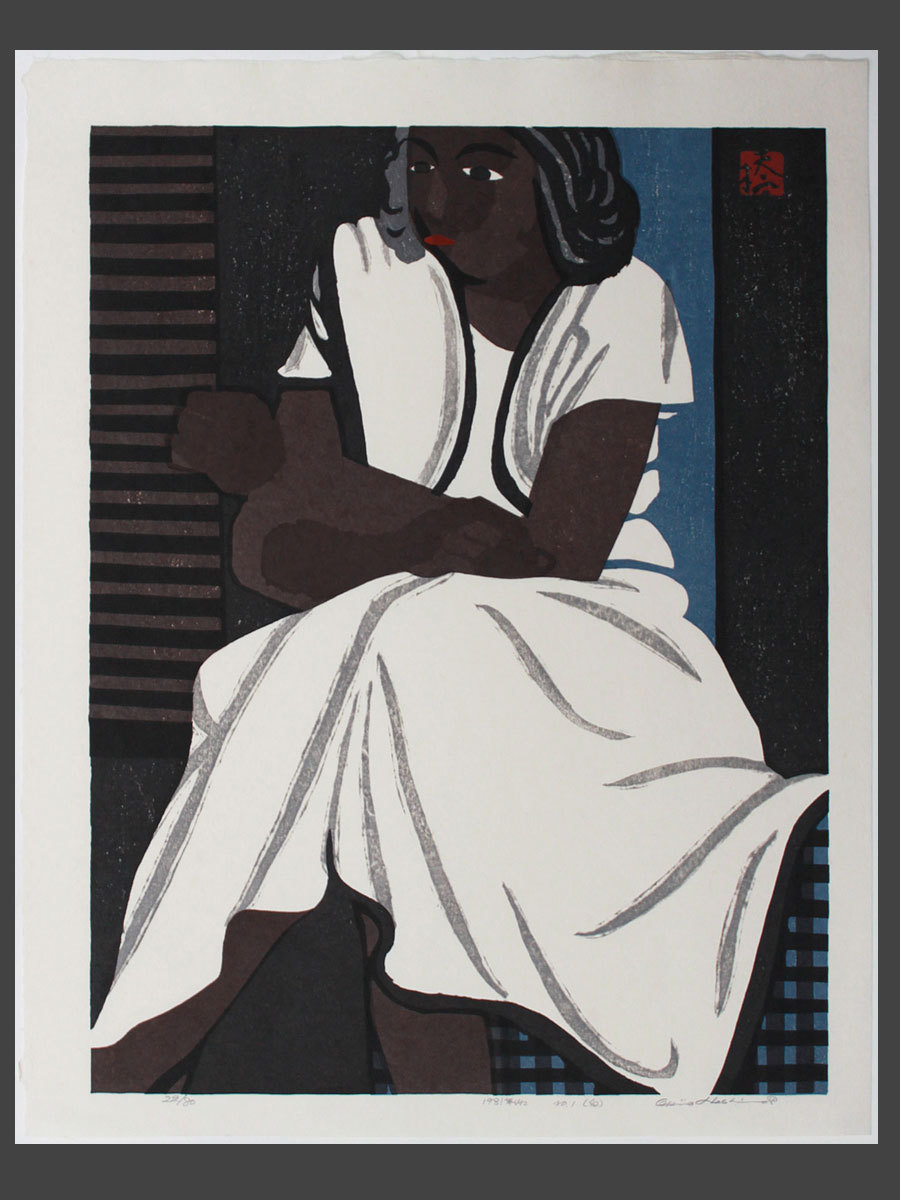
Work No.1 White (Woman in White) 22/80
1981
Woodblock print

Work No.2 Red 18/80
1981
Woodblock print
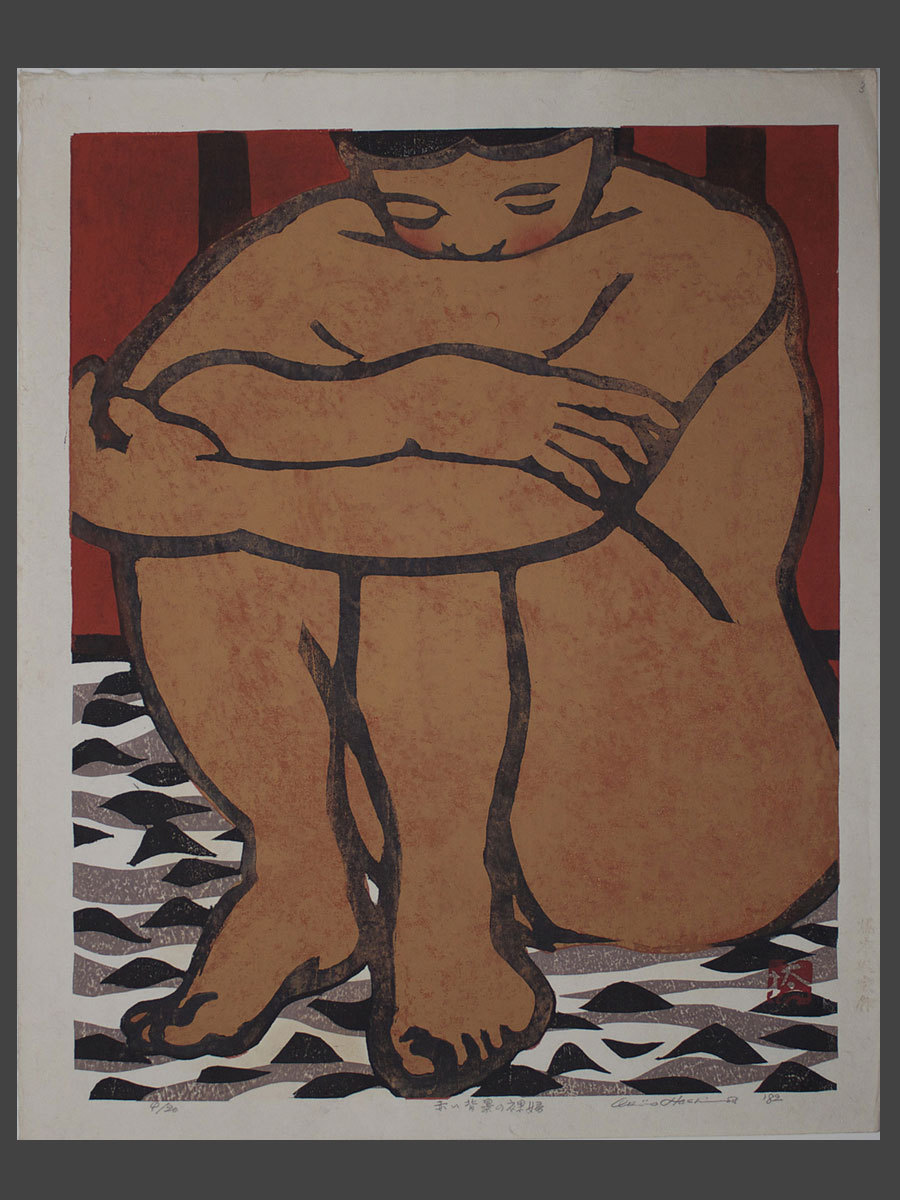
Nude against a Red Background
1982
Woodblock print

Morning Mist II
1985
Woodblock print, ink and color on paper

Setting Sun over Shiretaka
1986
Woodblock print, ink and color on paper

Okayama Castle No. 8
c. 1930–1990
Woodblock print
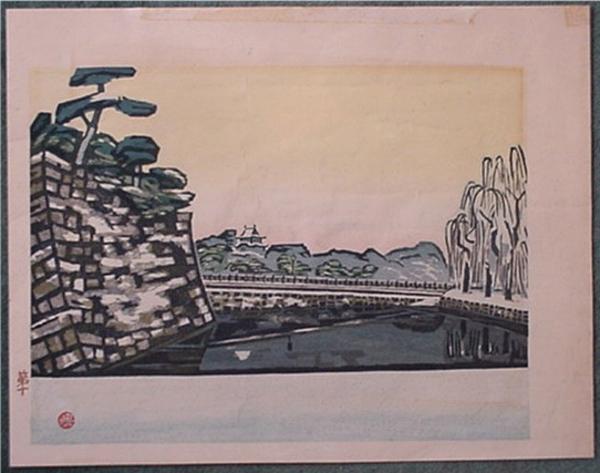
Unknown, castle bridge
Not set
Woodblock print

Himeji Castle
mid 20th century
Woodblock print, ink and color on paper
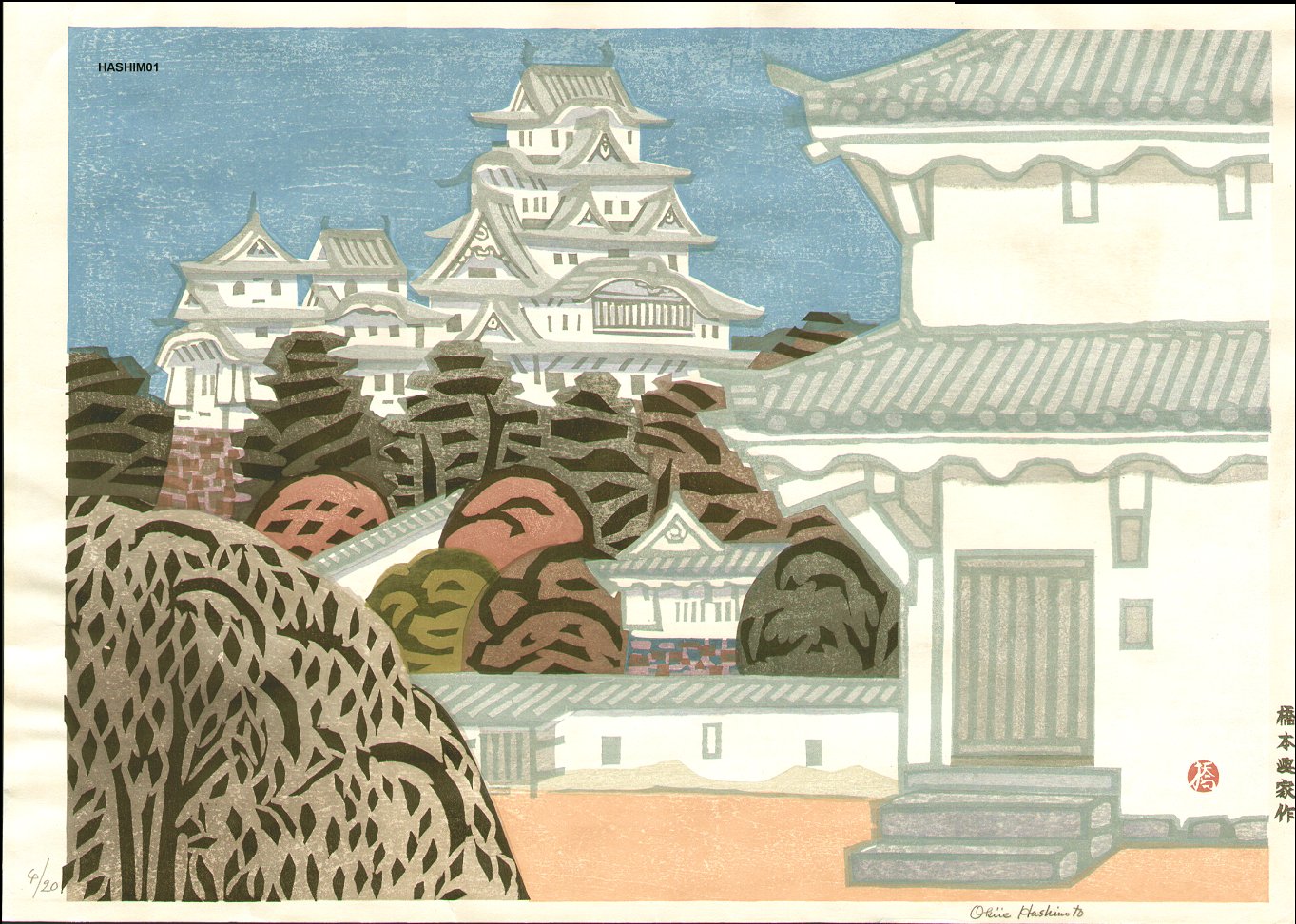
Castle
4/20, not dated
Woodblock print