Biography
Kumi Sugai (菅井汲, 1919–1996) was a Japanese abstract painter and printmaker who spent most of his career in Paris, where he became one of the most internationally prominent Japanese artists of the postwar period. Known for his bold geometric abstractions that evolved from calligraphic, gestural works in the 1950s to hard-edged, colorful compositions in the 1960s and beyond, Sugai created a distinctive body of lithographs and silkscreens that placed him at the intersection of Japanese aesthetic traditions and Western modernist abstraction.
Born in 1919 in Kobe, Japan, Sugai studied at the Osaka School of Fine Arts, where he trained in commercial design and developed an interest in Western modernist painting. After working as a graphic designer in Osaka, he moved to Paris in 1952, joining the wave of Japanese artists who sought the creative stimulation of the French capital in the postwar years. Paris in the 1950s was a center of the international art world, and Sugai quickly became engaged with the Parisian avant-garde.
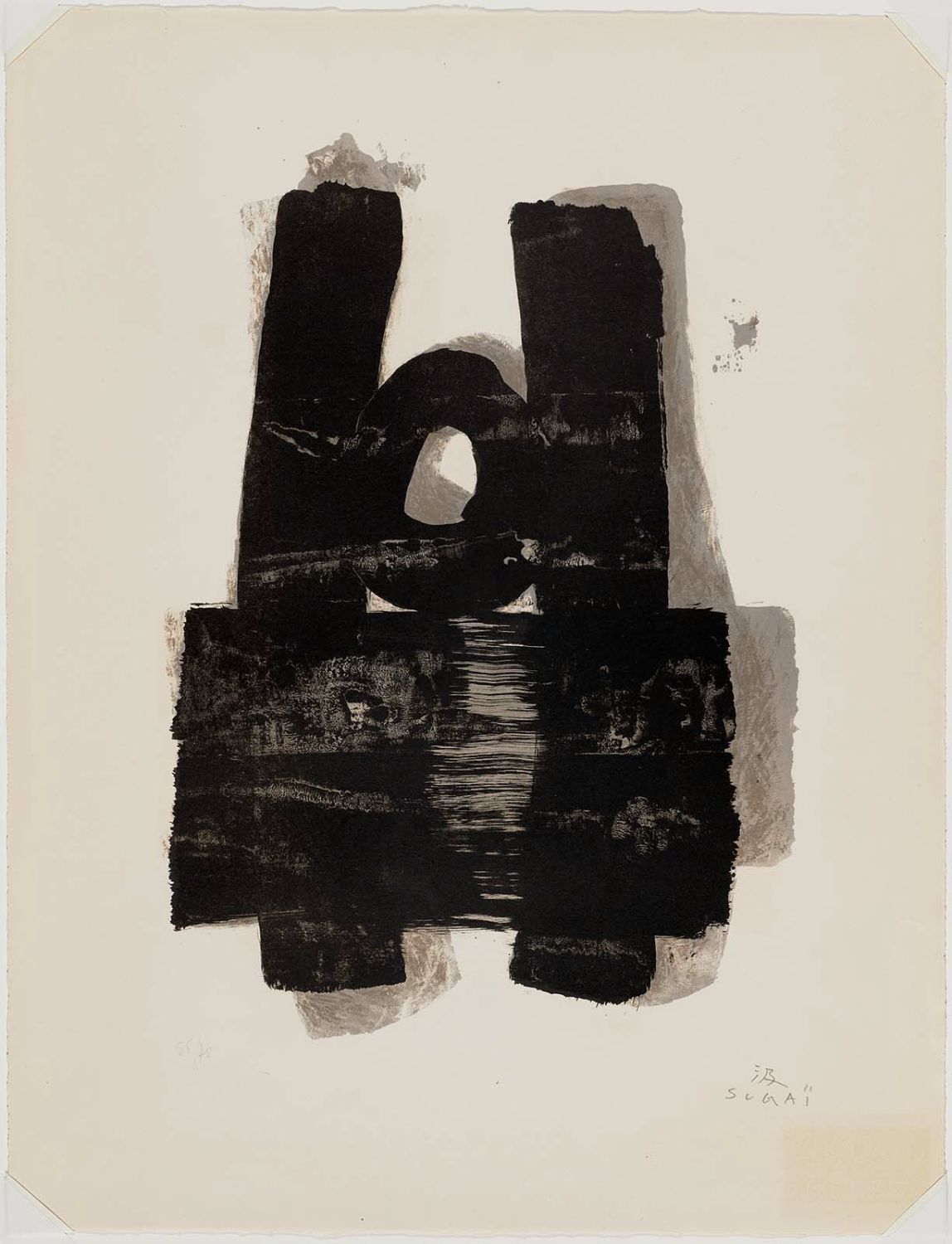
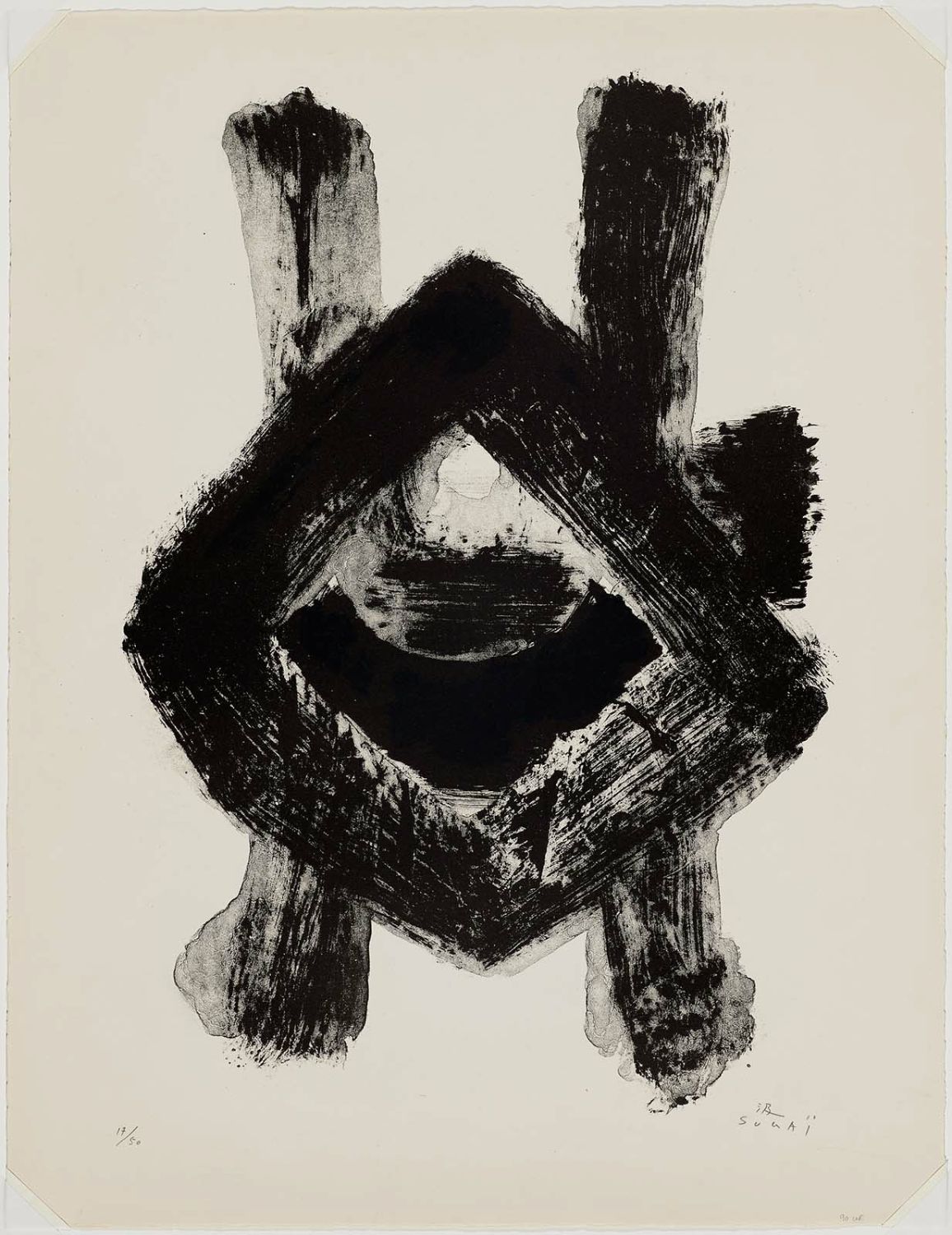
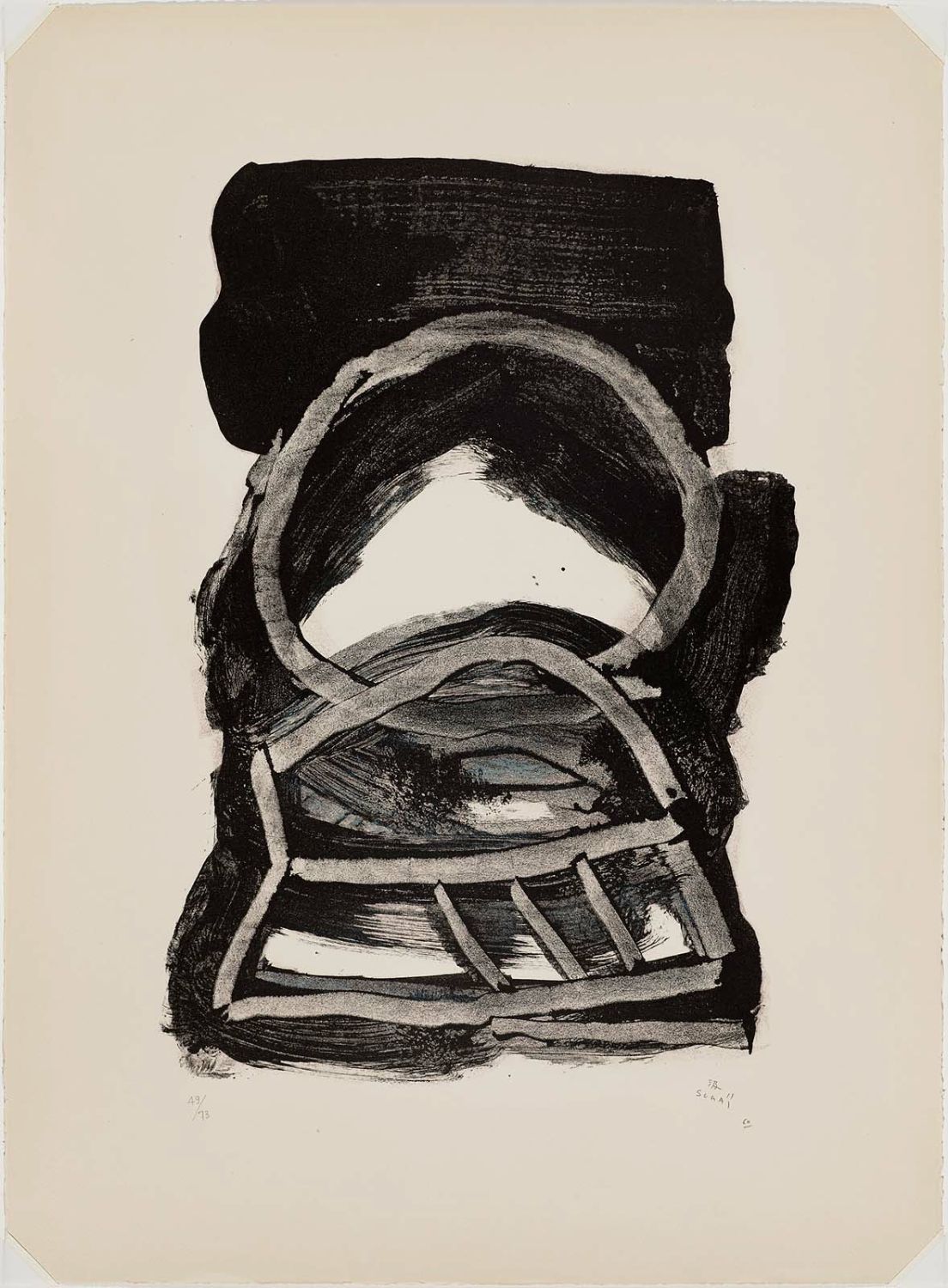
Sugai's early Parisian work drew on the gestural energy of Japanese calligraphy, combining bold, sweeping brushstrokes with the spatial sensibilities of abstract expressionism. These paintings and prints, with their dynamic, ink-like marks on open grounds, were well received by European critics who recognized in them a compelling synthesis of Eastern calligraphic tradition and Western abstract painting. The works evoke the energy and discipline of shodo (Japanese calligraphy) while exploring the formal possibilities of pure abstraction.
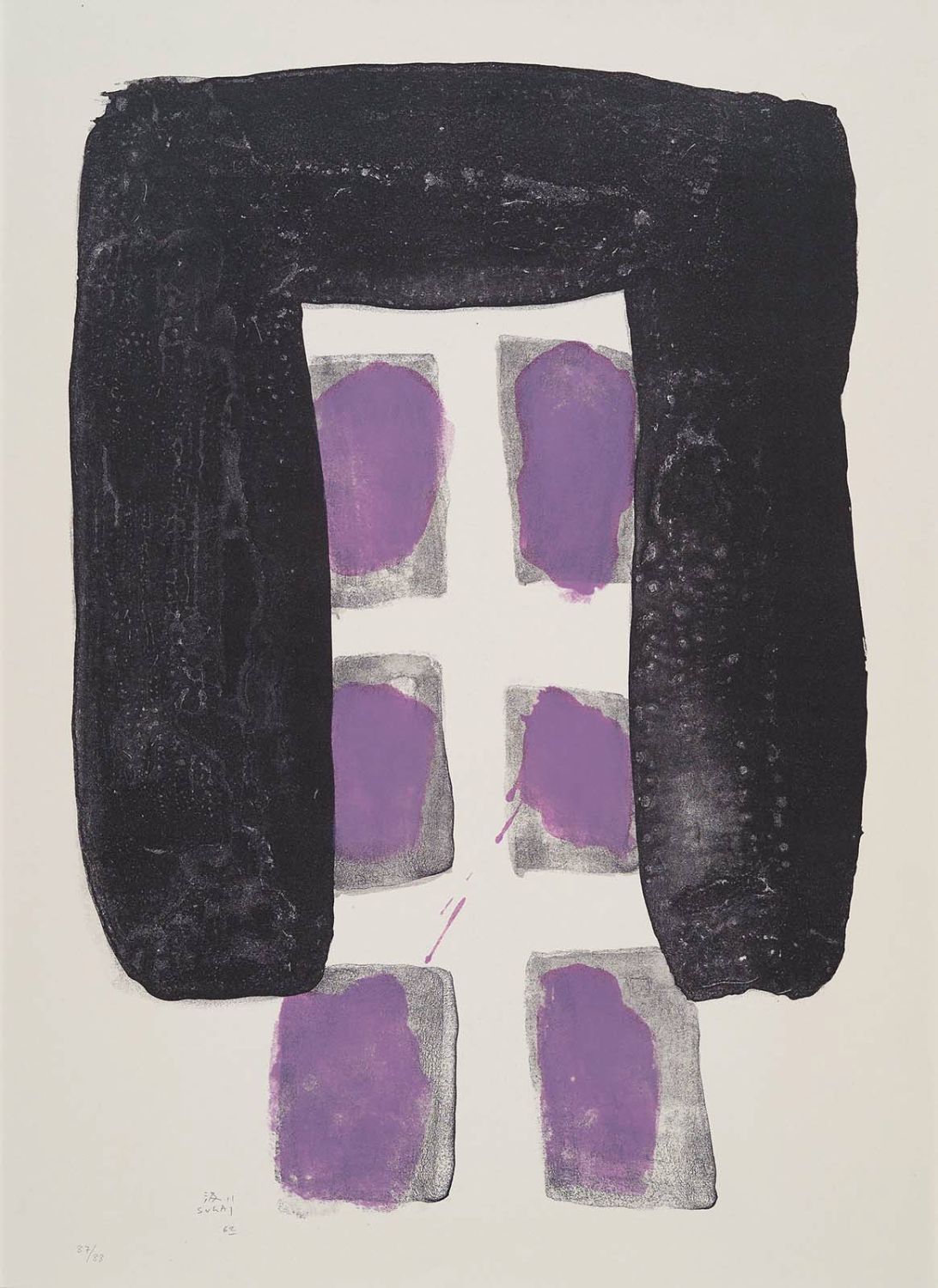
During the 1960s, Sugai's style underwent a dramatic transformation. He moved away from gestural abstraction toward hard-edged geometric compositions featuring bold, flat areas of saturated color — vivid reds, deep blues, bright yellows, and strong blacks — arranged in compositions of graphic clarity and power. These works, which coincided with the rise of hard-edge painting, op art, and pop art in the West, demonstrated Sugai's ability to engage with contemporary Western movements while maintaining a distinctly personal visual vocabulary. Highway signs, speed, and modern industrial imagery began to inform his compositions, reflecting his fascination with the visual culture of modernity.
As a printmaker, Sugai worked primarily in lithography and silkscreen, media that suited the flat, graphic qualities of his mature style. His prints, produced in collaboration with master printers in Paris, are noted for their impeccable technical quality and their striking visual impact. The bold colors, clean edges, and dynamic compositions of his prints made them popular with collectors and institutions worldwide.
Sugai exhibited extensively throughout his career, showing at major galleries in Paris, Tokyo, New York, and other cities. He participated in numerous international exhibitions, including the Venice Biennale and the São Paulo Biennale, and received significant awards and honors. He was recognized with the Grand Prize at the 1962 Mainichi Art Award and other prestigious distinctions.
Sugai died in 1996 in Kobe, his birthplace, at the age of seventy-seven. His works are held in major museum collections worldwide, including the Centre Pompidou in Paris, the Museum of Modern Art in New York, the Tate Modern in London, the National Museum of Modern Art in Tokyo, and the Guggenheim Museum. His career represents one of the most successful examples of a Japanese artist achieving genuine integration into the international art mainstream while drawing sustenance from Japanese aesthetic traditions.
Key Facts
- Active Period
- 1919–1996
- Nationality
- 🇯🇵Japan
- Movement
- Sōsaku-hanga
- Works Indexed
- 7
Frequently Asked Questions
What is Kumi Sugai known for?
Kumi Sugai (菅井汲, 1919–1996) was a Japanese abstract painter and printmaker who spent most of his career in Paris, where he became one of the most internationally prominent Japanese artists of the postwar period. Known for his bold geometric abstractions that evolved from calligraphic, gestural works in the 1950s to hard-edged, colorful compositions in the 1960s and beyond, Sugai created a distinctive body of lithographs and silkscreens that placed him at the intersection of Japanese aesthetic traditions and Western modernist abstraction.
When was Kumi Sugai active?
Kumi Sugai was active from 1919 to 1996. They were associated with the Sōsaku-hanga movement.
What artistic movements influenced Kumi Sugai?
Kumi Sugai's work was shaped by the Sōsaku-hanga tradition in Japanese woodblock printmaking. Sōsaku-hanga: The "creative prints" movement (c.
Where can I see Kumi Sugai's original prints?
Original prints by Kumi Sugai can be found in collections including Victoria and Albert Museum, ukiyo-e.org, mfa.
How much do Kumi Sugai prints cost?
Kumi Sugai's bold abstract prints appeal to collectors at the intersection of Japanese postwar art and European modernism. His career arc from calligraphic gesture to geometric hard-edge abstraction means his work attracts two distinct collector bases: those drawn to the Eastern-inflected early works and those who prefer the vibrant geometric compositions of his mature period. Prices are moderate and accessible. Sugai's prints appear regularly at auction in both European and Japanese markets. His lithographs and silkscreens, produced with high technical quality in Parisian workshops, offer strong visual impact at accessible prices. The geometric works from the 1960s-1970s, with their vivid colors and graphic boldness, tend to be the most popular with current collectors. His work benefits from strong institutional presence in major museums worldwide, which supports long-term collector confidence. Smaller prints: $200–$600. Major geometric compositions: $1,000–$3,000. Important early or large-format works: $4,000–$8,000. The market has been stable with particular strength in France and Japan.