
Biography
Hideo Hagiwara (萩原英雄, 1913–2007) was a Japanese printmaker known for his abstract and semi-abstract woodblock prints that explored the interplay of color, form, and texture through innovative multi-block techniques. His celebrated "Stone Garden" and gem-inspired series established him as one of the most technically accomplished and aesthetically refined artists of the sosaku-hanga movement, achieving widespread international recognition through prizes at major print biennales.
Born on February 22, 1913, in Kofu, Yamanashi Prefecture, Hagiwara grew up in the shadow of Mount Fuji, and the geological landscapes of his home prefecture — its mountains, rivers, and mineral formations — would provide enduring inspiration for his art. He studied oil painting at the Tama Art School (now Tama Art University) in Tokyo, where he received a thorough grounding in Western-style painting techniques and art theory. After graduating, he initially pursued painting before turning to printmaking in the postwar years.
Hagiwara's transition to printmaking came during the vibrant creative ferment of the late 1940s and 1950s, when Japanese artists were eagerly absorbing international modernist influences while seeking to define distinctly Japanese forms of contemporary expression. He embraced the sosaku-hanga principle of the artist as sole creator, designing, carving, and printing all his own work. His early prints showed the influence of European abstraction, but he quickly developed a personal style that drew on both Western modernism and Japanese aesthetic traditions.
The "Stone Garden" series, which Hagiwara began in the 1960s, is among his most celebrated achievements. Inspired by the raked gravel and carefully placed stones of Japanese Zen gardens, these prints translate the meditative spatial relationships of garden design into abstract compositions of extraordinary refinement. Using multiple carved woodblocks printed in succession, Hagiwara built up layers of color and texture that suggest the weathered surfaces of ancient stones, the flowing patterns of raked gravel, and the interplay of light and shadow across mineral surfaces. The series demonstrates his remarkable ability to evoke the physical presence of stone through the inherently flat medium of the woodblock print.
Equally distinctive was his series of prints inspired by precious and semi-precious gemstones. These works explored the translucent, refractive qualities of gems such as topaz, amethyst, ruby, and emerald through abstract compositions in which overlapping planes of transparent color create effects of luminous depth. To achieve these effects, Hagiwara developed sophisticated multi-block printing techniques, using as many as twenty or more separate blocks for a single print, each contributing a layer of translucent color that interacted with the layers beneath it. The technical demands of this approach were formidable, requiring precise registration and a deep understanding of how colors would interact when printed in transparent layers on washi paper.
Hagiwara's international recognition grew steadily through the 1960s and 1970s. He exhibited at the São Paulo Biennale, the Ljubljana Biennale of Graphic Arts, and other major international print exhibitions, winning prizes that brought his work to global attention. His prints were acquired by museums worldwide, including the Museum of Modern Art in New York, the British Museum, the National Museum of Modern Art in Tokyo, and the Yamanashi Prefectural Museum of Art, which houses a comprehensive collection of his work.
Beyond printmaking, Hagiwara was also active as an educator and art advocate. He taught at various institutions and contributed to the promotion of sosaku-hanga through exhibitions and publications. His technical innovations in multi-block color printing influenced younger generations of printmakers and expanded the expressive possibilities of the woodblock medium.
Hagiwara continued working into his nineties, producing prints that maintained the technical mastery and aesthetic sensitivity of his earlier work. He died on November 4, 2007, at the age of ninety-four, in Kofu. His legacy encompasses both his individual artistic achievements and his contribution to the technical vocabulary of modern woodblock printing.
Key Facts
- Active Period
- 1913–2007
- Nationality
- 🇯🇵Japan
- Movement
- Sōsaku-hanga
- Works Indexed
- 127
Frequently Asked Questions
What is Hideo Hagiwara known for?
Hideo Hagiwara (萩原英雄, 1913–2007) was a Japanese printmaker known for his abstract and semi-abstract woodblock prints that explored the interplay of color, form, and texture through innovative multi-block techniques. His celebrated "Stone Garden" and gem-inspired series established him as one of the most technically accomplished and aesthetically refined artists of the sosaku-hanga movement, achieving widespread international recognition through prizes at major print biennales.
When was Hideo Hagiwara active?
Hideo Hagiwara was active from 1913 to 2007. They were associated with the Sōsaku-hanga movement.
What artistic movements influenced Hideo Hagiwara?
Hideo Hagiwara's work was shaped by the Sōsaku-hanga tradition in Japanese woodblock printmaking. Sōsaku-hanga: The "creative prints" movement (c.
Where can I see Hideo Hagiwara's original prints?
Original prints by Hideo Hagiwara can be found in collections including Art Institute of Chicago, Harvard Art Museums, wbp, Fine Arts Museums of San Francisco.
How much do Hideo Hagiwara prints cost?
Hideo Hagiwara is recognized for his technically virtuosic abstract woodblock prints, particularly the 'Stone Garden' and gemstone-inspired series. His innovative use of multiple blocks to create layered, translucent color effects distinguishes his work within the sosaku-hanga tradition. Most prints sell in the $800-$3,500 range. Hagiwara used an unusually large number of blocks per print — sometimes 15 to 20 or more — to build up layered color effects of remarkable luminosity. His editions range from 30 to 80 impressions, signed and numbered in pencil. The 'Stone Garden' series and gemstone prints are the most sought-after, while earlier figurative works attract less collector interest. Registration quality and color vibrancy vary between impressions. Smaller or minor compositions: $300-$800. Mid-career abstract prints: $1,500-$3,500. Major exhibition pieces from the 1960s-1970s: $4,000-$10,000. Hagiwara's market is supported by collectors of both Japanese prints and international abstract art. His work appears at Japanese auction houses and occasionally at Western sales of modern Japanese prints.
Woodblock Prints by Hideo Hagiwara (127)

Mask O
20th century
Color woodblock print
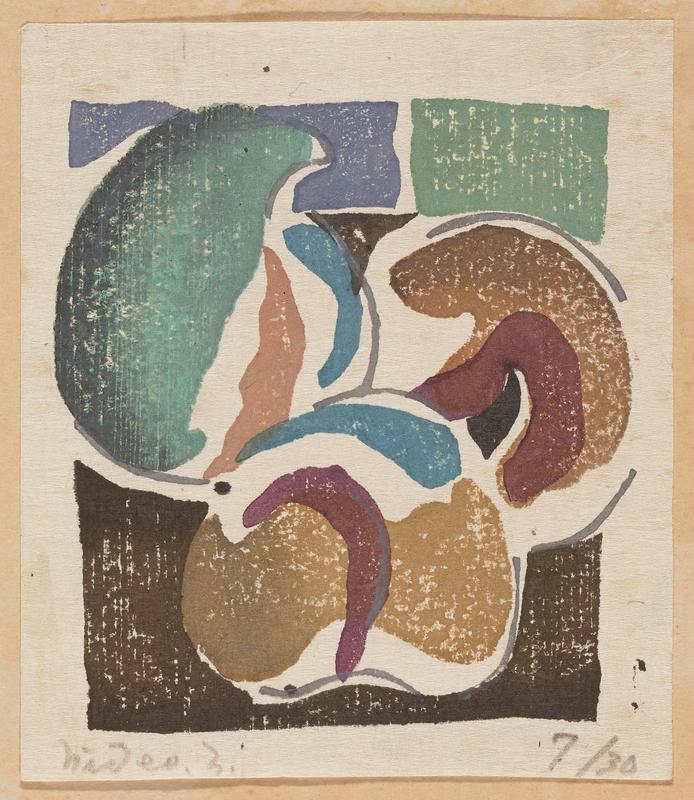
Peaches
1954
Woodblock print, ink and color on paper
Still Life with Peaches
1954
Woodblock print, ink and color on paper

Bird (Tori)
1958
Color woodblock print; edition 18/30

Composition P
1958
Woodblock print, ink and color on paper
![Iris (Rainbow) [Niji] by Hideo Hagiwara](https://www.artic.edu/iiif/2/1433951c-0335-8d79-04c3-273cb1af3223/full/843,/0/default.jpg)
Iris (Rainbow) [Niji]
1959
Color woodblock print; edition 6/30

White Moth (Shiroga)
1959
Color woodblock print; edition 2/30
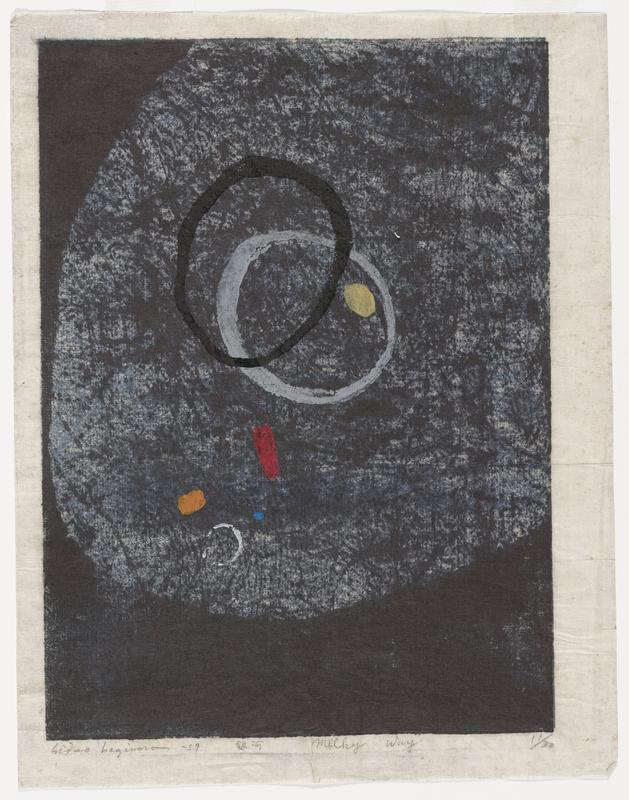
Milky Way
1959
Woodblock print, ink and color on paper
Midnight
Shōwa period, dated 1959
Woodblock print; ink and color on paper
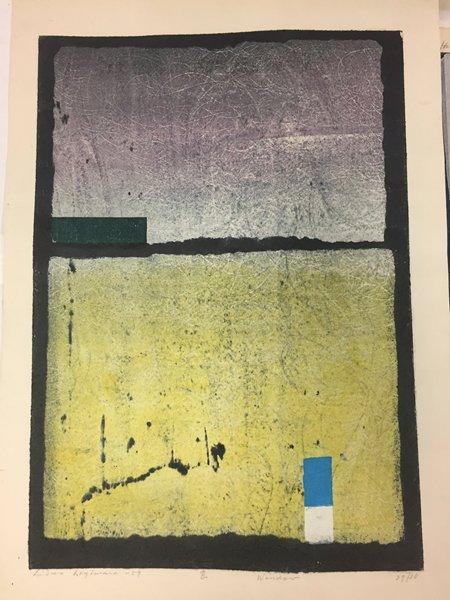
Window
1959
Woodblock print, ink and color on paper
![Soil (3) (Dojo [3]), Damp Zone (Shitchitai) by Hideo Hagiwara](https://www.artic.edu/iiif/2/72e6d234-895b-8342-6083-79498ab9ac8d/full/843,/0/default.jpg)
Soil (3) (Dojo [3]), Damp Zone (Shitchitai)
1960
Color woodblock print; edition 7/30
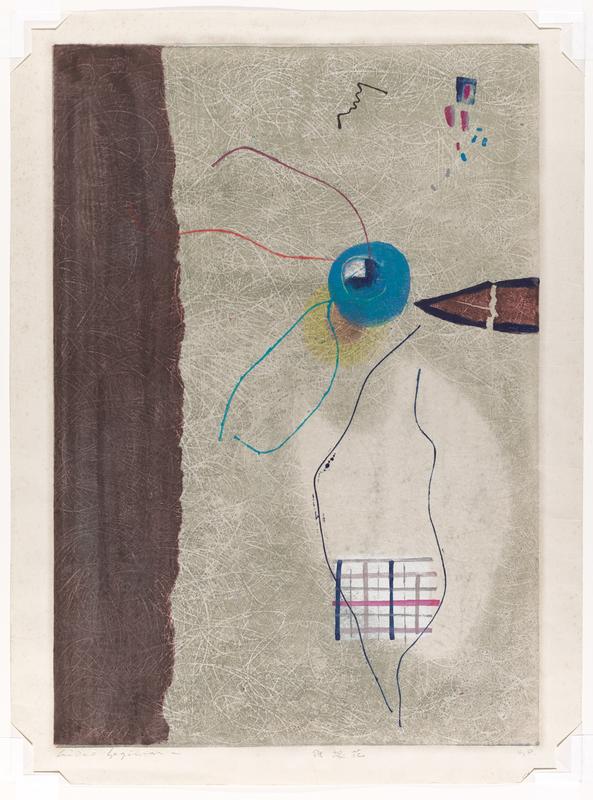
Devil Flower No. 6, Clematis
1960
Woodblock print, ink and color on paper
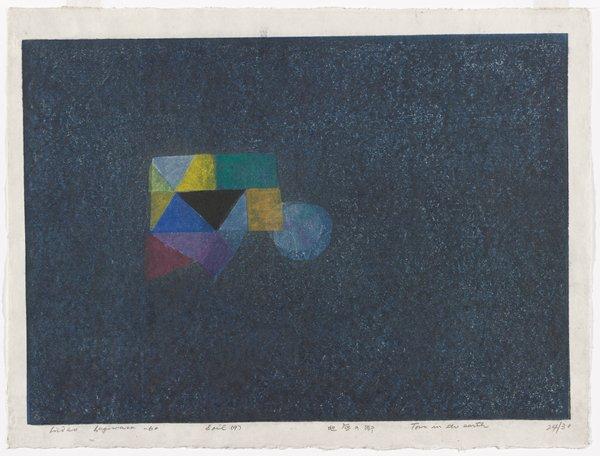
Soil (9): Town in the Earth
1960
Woodblock print, ink and color on paper

Stone Flower: Blue, Grey
1960
Woodblock print, ink and color on paper

Artemis (Arutemisu)
1966 (?)
Woodblock print; edition 12/50
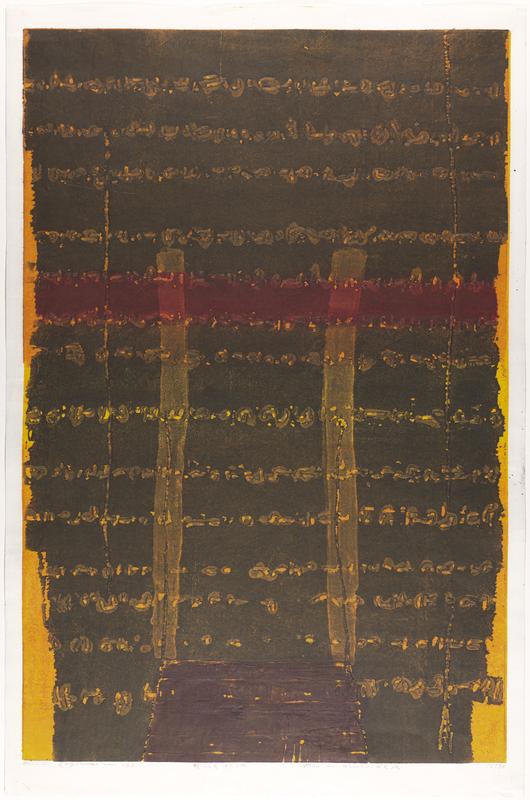
Man in Armor No. 12
1962
Woodblock print, ink and color on paper
![Fantasy in White (1) (Shiro no genso [1]) by Hideo Hagiwara](https://www.artic.edu/iiif/2/78ba1ff1-87e2-67d6-938b-8144016f4850/full/843,/0/default.jpg)
Fantasy in White (1) (Shiro no genso [1])
1962
Color woodblock print; edition 10/50

Man in Armor No. 19
1963
Woodblock print, ink and color on paper
Play Ground (2)
Shōwa period, dated 1964
Woodblock print; ink on paper with signature reading "Hideo Hagiwara"

Mask No.12 (Kamen No. 12)
1964
Color woodblock print; edition 10/50
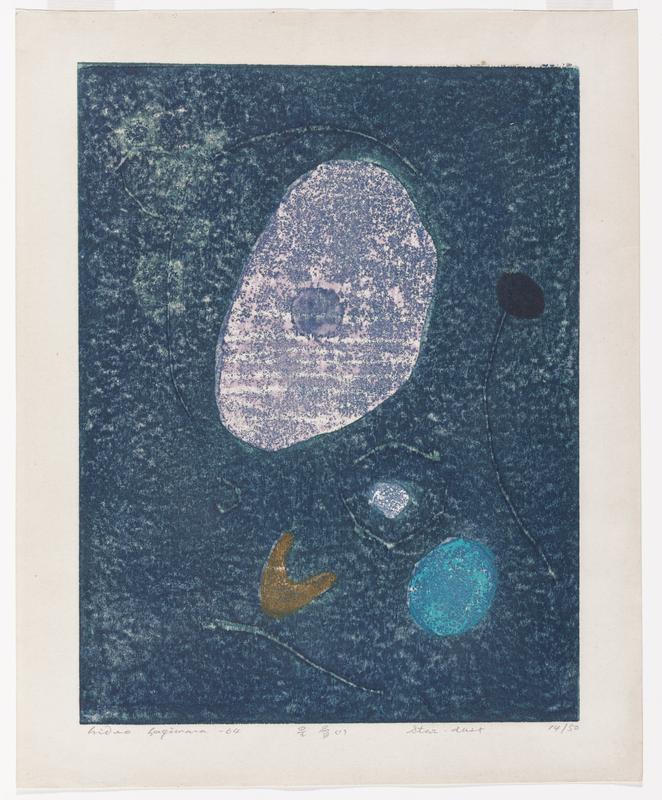
Star Dust 1
1964
Woodblock print, ink and color on paper with mica
Midas
Shōwa period, dated 1965?
Woodblock print; ink on paper with signature reading "Hideo Hagiwara"
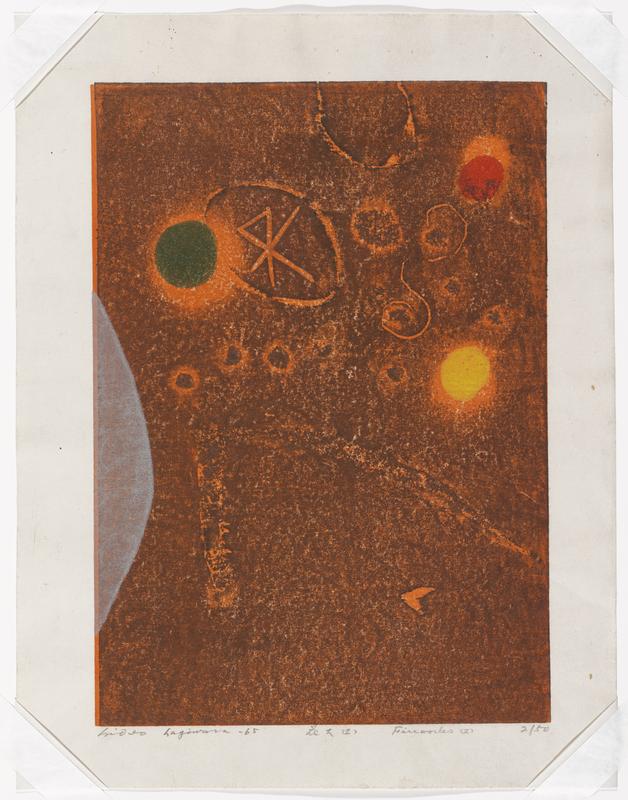
Fireworks (2)
1965
Woodblock print, ink and color on paper
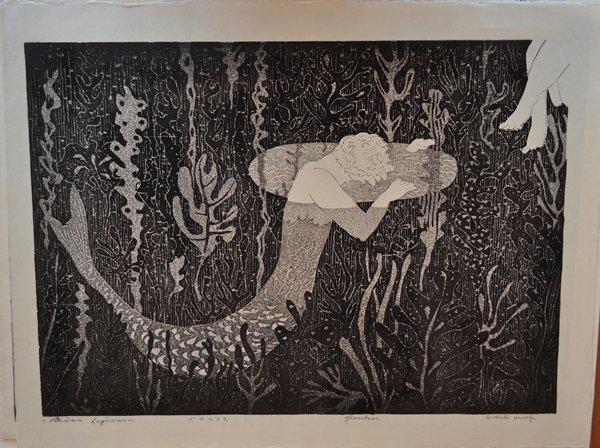
Glaukos
1965
Woodblock print, ink and color on paper
Phaethon, from the portfolio Greek Mythology
1965
Woodblock print; ink on paper
Herakles
Shōwa period, dated 1965?
Woodblock print; ink on paper with signature reading "Hideo Hagiwara"
Bellerophon
Shōwa period, dated 1965?
Woodblock print; ink on paper with signature reading "Hideo Hagiwara"

Circus No. 6
1968
Woodblock print, ink and color on paper with mica
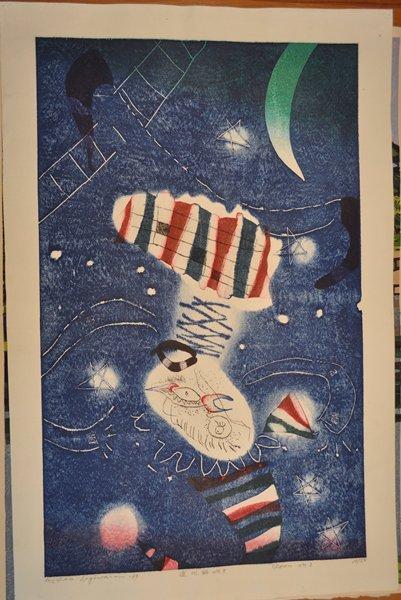
Clown No. 8
1969
Woodblock print, ink and color on paper with mica

Lady No. 9
1975
Woodblock print, ink and color on paper
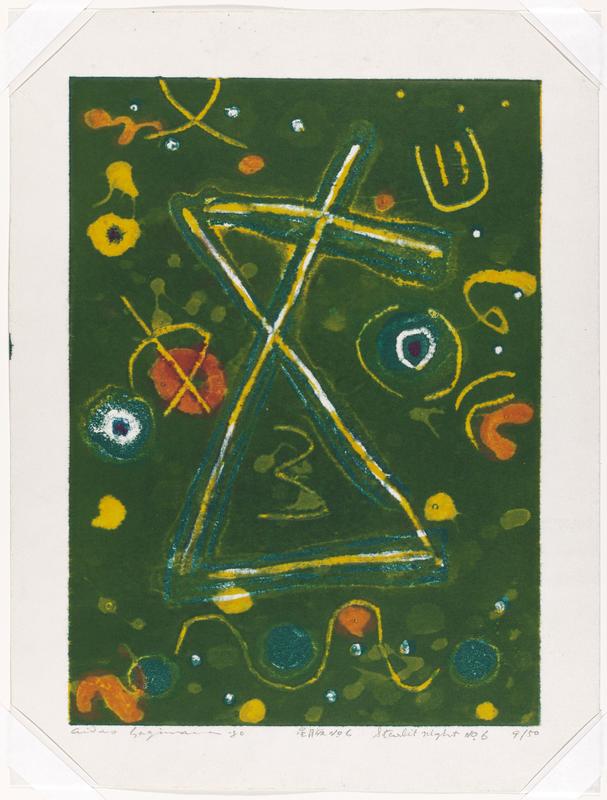
Starlit Night No. 6
1980
Woodblock print, ink and color on paper
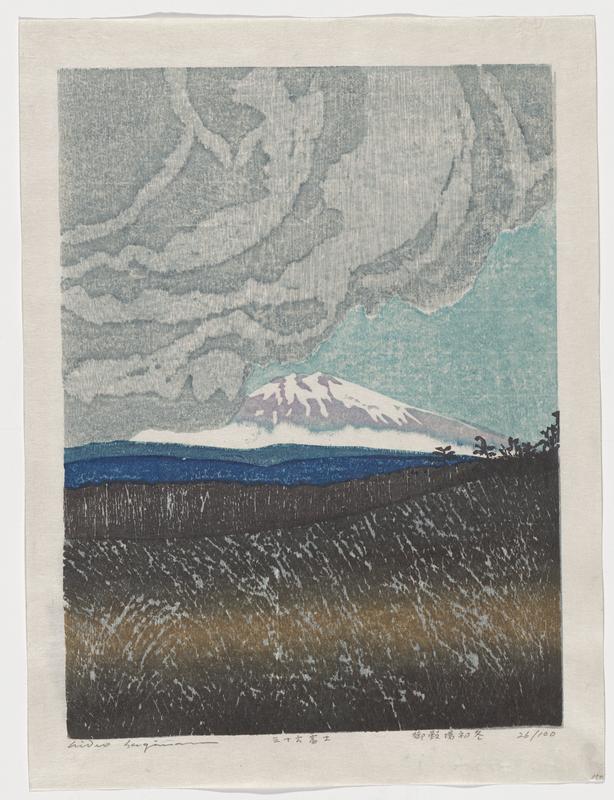
Early Winter in Gotenba
1981–86
Woodblock print, ink and color on paper
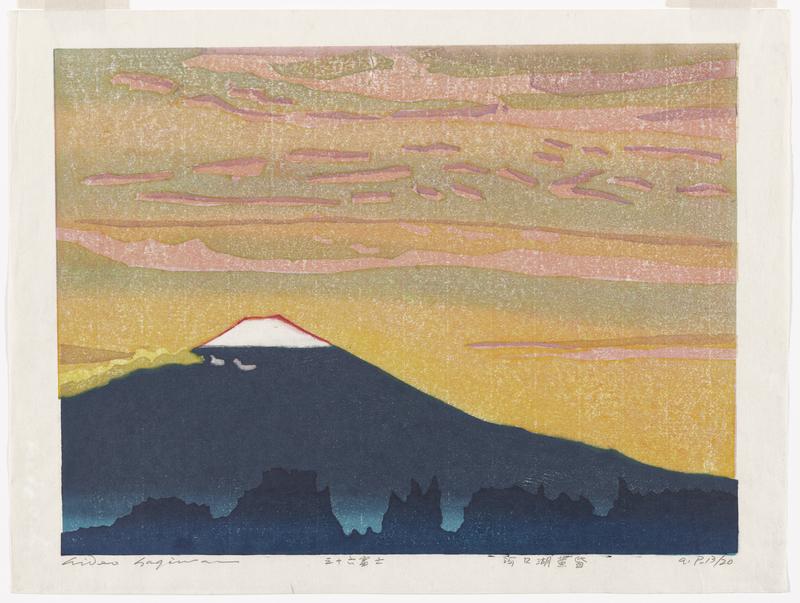
Dawn over Lake Kawaguchi
1981–86
Woodblock print, ink and color on paper
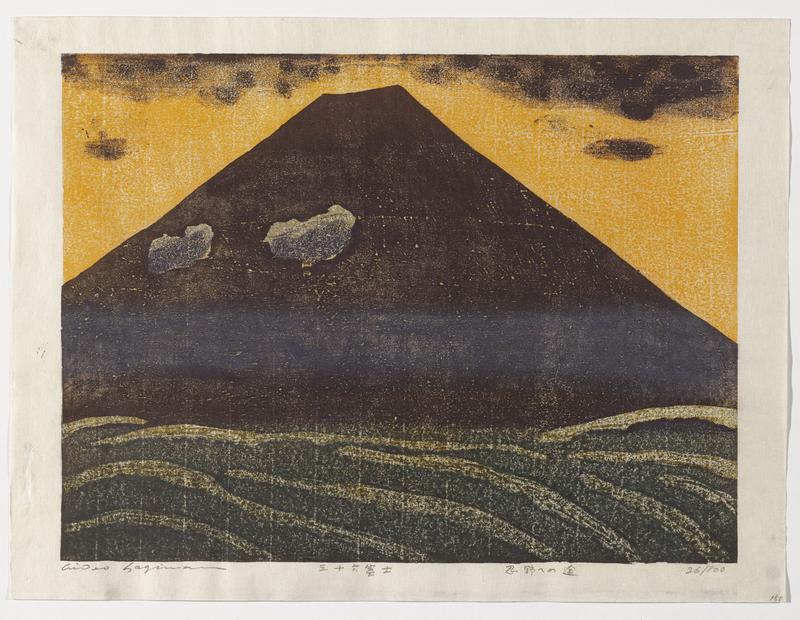
The Way to Oshino
1981–86
Woodblock print, ink and color on paper
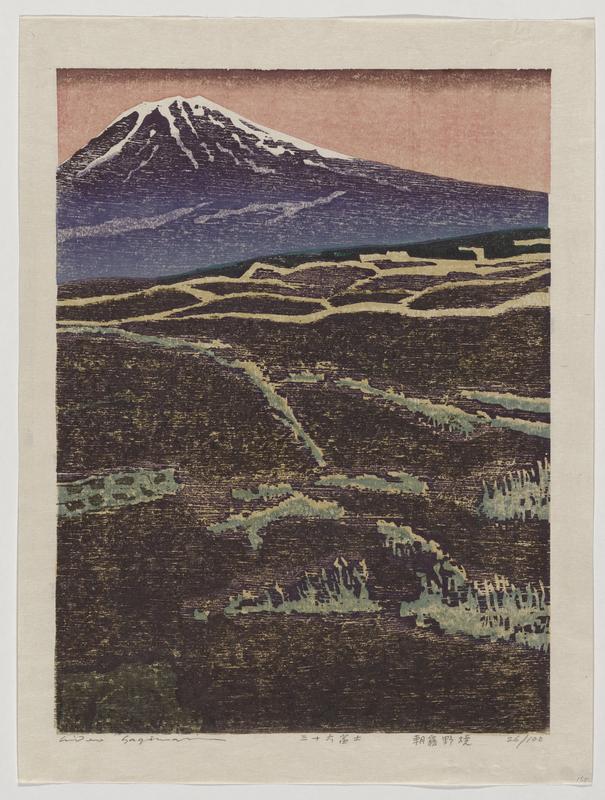
Burning Meadows at Asagiri
1981–86
Woodblock print, ink and color on paper
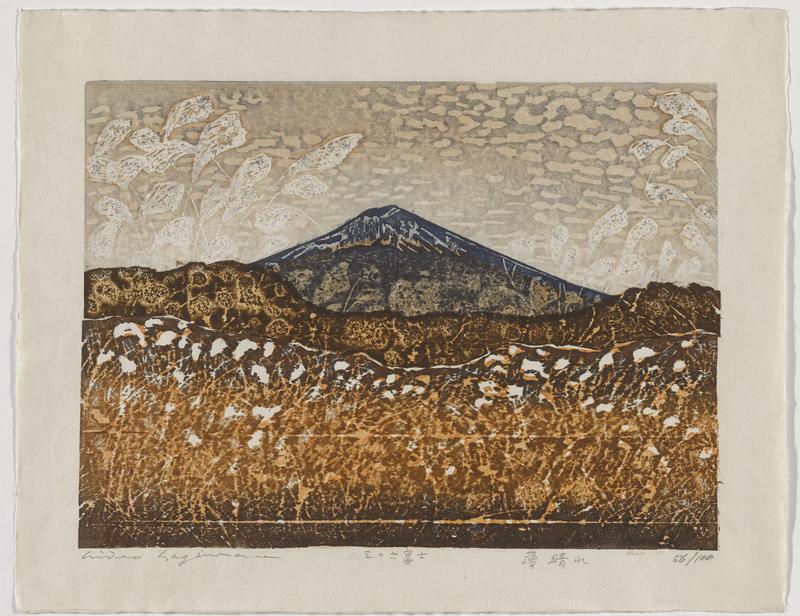
Hint of Sunshine
1981–86
Woodblock print, ink and color on paper
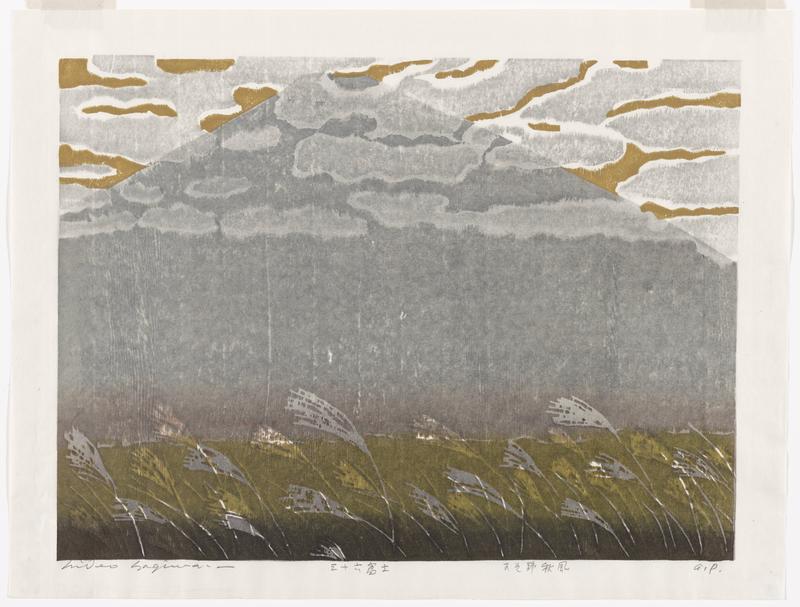
Autumn Wind in the Foothills
1981–86
Woodblock print, ink and color on paper

Remaining Flowers
1981–86
Woodblock print, ink and color on paper

The Sky is Aflame
1981–86
Woodblock print, ink and color on paper with mica
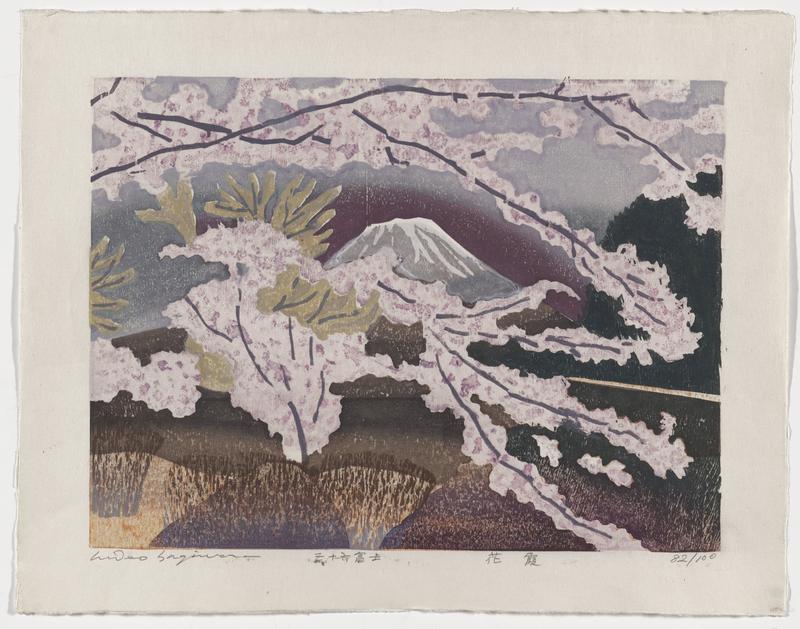
Curtain of Flowers
1981–86
Woodblock print, ink and color on paper
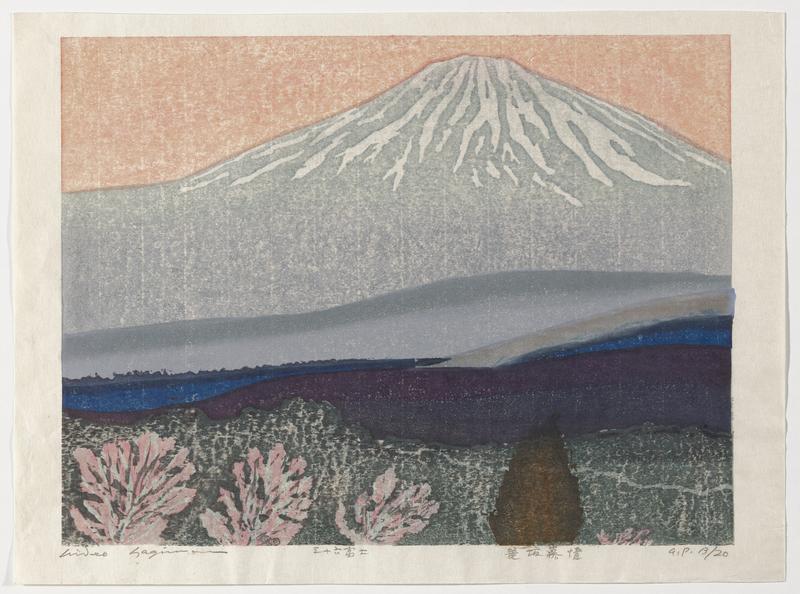
Longing at Kagosaka
1981–86
Woodblock print, ink and color on paper
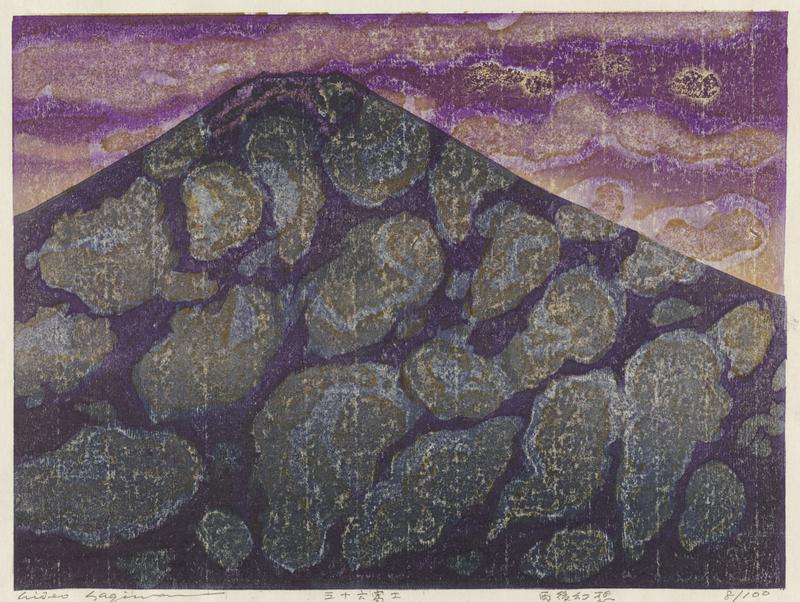
Fantasy after Rain
1981–86
Woodblock print, ink and color on paper
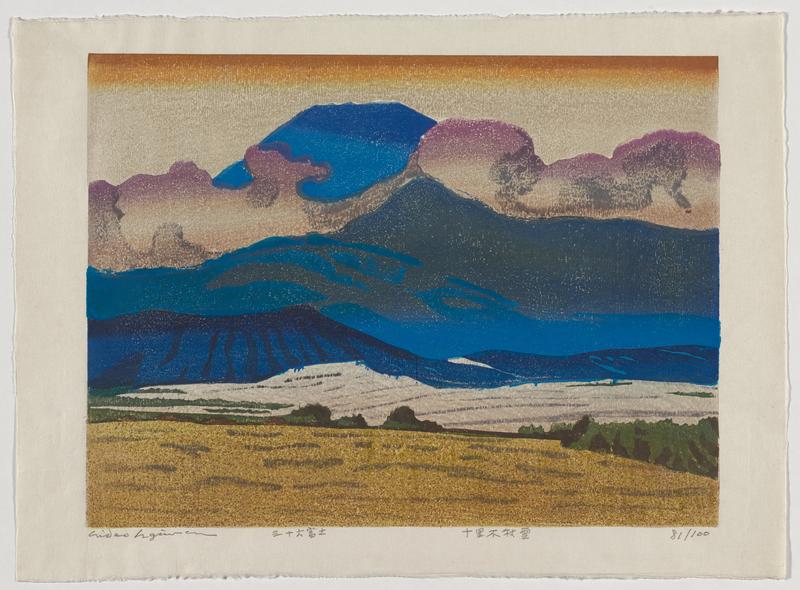
Autumn Clouds at Jūrigi
1986
Woodblock print, ink and color on paper

A Nebula (No. 3)
1987
Woodblock print, ink and color on paper

Sunset in Tokyo (One Hundred Views of Tokyo, Message to the 21st Century 東京百景 21世紀へのメッセジ)
1989-99
Woodblock print
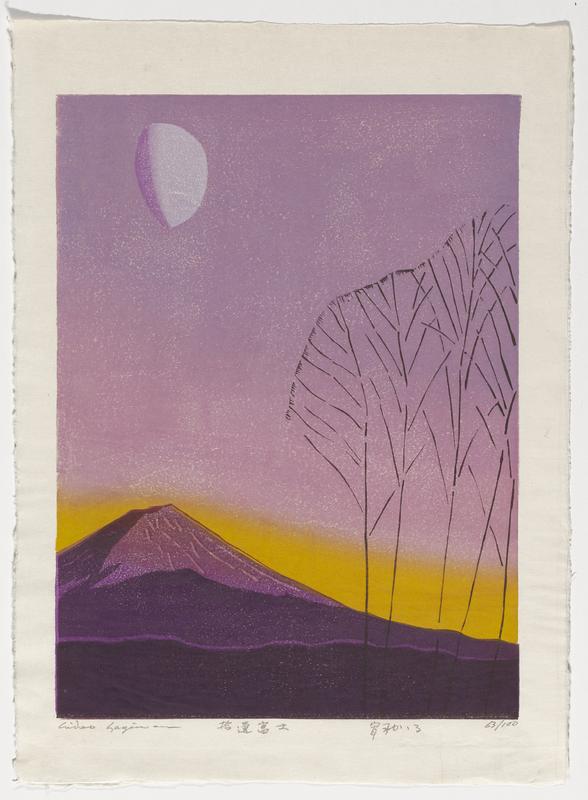
An Evening Moon
1990–91
Woodblock print, ink and color on paper
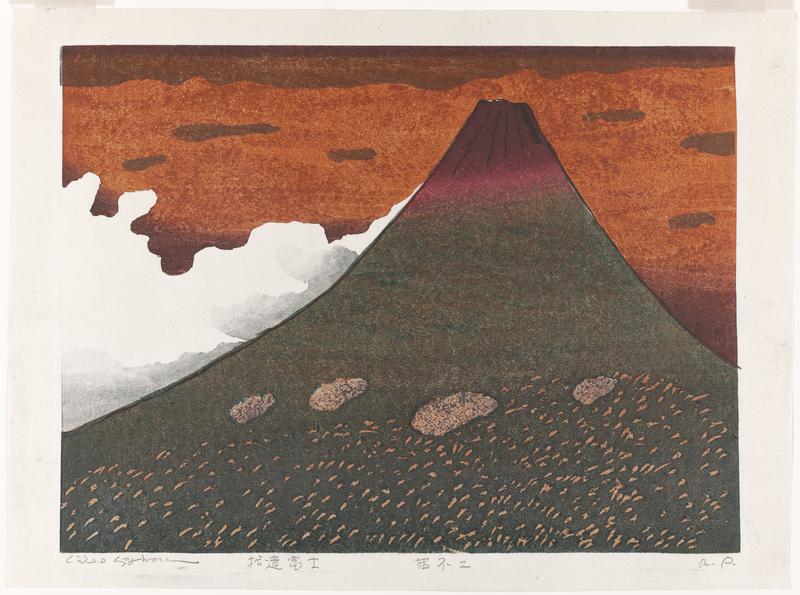
Evening Sky Mt. Fuji
1990–91
Woodblock print, ink and color on paper
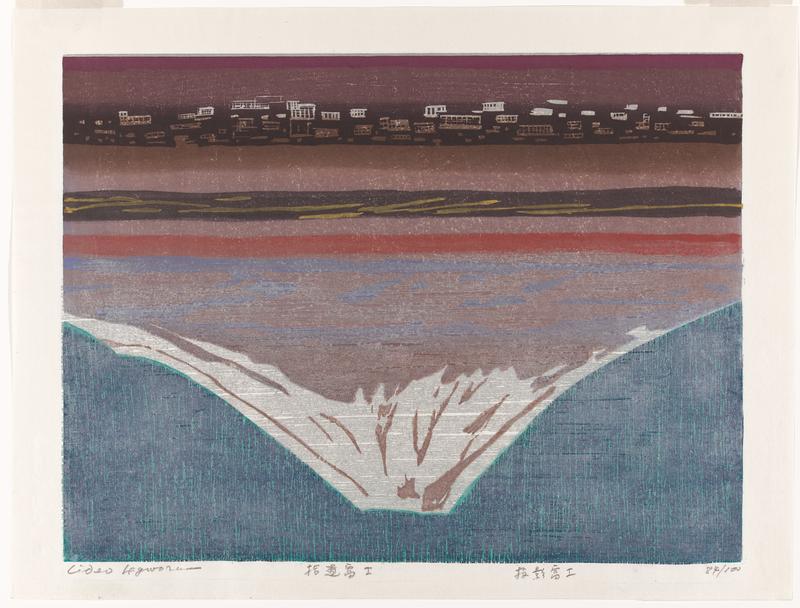
Projection of Mt. Fuji
1990–91
Woodblock print, ink and color on paper
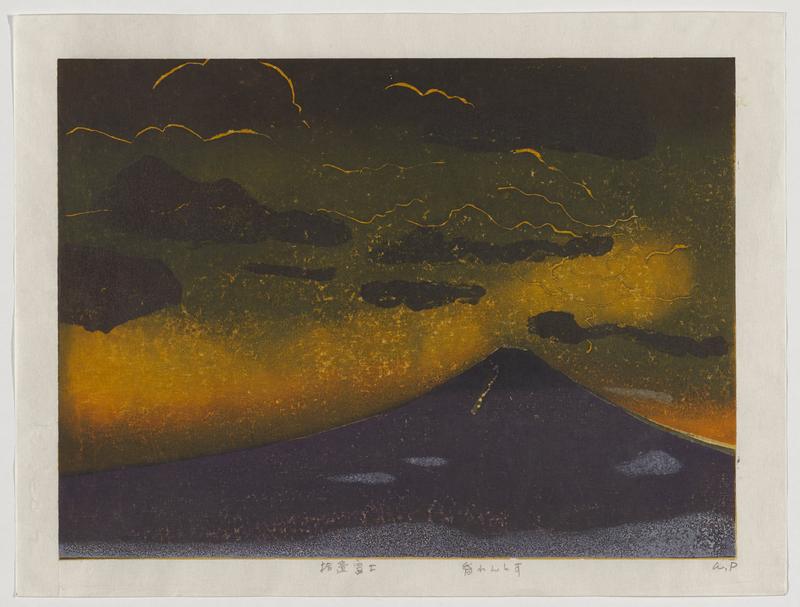
As Darkness Leaves
1990–91
Woodblock print, ink and color on paper
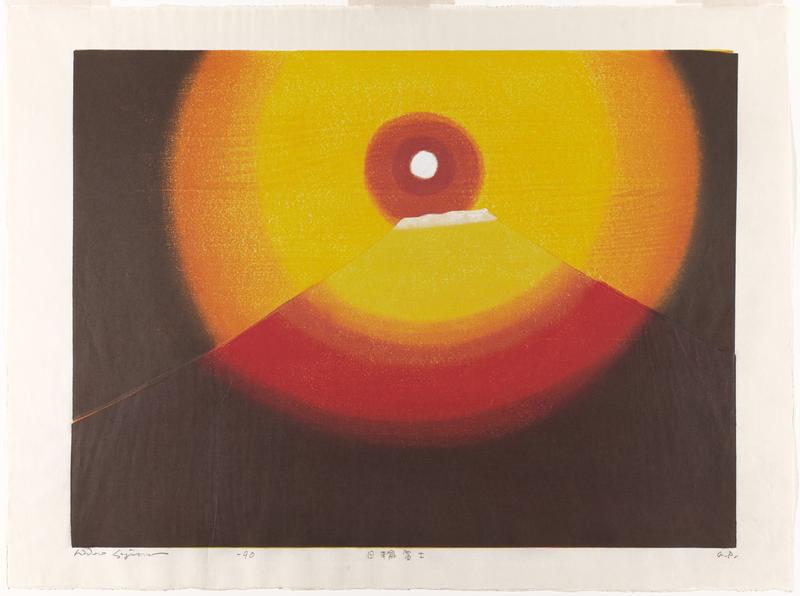
The Sun over Fuji
1990
Woodblock print, ink and color on paper

Light Snowfall
1990–91
Woodblock print, ink and color on paper
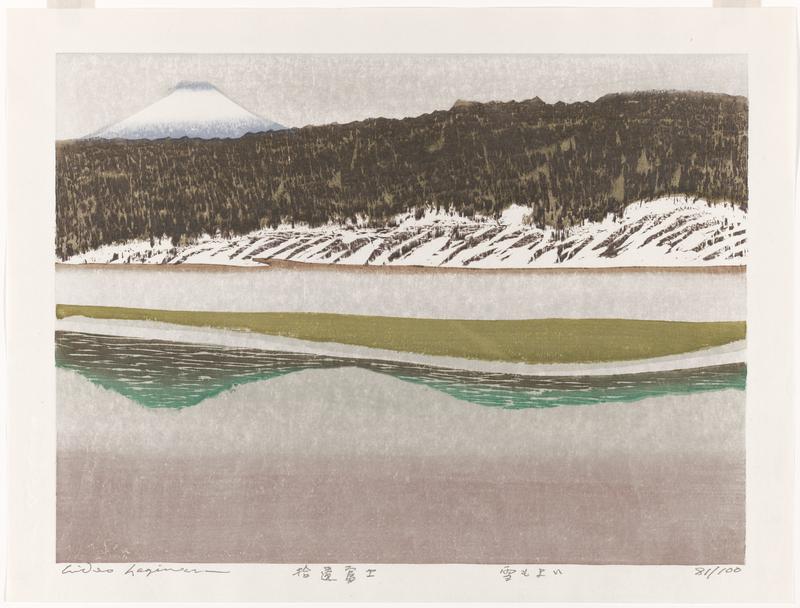
Good Snow
1990–91
Woodblock print, ink and color on paper
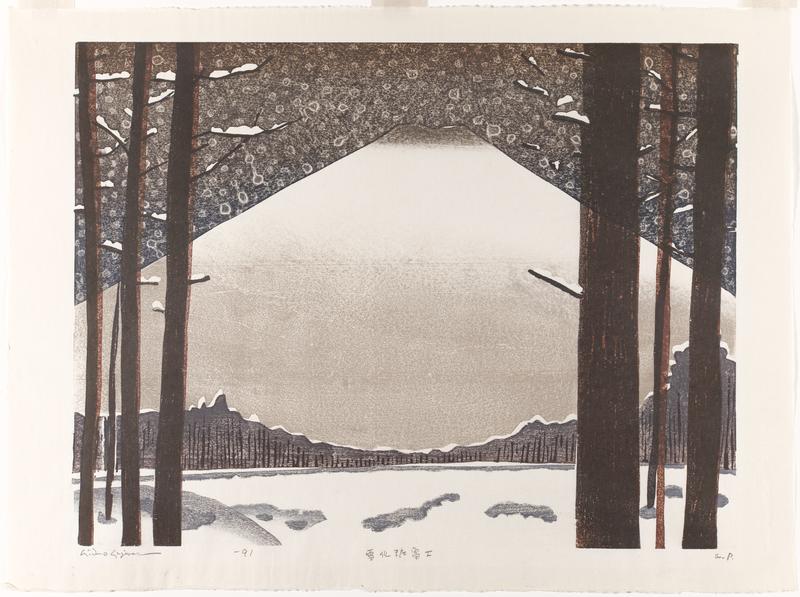
Mount Fuji with a Coating of Snow
1991
Woodblock print, ink and color on paper
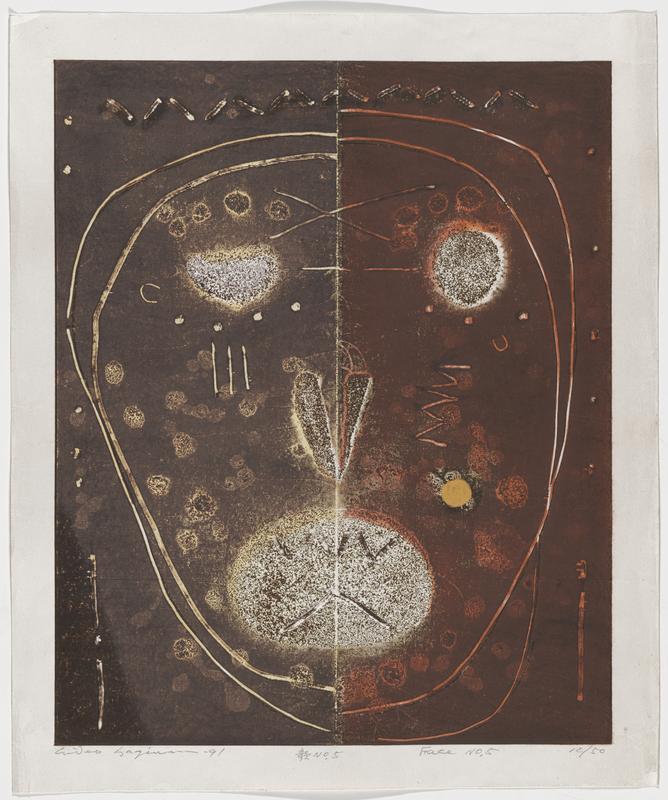
Face No. 5
1991
Woodblock print, ink and color on paper
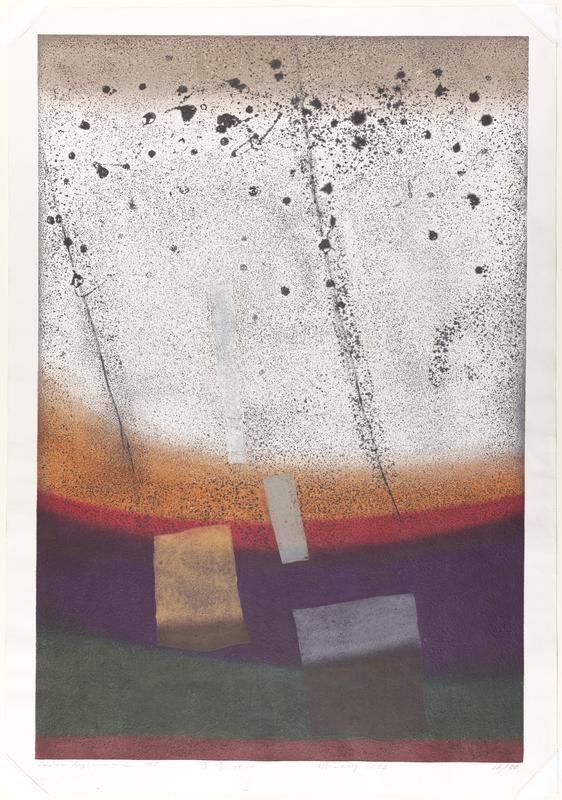
Memory No. 20
1995
Woodblock print, ink and color on paper
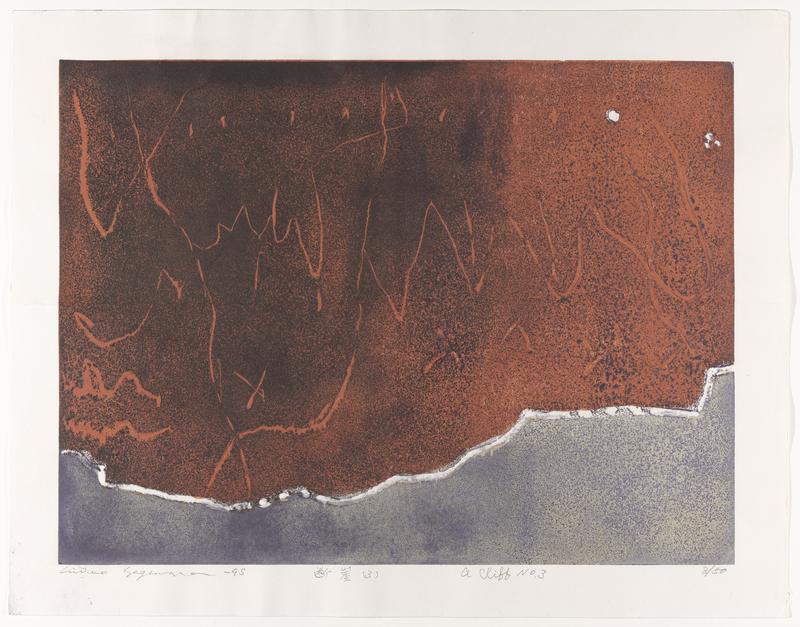
A Cliff (3)
1995
Woodblock print, ink and color on paper

Sunset Mt. Fuji
1995
Woodblock print, ink and color on paper
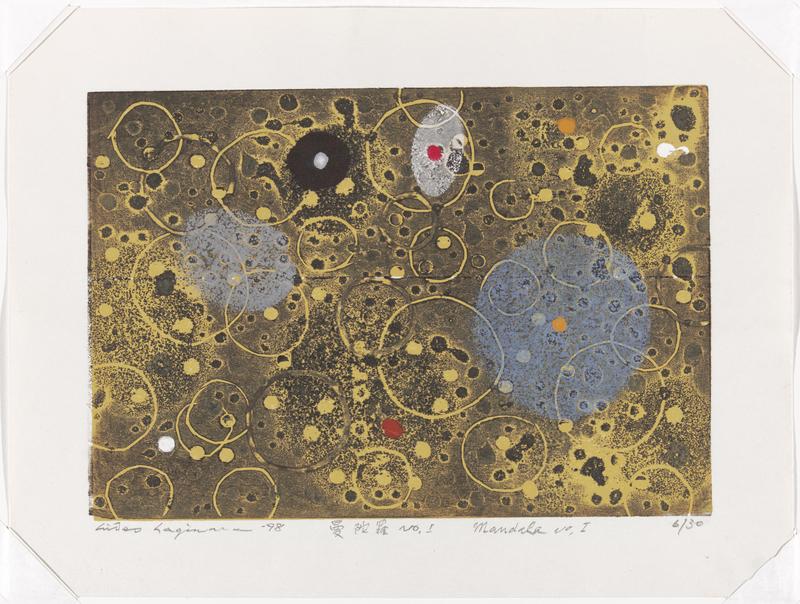
Mandala No. 1
1998
Woodblock print, ink and color on paper
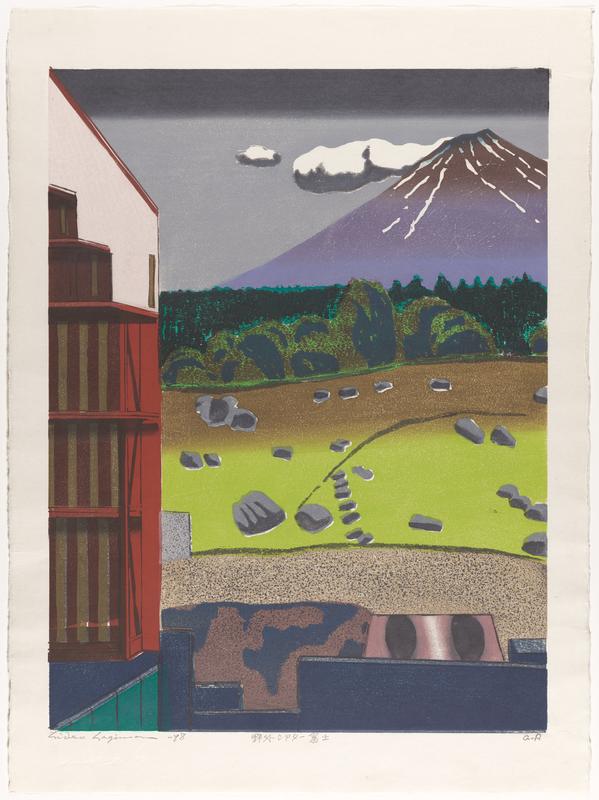
The Outdoor Theater at Mount Fuji
1998
Woodblock print, ink and color on paper
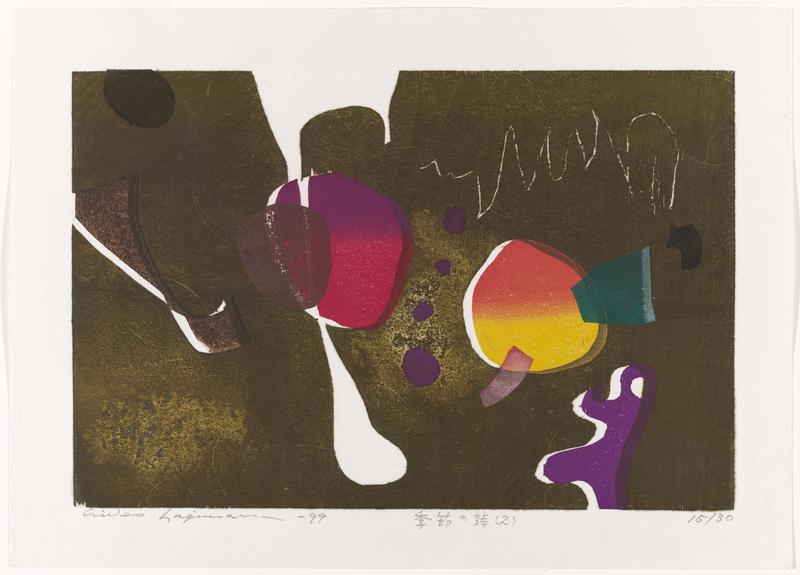
Seasonal Poem (2)
1999
Woodblock print, ink and color on paper